All Activity
- Past hour
-
Hello. I'm currently running Orangepi RV2 with vendor kernel and gentoo userland, from SSD, for testing of packages on risc-v. Would copying kernel/initrd/modules/bluetooth script from armsbian image and pointing boot.scr to it work for booting? Also, if I want accelerated graphics, should I use patched mesa from your repo, or does upstream one works with edge kernel?
- Today
-
new Version avaliable https://github.com/joilg/x88pro/releases/tag/0.6 New: Support now Hardware Version 1.4+ (EA6521 WIFI Chip) for WIFI and Bluetooth Display driver for HT1628 IR Remote USB 3.0 SuperSpeed (5Gbps) Ubuntu resolute 26.04 target OS please Test it now.
-
hi. I gave up a long time ago. but now I found the board in the closet and decided to look again. I made a typo in the marking. I have rk3518. can you upload your firmware backup to google drive. or whatever suits you.
-
Heh, speaking of which, is there no thermal throttling on CPU? Earlier I was trying to set it up as a seedbox, running qBittorrent. Newer versions have a setting to do multi-threaded checksum verification on torrents. Making that use all 8 cores provided nice ~550 MB/speeds, but it did heat up the CPU to 95C or even a bit more! Stopped it all and installed a fan (was just a heatsink before), now it can handle that at reasonable temps.
-
@rm_ you have a capable platform at hand, why not build edge on your RV2? No docker b/c this is riscv64, but this should work anyhow: git clone https://github.com/armbian/build.git cd build && ./compile.sh BOARD=orangepirv2 BRANCH=edge RELEASE=trixie \ BUILD_MINIMAL=yes KERNEL_CONFIGURE=no KERNEL_BTF=no KERNEL_GIT=shallow Mine is running, but AFAICR this is under 4h. You may want to place board upright for better ventilation 😉
-
But they still don't have any 7.0+ for evaluation, any idea when? Thanks
-
@c0rnelius thanks for the u-boot-only image. May help to sort things out. Also, the Armbian.com download pages now have downloadable RV2 and R2S images, so I can stop uploading my locally build ones. I grabbed a second NVME and placed it in the RV2 lower 2280 M.2 slot, while my upper 2230 M.2 slot concurrently holds another NVME. There is a minor quirks between U-Boot and Kernel: U-Boot output shows PCIE-0: Link up (Gen2-x2, Bus0) and PCIE-2: Link up (Gen2-x2, Bus2). U-Boot identifies 2280 as Device 0, and 2230 as Device 1. Linux swapped to 2230=/dev/nvme0n1 and 2280=/dev/nvme1n1. Both NVMEs are bootable, i.e the 2280 is booted if present, if not RV2 boots from 2230. A stopped U-Boot shows the following info => nvme info Device 0: Vendor: 0x144d Rev: 1B7QCXE7 Prod: S3EUNX0HB05786X [ 6.900] Type: Hard Disk [ 6.903] Capacity: 476940.0 MB = 465.7 GB (976773168 x 512) [ 6.910] Device 1: Vendor: 0x144d Rev: HPS4NHBV Prod: S774NX0XB34550 [ 6.917] Type: Hard Disk [ 6.920] Capacity: 122104.3 MB = 119.2 GB (250069680 x 512) while the Linux kernel has this: root@orangepirv2:~# df -h / Filesystem Size Used Avail Use% Mounted on /dev/nvme1n1p1 455G 1.7G 448G 1% / root@orangepirv2:~# lspci 0001:00:00.0 PCI bridge: SpacemiT X60 PCIe 2.0 x2 Root Complex (rev 01) 0001:01:00.0 Non-Volatile memory controller: Samsung Electronics Co Ltd NVMe SSD Controller SM961/PM961/SM963 0002:00:00.0 PCI bridge: SpacemiT X60 PCIe 2.0 x2 Root Complex (rev 01) 0002:01:00.0 Non-Volatile memory controller: Samsung Electronics Co Ltd NVMe SSD Controller PM9B1 (DRAM-less) (rev 02) root@orangepirv2:~# hdparm -t /dev/nvme?n1 /dev/nvme0n1: Timing buffered disk reads: 1446 MB in 3.01 seconds = 480.91 MB/sec /dev/nvme1n1: Timing buffered disk reads: 1760 MB in 3.00 seconds = 585.89 MB/sec HTH // Sven-Ola
-
@sr4armbian You could try building your own X98H image and use the kernel headers from your build. Your kernel headers will be in the build/output/debs directory, and the image will be in the build/output/images directory. I would recommend starting with a fresh install with this new image and kernel headers. git clone https://github.com/NickAlilovic/build.git --branch v20250306 cd build ./compile.sh choose "Do not change kernel configuration" choose "Show CSC/WIP/EOS/TVB" choose "I understand and agree" choose "X98H" choose "edge" rest is up to you... I used this method to get my display working. But that was a while ago.
-
@Jacob George So we will be able to boot Windows on the A733 soon? This would be fun.
-
I can not get anything over USB to UART, I did connected pins 6,8,10 it is COM6 Prolific PL2303GT cable, when I cros wire green and yellow I get response from Putty, please give me some advice, what am I missing?
-
@Nick AIs it possible to configure the front display using the Linux header you provided and the pin details I shared above? I know this is a big request, but if it's possible, it would make this setup complete. Since I am not a programmer, I tried using Google's AI, but it just took me in circles and landed me nowhere. If you require any additional log or configuration details please let me know.
-

How to use OrangePi 5 Plus's NPU for Image Generation?
LivingLinux replied to Johson's topic in Beginners
It seems there is a 4GB limit. Someone forked llama.cpp (so you can run GGUF models) and found a way to get rid of the 4GB limit. -
How to use OrangePi 5 Plus's NPU for Image Generation?
LivingLinux replied to Johson's topic in Beginners
If you are looking for image generation, someone converted Stable Diffusion to run on the NPU. -
Here is an IMG with just u-boot flash to it; https://github.com/pyavitz/binary/releases/download/images/k1-spacemit-boot.img Using it will bypass the SPI and allow you to boot from USB NVME EMMC. Granted, an Armbian IMG would need to have already been flashed or transferred to one of them. It could be useful if say, you b0rked the SPI and wanna attempt to fix it or to use the SD card as a chainload mech to boot into the NVMe.
-
 Hi everyone, I'm running a few services on an Armbian-based SBC and need a reliable SMTP Service Provider for system alerts, backup reports, and application notifications. Has anyone here used SMTP Service Provider iDealSMTP with Armbian, or compared it with other SMTP solutions for lightweight ARM servers? I'm interested in deliverability, ease of setup, and long-term reliability. I'd appreciate any experiences or recommendations. Thanks!
 -
I don't own an OPI RV2, but I do have a few K1's. I suggest trying without that NVMe attached as it may be a contributing factor to boot fails. Technically correct. But I've seen some peps attempt some odd things and then wonder why it doesn't work. With serial attached, stop auto boot with the SPACEBAR. From there run `nvme` and you'll be provided with options. Are you suggesting you wanna bypass SPI by using an SD card to boot into say an NVMe or USB? Should be easy enough. Partition an SD card with an 4MiB offset and flash the u-boot bins to it. U-boot should then check for what ever is available to boot from; USB SD NVME MMC. If there is no extlinux.conf, boot.scr or *.efi to boot from on the SD, it will look else where.
-
I remember reading somewhere that the top slot doesn't support booting from NVMe. If it's non-boot then it shouldn't matter.
-
@c0rnelius Thanks for your input. The SSD booting was not the only issue on my system. For you, does booting https://sven-ola.commando.de/privat-in/Armbian-unofficial_26.05.0-trunk_Orangepirv2_trixie_edge_7.1.0-rc3_minimal.img from a MicroSD card work? With or without any hardware in any M.2 slot. When I tested, it did not work. However I think the SSD was connected when I tried. I'd need to try again with it disconnected. As there is only one NVMe SSD on my RV2, it should not matter in which M.2 slot my SSD is? From my boot log I can't see if the SSD is on "Bus0" "Bus2", is there some u-boot command to tell? Regarding making a MicroSD as boot disk, do you have any thought how do it. With hours of testing my way I could probably figure it out, any pointer to speed up the process would be much appreciated.
- Yesterday
-
Patched the .dtb for v6.1, currently not yet in final format. I will probably create a commit to Armbian with a .dts for our board. I am attaching the dtb/dts just to keep track of the progress. Here are results of the RKNN test launch: rknn_api/rknnrt version: 2.3.2 (429f97ae6b@2025-04-09T09:09:27), driver version: 0.9.8 model input num: 1, output num: 1 input tensors: index=0, name=input, n_dims=4, dims=[1, 224, 224, 3], n_elems=150528, size=150528, fmt=NHWC, type=INT8, qnt_type=AFFINE, zp=0, scale=0.007812 output tensors: index=0, name=MobilenetV1/Predictions/Reshape_1, n_dims=2, dims=[1, 1001, 0, 0], n_elems=1001, size=2002, fmt=UNDEFINED, type=FP16, qnt_type=AFFINE, zp=0, scale=1.000000 custom string: Begin perf ... 0: Elapse Time = 8.06ms, FPS = 124.12 ---- Top5 ---- 0.935059 - 156 0.057037 - 155 0.003881 - 205 0.003119 - 284 0.000172 - 285 So: CPU: OK GPU: OK via Panfrost NPU: OK, RKNN inference works on RKNPU rk3566-box-X88PRO20-npu.dtb rk3566-box-X88PRO20-npu.dts
-
Can you give more details about the limitations of this NPU? I thought that they would be using shared system RAM. because all models are multiple megabytes, Can you comment about the ability to convert any model to your desired NPU target with "AI model conversion" https://tinycomputers.io/posts/rockchip-rk3588-npu-benchmarks.html (search for "Conversion Performance (x86_64)") Maybe its possible to run LCM-Lora in an armbian device, if it has 16GB. It is already running in a 16GB laptop without NPU or GPU. https://forums.raspberrypi.com/viewtopic.php?t=398225&sid=2b66e2cebe37506dd74215ead3dd264c I am thinking about buying an Orange PI zero 3W (allwinner NPU), but if you have troubles with a 6 TOPs NPU, I will have more troubles with a 2 TOPs NPU
-

NPU not working in OrangePi5Plus Vendor Kernel
robertoj replied to Ravi Terala's topic in Orange Pi 5 Plus
Refer to the experiences here: I think someone wrote that the mainline kernel has NPU support. Is this NPU going to load only models that are in the Rockchip model repository? -
This week's updates center on new board enablement, Rockchip platform refinements, and tooling and kernel maintenance. Board support expanded across multiple silicon families, with the addition of Seeed Studio reComputer RK3576/RK3588 DevKits and the Anbernic RG DS handheld image. The EasePi A2/R2 received substantial revisions to its board configurations and device trees, alongside a vendor logo transition to Linkease. SpacemiT K1 boot support was updated, and per-SoC LINUXCONFIG separation was introduced for the TQ family to better isolate kernel configurations. Rockchip received the bulk of low-level improvements. Notable changes include AUX recovery for USB-C DP Alt Mode in the dw-dp driver, device-tree-based LED configuration for the r8169/r8125 controllers, and an updated patch ensuring stable PCIe Ethernet MAC addresses across many boards. Additional fixes resolve slow WiFi on the NanoPi R76S via SDIO SDR104, enable Bluetooth on the Orange Pi 5 Ultra edge kernel, and restore the tm16xx driver on current kernels. On the tooling and maintenance side, Armbian Imager 2.0 was released, the mainline kernel was bumped to 7.1-rc6, and the rtl8192eu driver was re-enabled following a cleanup of compilation warnings. A previously merged USB gadget NULL pointer fix was reverted pending further evaluation. #Armbian #EmbeddedLinux #Rockchip #SBC #KernelDevelopment Changesmainline: bump to 7.1-rc6. by @EvilOlaf in armbian/build#9922Add Anbernic RG DS board image and Anbernic vendor logo. by @crackerjacques in armbian/armbian.github.io#326Add jellyfin-ffmpeg release constraints and ip-wrapper for easepi-r2. by @ifroncy01 in armbian/build#9942arm64: dts: overlay: add radxa display 8hd for rock5t. by @Ken-Vamrs in armbian/linux-rockchip#498board-vendor-logos: update EasePi vendor logo to Linkease. by @ifroncy01 in armbian/armbian.github.io#321drm: rockchip: dw-dp: add AUX recovery for USB-C DP Alt Mode. by @mingzhangqun in armbian/linux-rockchip#494easepi-r2/a2: fix device tree. by @jjm2473 in armbian/linux-rockchip#491feat(boards): Add Seeed Studio reComputer RK3576/RK3588 DevKit support. by @baorepo in armbian/build#9719Give each TQ SoC family its own LINUXCONFIG. by @schmiedelm in armbian/build#9924Introducing Armbian Imager 2.0. by @SuperKali in armbian/imager#143Milk-V Jupiter disable EEPROM node. by @pyavitz in armbian/build#9944nanopi-r76s: fix slow WiFi by enabling SDIO SDR104. by @SuperKali in armbian/build#9929net: r8169: add device tree based LED configuration for r8125. by @mingzhangqun in armbian/linux-rockchip#497orangepi5-ultra: enable Bluetooth on edge kernel via hci_bcm. by @pdapandapda in armbian/build#9697Revert "rockchip64: fix USB gadget NULL pointer crash in eth_get_drvinfo (6.18 + 7.0)". by @EvilOlaf in armbian/build#9926rockchip64: enable back tm16xx driver for current kernel. by @paolosabatino in armbian/build#9941rockchip64: update "describe PCIe Ethernet controllers" patch for stable MAC (many boards). by @rpardini in armbian/build#9933rtl8192eu: re-enable and fix tons of compilation warnings. by @EvilOlaf in armbian/build#9927SpacemiT: Update K1 boot support. by @pyavitz in armbian/build#9930Treat imx93 as slow hardware. by @schmiedelm in armbian/armbian.github.io#323Update EasePi A2/R2 board configs and device trees for improved hardware support. by @ifroncy01 in armbian/build#9907Update VERSION. by @EvilOlaf in armbian/build#9938View the full article
-
This week's updates center on new board enablement, Rockchip platform refinements, and tooling and kernel maintenance. Board support expanded across multiple silicon families, with the addition of Seeed Studio reComputer RK3576/RK3588 DevKits and the Anbernic RG DS handheld image. The EasePi A2/R2 received substantial revisions to its board configurations and device trees, alongside a vendor logo transition to Linkease. SpacemiT K1 boot support was updated, and per-SoC LINUXCONFIG separation was introduced for the TQ family to better isolate kernel configurations. Rockchip received the bulk of low-level improvements. Notable changes include AUX recovery for USB-C DP Alt Mode in the dw-dp driver, device-tree-based LED configuration for the r8169/r8125 controllers, and an updated patch ensuring stable PCIe Ethernet MAC addresses across many boards. Additional fixes resolve slow WiFi on the NanoPi R76S via SDIO SDR104, enable Bluetooth on the Orange Pi 5 Ultra edge kernel, and restore the tm16xx driver on current kernels. On the tooling and maintenance side, Armbian Imager 2.0 was released, the mainline kernel was bumped to 7.1-rc6, and the rtl8192eu driver was re-enabled following a cleanup of compilation warnings. A previously merged USB gadget NULL pointer fix was reverted pending further evaluation. #Armbian #EmbeddedLinux #Rockchip #SBC #KernelDevelopment Changesmainline: bump to 7.1-rc6. by @EvilOlaf in armbian/build#9922Add Anbernic RG DS board image and Anbernic vendor logo. by @crackerjacques in armbian/armbian.github.io#326Add jellyfin-ffmpeg release constraints and ip-wrapper for easepi-r2. by @ifroncy01 in armbian/build#9942arm64: dts: overlay: add radxa display 8hd for rock5t. by @Ken-Vamrs in armbian/linux-rockchip#498board-vendor-logos: update EasePi vendor logo to Linkease. by @ifroncy01 in armbian/armbian.github.io#321drm: rockchip: dw-dp: add AUX recovery for USB-C DP Alt Mode. by @mingzhangqun in armbian/linux-rockchip#494easepi-r2/a2: fix device tree. by @jjm2473 in armbian/linux-rockchip#491feat(boards): Add Seeed Studio reComputer RK3576/RK3588 DevKit support. by @baorepo in armbian/build#9719Give each TQ SoC family its own LINUXCONFIG. by @schmiedelm in armbian/build#9924Introducing Armbian Imager 2.0. by @SuperKali in armbian/imager#143Milk-V Jupiter disable EEPROM node. by @pyavitz in armbian/build#9944nanopi-r76s: fix slow WiFi by enabling SDIO SDR104. by @SuperKali in armbian/build#9929net: r8169: add device tree based LED configuration for r8125. by @mingzhangqun in armbian/linux-rockchip#497orangepi5-ultra: enable Bluetooth on edge kernel via hci_bcm. by @pdapandapda in armbian/build#9697Revert "rockchip64: fix USB gadget NULL pointer crash in eth_get_drvinfo (6.18 + 7.0)". by @EvilOlaf in armbian/build#9926rockchip64: enable back tm16xx driver for current kernel. by @paolosabatino in armbian/build#9941rockchip64: update "describe PCIe Ethernet controllers" patch for stable MAC (many boards). by @rpardini in armbian/build#9933rtl8192eu: re-enable and fix tons of compilation warnings. by @EvilOlaf in armbian/build#9927SpacemiT: Update K1 boot support. by @pyavitz in armbian/build#9930Treat imx93 as slow hardware. by @schmiedelm in armbian/armbian.github.io#323Update EasePi A2/R2 board configs and device trees for improved hardware support. by @ifroncy01 in armbian/build#9907Update VERSION. by @EvilOlaf in armbian/build#9938View the full article
-
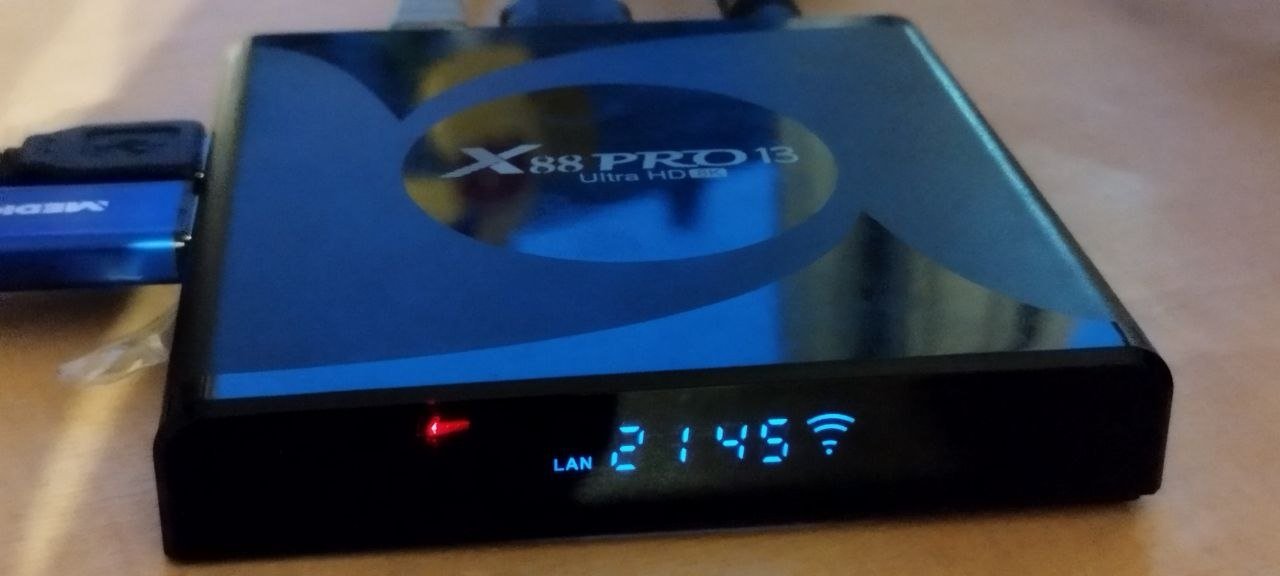
Hello everyone! I'm using this patch set from github to run armbian on x88pro13 (which has RK3528 with Mali 450 MP2). Everything seems to work fine (even wifi), but i'm not able to enable hw acceleration on kodi interface (it shows llvmpipe, so it's sw rendering) Do you have any hints on how to do that? Because at the moment i get 80% cpu just for the kodi gui. Thanks!
-

X96Air S905X3 - Any known emmc bricking issues?
SteeMan replied to ant_thomas's topic in Amlogic CPU Boxes
I see similar issues with some s905x2 and some s905c3 boxes I have. I've never dug into the issue to see what is happening, but the workaround that works for my cases is that when the boot from emmc fails, I boot from an SD card (I have an SD card ready just for this). Then reboot from emmc, and then it usually will boot. For some reason a successful boot from SD clears up something that then allows the emmc to boot properly. This is what works for me, don't know if your situation is the same or different but you can try.