
BoringName
-
Posts
29 -
Joined
-
Last visited
Content Type
Forums
Store
Crowdfunding
Applications
Events
Raffles
Community Map
Everything posted by BoringName
-
I haven't got my head around what the differences are with -copy options. I'm able to use drm-copy but it produces a small stutter when watching 1080p hevc content whereas drm is very smooth. As previously mentioned, drm-copy does allow mpv to display videos with problematic file widths instead of just a black screen. I don't understand it all enough to know why that is.
-
I think building a new image is probably beyond me at the moment. I uninstalled the existing headers, rebooted and installed the updated headers and rebooted. The issue persists. I'm just going to give up on it. I don't really need to LCD display to work. I just wanted confirmation I wasn't missing something stupid. Thanks.
-
This repo is a bit behind what you are running. drm has been changed to v4l2request. I'm going to assume you have hwdec=v4l2request in your mpv.conf file.
-
Some other info that may be relevant. Pretty much the only thing I could find that seemed to indicate different versions. cat /proc/version Linux Version 6.12.11-edge-sunxi64 (build@armbian) (aarch64-linux-gnu-gcc (Ubuntu 11.4.0-1ubuntu1~22.04) 11.4.0, GNU ld (GNU Binutils for Ubuntu) 2.38) #1 SMP PREEMPT Thu Jan 23 11:23:05 EST 2025 gcc --version gcc (Debian 12.2.0-14+deb12u1) 12.2.0
-
I currently have a TV box with @Nick A Armbian-unofficial_25.05.0-trunk_x98h_bookworm_edge_6.12.11_xfce_desktop.img. I have installed linux-headers-edge-sunxi64_25.05.0-trunk_arm64__6.12.11 from the same repository. I'm trying to build a custom module to get the LCD working but I keep coming up against a Exec Format Error which implies a mismatch between the build version and the installed version. But I can't find the cause. I have been following the build instructions for tm16xx-display which hasn't been a smooth process. I've had to remove some forward slashes in the Makefile so it would find the drivers/auxdisplay folder and the line-display.mod.c file it created had entries with multiple double quotes that caused errors. I had to change ""LINEDISP"" to "'LINEDISP'" before it would build. I should also mention I have previously tried OpenVFD and come up with the exact same issue so I don't think it's related to tm16xx. uname - r 6.12.11-edge-sunxi64 Vermagic of the module 6.12.11-edge-sunxi64 SMP preempt mod_unload aarch64 uname -a Linux x98h 6.12.11-edge-sunxi64 #1 SMP PREEMPT Thu Jan 23 11:23:05 EST 2025 aarch64 GNU/LINUX I have little experience with building things in Linux. Am I missing something simple? Is "PREEMPT" listed in all caps in uname -a an issue when the vermagic line is lower case? What about mod_unload? Any other ideas? I've been googling all day and got nowhere. Most results show different version between uname and vermagic which isn't the case here as far as I can tell. I guess I just need to know if it's possible to build custom modules with armbian images or if it's something that just doesn't work and I should forget about it. Thanks.
-
Just some more info I forgot to mention that might help others. I found other repositories for mpv for bookworm that were greater than the version in this repository (35.1) but none of them worked with drm. I believe it's because drm support gets skipped if mpv is built without libdrm being installed. Run mpv --hwdec=help If drm is not listed as one of the options it will not work. You need to find a build with drm support.
-
Sorry for filling this thread with my issues. I'm calling it quits on this one and I'll just put up with it. It seems the v4l2request/drmprime stuff is a slow moving beast with ffmpeg/mpv and I have no interest in dealing with the dependency rabbit hole building my own versions. I found some references on the mpv github mentioning possible frame size issues so that's probably what causing my problems. I don't expect it will be fixed until ffmpeg upstream is sorted out. Going by current progress rates that's probably 2 years away.... I did find using --hwdec=drm-copy will play the files without producing the driver error but the green issue is still there. Using drm-copy with 1080p videos would be a little choppy though. I did a grep search on the mpv and mesa driver source code and couldn't find any reference to the "rejecting image due to unsupported offset" error so that must be coming from an external library. I did have a small win as installing the backported Mesa driver did fix some slight screen tearing issues I was encountering on 1080p content.
-
A bit more info. I updated the mesa drivers with backport drivers to 25.0.7. Now videos outside of the ranges I listed earlier produce an error when trying to play with mpv. Mesa: error: panfrost: rejecting image due to unsupported offset or stride alignment Of course googling that error comes up with nada. All videos inside the ranges continue to play fine. If I scale the video down (from 706x480 to 704x480) when encoding to bring it within the working ranges. ffmpeg -hwaccel drm -hwaccel_device /dev/dri/renderD128 -i "input.mkv" -pix_fmt yuv420p -vf scale=704x480 "output.mkv" The video will play in mpv but still has the green/purple issue. This command produces a playable video with no green/purple issue ffmpeg -i "input.mkv" -vf scale=704x480 "output.mkv" Whatever the issue seems to be effecting both ffmpeg and mpv with certain video widths. Fmmpeg is outputting video with screwed up colours and mpv causes a driver error. mpv uses ffmpeg under the hood so it makes sense it's effecting both of them. I don't suppose anyone using this repository with a mali-g31 gpu could try and play a 706x480 file to see if it works ok and confirm I'm not crazy? You need to make sure it says "Using hardware decoding (drm)" in the terminal when mpv is launched. I guess there is a chance it's just a driver issue and not related to this repository at all.
-
Thanks but they didn't make any difference. I have confirmed it's an issue with the ffmpeg output when drm is enabled. I used the following to extract a single frame from a video using drm. ffmpeg -hwaccel drm -hwaccel_device /dev/dri/renderD128 -ss 00:00:10 -i "input.mkv" -frames:v 1 -q:v 2 "output%03d.jpg" It produces an image but it's nearly all green. If I remove the -hwaccel drm option the image produced is correct. I tried PNG format as well to rule out a format issue and got the same result. After the above result I tried ffmpeg -hwaccel drm -hwaccel_device /dev/dri/renderD128 -i "input.mkv" "output.mkv" As it's using default settings this converts the video to x264 output.mkv still plays as a black screen in mpv but when I play it with ffplay I get a video covered in green with splashes of purple here and there. Edit: I should clarify you can still make out the video contents, it's just the colours are messed up. It's mainly all green with purple flickers occasionally. So I guess I need to play around with ffmpeg.... the last time I tried to build my own it wasn't a fun time. Also unrelated to this issue but I found the cause of the invalid argument 22 error I mentioned earlier when playing x264 videos. 10 bit x264 videos are unsupported. Using -pix_fmt yuv420p when encoding changes it to an 8bit video which plays successfully in mpv with drm. I don't normally have 10bit x264 but when I was testing I converted a x265 to x264 and it must have maintained the pixel format. Edit: By adding the --vf=format=rgba to the mpv command line I can get mpv to play the file like ffplay does. Lots of green and purple but at least it displays an image instead of a black screen. I tried a bunch of different formats but they all come out exactly the same, except for --vf=format=gray. This plays a perfect black and white version of the video. For some frames the colours are correct in places but there is a lot of green blocky squares everywhere. So I don't think it's a format issue, I think ffmpeg is just screwing up the colour space for parts of the frame for certain width videos when drm is used.
-
With a lot of trial and error I figured out the issue but not the cause. This seems to only effect HEVC (x265) videos when drm is successfully enabled with MPV from this repository. If I try a different player, they play fine but no hardware acceleration. If I encode the videos to x264 they play but hardware acceleration fails with the following error [ffmpeg/video] h264: v4l2_request_probe_video_device: set controls failed. Invalid argument (22) The issue is the width of the video. Outside of certain ranges it will display a black video (audio works). It doesn't seem to matter what the height is set to. Eg) 704x480, 704x960 image is displayed. 706x480, 706x960 black screen The ranges go for 14 pixels and each range is separated by 50 pixels. eg) widths in the range of 690 to 704 display an image. Widths between 706 and 752 display a black screen. 754 to 768 display an image. It's a strange one.... Here is a list of ranges that work. Any widths outside of these ranges produces a black screen. It only goes up to 1984 but I'm sure the same rules would apply above this value.
-
I don't like my chances of any resolution to this problem but here goes. I'll start off by saying thanks for providing this repository, I recently went on holidays and was able to use my little magcubic box to watch content off my nas remotely. It was mostly great. One issue I have come across is most of my SD content (ripped from DVD) just displays a black screen. I encode it to 10 bit x265 the same as I do for blurays. Blurays at 1080p play fine, the DVD rips at 480p and 576p just display a black screen, audio works. When comparing them with MediaInfo the only real difference (aside from resolution) is the color primaries, transfer characteristics and matrix coefficient tags. Blurays are bt.709 and the DVD rips are bt.601. Also NTSC vs PAL for the blurays. I've also come across some files that I believe I downloaded at some point that are DVD resolutions, 10 bit x265 PAL that play ok. In MediaInfo these files are missing the all the tags mentioned above. I don't know how this is possible... To troubleshoot I've tried converting a non working file to 25 FPS (PAL) and setting the elements above to bt.709 but no dice. I've run mpv from the terminal in verbose mode and tried to compare a working file to non working file and nothing is really standing out. I think ffmpeg is just serving up black frames with v4l2 in certain circumstances, maybe when the color primaries are bt.601. I'm not overly confident the method I used above to set the bt.709 values would actually work. I installed mplayer and this plays the files ok but doesn't have hardware acceleration. This is why I think the issue is ffmpeg and v4l2. Probably not relevant but 2160p content plays (bt.2020). It really struggles with it but it displays an image. Any ideas would be great. At this stage I'm probably going to take a 10 second clip of a non working file and just run it through bunch of different encode settings until I get something that displays and work backwards from there.
-
I've been trying to get the LCD working on my box. I've used Nicks image - Armbian-unofficial_25.05.0-trunk_X98h_bookworm_edge_6.12.11_xfce_desktop I've followed instructions for OpenVFD and tm16xx on these forums but both result in an Exec Format Error when I try to install the compiled module. From what I have read this is a version mismatch between the kernal and what the module was built with but when I compare uname -r with the vermagic of the module they match. I initially installed the linux headers from Nick's Github: linux-headers-edge-sunxi64_25.05.0-trunk_arm64_6.12.11. After I got the format error I tried installing headers from Armbian-config but get the same result. Make wouldn't work at all initially until I did a symlink between the relevant folders in usr/src and lib/modules. Maybe that stuffed something up?
-
Bookworm. But my point was the version 35.1 is what got installed when I ran the scripts in the first post. If the script installed 37 for you because you're on Ubuntu then I probably am on the wrong track. Yes I believe it does this. I was just pointing out that drm_prime works for me but I guess that could just be due to different hardware on the device. I'm not using an Orange Pi.
-
I was surprised when mine played H265 10 bit. I thought I'd read somewhere v4l2 was limited to 8 bit. Obviously that was incorrect.
-
I'm very new to Armbian so I could be off track here but I noticed your running MPV version 37. When I ran the instructions for the first time I already had mpv installed (version 40 or something) so it didn't get updated. I ended up uninstalling MPV and running the instructions again. Now I have version 35.1 which fixed the drm_prime errors for me. The version difference could be because you are on 26.2 of Armbian and I'm on 25.05, I haven't got my head around all the different versions of things yet. Maybe try uninstalling MPV and trying the commands again and see what version it gives you.
-
I don't know if this is known already and if its off topic for this thread. I did a search for moonlight in the allwinner section and nothing came up so I'm sticking it here I got moonlight running on H618 (actually it might be a H616....) box with no issues at all. Streamed a game from my main PC (with sunshine) at 1080p and it ran great. Makes for a cheap Steamlink alternative. I just followed the instructions here, It does mention v4l2 so maybe the v4l2request patch is required for it to work. There is an Embedded version that might work if you don't have v4l2 support.
-
I got emby installed and working. Made it launch with the ir remote, it was all perfect until I tried to play a video I've set it to use mpv but it seems the emby package has it's own version of mpv and ffmpeg baked in as the versions reported in the mpv.log are different and it fails to use drm, it seems the following errors are the problem. [ 0.028][v][libmpv_render/drmprime] drmprime hwdec requires at least one dmabuf interop backend. [ 0.028][v][libmpv_render] Loading failed. [ 1.422][v][ffmpeg] Unable to open any dma_heap device [ 1.422][e][ffmpeg/video] hevc: Failed to set destination format: S265 1920x1080 [ 1.422][e][ffmpeg/video] hevc: Failed setup for format drm_prime: hwaccel initialisation returned error. When I launch the same file directly in mpv, it plays fine and doesn't have the errors above. The system has mpv version 0.35.1 but emby reports using 0.38.0-dirty. Same with ffmpeg and all the associated lib files, they are all higher versions and I can't find duplicates in the system so I believe they are packaged as part of the emby app so I really doubt it's something I will be able to fix unfortunately. Tried Kodi and that's missing all the acceleration settings. Jellyfin client doesn't work with an emby server anymore. Just to attempt to keep this on topic, I don't suppose there is anything I can config with the image that might resolve the dma_heap errors? edit: I figured out a solution, emby lets you configure an external player. I just set that to /usr/bin/mpv and it works.
-
It's this image from @Nick A github. Armbian-unofficial_25.05.0-trunk_X98h_bookworm_edge_6.12.11_xfce_desktop.img I had to copy over a few firmware files to get wifi/bluetooth working but otherwise it's unchanged.
-
I initially tried the instructions in the original post and it didn't work for me. On an allwinner h618 box with a mali-G31. I then spent pretty much all day today trying to find a fix. I came across a post on here stating the version of mpv that works with v4l2 needs to be compiled with the same package versions as ffmpeg or something along those lines. When I first tried the instructions I already had mpv installed and I remember it stating that it didn't update it. So for a hail mary I ran apt remove ffmpeg and apt remove mpv. Then I ran the instructions again and noticed first one didn't actually run successfully which could have been why they didn't work this morning.... When I copy pasted into the terminal it left the $ signs in there and caused errors. So I manually typed it out and got everything to run successfully. Now everything works. mpv is buttery smooth. Previously mpv stated drm was unsupported now it says "using hardware decoding (drm)". I had checked ffmpeg and it did list v4l2 as supported so maybe that didn't need to be reinstalled. Anyway, if it hasn't worked for you maybe try uninstalling ffmpeg and mpv and running the commands again.
-
And now I've hit a road block. I can't get video acceleration to work. VLC just displays a blank screen no matter what output I select and MPV playback is very stuttered. I wanted this box to act as an Emby client, got it all configured to load emby via the ir remote and got all the functionality working but when I play a video it's so choppy it's basically unwatchable. 576p is almost bearable, 1080p is not. I've spent all day on it and got nowhere. I've followed the instruction in this post but it made no difference - Repository for v4l2request hardware video decoding (rockchip, allwinner) edit: Ok the instructions in that post did actually work, I just didn't notice one of the commands had not run properly when I first tried it. Video playback in mpv is buttery smooth, now I just need to figure out how to get emby to do the same.
-
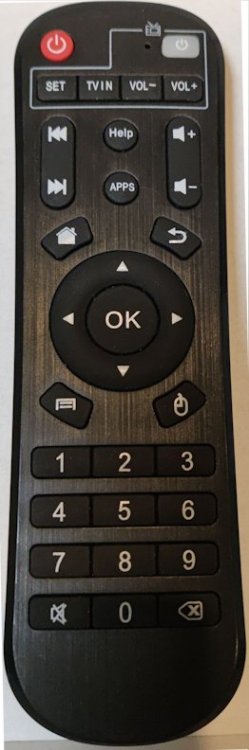
Installed to the EMMC with armbian-install and no issues it all. Took about 10 minutes and now boots from the EMMC with no SD card inserted. I think I paid $35AU for this thing and it came with the remote, a bluetooth keyboard, HDMI cable and power supply. Absolute bargain when you compare it to the current price of Rasperry PI's especially when it comes with it's own case and internal storage. Thanks to everyone who contributed to getting these images out there, it's fantastic. I've also got the IR remote working. I followed rafman's post but this didn't fully work for me. It allowed the remote to work and I could see it was working with ir-keytable -t but the desktop and any open apps wouldn't respond to it. The solution was to copy the toml file to /etc/rc_keymaps/magcubic.toml then edit /etc/rc_maps.cfg and add the following to the bottom of the file * rc-empty <whatever_name>.toml * rc-empty magcubic.toml Adding the line to the rc.local file was not required. I've attached a picture of the remote and the toml file I created. I didn't map the buttons in the top right section as this remote has a learning function and you're supposed to learn the codes from your TV remote. But here are the codes my remote was using for these buttons by default. Power 0x1f1 Set 0x1f2 TVIN 0x1f3 VOL- 0x1f4 VOL+ 0x1f5 Edit: If you are going to use on media player apps you will probably want to edit the toml file and change "KEY_OK" to "KEY_SPACE". OK doesn't let you select things with the OK button but SPACE does. magcubic.toml
-
Bluetooth now working, no compiling required via hciattach. I don't know how much of this is necessary because I generally don't know what I'm doing. But here goes. Apparently hciattach is a legacy app that requires the firmware to be in /etc/firmware so I made a folder and setup a symlink before running the hciattach. <NOT REQUIRED> sudo mkdir -p /etc/firmware <NOT REQUIRED> sudo ln -sf /lib/firmware/aic8800_sdio/*.* /etc/firmware sudo hciattach -s 1500000 /dev/ttyS1 any 1500000 flow nosleep <NOT REQUIRED> sudo hciconfig hci0 up Bluetooth should be available now. You can test it with sudo hcitool -i hci0 scan This will display any devices in the area the bluetooth adapter has detected. I had installed armbian-firmware package so that might also be required but I doubt it. I will flash a new image and start from scratch just to make sure everything I've stated works on a fresh install and then update the thread. Edit: I tested it on a fresh image and the only command required for bluetooth to activate was the hciattach line. I couldn't figure out how to do strikethrough in the code block so I just listed added the "NOT REQUIRED" info. I didn't want to remove them in case it helps someone else. The firmware files I mentioned in a previous post need to copied over and the device powered down before running the hciattach command. The hciattach commands do not persist through a reboot so I need to figure out how to get this to run on startup, hopefully the easy part. Thanks for all the help. Hard to beat that feeling when you spend hours troubleshooting something and it fires up for the first time!
-
We have progress, sorry I feel like I'm spamming this thread a bit but at least I have a result. Wifi is now working. Still no bluetooth. For anyone playing at home with this box, to get to this point I installed x98h image from Nick's github. I then downloaded the following files from walnutpi's github fw_patch_table_u03.bin fw_adid_u03.bin fw_patch_u03.bin fmacfw.bin aic_userconfig.txt I copied these files to the device and placed them in /lib/firmware/aic8800_sdio/ Then shutdown the unit and powered it back up. Doing a restart isn't enough, you need to shut it down. So just bluetooth to go. The only related message seems to be sdio_err: <aicwf_sdio_bus_pwrctl,1380>: bus down Which I expect will probably require me to update the dtb settings as previously discussed. Happy to settle with just the wifi working but I'll take a shot at getting bluetooth going because I may as well finish what I started. Thanks for the help thus far. edit: I've tried decompiling the /boot/dtb/allwinner/sun50i-h618-x98h.dtb file but I can't find any of the relevant info to change in the dts file. It's like the sections listed in the patch file linked earlier are not there at all. I understand it's in a different format but as an example. The following section line 278 to 297 +&uart1 { + pinctrl-names = "default"; + pinctrl-0 = <&uart1_pins>, <&uart1_rts_cts_pins>; + uart-has-rtscts; + status = "okay"; + + bluetooth { + compatible = "allwinner,sunxi-btlpm"; + // max-speed = <1500000>; + + clocks = <&rtc 1>; + clock-names = "lpo"; + vbat-supply = <®_dldo1>; + vddio-supply = <®_dldo1>; + enable-gpios = <&pio 6 19 GPIO_ACTIVE_HIGH>; /* PH19 bt_power */ + reset-gpios = <&pio 6 13 GPIO_ACTIVE_LOW>; /* PH13 bt_rst_n */ + device-wakeup-gpios = <&pio 6 17 GPIO_ACTIVE_HIGH>; /* PH17 bt_wake */ + host-wakeup-gpios = <&pio 6 16 GPIO_ACTIVE_HIGH>; /* PH16 bt_hostwake */ + }; +}; I've tried searching the dts file for "uart1", "bluetooth", "bt", "btlpm", "lpo", the hex equivalent of the values above, all the different value names etc... of the small amount of results that do show up, most of them are not even remotely close to matching anything above. "usart1" does have a section detailing the pins and rtscts but it seems that bluetooth section just isn't there. This is just one example, lines 87 to 102 don't appear to be there either. There is some values for vcc-3v3 but that's it. I'll probably have to look at updating the values in the patch file and building an image.
-
Excellent, thanks. One more thing. I just reloaded the x98h image. When I previously loaded this image, I didn't check dmesg like I did with the other images. They had no mention of Wifi at all but this one does. It seems to start enabling wifi but then fails here rwnx_load_firmware :firmware path = /lib/firmware/aic8800_sdio/fw_patch_table_u03.bin rwnx_load_firmware: fw_patch_table_u03.bin file failed to open wrong size of firmware file aicbt_patch_table_alloc fail edit: So lib/firmware/aic8800_sdio/fw_patch_table_u03.bin does not exist which probably explains that error. I'll see if I can get my hands on that file and see if that fixes things before I worry about compiling/decompiling stuff.
-
Ok, just so I'm following you correctly. This line in my DTS dump bt_rst_n = <0x23 0x06 0x13 0x01>; In decimal is <35 6 19 1> In the patch you linked the line above should be matched to these values at line 293? reset-gpios = <&pio 6 13 GPIO_ACTIVE_LOW>; /* PH13 bt_rst_n */ So I should change this to reset-gpios = <&pio 6 19 GPIO_ACTIVE_HIGH>; /* PH13 bt_rst_n */ Repeat for all the other values to match the DTS dump then build the image? Is there a way to set these values at the command line without having to build an image? edit: Actually my high low flag is 0x13 which is 0001 0011. This is read from right to left isn't it? So Bit 0 is actually a 1 which means in the example above I should set it to the following? reset-gpios = <&pio 6 19 GPIO_ACTIVE_LOW>; /* PH13 bt_rst_n */ Sorry I'm probably getting in a little over my head....