


RSS Bot
-
Posts
4310 -
Joined
-
Last visited
Never
Content Type
Forums
Store
Crowdfunding
Applications
Events
Raffles
Community Map
Posts posted by RSS Bot
-
-

Welcome to the latest Armbian Newsletter: your source for the latest developments, community highlights, and behind-the-scenes updates from the world of open-source ARM and RISC-V computing.
The past two months have been particularly active for the embedded ecosystem. At EMBEDDED WORLD 2026, developers, hardware vendors, and open-source communities gathered to showcase the latest innovations shaping the future of embedded computing. In parallel, the Armbian project continues to evolve with new releases, expanded board support, and ongoing improvements to the build framework driven by the contributions of its global community and the growing demand for reliable Linux on ARM and RISC-V platforms.
SPONSORED
Join us in making open source better! Every donation helps Armbian improve security, performance, and reliability — so everyone can enjoy a solid foundation for their devices.
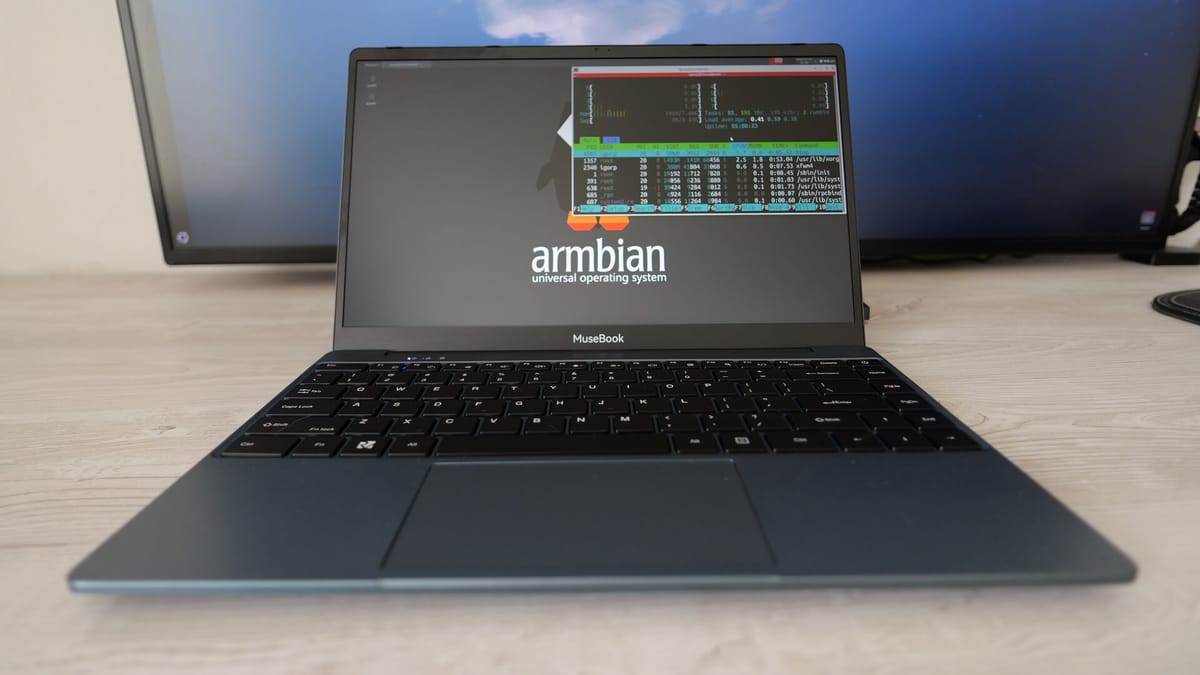
-
The first quarter of 2026 has been a period of significant technical consolidation for the Armbian project. Driven by the v26.02 (Goa) release cycle, the project has focused on three core pillars: aggressive framework refactoring, the stable rollout of the Linux 6.18 LTS kernel, and the maturation of the Armbian Imager utility.
Core Framework Refactoring
A primary objective this quarter was the reduction of technical debt within the
armbian/buildrepository. The development team initiated a systematic cleanup to improve build reliability and maintenance.- Toolchain Optimization: Through a series of pull requests, including #9218, #9252, and #9256, significant "dead code" was removed from the internal toolchain. This refactoring simplifies the logic required to support a diversifying array of ARM and RISC-V architectures.
- mmdebstrap Transition: The framework has officially transitioned to mmdebstrap as the exclusive engine for rootfs creation (#9512). By deprecating the legacy debootstrap method, the project ensures faster, more consistent, and reproducible builds across varied host environments.
- Bash Modernization: Internal build scripts have been transitioned from POSIX to Bash syntax to leverage modern shell features and enhance overall script reliability.
Kernel and Hardware Integration
Q1 marked the broad adoption of the Linux 6.18 LTS kernel series, providing improved driver support and hardware abstraction for tier-1 platforms.
- Linux 6.18 LTS Rollout: Stable support for the 6.18.y kernel was merged for major families, including meson64, rockchip64, and UEFI targets (#9069, #9086).
- Hardware Support Expansion:
- SpacemiT MusePi Pro: Full integration and kernel patching were completed (#9422).
- Orange Pi RV2: Initial support and nightly build availability were established for this RISC-V target.
- Radxa Rock 4D & ODROID M2: These boards were elevated to the stable support tier within the 26.02 release.
- Firmware Updates: U-Boot was bumped to v2026.01 for several platforms. Notably, boot delays on the Orange Pi 5 series were addressed via updated U-Boot candidates (#9450).
Ecosystem Tools: Armbian Imager
The Armbian Imager has transitioned from a utility to a cornerstone of the project’s user experience, with a focus on security and onboarding efficiency.
- Cross-Platform Security: Code signing was implemented for both macOS and Windows artifacts to reduce installation friction for non-Linux users (imager#87).
- Performance Improvements: The utility now features optimized image decompression and enhanced device disconnect detection (imager#28).
- Automated Reporting: A new AI Actions Report workflow (armbian.github.io#165) was implemented to automate development highlights, providing greater transparency into the commit history for the community.
Strategic Industry Alignment
The technical trajectory of Q1 was intentionally aligned with Armbian’s presence at Embedded World 2026 in Nuremberg.
By showcasing the framework and Imager as guests of Seeed Studio, the project demonstrated its readiness for industrial-scale deployment. The shift toward mainline kernel and U-Boot support—specifically targeting the retirement of vendor-specific bootloaders—remains a priority for long-term security and professional-grade stability.
Contributors & Credits
The progress in Q1 2026 is the result of sustained contributions from the Armbian Dev team and the wider community. Detailed changelogs and commit histories are available at github.com/armbian/build.
-
I'd been putting this off for years. Every March, I'd read someone else's embedded world recap, tell myself "next year", and go back to my terminal. This year I actually went and I'm still processing everything I saw.
First things first: the team
Before I talk about any stand or chip, I need to tell you what made this trip different from anything I've done before. There were five of us from the Armbian team at the show: Igor, Werner, Meko, amazingfate, and me. Five people. Four countries. Some of us had worked together for years and never met in person.
You know how it is in open-source, you collaborate through GitHub, you argue about patches on the mailing list, you review each other's code at odd hours. But you don't always know the face behind the username. Meeting those people for real, shaking their hand, having a coffee together, that's something no pull request can replicate. And honestly, it was worth the trip on its own.
The show itself: I wasn't ready for this
Arriving at the Nuremberg Messe for the first time is a genuine shock. I knew embedded world was big. I did not know it was this big. Enormous halls, thousands of exhibitors, tens of thousands of attendees. On day one I got genuinely lost between the pavilions spent a solid half hour wandering with no idea where I was. I'm told this is a rite of passage.
What surprised me most about the atmosphere is how concrete everything felt. This isn't a conference where people pitch vaporware from behind polished booths. Engineers and developers everywhere, talking about real problems, showing real hardware. You can walk from a giant like Qualcomm to a small team doing something fascinating with a handful of sensors and both conversations feel equally substantive.
What we saw on the floor
Rockchip was a mandatory stop for us, and they didn't disappoint. On their stand: the RK3572 EVB an evaluation board we hadn't seen in person before. Reading specs in a datasheet is one thing. Seeing the board running, understanding its real-world size, its connectors, how it behaves, that's a completely different kind of knowledge. The kind you can only get by showing up.
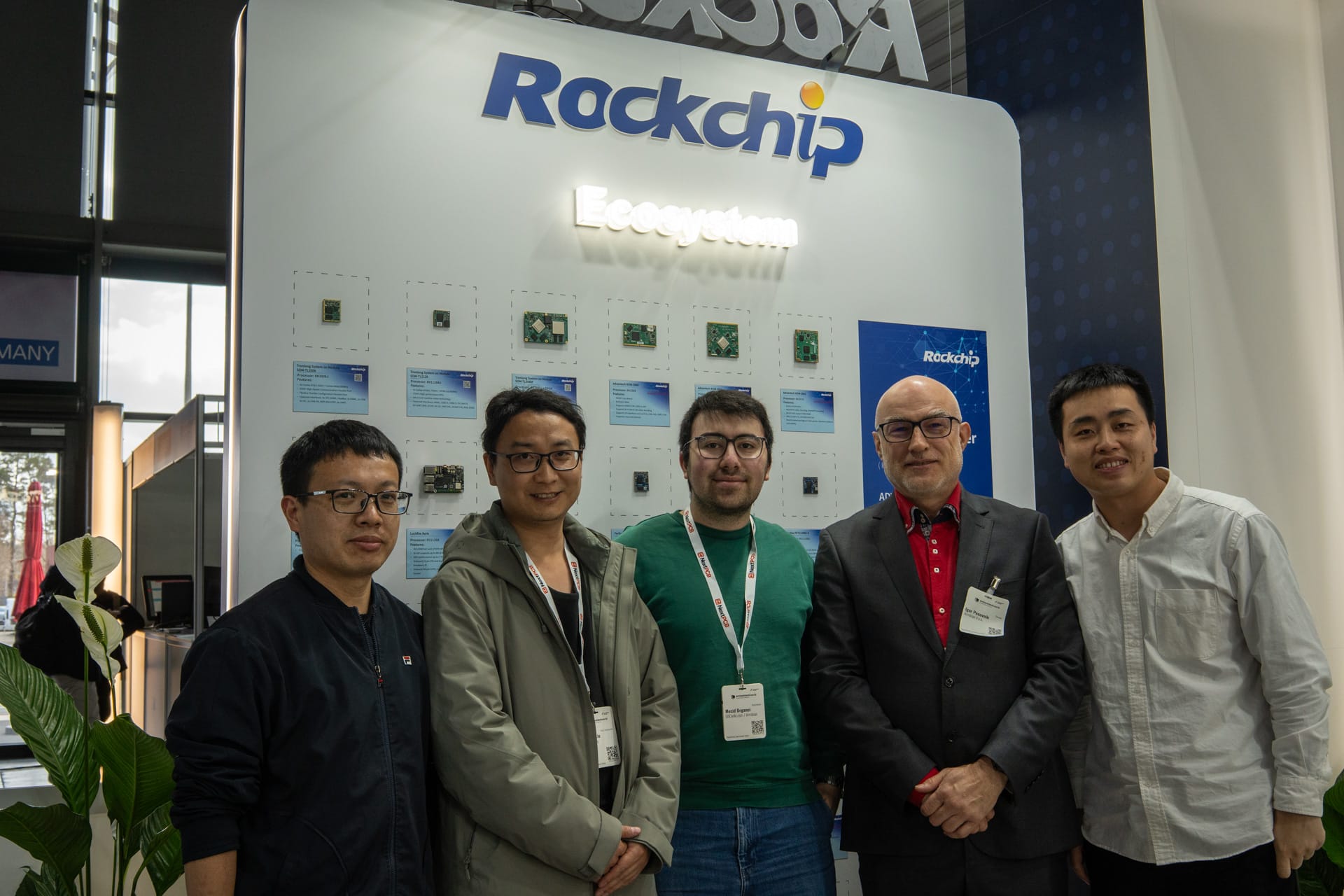 Rockchip Employees (Most left and right) and Jianfeng Liu, Mecid Urganci & Igor Pecovnik
Seeed Studio had live demos of AI Vision and AI Sound, and the one that genuinely impressed me was their AI camera with a built-in NPU doing real-time object recognition. I'm not talking about laggy, stuttering inference, it was smooth. Fluid. The kind of performance that makes you stop walking and just stare for a minute. Seeing that level of real-time AI running on a compact edge device was one of those moments where the future stops feeling abstract.
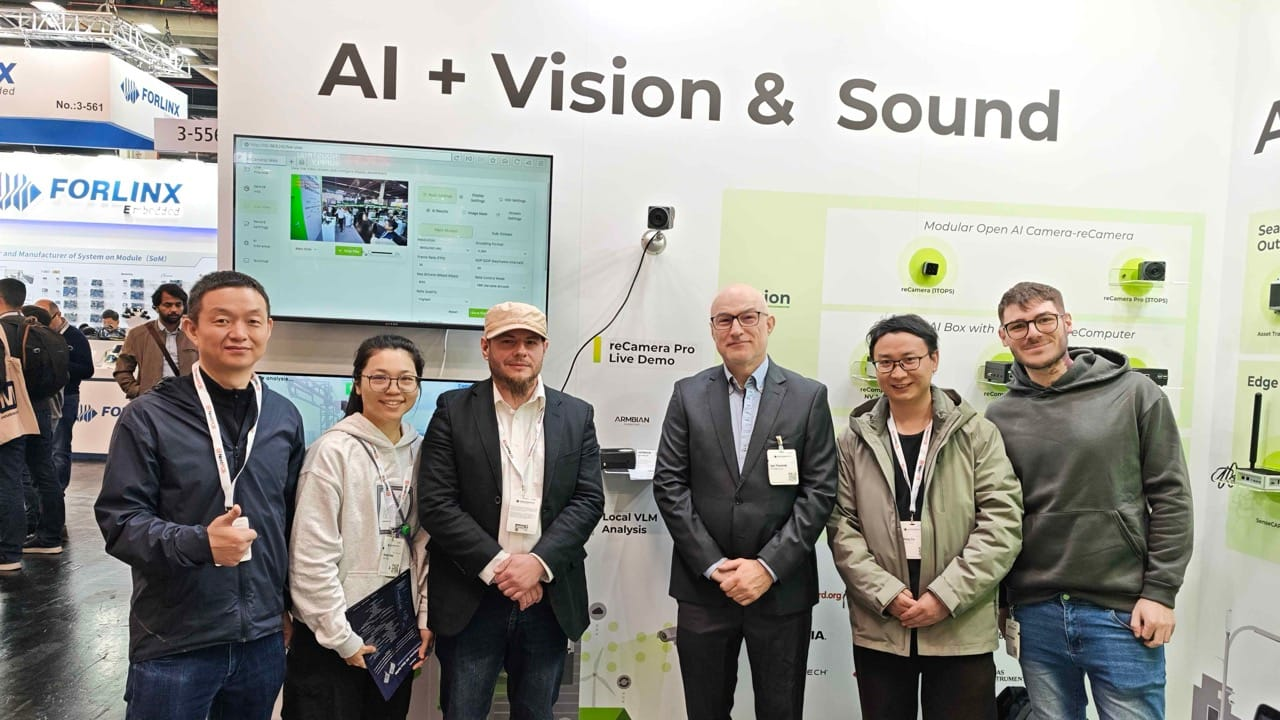 Seedstudio x Armbian (Maximilian Riedl , Igor Pecovnik, Jianfeng Liu, Daniele Briguglio)
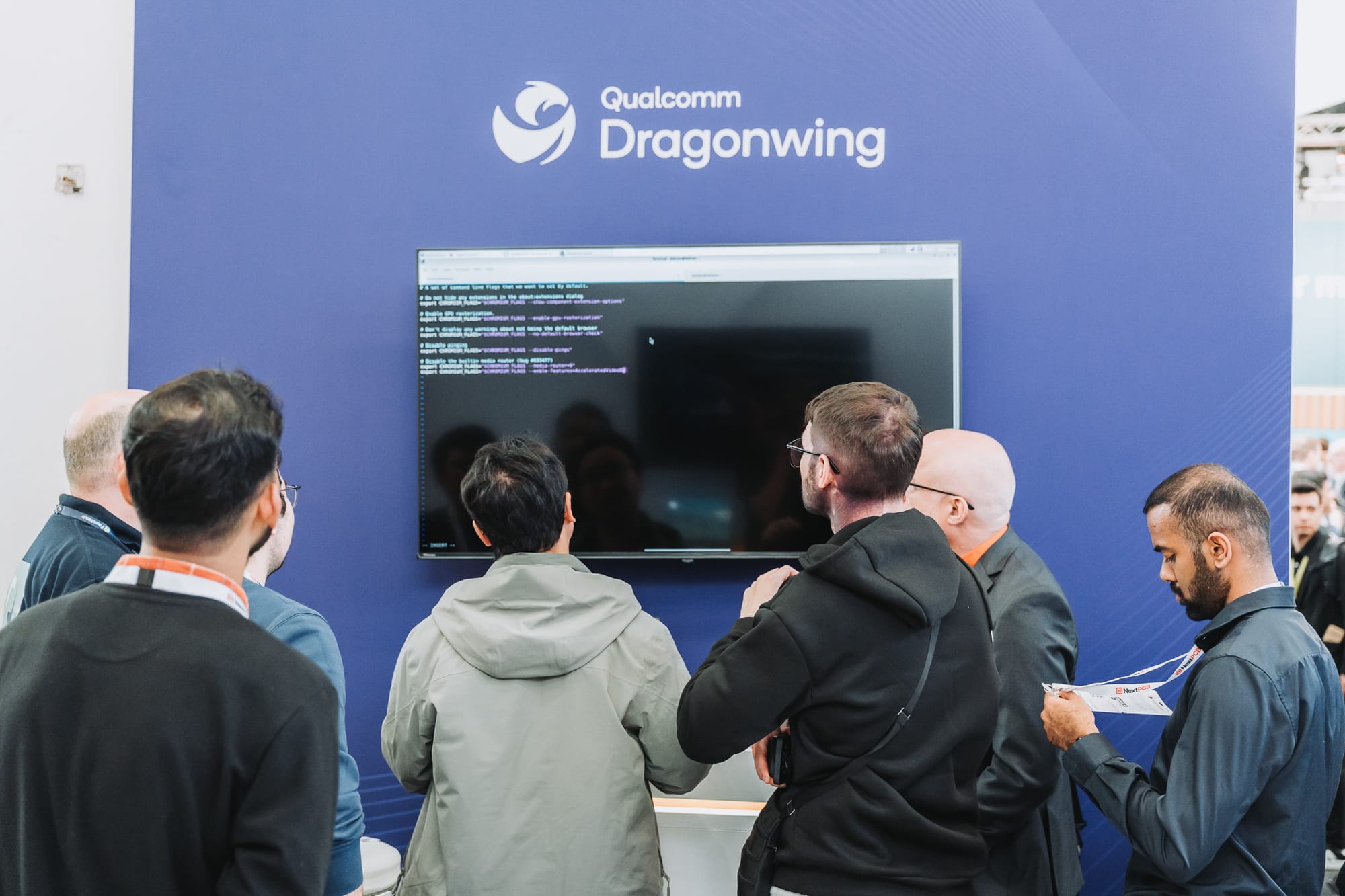
Qualcomm brought the Arduino Ventuno Q, and this is where things got interesting and a little funny. meko had already run his benchmarks on the board when amazingfate noticed something: Chromium's hardware acceleration wasn't enabled. So he enabled it. Right there. Directly on the board. In front of the stand staff.
The reaction from the Qualcomm team? Complete, genuine astonishment. They didn't see it coming. That's what happens when you bring a group of Armbian developers to a trade show, we don't just look at things, we poke at them.
 Armbian at the Foundries.io booth
Collabora was present at the show, and amazingfate got to meet some of the team. Their kernel and GPU driver work is always relevant to what we do, so that conversation mattered even if I wasn't there for it personally.
The moment that hit hardest: Armbian on the BeagleBadge
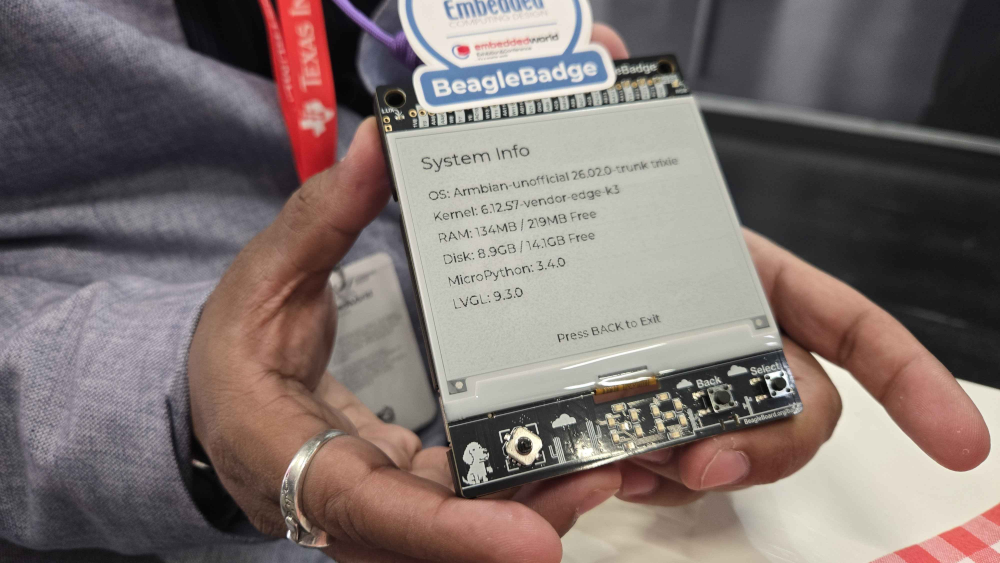
During a meeting with the BeagleBoard.org team inside the show, they showed us their brand new project: the BeagleBadge. Launched right there at embedded world 2026, it won Best in Show in the Wearables category; a Linux-powered wearable badge with a 4.2" ePaper display, dual-core ARM Cortex-A53, Wi-Fi 6, LoRa, and more sensors than I can list here. Built around the Texas Instruments AM62L32, manufactured by Seeed Studio.
Impressive hardware. But here's the part that actually stopped me in my tracks: Armbian was running on it. There's an official "Armbian BeagleBadge demo for EW2026" image — Debian Trixie, Linux 6.12 — listed right on the BeagleBoard.org site.
Our OS. On a Best-in-Show winning badge. At the world's biggest embedded show.
That's not a small thing. That's the community's work showing up exactly where it matters.
What embedded world taught me about where this industry is going
Three days of walking, talking, and observing gives you a pretty clear picture of the currents moving through the embedded world right now.
Edge AI is not a trend anymore, it's infrastructure. Every major vendor had something running inference locally, without cloud, on modest hardware. This is real, it's shipping, and it's going to reshape what we expect embedded systems to do.
Open-source has earned its seat at the table. I half-expected it to be the hobbyist corner of the show. It wasn't. Companies are building on Linux, on open stacks, on ecosystems maintained by communities like ours. That's not charity, it's strategy. And it means the work we do in Armbian matters more than we sometimes give ourselves credit for.
The line between prototype and product is razor thin. At most stands you'd see a mix: shipping products, reference designs, things that will exist in six months. That gap is where the interesting information lives; what's coming, which platforms are getting serious investment, which vendors are committed to mainline Linux support. You don't learn that from a datasheet. You learn it by being there.
Would I go back?
Without a second thought.
If you're an Armbian community member who's been putting this off the same way I was stop putting it off. The technical exposure is valuable. The networking is real. And meeting the people you build things with, face to face, is something that doesn't have a substitute.
The show runs every year in Nuremberg. I'll be there.
See you in 2027. 🇩🇪
-
Based on Debian 13 (Trixie), Apertis v2026 delivers updated system libraries, development tools, compilers, and core services, alongside a new default Wayland compositor, a reworked SDK, and smarter packaging pipelines.
-
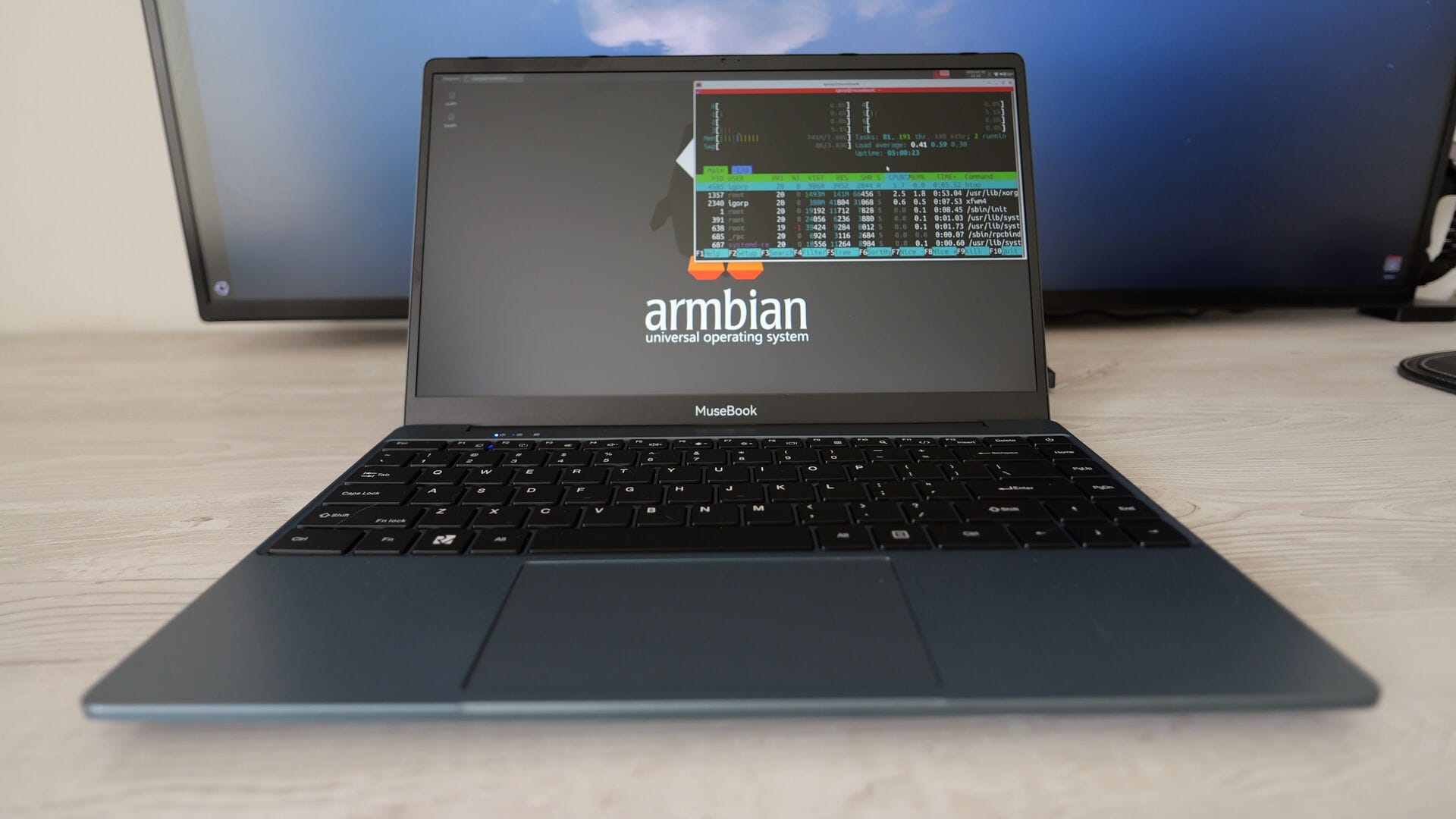
This week in Armbian development saw a significant expansion of hardware support, including new board images and compatibility for devices such as the Ariaboard Photonicat 2, SpacemiT MUSE Book, NanoPC T6 Plus, and Mekotronics R58S2. Kernel patches were updated across multiple platforms, notably for Rockchip and Sunxi families, enhancing stability and performance. Several new modules were introduced in the configuration framework, including browser-based code-server, memory management, Docker log viewing, and subscription tracking. Improvements to documentation, security hardening, and code formatting were also implemented. Notable fixes addressed USB, Ethernet, and device-specific issues, while ZFS functionality and tuning interfaces received updates. The release continues Armbian’s commitment to broad hardware support and robust system features.
Changes
- action: fix typos, update defaults, and harden GPG signing. by @igorpecovnik in armbian/build#9613
- Add Ariaboard Photonicat 2 support for rockchip64-6.18. by @HackingGate in armbian/build#9535
- Add container_type field to Uptime Kuma config. by @igorpecovnik in armbian/configng#776
- Add image and reusable slug for Qidi X-4. by @Shadowrom2020 in armbian/armbian.github.io#262
- Add Laptop SpacemiT MUSE Book. by @pyavitz in armbian/build#9591
- Add line breaks to improve .md rendering. by @igorpecovnik in armbian/configng#784
- Add NanoPC T6 plus image. by @igorpecovnik in armbian/armbian.github.io#266
- Add radxa-dragon-q6a to nightly release blacklist. by @igorpecovnik in armbian/armbian.github.io#260
- add recomputer rk3588-devkit support. by @ackPeng in armbian/linux-rockchip#460
- add rockchip patch for fusb302 to support aw3561. by @ackPeng in armbian/linux-rockchip#456
- add rockchip zbit mtd spi flash support. by @ackPeng in armbian/linux-rockchip#464
- Add rtl8710bufw_SMIC.bin for RTL8188GU WiFi USB. by @Shadowrom2020 in armbian/firmware#121
- add support for imx708 raspberry pi v3 camera. by @ackPeng in armbian/linux-rockchip#457
- Add trixie and noble to nightly manual targets. by @igorpecovnik in armbian/armbian.github.io#263
- Add xfce desktop for riscv64 legacy branch in stable builds. by @igorpecovnik in armbian/armbian.github.io#264
- aic8800-dkms extension. by @Shadowrom2020 in armbian/build#9578
- arm64: dts: rockchip: add Mekotronics R58S2. by @HeyMeco in armbian/linux-rockchip#461
- armbian-kernel: improve code documentation and formatting. by @igorpecovnik in armbian/build#9559
- Board image: Add Mekotronics R58S2. by @igorpecovnik in armbian/armbian.github.io#265
- Board: Add Mekotronics R58S2. by @HeyMeco in armbian/build#9610
- Bump geekyeggo/delete-artifact from 5 to 6. by @igorpecovnik in armbian/os#443
- docs: expand GitHub Actions section with examples and inputs reference. by @igorpecovnik in armbian/documentation#900
- docs: reorganize ZFS documentation with proper tab formatting. by @igorpecovnik in armbian/configng#779
- docs: simplify code-server documentation footer. by @igorpecovnik in armbian/configng#792
- Dozzle: Proper image. by @igorpecovnik in armbian/configng#775
- families: sm8550: Limit kernel version to 6.18.18. by @kasimling in armbian/build#9604
- feat: add code-server module for browser-based VS Code. by @igorpecovnik in armbian/configng#790
- feat: add comprehensive memory management module. by @igorpecovnik in armbian/configng#781
- feat: add Dozzle Docker log viewer module. by @igorpecovnik in armbian/configng#773
- feat: add Wallos subscription tracker module. by @igorpecovnik in armbian/configng#785
- feat: ZFS pool import and scan functionality. by @igorpecovnik in armbian/configng#782
- Fix Docker image configuration for GitHub Actions. by @igorpecovnik in armbian/docker-armbian-build#12
- fix: force destroy VMs when graceful shutdown fails. by @igorpecovnik in armbian/configng#793
- fix: improve kvmtest module security, UI, and add channel selection. by @igorpecovnik in armbian/configng#789
- fix: resolve mixed indentation in prometheus heredoc. by @igorpecovnik in armbian/configng#794
- framework artifact-rootfs - remove the last vestige of LEGACY_DEBOOTSTRAP. by @tabrisnet in armbian/build#9599
- HACK: Enable PCIe switch on RK3399. by @retro98boy in armbian/build#9574
- KDE Neon: add more packages for touchscreen devices. by @kasimling in armbian/build#9551
- mkspi: fix devicetree opp voltage settings. by @redrathnure in armbian/build#9603
- nanopi-zero2: add USB support for RK3528 (current + edge). by @rubycomm in armbian/build#9500
- OrangePi5Pro: Comprehensive HW Support: YT6801 PCIe-Eth, Codec ES8388 Audio, eFUSE & U-Boot v2025.10. by @c127dev in armbian/build#9600
- qcom/sc8280xp: sync microsoft blackrock (windows dev kit 2023) latest firmware for mainline kernel. by @rbqvq in armbian/firmware#122
- Qidi X-6: fix devicetree opp voltage settings. by @Shadowrom2020 in armbian/build#9577
- refactor: update KVM test images to latest releases. by @igorpecovnik in armbian/configng#783
- rock-3a: bump uboot to v2026.04-rc4. by @EvilOlaf in armbian/build#9576
- rockchip-rv1106: Enable (=m) Realtek 8188EU wifi. by @vidplace7 in armbian/build#9607
- rockchip64-6.18: rewrite kernel patches against 6.18.20. by @EvilOlaf in armbian/build#9587
- rockchip64: rk3528: fix USB OTG and ethernet for NanoPi Zero2. by @rubycomm in armbian/build#9597
- sm8550-6.18: Fix TF card IO performance regression. by @kasimling in armbian/build#9546
- SpacemiT MUSE Book: Fixup SRC_CMDLINE var. by @pyavitz in armbian/build#9612
- stmmac: Refactor Phytium ethernet patches into modular components. by @igorpecovnik in armbian/build#9585
- style: simplify markdown formatting in Wallos footer. by @igorpecovnik in armbian/configng#787
- sunxi-6.18: rewrite kernel patches against 6.18.20. by @EvilOlaf in armbian/build#9611
- sunxi: drm/gem-dma: Support dedicated DMA device for allocation. by @EvilOlaf in armbian/build#9605
- sunxi: edge: bump to 7.0. by @EvilOlaf in armbian/build#9549
- sunxi: Enable device mapper snapshot support. by @frank-f in armbian/build#9590
- sunxi: fix iommu driver patch to allow compilation. by @EvilOlaf in armbian/build#9592
- sunxi: fix
Unhandled Exception in EL3.and/causing secondary cpus not coming online. by @EvilOlaf in armbian/build#9586 - sunxi: remove BSP GMAC/EPHY patch that breaks H6 internal EMAC. by @igorpecovnik in armbian/build#9609
- uefi edge: bump to 7.0. by @EvilOlaf in armbian/build#9547
- uefi-arm64-6.12: fix stmmac compilation errors. by @igorpecovnik in armbian/build#9596
- uefi-x86-6.18: rewrite kernel patches against 6.18.20. by @EvilOlaf in armbian/build#9588
- update seeed studio rk3576 devkit camera and dp overlay. by @ackPeng in armbian/linux-rockchip#463
- Update some board csc file. by @retro98boy in armbian/build#9573
- Update ZFS tuning recommendations and remove settings view. by @igorpecovnik in armbian/configng#780
- ZFS Performance Tuning Interface. by @igorpecovnik in armbian/configng#777
- [2026.5] - framework rootfs-create: remove LEGACY_DEBOOTSTRAP, use only the upstream mmdebstrap. by @tabrisnet in armbian/build#9512
-
Google's AndroidXR. Qualcomm's Snapdragon Spaces. NVIDIA CloudXR. What do they have in common? Monado, the Open Source, cross-platform OpenXR runtime Collabora launched as an alternative to proprietary XR stacks.
-
Diagnosing System Issues and Getting Support with Armbianmonitor

Armbian is a lightweight operating system based on Debian/Ubuntu, highly optimized for single-board computers (SBCs) like the Raspberry Pi, Orange Pi, and many others. When facing system problems on an SBC running Armbian, the built-in utility
armbianmonitoris an essential diagnostic tool. It quickly gathers crucial system data, making troubleshooting faster and more accurate for both the user and the community providing support.Key Diagnostic Functions
The primary use of
armbianmonitoris to generate real-time performance and system configuration reports. By running the command without any arguments, you get a menu of options, but the most vital functions for diagnosis are:- System Status (
armbianmonitor -m): This provides a live monitoring dashboard. It displays key metrics like CPU frequency, load average, temperature, memory usage, and disk I/O. By watching this output while a problem (like a system freeze or slowdown) occurs, you can often pinpoint the bottleneck—for instance, a sudden spike in CPU temperature indicating a cooling problem, or sustained high memory usage pointing to a resource leak. - System Information (
armbianmonitor -uor-d): This is the most crucial function for seeking online support. It gathers a comprehensive, anonymized report including details about the kernel version, device model, installed packages, boot logs, and hardware configuration. This data is essential because the performance and stability of SBCs are often highly dependent on the specific kernel and hardware drivers used for that model.
Getting Support Online
When seeking help on platforms like the Armbian forum or GitHub, simply describing the symptoms is rarely enough. The person helping you needs to know the exact state of your system.
By running
armbianmonitor -u, the utility uploads the detailed diagnostic report to a public pastebin service (like https://www.google.com/search?q=paste.armbian.com) and provides a unique, short URL. You can then include this URL directly in your support request. This allows community members to instantly access the exact configuration, eliminating back-and-forth questions about device type, OS version, and log file locations. This standardized method is the fastest way to receive targeted, effective assistance and ensures your issue is diagnosed accurately. - System Status (
-
This week in Armbian development saw significant enhancements across multiple areas, including expanded board support and improved hardware compatibility. Notable additions include new images and configurations for Qidi X-6, X-7, and Ariaboard Photonicat2 mainboards, as well as refined kernel patch maintenance and updates for various platforms. The build system received important fixes, such as resolving compilation errors and device tree issues, alongside improvements in Docker utilities and offline mode detection. Several refactoring efforts streamlined backend processes and enhanced user interface elements. The team also introduced automatic fallback mechanisms for Hetzner server types, optimizing runner scaling. Overall, these updates reinforce Armbian's commitment to stability, broader hardware support, and a smoother user experience.
Changes
- Add automatic fallback to smaller Hetzner server types with runner count scaling. by @igorpecovnik in armbian/actions#15
- Add board and board vendror image for Ariaboard Photonicat2. by @HackingGate in armbian/armbian.github.io#255
- Add image for Qidi X-7 Mainboard. by @Shadowrom2020 in armbian/armbian.github.io#257
- Add some board image. by @retro98boy in armbian/armbian.github.io#258
- Add support for dialog via new wrapper functions. by @igorpecovnik in armbian/configng#762
- Add support for qidi x-* boards. by @Shadowrom2020 in armbian/build#9564
- Change unit tests badge link in documentation. by @igorpecovnik in armbian/documentation#885
- Drop patches that landed upstream and fix two. by @igorpecovnik in armbian/build#9544
- edge: bump 7.0 to rc5. by @EvilOlaf in armbian/build#9580
- Enable BCACHE on Raspberry Pi build. by @aulanov in armbian/build#9550
- feat: offline mode detection with local asset cache. by @SuperKali in armbian/imager#117
- feat: settings refactoring, DiskArbitration device detection, and filename parser improvements. by @SuperKali in armbian/imager#114
- fix race condition and NULL ptr deref in PCIe threaded probe. by @AlomeProg in armbian/linux-rockchip#458
- fix(docker): add trixie support for upstream docker-ce to fix HomeAssistant installation. by @igorpecovnik in armbian/configng#765
- fix: correct dialog argument order causing box option errors. by @igorpecovnik in armbian/configng#768
- fix: resolve Phytium stmmac compilation errors for kernel 6.19. by @igorpecovnik in armbian/build#9545
- fix: settings modal reset, custom image manufacturer, and board detection setting. by @SuperKali in armbian/imager#116
- Image for Qidi X-6 Mainboard. by @Shadowrom2020 in armbian/armbian.github.io#256
- kernel patch maintenance. by @EvilOlaf in armbian/build#9562
- meson64-6.18: rewrite kernel config. by @EvilOlaf in armbian/build#9581
- mksklipad50: fix devicetree opp voltage settings. by @torte71 in armbian/build#9569
- OrangePi-RV2/R2S: rename board config from wip to csc. by @sven-ola in armbian/build#9560
- Qidi X-6: fix defconfig patch. by @Shadowrom2020 in armbian/build#9567
- refactor: add comprehensive Docker wrapper utilities with progress display. by @igorpecovnik in armbian/configng#769
- refactor: deduplicate hooks, add CSS design tokens, clean up backend. by @SuperKali in armbian/imager#115
- rockchip64-7.0: mekotronics-r58x-pro: analog sound: use SuperKali's new clock. by @rpardini in armbian/build#9554
- rockchip64: rk3588: add I2S MCLK output gate clocks for audio codec support. by @SuperKali in armbian/build#9548
- rockchip64: rk3588: update I2S MCLK gate patches to match upstream v3 and add u-boot clock IDs. by @SuperKali in armbian/build#9568
- sm8250: Fix application of Retroid Pocket 5/mini device trees. by @kay-lambdadelta in armbian/build#9572
- SpacemiT: Update ATFSOURCE, BOOTSOURCE and SD card support.. by @pyavitz in armbian/build#9552
- sunxi-6.18: remove stray commit from patch. by @EvilOlaf in armbian/build#9556
- sunxi: bump
edgeto 6.19.y,currentto 6.18.y andlegacyto 6.12.y. by @EvilOlaf in armbian/build#9381 - Update odroidxu4-current to 6.6.129. by @belegdol in armbian/build#9558
- Update VERSION. by @EvilOlaf in armbian/build#9553
-
PanVK’s new framebuffer abstraction for Mali GPUs removes OpenGL-specific constraints, unlocking more flexible tiled rendering features in Vulkan.
-
This week in Armbian development saw significant progress across board support and kernel updates. New boards such as the Cainiao CNIOT Core, EByte ECB41-PGE, DG SVR 865 Tiny, and NORCO EMB-3531 received initial support, expanding hardware compatibility. Kernel patches were rewritten for the meson64 and rockchip64 platforms, aligning with version 6.18.18, while edge releases were bumped to 7.0-rc3 and rc4. Improvements included enhanced SD card and audio support for SpacemiT and Youyeetoo YY3588 boards, as well as refined configuration checks and display fixes. Several upstream patches were dropped or disabled, and the Dependabot schedule was updated for daily maintenance. Additional fixes addressed USB modes, Docker host-gateway resolution, and Xorg display issues, rounding out a productive week for the Armbian project.
Changes
- Add cainiao-cniot-core board and cainiao vendor image. by @retro98boy in armbian/armbian.github.io#251
- Add EByte Vendor // ECB41-PGE board. by @vidplace7 in armbian/armbian.github.io#250
- add recomputer rk3576-devkit dts. by @ackPeng in armbian/linux-rockchip#451
- Add support for the Radxa Display 10 FHD to the Rock 5B Plus. by @FlorianKohn in armbian/linux-rockchip#453
- add: initial support for DG SVR 865 Tiny board (SM8250/QCS8250). by @Lemon1151 in armbian/build#9423
- arch: arm: dts: add EByte ECB41-PGE (RK3506g2). by @vidplace7 in armbian/linux-rockchip#454
- armbian-zram-config: refine check for existing /tmp mount. by @vidplace7 in armbian/build#9514
- cainiao cniot core improve. by @retro98boy in armbian/build#9526
- chore: update Dependabot schedule to daily updates. by @igorpecovnik in armbian/build#9537
- csc board: Add NORCO EMB-3531 initial support. by @retro98boy in armbian/build#9456
- Drop patches that landed upstream and fix two. by @igorpecovnik in armbian/build#9544
- edge: bump 7.0 to rc4. by @EvilOlaf in armbian/build#9543
- extension: ccache-remote: fix Docker host-gateway for hostnames resolving to loopback. by @iav in armbian/build#9505
- fix(orangepi5max): change usbdrd_dwc3_0 mode from otg to host. by @Echoflare in armbian/linux-rockchip#449
- fix: correct repository dispatch event type name. by @igorpecovnik in armbian/armbian.github.io#254
- framework run_host_x86_binary_logged - support 32-bit x86. by @tabrisnet in armbian/build#9466
- Gateway AM-GZ80x: Update $board and meson-axg family conf. by @pyavitz in armbian/build#9533
- maint: meson64-current: rewrite patches against 6.18.18. by @EvilOlaf in armbian/build#9528
- maint: rockchip64-current: rewrite kernel patches against 6.18.18. by @EvilOlaf in armbian/build#9527
- meson64: a311d: Fix Xorg display when etnaviv enabled. by @retro98boy in armbian/build#9524
- Odroid-M2: Support for weather board zero. by @mlegenovic in armbian/build#9523
- odroidn2: u-boot: bump to v2026.04-rc3; make fancy, incl LWIP. by @rpardini in armbian/build#9507
- OrangePi 3 LTS: Update $board.conf file. by @pyavitz in armbian/build#9495
- OrangePi-RV2/R2S: add sdcard and emmc for Linux-7.x. by @sven-ola in armbian/build#9539
- Reword BTF memory check. by @x13-me in armbian/build#9502
- RK3506: Add spidev overlays for RK3506 family. by @vidplace7 in armbian/linux-rockchip#450
- rockchip64: bump
edgeto 7.0-rc3. by @EvilOlaf in armbian/build#9445 - rockchip64: cleanup old patchsets. by @EvilOlaf in armbian/build#9498
- rockchip: Add CSC board EByte ECB41-PGE (RK3506G). by @vidplace7 in armbian/build#9513
- rockchip: refresh LibreELEC patch import for edge 6.19 kernel. by @paolosabatino in armbian/build#9506
- rockchip: restore proper LE patches for rockchip armhf. by @paolosabatino in armbian/build#9530
- rpi4b: bump edge to 7.0. by @EvilOlaf in armbian/build#9529
- Spacemit rv2 rename dtb. by @sven-ola in armbian/build#9531
- SpacemiT: Add SD card support, CPU freq scaling and other fixups. by @pyavitz in armbian/build#9518
- SpacemiT: Disable patches that made it upstream (7.0-rc4). by @pyavitz in armbian/build#9540
- spacemit: enable powervr drm driver for current 6.18 kernels. by @sven-ola in armbian/build#9515
- sunxi: bump
edgeto 6.19.y,currentto 6.18.y andlegacyto 6.12.y. by @EvilOlaf in armbian/build#9381 - Youyeetoo YY3588: Enable ES8388 audio support + RK3588 I2S MCLK gate fix . by @SuperKali in armbian/build#9534
-
This week’s Armbian development saw a wide range of improvements and fixes across the project’s build framework, kernel support, and device compatibility. Notable changes include the transition from POSIX to Bash syntax for enhanced script reliability, expanded support for new hardware such as the Norco-EMB-3531 board, and the addition of Vulkan and improved 3D package descriptions. Several device-specific updates were made, including kernel enhancements for sm8250, mainline support for SpacemiT, and fixes for wireless and HDMI functionality on various boards. The team also introduced new features like a cache manager modal in the imager and improved marking for container-based software. Multiple bug fixes addressed issues with OS image duplication, patch timestamps, and device quirks. Security was bolstered with hardened GitHub Actions, ensuring a more robust development pipeline.
Changes
- (#9400 P1a) Replace POSIX [ ] with bash [[ ]] across build framework. by @iav in armbian/build#9462
- Add manual execution and daily cron schedule for MOTD generation. by @igorpecovnik in armbian/armbian.github.io#249
- Add norco-emb-3531 board and norco vendor image. by @retro98boy in armbian/armbian.github.io#244
- add Vulkan support and expand 3D package descriptions. by @igorpecovnik in armbian/build#9494
- Added config improvements and fixes to ayn odin2. by @Squishy123 in armbian/build#9316
- bump 7.0 to rc2. by @EvilOlaf in armbian/build#9475
- dwc2: explicitly force host mode for USB_DR_MODE_HOST. by @igorpecovnik in armbian/build#9486
- feat: add cache manager modal with per-image management. by @SuperKali in armbian/imager#109
- feat: mark container-based software in menu and docs. by @igorpecovnik in armbian/configng#761
- fix(gitignore): ignore pycache at all depths (#7863). by @iav in armbian/build#9490
- fix(images): adapt module to new armbian-images.json structure. by @igorpecovnik in armbian/configng#756
- fix(manage_zsh): abort shell change if zsh package install fails. by @ajorpheus in armbian/configng#759
- fix: resolve OS image list duplication when switching filters. by @SuperKali in armbian/imager#110
- Fix: SakuraPi RK3308B WLAN broken. by @TheSnowfield in armbian/build#9478
- i915: fix Dell XPS 13 7390 device ID in quirk patches. by @igorpecovnik in armbian/build#9485
- Improve sm8250 6.19 edge kernel. by @retro98boy in armbian/build#9434
- meson64: bump
edgeto 7.0-rc1. by @EvilOlaf in armbian/build#9459 - meson: freeze current kernel at 6.12.28 and fix HDMI PHY frequency limit. by @igorpecovnik in armbian/build#9465
- nanopi-zero2: enable mainline kernel support and PCIe for M.2 WiFi. by @rubycomm in armbian/build#9453
- OrangePi 3B: Add device tree overlays for OrangePi 3B with I2C, PWM, SPI support. by @kskshaf in armbian/build#9460
- OrangePi-RV2: Fix wireless access point mode by using the correct FW. by @sven-ola in armbian/build#9504
- orangepi5: rewrite uboot patches against v2026.04-rc3. by @EvilOlaf in armbian/build#9457
- patching: fix #9028 timestamp when multiple patches touch same file. by @iav in armbian/build#9489
- pkg_install/pkg_remove: properly propagate apt-get exit codes. by @igorpecovnik in armbian/configng#760
- Removed un-needed patch for SM8550-6.18; patch has already been updat…. by @Squishy123 in armbian/build#9487
- rk3568: add 51.2MHz PLL rate for HDMI. by @skorobkov in armbian/build#9477
- rock-5b-plus: add current kernel to build targets. by @igorpecovnik in armbian/build#9464
- rock-5t: add current kernel to build targets. by @igorpecovnik in armbian/build#9463
- Rockchip64 fix patches due to upstream changes in 6.19.6 and 6.18.16. by @EvilOlaf in armbian/build#9483
- rockchip: Disable specific patches in 6.19 series. by @igorpecovnik in armbian/build#9493
- rockchip: Enable Wireguard/TUN module in vendor kernel. by @vidplace7 in armbian/build#9492
- Spacemit legacy loadpatch. by @sven-ola in armbian/build#9496
- SpacemiT: Add linux-7.0.y "mainline" support. by @pyavitz in armbian/build#9458
- spacemit: remove old and unused patch set. by @sven-ola in armbian/build#9497
- unset QEMU_CPU for aml_image_packer. by @QwaSeeK in armbian/build#9417
- Update odroidxu4-current to 6.6.128. by @belegdol in armbian/build#9491
- [StepSecurity] ci: Harden GitHub Actions. by @step-security-bot in armbian/build#9356
-
As champions of open source development in the embedded community, Collabora will be at Booth 4-404 with an impressive lineup of live demonstrations spanning graphics, machine learning, continuous testing, and real-world applications.
-
Get the recap of Nicolas Frattaroli's FOSDEM talk detailing Rockchip’s mainline progress, including Vulkan 1.4 and NPU support as a vital path to sustainable, affordable hardware.
-

Welcome to the latest Armbian Newsletter, your source for updates, community highlights, and behind-the-scenes news from the world of open-source ARM and RISC-V computing.
Streamlining the ecosystem
This past quarter development has taken a significant step forward for Armbian. We've been busy cleaning up and optimizing our codebase, merging over 150 improvements primarily focused on advancing kernel support for Rockchip and Allwinner platforms. A significant secondary effort was dedicated to modernizing the project's infrastructure and build tools, driven largely by a core group of dedicated contributors.
Hardware support continues to expand. We're thrilled to introduce new LTS kernel v6.18 based images and support for exciting new boards like the SpacemiT MusePi Pro, Radxa Rock 4D, Orangepi RV2, Odroid M2, ... We've also brought back KDE Neon desktop builds and added RISC-V XFCE desktop support for those exploring new territory.
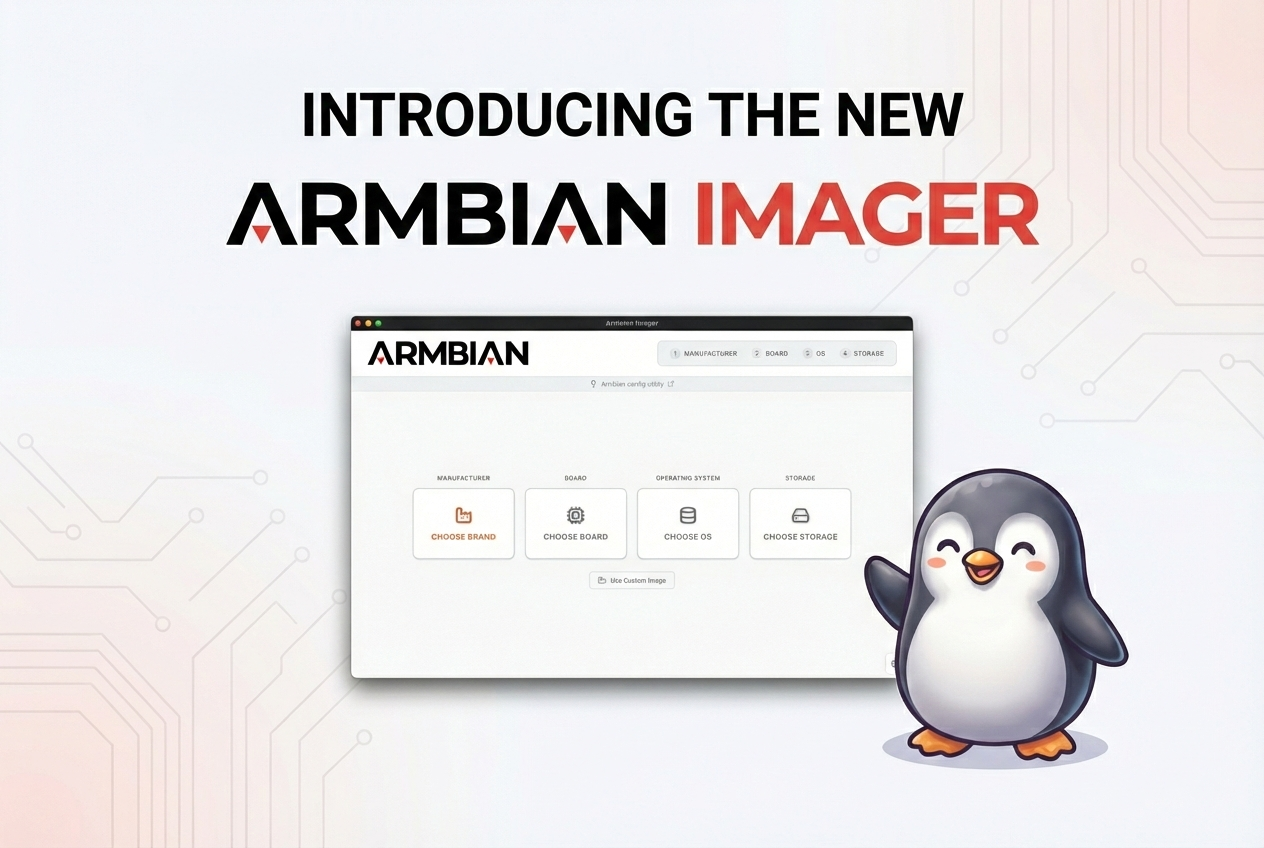
Our user tools have received major upgrades too. Armbian Imager now features faster decompression, enhanced security with code signing for macOS and Windows, AI-powered translations, and a new settings panel with developer options. Behind the scenes, we've strengthened our build infrastructure to keep everything running reliably as we grow.
Whether you're trying the new stable kernel or experimenting with our latest builds, this update reinforces our commitment to delivering a professional, accessible Linux experience for ARM and RISC-V hardware.
Join Armbian at Embedded World 2026. Meet us in Hall 3, Booth 3-556 (Seeed Studio), where we’ll be showcasing the Armbian build framework and how it powers reliable, production-ready Linux for ARM devices.
Download the latest release and experience Armbian today.SPONSORED
Join us in making open source better! Every donation helps Armbian improve security, performance, and reliability — so everyone can enjoy a solid foundation for their devices.
-
Support for Rockchip’s VDPU381 and VDPU383 decoders is now upstream in Linux, bringing mainline H.264/HEVC decode support, robust IOMMU-reset recovery, and new HEVC V4L2 UAPI controls aligned with Vulkan Video.
-
Weston 15.0 has arrived, bringing a brand new Lua-based shell for fully customizable window management, an experimental Vulkan renderer, and a host of improvements to color handling, media playback, and display performance.
-
Collabora is excited to see Monado at the heart of the new OpenXR runtime for Android XR, a major milestone for Open Source XR interoperability.
-
Collabora is excited to see Monado at the heart of the new OpenXR runtime for Android XR, a major milestone for Open Source XR interoperability.
-
http://blog.armbian.com/content/images/2026/02/githubhighlights-2.png
This week’s Armbian development saw significant progress across board support, software modules, and workflow enhancements. Notable additions include new board images for ForLinx OK3506-S12, Cix-ACPI, and expanded support for Raspberry Pi 400, 500, and RPi3 series. Improvements to build targets and kernel patches were implemented, alongside fixes for overlayfs module logic and OpenMediaVault installation. The imager received updates for macOS compatibility and enhanced handling of write-protected devices. Several workflow optimizations and cleanup tasks were completed, streamlining concurrency and retry logic. Updates also targeted Debian trixie/sid for app builds and refined base images for specific boards. Overall, the changelog reflects a strong focus on broadening hardware compatibility, improving reliability, and optimizing development processes.
- Add exotics board to apps blacklist. by @igorpecovnik in armbian/armbian.github.io#233
- Add ForLinx Vendor // OK3506-S12 Board. by @vidplace7 in armbian/armbian.github.io#235
- Add Rpi 400 and 500 series. by @igorpecovnik in armbian/armbian.github.io#227
- Add RPi3 series as reusable / virtual targets. by @igorpecovnik in armbian/armbian.github.io#225
- Add: Cix-ACPI board image & Cixtech Vendor image. by @HeyMeco in armbian/armbian.github.io#237
- arch: arm: dts: add ForLinx OK3506-S12 (RK3506J). by @vidplace7 in armbian/linux-rockchip#446
- Build targets: enable and disable build targets. by @igorpecovnik in armbian/build#9377
- bump to next rc. by @EvilOlaf in armbian/build#9376
- cleanup leftover traces of oftc and matrix. by @EvilOlaf in armbian/documentation#876
- create rewrite-patches workflow. by @EvilOlaf in armbian/build#9364
- descrube update #9191 custom LOGLEVEL with UBOOT_LOGLEVEL. by @iav in armbian/documentation#868
- Exclude armhf, riscv64, and loongarch64 from apps builds. by @igorpecovnik in armbian/armbian.github.io#234
- extensions: radxa-aic8800: allow 6.19; skip DKMS only on >= 6.20. by @HackingGate in armbian/build#9397
- feat(software): add OpenMediaVault installation module. by @igorpecovnik in armbian/configng#751
- feat: add locked badge and disable selection for write-protected devices. by @SuperKali in armbian/imager#97
- feat: detect macOS /Applications folder on update failure. by @SuperKali in armbian/imager#101
- Fix OMV installation - via armbian-config. by @igorpecovnik in armbian/os#429
- fix(system): correct overlayfs module status logic and conditions. by @igorpecovnik in armbian/configng#749
- fix(system): improve overlayfs module config handling and status check. by @igorpecovnik in armbian/configng#750
- fix: align macOS ARM artifact naming to aarch64 (#99). by @SuperKali in armbian/imager#100
- fix: enable multi-stream XZ decompression for Khadas OOWOW images. by @SuperKali in armbian/imager#98
- mekotronics-r58x-4g: mainline u-boot v2026.01; mainline 6.19 kernel (edge). by @rpardini in armbian/build#9398
- meson64-edge and rockchip64-edge: rewrite kernel patches against 6.19. by @EvilOlaf in armbian/build#9382
- Normalize kernel config hash inputs. by @iav in armbian/build#9277
- Orange Pi 3B: Generate alternate SPI image for booting from SATA. by @dust-7 in armbian/build#9388
- Orangepi lite2 and one plus: change crust config. by @igorpecovnik in armbian/build#9374
- Race conditions: installing packages before adding a repo. by @igorpecovnik in armbian/build#9393
- Refactor RPi imager JSON generation to Python script. by @igorpecovnik in armbian/armbian.github.io#228
- Remove redundant git pull --rebase that causes failures. by @igorpecovnik in armbian/armbian.github.io#230
- Revert "build(deps): bump setuptools from 80.10.2 to 82.0.0". by @iav in armbian/build#9392
- Revert "Sunxi64 EDGE: Add missing audio related modules and other". by @pyavitz in armbian/build#9380
- RK3506: Pin U-Boot to known-working commit. by @vidplace7 in armbian/build#9390
- rockchip: Add CSC board ForLinx OK3506-S12 (RK3506J). by @vidplace7 in armbian/build#9394
- rockchip: Allow dt overlays that disable nodes. by @vidplace7 in armbian/build#9396
- RV1106: Reduce kernel memory footprint (fix boot on 64MB boards). by @vidplace7 in armbian/build#9399
- Set DESKTOP_APPGROUPS_SELECTED to empty for nightly desktop images. by @igorpecovnik in armbian/armbian.github.io#231
- Sunxi64 EDGE: Add missing audio related modules and other. by @pyavitz in armbian/build#9373
- Treat legacy branch same as vendor in target generation. by @igorpecovnik in armbian/armbian.github.io#226
- Update apps targets to Debian trixie/sid, headless builds. by @igorpecovnik in armbian/armbian.github.io#232
- Update base image for specific boards in config. by @igorpecovnik in armbian/os#427
- Workflow improvements: standardize concurrency and retry logic. by @igorpecovnik in armbian/armbian.github.io#229
-
Over the past year, Collabora has pushed mainline GStreamer toward a first-class media and Machine Learning platform, with new inference backends, extended metadata/tensor handling, and production-ready analytics building blocks.
-
With its latest release, GStreamer adds native support for AI inference engines including ONNX Runtime, LiteRT, and Burn, along with tensor decoders for YOLO, face detection, tracking, and more.
-
Collabora continues to be a key contributor to the Linux kernel, with 125 patches from 21 developers! Highlights include Arm Mali GPU improvements, expanded MediaTek and Rockchip SoC support, Rust integration progress, and new Rockchip video capture functionality.
-
http://blog.armbian.com/content/images/2026/02/githubhighlights-2-1.webp
This week in Armbian development saw significant advancements across kernel, firmware, and build targets. The release of 6.18.y kernel UEFI images marks a major update, alongside expanded desktop build options including Cinnamon and KDE Neon for UEFI systems. Notable board support enhancements include the addition of custom build targets for Amlogic TV Boxes, the Raspberry Pi Zero 2W as a virtual board, and improved support for Orange Pi 3 LTS and Odroid M2 devices. Automation improvements streamline inventory rebuilds and board data management, while new features such as Armbian board auto-detection and browser enablement for Riscv64 boards enhance usability. Several bug fixes and configuration updates address issues across Hyper-V images, kernel configs, and u-boot versions. The changelog also highlights upgrades to wireless firmware, dependency management, and support for BTRFS on NanoPi R3S-LTS, reflecting ongoing efforts to broaden compatibility and stability.
- 6.18.y kernel UEFI images are out. by @igorpecovnik in armbian/armbian.github.io#221
- abl: feat: add extraargs from armbianEnv for mkbootimg. by @CodeChenL in armbian/build#9341
- Add -hyperv suffix to REDI_VARIANT for Hyper-V images. by @igorpecovnik in armbian/armbian.github.io#216
- Add Cinnamon and KDE Neon desktop builds for UEFI. by @igorpecovnik in armbian/armbian.github.io#209
- Add cloud image extensions to UEFI minimal targets. by @igorpecovnik in armbian/armbian.github.io#211
- Add custom build targets for Amlogic TV Boxes. by @SteeManMI in armbian/armbian.github.io#224
- Add ENABLE_EXTENSIONS to UEFI desktop targets. by @igorpecovnik in armbian/armbian.github.io#210
- Add KDE Neon and RISC-V XFCE desktop targets. by @igorpecovnik in armbian/armbian.github.io#214
- Add Raspberry Pi Zero 2W board as virtual board. by @igorpecovnik in armbian/armbian.github.io#223
- Add remote execution method for inventory rebuild. by @igorpecovnik in armbian/armbian.github.io#222
- Add REMOVE_EXTENSIONS blacklist support to generate_targets.py. by @igorpecovnik in armbian/armbian.github.io#217
- ath12k: Upgrade to WLAN.HMT.1.1.c5-00302-QCAHMTSWPL_V1.0_V2.0_SILICON…. by @kasimling in armbian/firmware#118
- Automation: when board data changes on push, execute inventory rebuild at armbian.github.io. by @igorpecovnik in armbian/build#9354
- BPI-M4-Zero / KickPi K2B: Update u-boot to v2026.01, ATF to lts-v2.12.9 and fixup the KickPi K2B linux DTS. by @pyavitz in armbian/build#9340
- Enable Browsers on two Riscv64 boards. by @igorpecovnik in armbian/armbian.github.io#219
- Extension: Bump Nvidia propriatery driver. by @igorpecovnik in armbian/build#9338
- feat: add Armbian board auto-detection and toast notification system. by @SuperKali in armbian/imager#91
- feat: add Dependabot configuration for dependency management. by @SuperKali in armbian/imager#70
- File was removed while it remained in series control file. . by @igorpecovnik in armbian/build#9339
- Fix errors in .editorconfig. by @iav in armbian/build#9363
- Fix file_extension extraction for Hyper-V cloud images. by @igorpecovnik in armbian/armbian.github.io#215
- Fix K3 issues - APT Caching, PB2, Missing KConfig. by @Grippy98 in armbian/build#9349
- KDE Neon: drop conflicting packages in order to assemble KDE desktop. by @igorpecovnik in armbian/build#9337
- kernel configs: disable unprivileged BPF. by @neheb in armbian/build#9082
- khadas-edge2: remove legacy uboot. by @efectn in armbian/build#9367
- Limit exposed.map to maximum 2 entries per board. by @igorpecovnik in armbian/armbian.github.io#220
- meson64: ressurect 6.12 as
BRANCH=oldlts. by @rpardini in armbian/build#9350 - Odroid M2: Move main build target to CURRENT kernel branch. by @igorpecovnik in armbian/build#9357
- Odroid-M2: update uboot to v2025.10. by @mlegenovic in armbian/build#9359
- Orange Pi 3B: Update config. by @dust-7 in armbian/build#9370
- OrangePi 3 LTS: Add DTS and DEFCONFIG to u-boot v2026.01. by @pyavitz in armbian/build#9352
- OrangePi 3 LTS: Add ethernet support to u-boot defconfig. by @pyavitz in armbian/build#9365
- OrangePi 3 LTS: Fixup u-boot LED nodes. by @pyavitz in armbian/build#9358
- OrangePi 3 LTS: Update crust and u-boot defconfig. by @pyavitz in armbian/build#9372
- OrangePi 3 LTS: Use extlinux, remove aw859a-wifi.service, update current defconfig, etc.... by @pyavitz in armbian/build#9362
- Promoting Opi 3LTS and Odroid M2, demoting cubox-i and Jetson Nano. by @igorpecovnik in armbian/build#9353
- Radxa E52C: add mainline U-Boot support and kernel target configuration. by @okrc in armbian/build#9366
- radxa-e54c: board config: remove wayland-sessions-mask extension. by @schwar3kat in armbian/build#9351
- Refactor mesa-vpu extension: add architecture-specific browser selection. by @igorpecovnik in armbian/build#9347
- Remove Rockchip gpio patch, already applied upstream. by @tparys in armbian/build#9368
- Restore qemu performance fix for Ubuntu Noble. by @tparys in armbian/build#9371
- Restructured qcom/sm8550/ayn directory. by @Squishy123 in armbian/firmware#117
- Rock 5B Plus: Add GPIO names to edge dts. by @JohnTheCoolingFan in armbian/build#9348
- Support BTRFS on NanoPi R3S-LTS. by @clarkmcc in armbian/build#9343
-
http://blog.armbian.com/content/images/2026/02/githubhighlights-2.webp
This week’s Armbian development saw significant progress across multiple areas, including desktop environment enhancements, kernel updates, and expanded hardware support. Notable changes include the addition of GNOME desktop options, improvements to XFCE organization, and updates to U-Boot for several boards. The team introduced new board images and logos, refined Docker automation and documentation, and standardized numerous software modules for better maintainability. Kernel advancements featured bumps to 6.19-rc8, integration of ZFS v2.4.0, and targeted fixes for Rockchip and Odroid platforms. Community governance and build processes were also strengthened, alongside the deprecation of Matrix and OFTC chat utilities. These updates collectively improve user experience, system stability, and future development agility.
- Add community governance and improve documentation. by @igorpecovnik in armbian/armbian.github.io#197
- Add DESKTOP_APPGROUPS_SELECTED to stable XFCE desktop target. by @igorpecovnik in armbian/armbian.github.io#198
- Add documentation for ARMBIAN_DOCKER_AUTO_PULL build switch. by @igorpecovnik in armbian/documentation#865
- Add GNOME desktop and reorganize XFCE in stable targets. by @igorpecovnik in armbian/armbian.github.io#199
- Add Khadas Mind, Minisiforum logo and Orangepi 6 Plus. by @igorpecovnik in armbian/armbian.github.io#203
- Add manual append for standard UEFI images. by @igorpecovnik in armbian/armbian.github.io#204
- Add zfs-zed to GLOB pattern in ZFS configs. by @igorpecovnik in armbian/os#426
- armbian-kernel: add AMD DC support for UEFI boards. by @igorpecovnik in armbian/build#9324
- armbianmonitor: fix error message at the end of every report. by @EvilOlaf in armbian/build#9325
- bcm2711 Family: Remove post_family_tweaks_bsp__rpi_firmware func. by @pyavitz in armbian/build#9331
- Board images for Orange Pi RV2 and Orange Pi R2S. by @sven-ola in armbian/armbian.github.io#201
- Bump BesTV R3300-L U-Boot. by @retro98boy in armbian/build#9303
- Bump CAINIAO CNIoT-CORE U-Boot. by @retro98boy in armbian/build#9304
- Chat utilities: remove missing package. by @igorpecovnik in armbian/build#9334
- ci: run all unit tests on schedule and main branch workflow_dispatch. by @igorpecovnik in armbian/configng#727
- clang: enable colored diagnostic output for kernel compilation. by @iav in armbian/build#9310
- Deprecate Matrix. by @EvilOlaf in armbian/build#9318
- Deprecate OFTC and matrix. by @EvilOlaf in armbian/documentation#872
- docker: add automatic image pull cronjob and cleanup system. by @igorpecovnik in armbian/build#9265
- feat: add reusable board definitions to image JSON generator. by @igorpecovnik in armbian/armbian.github.io#202
- Fix missing Cinnamon menu by removing outdated Cinnamon menu applet blob.. by @schwar3kat in armbian/build#9300
- fix(software): correct stderr redirection placement in docker commands. by @igorpecovnik in armbian/configng#746
- fix(software): fix netdata module issues and add test cleanup. by @igorpecovnik in armbian/configng#747
- fix: motd: handle empty temperature values in printf. by @igorpecovnik in armbian/build#9296
- followup #9164 2ba0766 - add ubuntu resolute,questing to optional-cli. by @iav in armbian/build#9320
- forge1: switch to RK3506J variant and add OPTEE support. by @igorpecovnik in armbian/build#9326
- json: add kernel_version field to images output. by @igorpecovnik in armbian/armbian.github.io#206
- Kernels 6.18 needs ZFS v2.4.0. by @igorpecovnik in armbian/os#425
- mainline-kernel: bump 6.19 to 6.19-rc8. by @rpardini in armbian/build#9332
- mainline: bump to 6.19-rc7. by @EvilOlaf in armbian/build#9294
- networking: relax networkd-wait-online to avoid multi-NIC timeouts. by @igorpecovnik in armbian/build#9311
- Odroid XU4: remove upstreamed patches. by @igorpecovnik in armbian/build#9306
- odroidm1: u-boot v2026.01 + kernel fix for ethernet. by @rpardini in armbian/build#9333
- OrangePi 3 LTS: Update U-Boot to v2026.01 and Linux DTS "and other fixups". by @pyavitz in armbian/build#9323
- Re-enable build targets after fixing their assembly. by @igorpecovnik in armbian/armbian.github.io#200
- refactor(docker): use upstream docker-ce for bookworm, distro for others. by @igorpecovnik in armbian/configng#726
- refactor(immich): standardize module and update postgres interface. by @igorpecovnik in armbian/configng#733
- refactor(network): standardize modules and add hidden WiFi support. by @igorpecovnik in armbian/configng#739
- refactor(pihole): standardize module with docker.io and improve detection. by @igorpecovnik in armbian/configng#734
- refactor(software): move docker check to install command. by @igorpecovnik in armbian/configng#738
- refactor(software): standardize 33 docker modules with modern patterns. by @igorpecovnik in armbian/configng#736
- refactor(system): harden armbian_firmware module with standard conventions. by @igorpecovnik in armbian/configng#744
- refactor(system): standardize headers and ZFS modules with improved hardening. by @igorpecovnik in armbian/configng#742
- refactor(wireguard): consolidate status checks and simplify module interface. by @igorpecovnik in armbian/configng#731
- refactor: standardize ghost and mysql docker modules. by @igorpecovnik in armbian/configng#728
- Resolving boot issues. by @rvdr in armbian/build#9329
- Rockchip 6.19: drop upstreamed patches. by @igorpecovnik in armbian/build#9309
- rockchip/64: import mainlined patch to fix gpio . by @paolosabatino in armbian/build#9328
- rockchip64-6.18: fix helios64 pcie patch. by @igorpecovnik in armbian/build#9315
- rockchip64-current: rewrite patches. by @EvilOlaf in armbian/build#9313
- rockchip64-current: rewrite patches due to upstream changes in 6.18.8. by @EvilOlaf in armbian/build#9319
- rockchip64: fix clang build error. by @paolosabatino in armbian/build#9307
- rockchip: fix gpio-ir-recv stack dumps, other minor fixes. by @paolosabatino in armbian/build#9317
- SMART AM40: Bump U-Boot. by @retro98boy in armbian/build#9302
- sun55i aftercare. by @EvilOlaf in armbian/build#9321
- sunxi a523: Adding support for PCIe, SPI Flash and Iommu. by @rvdr in armbian/build#9280
- sunxi: drop unneeded patches. by @EvilOlaf in armbian/build#9312
- targets: change community builds from forky to trixie. by @igorpecovnik in armbian/armbian.github.io#207
- Update header level for Pi-hole Explained section. by @igorpecovnik in armbian/configng#748
- Update odroidxu4-current to 6.6.122. by @belegdol in armbian/build#9322
- Update sm8250 current kernel config. by @retro98boy in armbian/build#9292
- Use EDGE branches for Orangepi 6 and Minisforum R1S. by @igorpecovnik in armbian/armbian.github.io#205
- uwe5622: fix compilation with clang on Linux 6.19. by @iav in armbian/build#9314
- [RFC] qcs6490: fix patched dtb not compiled. by @amazingfate in [#9301](https://github....




[Collabora] - Springing into AI: PyTorch Conference Europe & ICLR 2026
in SBC News
Posted
View the full article