


RSS Bot
-
Posts
4310 -
Joined
-
Last visited
Never
Content Type
Forums
Store
Crowdfunding
Applications
Events
Raffles
Community Map
Posts posted by RSS Bot
-
-

ACEMAGICIAN T8PLUS is an ultra-compact mini PC based on the latest Intel Processor N95 “Alder Lake N-Series” processor with three HDMI video outputs and dual gigabit Ethernet ports. The 8.9 x 8.9 x 4.3mm computer ships with 8GB LPDDR5 memory, a 256GB M.2 NVMe SSD, and is also equipped with three USB 3.0 ports, a WiFi 5 and Bluetooth 4.2 wireless module, and a 3.5mm audio jack, plus a Kensington lock slot. ACEMAGICIAN T8PLUS specifications: SoC – Intel Processor N95 quad-core Alder Lake-N processor @ up to 3.4 GHz (Turbo) with 6MB cache, 16EU Intel HD graphics @ 1.2 GHz; TDP: 15W System Memory – 8GB DDR4 @ 4800MHz Storage – 256GB M.2 NVMe SSD Video Output – 3x HDMI 2.0b ports up to 4Kp60; triple independent display support Audio – 3.5mm audio jack, digital audio output via HDMI ports Networking 2x Gigabit Ethernet RJ45 ports Wi-Fi 5 and [...]
The post ACEMAGICIAN T8PLUS – Processor N95 mini PC comes with three HDMI ports, dual GbE appeared first on CNX Software - Embedded Systems News.
-
Description
#5007 Support unmbers in username. But don't make sure that the first charactor of username isn't number. So let's fix it.
How Has This Been Tested?
- [ ] Manual grep
Checklist:
- [ ] My code follows the style guidelines of this project
- [X] I have performed a self-review of my own code
- [ ] I have commented my code, particularly in hard-to-understand areas
- [ ] I have made corresponding changes to the documentation
- [X] My changes generate no new warnings
- [ ] Any dependent changes have been merged and published in downstream modules
-
This ensures that the armbian-audio-config script actually works in minimal builds too.
This fixes #5012 (AR-1644)
How Has This Been Tested?
./compile.sh BOARD=orangepipc BRANCH=current RELEASE=jammy BUILD_MINIMAL=yes BUILD_DESKTOP=no KERNEL_CONFIGURE=prebuilt- booting it
- Installing mpg321
- Trying to play some audio file on the minijack output:
mpg321 -a hw:0 sample-15s.mp3, which produces audible sound - Using alsamixer to see that the "Line out" control of card 0 is indeed successfully unmuted and set to 45% (0dB), presumably by armbian-audio-config
Checklist:
- [ ]
My code follows the style guidelines of this projectN/A - [ ]
I have performed a self-review of my own codeN/A - [ ]
I have commented my code, particularly in hard-to-understand areasN/A - [ ]
I have made corresponding changes to the documentationN/A - [X] My changes generate no new warnings
- [ ]
Any dependent changes have been merged and published in downstream modulesN/A
-

When I first saw the iKOOLCORE R1 I was fascinated that a mini PC of similar size to the smallest fully functional ones available (think Chuwi LarkBox, GMK NucBox or ECS LIVA Q Series) could be equipped with four 2.5 gigabit Ethernet (2.5GbE) ports. I approached iKOOLCORE who kindly provided an R1 for review and I’ve looked at performance running both Windows 11 and Ubuntu 22.04 and dabbled with using hypervisors on this mini PC through Proxmox virtual environment. iKOOLCORE R1 specifications iKOOLCORE list the R1 specifications on their website as: Of note are the ‘EC, FCC, RoHS’ certifications indicating both European conformity and approval for use in the US. Technically ‘EC’ refers to an ‘EC declaration of conformity’ which is not a certificate, however, the ‘EC declaration of conformity’ is called a ‘CE statement’ or ‘CE certificate’ which is why you often see this abbreviated as ‘CE’. The rest [...]
The post iKOOLCORE R1 review – A quad 2.5GbE mini PC tested with Windows 11, Ubuntu 22.04, Proxmox appeared first on CNX Software - Embedded Systems News.
-

Mekotronics R58X-Pro and R58X-HDD Rockchip RK3588 embedded PCs are updates to the company’s earlier R58X and R58X-4G mini PCs with features such as built-in PoE module, 4G LTE module, optional 10GbE M.2 PCIe 3.0 module, and a microSD card slot. The R58X-HDD also adds a 2.5-inch SATA bay for HDD or SSD, and the R58X-Pro implements a volume knob and a front panel display. Both R58X-Pro and R58X-HDD embedded PCs still come with up to 16GB RAM, 128GB eMMC flash, support dual 8K video output through HDMI and DisplayPort outputs, feature one HDMI 2.0 video input, two GbE ports, RS485 and RS232 interfaces, a few USB ports and more. Mekotronics R58X-Pro/R58X-HDD specifications: SoC – Rockchip RK3588 octa-core processor with four Cortex-A76 cores @ 2.4 GHz, four Cortex-A55 cores @ 1.8 GHz, an Arm Mali-G610 MP4 GPU, a 6TOPS NPU, 8K 10-bit decoder, 8K encoder System Memory – 4GB, 8GB, or [...]
The post Rockchip RK3588 embedded PCs support PoE, 4G LTE, 10GbE, 2.5-inch SATA HDD, and more appeared first on CNX Software - Embedded Systems News.
-

Last week, we wrote about the new XIAO ESP32S3, a tiny ESP32-S3 board from Seeed Studio. The company has now launched the XIAO ESP32S3 Sense adding a camera and microphone module connected through a board-to-board connector, as well as the Round Display for XIAO that can help people easily create wearable devices with a touchscreen based on any board from the XIAO family. XIAO ESP32S3 Sense XIAO ESP32S2 Sense specifications: Wireless MCU – Espressif Systems ESP32-S3R8 dual-core Tensilica LX7 microcontroller @ 240 MHz with 512KB SRAM, 8MB PSRAM, Wi-Fi 4 & Bluetooth 5.0 dual-mode (Classic + BLE) connectivity Storage – 8MB SPI flash, microSD card slot Antenna – External u.FL antenna USB – USB Type-C port for power and programming Camera – OV2640 camera sensor up to 1600×1200 resolution Audio – Built-in digital microphone Expansion I/Os 2x 7-pin headers with 1x UART, 1x I2C, 1x SPI, 11x GPIO (PWM), 9x [...]
The post XIAO ESP32S3 board gets some senses with a camera and microphone module, plus a round touchscreen display appeared first on CNX Software - Embedded Systems News.
-
rpardini's big batch of
libchanges from late March/23 (incl AR-1620 and AR-1639)- (G) cli: commands: fix artifact aliases, reorder
- (G) configdump: better logging; insert (still unsupported) array/dict raw value and 2do markers into produced dump JSON
- (G) config: fix: replace undue
exportstatements withdeclare -g; shellfmt - (G) lib: fix: replace undue
exportstatements withdeclare -g - (G) run shellfmt; remove commented-out; no actual changes
- (G) distro-agnostic: emit 'info' message before setting root password, otherwise logs are confusing
- (G) distro-specific: fix installation of
fake-ubuntu-advantage-tools - (G) desktop/bsp-desktop: add
config_dumpmethod; fixartifact_map_debsref subdir and name - (G) artifact bsps: require aggregation to build, not to list what needs to be built
- (G) update library-functions.sh
- (G) distro-agnostic: fix install of
armbian-bsp-cli(notarmbian-bsp) - (G) armbian-bsp-cli: add
_config_dumpmethod, use configuration with aggregation, add required vars check - (G) include rudimentary artifact dependency information for config-dump-json: fixes/refactor/cleanup
- (G) artifact-rootfs.sh: include rudimentary artifact dependency information for config-dump-json
- (G) artifact-armbian-(config/plymouth-theme/zsh).sh: include rudimentary artifact dependency information for config-dump-json
- (G) artifact-fake-ubuntu-advantage-tools.sh: include rudimentary artifact dependency information for config-dump-json
- (G) include rudimentary artifact dependency information for config-dump-json
- (G)
configdump/json-info-boards: revamp, all-JSON now; use_board=yes skip_kernel=no for config; refactor & use new Python bash-declare-to-JSON utility- use new capture'd vars scheme
- so
./compile.sh BOARD=xxx BRANCH=yyyy config-dump-json | jq .now works and is consistent/newline tolerant - introduce internal
skip_host_config=yesforprep_conf_main_minimal_ni()to skip callingcheck_basic_host()
- (G) capture: set globals
CAPTURED_VARS_NAMESandCAPTURED_VARS_ARRAY(instead ofCAPTURED_VARS_ARRAYthat was space-delimited); filter and sort last-minute - (G) oras: add
--insecureto further retries if we get a failure on first try, to workaround GitHub's March/2023 mess with certificates - (G) runners: introduce internal
skip_error_info=yesforrun_host_command_logged()- doesn't show nor clear vars
if_error_find_files_sdcardandif_error_detail_message - used by
chroot_sdcard_apt_get()which usesrun_host_command_logged()multiple times, and the first would clear the important/last one
- doesn't show nor clear vars
- (G) fix:
declaresome variables that were leaking into global namespace for no reason- especially
for VAR in ...and VAR leaks sans the declare - rename
fragment_manager_cleanup_filetoextension_manager_cleanup_file
- especially
- (G) bat-cat: introduce tooling support for
bat(colorized/smartcat), including DEBIAN/xxx syntaxes; cached in Docker image - (G) oci-oras: fix, don't test for ORAS_BIN before it is actually defined
- (G) apt-install:
install_deb_chroot(): useful logging, when trying to install invalid stuff
-
rpardini's big-ish batch of
configchanges from late March/23- (G) config: fix: replace undue
exportstatements withdeclare -g; shellfmt - (G) odroidn2: bump to 2022.10 u-boot with boot order patch and nothing else
- remove old legacy uboot (odroidn2 hasn't even had a legacy BRANCH for a while)
- (G) meson64: only
gxbbandgxlrequire fetching repoodroidc2-blobs, split hook
- (G) config: fix: replace undue
-

congatec conga-STDA4 is a SMARC Computer-on-Module (CoM) based on Texas Instruments TDA4VM or DRA829J Jacinto 7 processor with two Cortex-A72 cores, six real-time Cortex-R5 cores for functional safety, accelerated vision and AI processing capabilities, and plenty of interfaces. The first Texas Instruments-powered CoM from the company is designed for industrial mobile machinery requiring near-field analytics, such as automated guided vehicles and autonomous mobile robots, construction and agricultural machinery, as well as any industrial or medical solutions requiring energy-efficient computer vision at the edge. conga-STDA4 specifications: SoC – Texas Instruments Jacinto 7 TDA4VM/DRA829J with Dual-core Arm Cortex-A72 up to 2.0 GHz 6x Arm Cortex-R5F cores @ 1.0 GHz up to 8 MB of on-chip L3 RAM 1x C7x DSP up to 80 GFLOPs 2x C66 DSPs up to 40 GFLOPs Up to 8 TOPS MMA AI accelerator PowerVR Rogue 8XE GE8430 3D GPU with support for OpenGL ES 3.1, OpenVX, OpenCL [...]
The post conga-STDA4 SMARC 2.1 module features TI TDA4VM/DRA829J Jacinto 7 processor appeared first on CNX Software - Embedded Systems News.
-

Rack Robotics’ Powercore is an Electrical Discharge Machining (EDM) kit that converts your existing 3D printer (or CNC router) into a machine capable of cutting high-precision and detailed metal parts. We’ve already seen 2-in-1 3D printers and laser engravers such as the Creality Ender 3 S1 Pro, but while this type of machine can usually cut plywood or engrave stainless steel, the laser is not powerful enough to cut through aluminum. The Powercore EDM kit changes that by enabling the cutting of aluminum parts up to 4mm thick, although aluminum sheets that are 1mm or thinner are recommended. But before we get into Powercore details, what is Electrical Discharge Machining exactly? Engineers Edge explains: Electrical Discharge Machining, EDM is one of the most accurate manufacturing processes available for creating complex or simple shapes and geometries within parts and assemblies. EDM works by eroding material in the path of electrical discharges [...]
The post Convert your 3D printer into a metal cutting machine with an Electrical Discharge Machining kit (Crowdfunding) appeared first on CNX Software - Embedded Systems News.
-

ELECFREAKS Wukong 2040 is a multifunctional breakout board designed for Raspberry Pi Pico. It is equipped with interfaces for four DC motors, up to twelve servos, a buzzer, A\B buttons, RGB “rainbow” lights, a Reset button, etc… The board can be powered by a single 18650 3.7V LiPo battery and integrates a power management IC that monitors the battery level and can also charge the battery via a USB charger. Battery life is typically 60 minutes per charge but can last over 120 minutes depending on the load. Wukong 2040 key features and specifications Description of the Wukong 2040 interfaces Specifications and dimensions of the Wukong 2040 Expansion Board for Raspberry Pi Pico The Wukong 2040 breakout board for the Raspberry Pi Pico can control up to four DC motors and up to 12 servo motors as shown in the diagram below. Pinout diagram of the Wukong 2040 board [...]
The post Servo and motor control with Raspberry Pi Pico, CircuitPython, and Wukong 2040 breakout board appeared first on CNX Software - Embedded Systems News.
-
Description
Adding u-boot patches to recognize the espressobin ultra, and compile a device tree for firmware use.
How Has This Been Tested?
Compiled and booted on ebin ultra
-
Description
Jira reference number [AR-1641](https://armbian.atlassian.net/browse/AR-1641)
How Has This Been Tested?
I run the segment of the bash script into test.sh to check it locally
cp  /boot/armbianEnv.txt armbianEnv2.txt
BLACKLIST_SIMPLEDRM="module_blacklist=simpledrm"
if grep -q "meson64" /etc/armbian-release; then
        echo "extraargs=${BLACKLIST_SIMPLEDRM}"  >> armbianEnv2.txt
fi
#Line extraargs should appear
cat armbianEnv2.txt
bash test.sh outputs:
verbosity=1
console=both
overlay_prefix=meson
bootlogo=true
rootdev=UUID=f9f9535f-bd89-4be4-9ef4-1f1e312cc20a
rootfstype=ext4
usbstoragequirks=0x2537:0x1066:u,0x2537:0x1068:u,0x1058:0x0730:u
extraargs=module_blacklist=simpledrm
In the practice instead of having with lsmod | grep drm_shmem drm_shmem_helper 24576 1 panfrost simpledrm
we have now with lsmod | grep drm_shmem drm_shmem_helper 24576 1 panfrost
and the warning without hardware acceleration dissapeared. thus glxinfo -B | grep Device was no more llvmpipe but the wished Device: Mali-G31 (Panfrost) (0xffffffff)
-
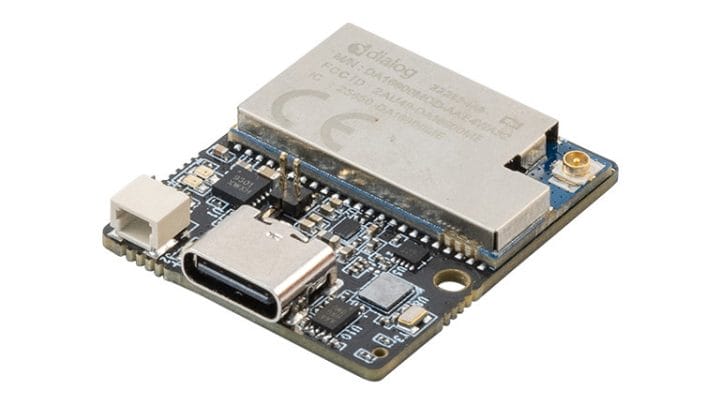
Avnet RASynBoard is a tiny board that packs a lot of features in a 30x25mm form factor with a Renesas RA6M4 Cortex-M33 microcontroller, a Syntiant NDP120 Neural Decision Processor, a Renesas (Previously Dialog Semi) DA16600 Wi-Fi 4 & Bluetooth 5.1 combo module, and a 6-axis inertial measurement unit (IMU) and digital microphone from TDK. The RASynBoard is offered as part of an EVK with the Core Board described above plus an IO board with headers, a Pmod connector, a MikroE Shuttle Click header, a microSD card slot for storage, and a built-in debugger, plus two buttons and an RGB LED. RASynBoard specifications: Main microcontroller – Renesas RA6M4 Arm Cortex-M33 microcontroller @ 200 MHz with 1 MB flash memory, 256 KB SRAM ML accelerator – Syntiant NDP120 Neural Engine based on Syntiant Core 2 Deep Neural Network, Arm Cortex M0 and HiFi 3 DSP Wireless module – Renesas DA16600 2.4 [...]
The post Tiny RASynBoard combines Renesas RA6M4 MCU with Syntiant NDP120 ML accelerator, WiFi & BLE module, and some sensors appeared first on CNX Software - Embedded Systems News.
-
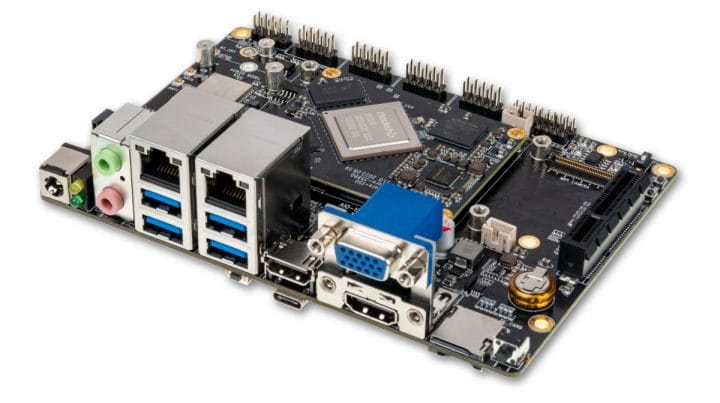
Rockchip RK3588M is an automotive-grade variant of the Rockchip RK3588 octa-core Cortex-A76/A55 SoC that supports at least 6 Full HD displays and 16 camera inputs and can simultaneously run the car dashboard, in-vehicle infotainment, a digital rearview mirror, headrest monitors, ADAS system, and more. The frequency of the Cortex-A76 cores is limited to 2.1 GHz, and the Cortex-A55 cores to 1.7 GHz, against 2.4 and 1.8 GHz for RK3588, probably to operate in a larger temperature range required by the automotive market. I could not find any RK3588M datasheet yet, but we can find more details through the Firefly AIO-3588MQ automotive mainboard built around the RK3588M processor. Firefly AIO-3588MQ specifications: SoC – Rockchip RK3588M octa-core processor with CPU 4x Cortex-A76 cores @ up to 2.1 GHz, 4x Cortex-A55 cores @ up to 1.7 GHz Arm Mali-G610 MP4 GPU with OpenGL ES 3.2, OpenCL 2.2, Vulkan 1.1 support 6 TOPS AI [...]
The post Rockchip RK3588M automotive-grade AI SoC supports up to 16 camera inputs appeared first on CNX Software - Embedded Systems News.
-
Description
Jira reference number AR-1639
How Has This Been Tested?
[🐳|🔨] dpkg-deb: building package 'armbian-config' in '/armbian/.tmp/work-c83920b4-8982-4007-933f-d08866c61443/tmp.Qoc0Tbqyxh/armbian-config_23.05.0-trunk_all.deb'. [🐳|💥] error! [ Artifact file /armbian/output/debs/armbian-config_23.05.0-trunk--1-SAce33-B21b2_all.deb did not exist, after artifact_build_from_sources(). ]- [ ] Test B
Checklist:
- [ ] My code follows the style guidelines of this project
- [ ] I have performed a self-review of my own code
- [ ] I have commented my code, particularly in hard-to-understand areas
- [ ] I have made corresponding changes to the documentation
- [ ] My changes generate no new warnings
- [ ] Any dependent changes have been merged and published in downstream modules
-

Cytron CM4 Maker Board is a carrier board for the Raspberry Pi CM4 or CM4 Lite system-on-module with plenty of I/Os, support for one M.2 NVMe SSD, and RTC backup battery, a buzzer, and various LEDs for GPIO status that makes the board especially well suited for the education market and prototyping. The carrier board also comes with the usual Gigabit Ethernet and full-size HDMI port, four USB 2.0 ports, five Grove connectors, one Maker port, the omnipresent 40-pin Raspberry Pi GPIO header, and support power input from 7V-18V DC jack or 5V via a USB Type-C connector. CM4 Maker Board specifications Cytron CM4 Maker Board specifications: Supported SoM – Raspberry Pi Compute Module 4 or Compute Module 4 Lite Storage microSD card slot M.2 PCIe 2.0 socket for NVMe 2232/2242 SSD Video Interfaces Full-size HDMI 2.0 port MIPI DSI display connector Camera – MIPI CSI connector connector Audio – [...]
The post CM4 Maker Board review – Part 1: specifications, unboxing, and first boot appeared first on CNX Software - Embedded Systems News.
-

Arduino have launched an upgrade to their 8-bit Arduino UNO R3 board with the Arduino UNO R4 featuring a 48 MHz Renesas RA4M1 Arm Cortex-M4F 32-bit microcontroller, and an optional ESP32-S3 module for WiFi 4 and Bluetooth 5.0 connectivity. The new Arduino UNO R4 offered improved performance and greater resources since the MCU is clocked three times faster than the 8bit AVR MCU found in the UNO R3, the board gets sixteen times more RAM (32KB vs 2KB to 32kB) and eight times more flash memory (256KB vs 32kB). The USB Type-C device port has been upgraded to a more modern USB Type-C port and the UNO R4 can take up to 24V supply voltage. Arduino UNO R4 (preliminary) specifications: Microcontroller – Renesas RA4M1 Arm Cortex-M4F MCU @ 48 MHz with 32KB SRAM, 256KB flash. 8KB dataflash Wireless (Arduino UNO R4 WiFi only) – ESP32-S3-MINI-1 module based on ESP32-S3 dual-core [...]
The post Arduino UNO R4 Renesas RA4M1 32-bit maker board offered with optional ESP32-S3 WiFI & BLE module appeared first on CNX Software - Embedded Systems News.
-
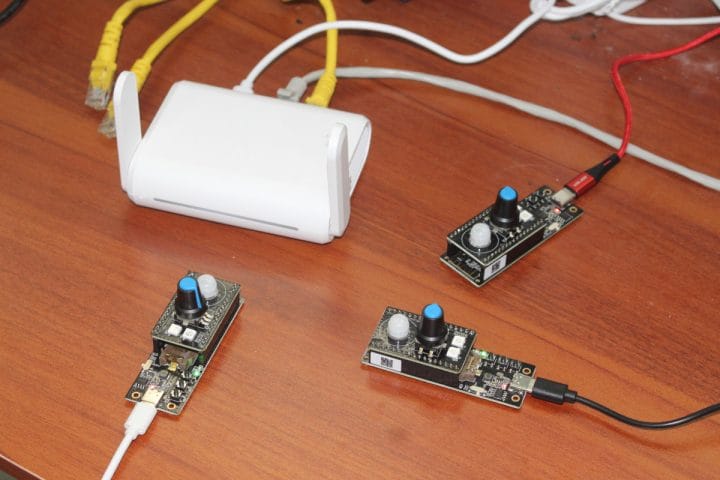
Last week we checked out the hardware for the GL.iNet GL-S200 Thread Border Router kit with three nRF52840 Thread Dev Boards, and I’ve now had time to work with the kit, so I’ll report my getting started experience in the second part of the review. GL-S200 Initial Set Up I connected the WAN port to my Ethernet Switch itself connected to my modem router and the LAN port to my laptop, so I could access the web interface using the default IP address (192.168.8.1). The GL-S200 uses the same Admin Panel as other GL.iNet routers such as the Beryl AX router we reviewed at the beginning of the year. You’ll be greeted by a wizard to let you select the language and set a new password for the Admin Panel, and once you’re done you’ll have access to the familiar GL.iNet Admin Panel 4.x.x. After completing the wizard, the system [...]
The post Getting Started with GL-S200 Thread Border Router kit appeared first on CNX Software - Embedded Systems News.
-
Description
'setenv console "display"' in boot-sunxi.cmd & in armbianEnv.txt had the same effect as 'setenv console "both"'. That was due to a false if-statement in boot-sunxi.cmd:41 Fixed that, so 'setenv console "display"' will not co-enable the serial console anymore. No dependencies required.
Jira reference number: [n/a]
How Has This Been Tested?
Test A: Executed mkimage on BananaPi. Yielded results as expected.
- [x] Test A
Checklist:
- [x] My code follows the style guidelines of this project
- [x] I have performed a self-review of my own code
- [n/a] I have commented my code, particularly in hard-to-understand areas
- [n/a] I have made corresponding changes to the documentation
- [x] My changes generate no new warnings
- [n/a] Any dependent changes have been merged and published in downstream modules
-
Description
As per subject, move the rk322x edge kernel to 6.2
How Has This Been Tested?
- [x] Built fresh image and tested on rk322x device
Checklist:
- [x] My code follows the style guidelines of this project
- [x] I have performed a self-review of my own code
- [x] I have commented my code, particularly in hard-to-understand areas
- [x] I have made corresponding changes to the documentation
- [x] My changes generate no new warnings
- [x] Any dependent changes have been merged and published in downstream modules
-
Description
This PR creates a patch directory named
v2022.04and places u-boot patches for rockchip 32 bit (Tinkerboard/S) and rk322x into to leverage the new per-version patch format.Jira reference number AR-1637
How Has This Been Tested?
- [x] Built a fresh image and tested on rk322x device sdcard
- [x] Built a fresh image and tested on Asus Tinkerboard sdcard
Checklist:
- [x] My code follows the style guidelines of this project
- [x] I have performed a self-review of my own code
- [x] I have commented my code, particularly in hard-to-understand areas
- [x] I have made corresponding changes to the documentation
- [x] My changes generate no new warnings
- [x] Any dependent changes have been merged and published in downstream modules
-
Description
A recent couple of patches, introduced in mainline kernel 6.1 to fix some rk356x emmc detection, break the detection of some old emmc parts on rk322x.
This PR reverts the kernel 6.1 patches until some more investigations are done to better understand the nature of the issue and if it can be solved without disturbing the mainline kernel.
Anyway this is confined into rk322x family, so anyone else is not affected by.
How Has This Been Tested?
- [x] Built full image and tested on the problematic rk322x device
Checklist:
- [x] My code follows the style guidelines of this project
- [x] I have performed a self-review of my own code
- [x] I have commented my code, particularly in hard-to-understand areas
- [x] I have made corresponding changes to the documentation
- [x] My changes generate no new warnings
- [x] Any dependent changes have been merged and published in downstream modules
-
Description
Move rockchip 32 bit edge kernel to 6.2. Kernel works fine, but there are some kernel "error" messages that needs to be investigated. Nonetheless the base system seems to work pretty fine
Jira reference number AR-1636
How Has This Been Tested?
- [x] Full image has been built and tested on Asus Tinkerboard Rev 1.01
Checklist:
- [x] My code follows the style guidelines of this project
- [x] I have performed a self-review of my own code
- [x] I have commented my code, particularly in hard-to-understand areas
- [x] I have made corresponding changes to the documentation
- [x] My changes generate no new warnings
- [x] Any dependent changes have been merged and published in downstream modules
[CNX-Software] - CINCOZE P1201 – A slim Atom x6000E Elkhart Lake PC for embedded and panel PC applications with a CDS connector
in SBC News
Posted
CINCOZE P1201 is a slim embedded computer based on an Atom x6000E Elkhart Lake processor and mostly designed for panel PC applications thanks to the company’s patented CDS (Convertible Display System) connector that allows the mini PC to slide into the back of a display for easy installation. Equipped with up to 32GB RAM, SATA and/or mSATA storage, the P1201 can also be used for generic embedded and industrial applications thanks to DisplayPort and VGA video interfaces, two Gigabit Ethernet ports, optional wireless modules for WiFi, Bluetooth, and cellular, terminal blocks for RS232, RS485, and digital I/Os, as well as support for a wide supply voltage up 48V, and a -40°C to 70°C operating temperature range. CINCOZE P1201 specifications: Elkhart Lake SoC (one or the other) Intel Atom x6425E quad-core processor @ 2.00 GHz / 3.0 GHz with 1.5MB cache, 32 EU UHD graphics; 12W TDP Intel Atom x6211E dual-core [...]
The post CINCOZE P1201 – A slim Atom x6000E Elkhart Lake PC for embedded and panel PC applications with a CDS connector appeared first on CNX Software - Embedded Systems News.
View the full article