All Activity
- Today
-
Okay an update: Thank you @jock for the answer i've been looking for, I've managed to make use of the hardware acceleration (H.264) of my RK3229 on Android Auto (OpenAuto) but it's a complicated process i had to do. - I had to build my own aasdk and openauto from the git repository and test it as it is. running raw Open Auto showed the following issues: for openauto GUI it runs via linuxfb (trying to fix but still can't find a workaround) AndroidAuto stream decode was only running x264 (software decoding) [fixed tho] This has been fixed by doing a custom code for OpenAuto to utilize Kmssink (now works in 720p 30fps, going 60 adds a lot of latency but it's smooth!) Audio Not Working (i think can be fixed by pulse audio or just do direct hardware) Probably more since im only testing Audio Video as of right now. OpenAuto: RK3229 Armbian Github Repository if ever you want to try it!
-
Hello. I have easily managed to get armbian up and running of a usb stick, in fact everything worked perfect (hdmi, wifi, gbit ethernet, etc.). The tv box is h96-air-gbit (as the dtb is named), amlogic s905x3 soc, 32gb mmc, 4gb RAM, gigabit ethernet, 2xusb 2.0, 1xusb 3.0, sd card, hdmi, av port (reset button inside), spdif. The thing is, I wanted to benefit from the 32gb internal mmc storage, since I was running armbian from a 8gb usb stick (had a lot of those hanging around, and didn't want to buy a bigger one). I did notice the image I used had not armbian-install script, nor nand-sata-install. I did a manual install (snapshot copy) of my current system with the help of Claude.ai 1. step - create an setup another partition on the emmc (currently there were 2x 4M partitions - the bootloader I presume) sudo fdisk /dev/mmcblk1 sudo mkfs.ext4 -L ARMBIAN_ROOT /dev/mmcblk1p1 Note: Doing this seems enough reasonable to me (well, to my limited knowledge), no overwriting should have happened 2. step - snapshot copy the OS sudo mkdir -p /mnt/emmc sudo mount /dev/mmcblk1p1 /mnt/emmc sudo rsync -aAXv --exclude={"/dev/*","/proc/*","/sys/*","/tmp/*","/run/*","/mnt/*","/media/*","/lost+found"} / /mnt/emmc/ Note: This also seems alright, and the commands exited with no errors 3. step - update the extlinux.conf, the cmdline to point to the right UUID - the one from the emmc sudo blkid /dev/mmcblk1p1 sudo nano /mnt/emmc/boot/extlinux/extlinux.conf 4. step - just confirm everything is set, and shutdown, disconnect power and reconnect cat /mnt/emmc/boot/extlinux/extlinux.conf sync sudo umount /mnt/emmc Note: Everything seemed fine and correct. So after the whole process, I shut it down, removed the usb and booted. It didn't come online after a while, so I rebooted with hdmi connected (I did face some issues before, like unusally slow boot times in headless mode). It just never turned on. The logo was gone, so I figured something went quite wrong. Currently, the situation is the following: I reopened the board to connect uart for diagnostics. So The board without external storage (usb, sd card) doesn't boot, it does a certain sequence, but fails and just hangs (no reboot loop). If I have an external usb, the one which worked before (correct setup), it reboots in loop - it does try to boot from the usb, but fails. Chatgpt suggests that I probably overwrote some portions of the bootloader or firmware files on which armbian relied (some or most of the env vars are probably gone). Claude has a similar suggestion (FDT_BAD_MAGIC, get partition table from dts faild - the bootloader is messed up). I did try booting from usb and from sd - forcing multi boot (reset button), but that's definitely not the issue. The bootloader seems to be working up to a certain point - but booting from usb or sd produce the same error - last few lines of the log, right before the reboot (and it reboots indefinitely in loop): Device: SDIO Port B Manufacturer ID: fe OEM: 3456 Name: ASTCTran Speed: 50000000 Rd Block Len: 512 SD version 3.0 High Capacity: Yes Capacity: 7.3 GiB mmc clock: 40000000 Bus Width: 4-bit Device: SDIO Port B Manufacturer ID: fe OEM: 3456 Name: ASTCTran Speed: 50000000 Rd Block Len: 512 SD version 3.0 High Capacity: Yes Capacity: 7.3 GiB mmc clock: 40000000 Bus Width: 4-bit reading aml_autoscript 800 bytes read in 11 ms (70.3 KiB/s) ## Executing script at 01080000 ## Error: "bootfromsd" not defined get partition info failed !! reboot use default mode: normal bl31 reboot reason: 0xd bl31 reboot reason: 0x1 system cmd 1. Since, the aml_autoscript should definitely be working, the bootloader is the most probable issue. So, what Claude suggests is to flash s905x3 compatible u-boot. I managed to get the board in usb burn mode by mask rom (toothpick reset method didn't work). Currently I have the board plugged to pc (usb male to male) and uart connected (improvised RP2040 zero uart bridge). Please provide me with instructions and what to do. I soft bricked the board by following plausible instructions from ai, I don't want to hard brick it (I really liked it:) Also, I keep the board connected, since I don't know if I could reintroduce mask rom mode if turned off. Here is the complete log of one of the infinite reboots from the loop: SM1:BL:511f6b:81ca2f;FEAT:A0F83180:20282000;POC:F;RCY:0; EMMC:0; READ:0;0.0;CHK:0; bl2_stage_init 0x01 bl2_stage_init 0x81 hw id: 0x0001 - pwm id 0x00 bl2_stage_init 0xc0 bl2_stage_init 0x02 L0:00000000 L1:00000703 L2:00008067 L3:15000020 S1:00000000 B2:20282000 B1:a0f83180 TE: 146487 BL2 Built : 15:21:48, Aug 28 2019. g12a g1bf2b53 - luan.yuan@droid15-sz Board ID = 1 Set cpu clk to 24M Set clk81 to 24M Use GP1_pll as DSU clk. DSU clk: 1200 Mhz CPU clk: 1200 MHz Set clk81 to 166.6M fw parse done Load ddrfw from eMMC, src: 0x00060200, des: 0xf ffd0000, size: 0x0000c000, part: 0 Load ddrfw from eMMC, src: 0x00038200, des: 0xfffd0000, size: 0x00004000, part: 0 PIE I prepare done fastboot data load 00000000 emmc switch 1 ok ddr saved addr:00016000 Load ddr parameter from eMMC, src: 0x02c00000, des: 0xfffd0000, size: 0x00001000, part: 0 00000000 emmc switch 0 ok fastboot data verify verify result: 265 Cfg max: 5, cur: 1. Board id: 255. Force loop cfg DDR4 probe ddr clk to 912MHz Load ddrfw from eMMC, src: 0x00 014200, des: 0xfffd0000, size: 0x0000c000, part: 0 dmc_version 0001 Check phy result INFO : End of initialization INFO : End of read enable training INFO : End of fi ne write leveling INFO : ERROR : Training has failed! 1D training failed Cfg max: 5, cur: 2. Board id: 255. Force loop cfg DDR3 probe ddr clk to 792MHz Load ddrfw from eMMC, src: 0x0002c2 00, des: 0xfffd0000, size: 0x0000c000, part: 0 dmc_version 0001 Check phy result INFO : End of initialization INFO : End of read enable training INFO : End of fine wr ite leveling INFO : End of read dq deskew training INFO : End of MPR read delay center optimization INFO : End of Write leveling coarse delay INFO : End of write delay center optimization INFO : End of read delay center optimization INFO : End of max read latency training INFO : Td BL3X from eMMC, src: 0x00078200, des: 0x01768000, size: 0x000c8000, part: 0 BL33 CHK: 0xfffffff1 ADDR 01 7a1970 Load FIP HDR from eMMC, src: 0x00010200, des: 0x01700000, size: 0x00004000, part: 1 00000000 emmc switch 1 ok Load BL3X from eMMC, src: 0x00078200, des: 0x01768000, size: 0x000c8000, part: 1 bl2z: ptr: 05129330, size: 00001e40 0.0;M3 C HK:0;cm4_sp_mode 0 MVN_1=0x00000000 MVN_2=0x00000000 [Image: g12a_v1.1.3390-6ac5299 2019-09-26 14:09:46 luan.yuan@droid15-sz] OPS=0x10 ring efuse init 2b 0c 10 00 01 07 0e 00 00 0f 32 34 50 4d 50 50 [0.933 001 Inits done] secure task start! high task start! low task start! run into bl31 NOTICE: BL31: v1.3(release):4fc40b1 NOTICE: B L31: Built : 15:57:33, May 22 2019 NOTICE: BL31: G12A normal boot! NOTICE: BL31: BL33 decompress pass ERROR: Error initializing runtime service opteed_fast U-Boot 2015.01 (Jun 1 9 2020 - 20:04:27) DRAM: 3.8 GiBspi_post_bind(spifc): req_seq = 0 register usb cfg[0][1] = 00000000d7f3ec90 NAND: get_sys_clk_rate_mtd() 290, clock setting 200! NAND device id: 0 ff ff ff ff ff No NAND device found!!! nand init failed: -6 get_sys_clk_rate_mtd() 290, clock setting 200! NAND device id: 0 ff ff ff ff ff No NAND device found! !! nand init failed: -6 MMC: aml_privemmc/sd response timeout, cmd8, status=0x1ff2800 emmc/sd response timeout, cmd55, status=0x1ff2800 co-phase 0x3, tx-dly 0, clock 400000 co-phase 0x3, tx-dly 0, clock 40000000 aml_sd_retry_refix[983]:delay = 0x0,gadjust =0x162000 [mmc_startup] mmc refix success init_part() 282: PART_TYPE_DOS [mmc_init] mmc init success Amlogic multi-dtb tool Cannot find legal dtb! start dts,buffer=00000000d3e53620,dt_addr=00000000d3e53620 check_valid_dts: FDT_ERR_BADMAGIC get_partition_from_dts() 91: ret -9 get_partition_from_dts() 94: ret -9 get_ptbl_from_dtb()-272: get partition table from dts faild mmc_device_init()-1254: get partition table from dtb failed get_ptbl_rsv()-494: magic faild MPT, mmc_device_init()-1281: dtb&rsv are not exisIn: serial Out: s_verify_dtb_checksum()-3477: calc 0, store 0 update_dtb_info()-3585: cpy 1 is not val id _verify_dtb_checksum()-3477: calc 0, store 0 update_dtb_info()-3585: cpy 0 is not valid dtb_read()-3694: total valid _verify_dtb_checksum()-3477: calc 0, store 0 update_dtb _info()-3585: cpy 1 is not valid _verify_dtb_checksum()-3477: calc 0, store 0 update_dtb_info()-3585: cpy 0 is not valid dtb_read()-3694: total valid 0 emmc - EMMC sub system Usa ge: emmc dtb_read addr size emmc dtb_write addr size emmc erase dtb emmc erase key emmc fastboot_read addr size emmc fastboot_write addr size vpu: vpu_power_on vpu:[K M]Error:f[keymanage_dts_get_key_device]L100:/unify not parsed yet! [KM]Error:f[_get_km_ops_by_name]L248:key eth_exphy_para not know device 4 [KM]Error:f[key_unify_read]L312:key[eth_ exphy_para] no cfg in dts dwmac.f f3f0000 Waiting for PHY auto negotiation to complete. . . . done The Bes t Window is index 44 [KM]Error:f[keymanage_dts_get_key_device]L100:/unify not parsed yet! [KM]Error:f[_get_km_ops_by_name]L248:key eth_exphy_para not know device 4 [KM]E rror:f[key_unify_write]L279:key[eth_exphy_para] no cfg in dts libfdt fdt_check_header(): FDT_ERR_BADMAGIC No FDT memory address configured. Please configure the FDT address via "fdt addr <a ddress>" command. Aborting! dwmac.ff3f0000[KM]Error:f[keymanage_ta: erase the area which is uboot or data store erase partition <partition_name>: erase the area whi ch partition in u-boot store erase dtb store erase key store disprotect key store rom_protect on/off store scrub off|partition size scrub the area from offset and size store dtb i read/read/write addr <size> read/write dtb, size is optional store key read/write ad= 0 info->crc32 = 0 Magic is incorrect. boot-info is invalid. Resetting. save boo t-info info->magic = info->version_major = 1 info->version_minor = 0 info->slots[0].priority = 15 info->slots[0].tries_remaining = 7 info->slots[0].successful_boot = 0 info->slots[1].priority = 14 info->slots[1].tries_remaining = 7 info->slots[1].successful_boot = 0 info->crcion in u-boot store erase dtb store erase key store disprotect key st ore rom_protect on/off store scrub off|partition size scrub the area from offset and size store dtb iread/read/write addr <size> read /write dtb, size is optional store key read/write addr <size> read/write key, size is optional store ddr_parameter read/write addr <size> read/write ddr parameter[KM]Error:f[keymanage_dedid preferred_mode is <NULL>[0] hdr mode is 0 dv mode is ver:0 len: 0 hdr10+ mode is 0 [OSD]check dts: FDT_ERR_BADMAGIC, load default fb_addr parameters [OSD]set initrd_high: 0x3d800000 [OSD]fb_addr for logo: 0x3d800000 [OSD]check dts: FDT_ERR_BADMAGIC, load default fb_addr parameters [OSD]fb_addr for logo: 0x3d800000 [OSD]VPP_OFIFO_SIZE:0xfff01fff [CANVAS]canvas init [CANVAS]addr=0x3d800000 width=3840, height=2160 Cannot find dev. amot store erase dtb store erase key store disprotect key store rom_protect on/off store scrub off|partition size scrub the area from offset and size store dtb iread/read/write addr <size> read/write dtb, size is optional store key read/write addr <size> read/write key, size is optional store ddr_parameter read/write addr <size> read/write ddr parameter, size is o[KM]Error:f[keymanage_dnel error SARADC channel(2) is 0x3ff. saradc - saradc sub-system Usage: saradc saradc open <channel> - open a SARADC channel saradc close - close the SARADC saradc getval - get the value in current channel saradc test - test the SARADC by channel-7 saradc get_in_range <min> <max> - return 0 if current value in the range of current channel Command: bcb uboot-command Start ron_name>: erase the area which partition in u-boot store erase dtb store erase key store disprotect key store rom_protect on/off store scrub off|partition size scrub the area from offset and size store dtb iread/read/write addr <size> read/write dtb, size is optional store key read/write addr <size> read/write key, size is optional store ddr_parameter read/writeuboot-command Hit Enter or space or Ctrl+C key to stop autoboot -- : 0 Unknown command 'ddr_auto_fast_boot_check' - try 'help' pll tsensor avg: 0x1e95, u_efuse: 0x807a temp1: 25 ddr tsensor avg: 0x1eaf, u_efuse: 0x8076 temp2: 26 device cool done CONFIG_SYSTEM_AS_ROOT: systemroot system_mode: 1 Start read misc partition datas! Cannot find dev. amlmmc cmd <NULL> failed store - STORE sub-system Usage: store init flag store read name addr off|partition size read 'size' bytes starting at offset 'off' to/from memory address 'addr', skipping bad blocks. store write name addr off|partitiote addr <size> read/write key, size is optional store ddr_parameter read/write addr <size> read/write ddr parameter, size is optional store mbr addr update mbr/partition table by dtb [burnup]Err:store_read_ops,L84:cmd failed, ret=1, [store read misc 0xd3e4d090 0x0 0x820] failed to store read misc. info->magic = info->version_majosful_boot = 0 info->crc32 = -1075449479 Cannot find dev. amlmmc cmd <NULL> failed store - STORE sub-system Usage: store init flag store read name addr off|partition size read 'size' bytes starting at offset 'off' to/from memory address 'addr', skipping bad blocks. store write name addr off|partition size write 'size' bytes starting at offset 'off' to/frarameter read/write addr <size> read/write ddr parameter, size is optional store mbr addr update mbr/partition table by dtb [burnup]Err:store_write_ops,L148:cmd [store write misc 0xd3e4d090 0x0 0x820] failed active slot = 0 CONFIG_AVB2: null active_slot: normal Cannot find dev. amlmmc cmd <NULL> failed store - STORE sub-system Usage: store init flag store r on/off store scrub off|partition size scrub the area from offset and size store dtb iread/read/write addr <size> read/write dtb, size is optional store key read/write addr <size> read/write key, size is optional store ddr_parameter read/write addr <size> read/write ddr parameter, size is optional store mbr addr update mbr/partition table by dtb [burnup]Err:stornoSof sof timeout, reset usb phy tuning card in co-phase 0x2, tx-dly 0, clock 400000 co-phase 0x2, tx-dly 0, clock 400000 co-phase 0x2, tx-dly 0, clock 400000 co-phase 0x2, tx-dly 0, clock 400000 co-phase 0x2, tx-dly 0, clock 40000000 aml_sd_retry_refix[983]:delay = 0x0,gadjust =0x162000 [mmc_startup] mmc refix success init_part() 282: PART_TYPE_DOS [mmc_init] mmc init success Device: SDIO Port B Manufacturer ID: fe OEM: 3456 Name: ASTCTran Speed: 50000000 Rd Block Len: 512 SD version 3.0 High Capacity: Yes Capacity: 7.3 GiB mmc clock: 40000000 Bus Width: 4-bit Device: SDIO Port B Manufacturer ID: fe OEM: 3456 Name: ASTCTran Speed: 50000000 Rd Block Len: 512 SD version 3.0 High Capacity: Yes Capacity: 7.3 GiB mmc clock: 40000000 Bus Width: 4-bit reading aml_autoscript 800 bytes read in 11 ms (70.3 KiB/s) ## Executing script at 01080000 ## Error: "bootfromsd" not defined get partition info failed !! reboot use default mode: normal bl31 reboot reason: 0xd bl31 reboot reason: 0x1 system cmd 1.
-
Related answer: https://forum.armbian.com/topic/57601-missing-headers-for-618-kernel/#findComment-232075
-
Hi, this is my first post, my apologies, I could not find a matching topic category for this PCduino3 nano question/issue (no built-in wifi, I use a Roccar wifi dongle) I have successfully built the image using the armbian configuration script (bookworm current), the board boots and runs teslausb, however, I am unable to install the driver for my wifi dongle. The error when starting the install-driver.sh script is "your kernel headers are not properly installed". I tried apt install linux-headers-current-sunxi and kernel-headers-armmp, they install successfully but I still get the same error about the kernet headers not being properly installed. The drivers are for rtl88x2bu cloned from morrownr on github Any help would be appreciated Gaetano.
-
There are no header packages for each and every trunk version to save resources. Most simple solution is probably DIY an image with INSTALL_HEADERS=yes to have them shipped with the image.
-
Hello @sven-ola! Yesterday, everything built fine for me using your git orangepi-rv2 branch with the EDGE kernel. After making the changes, Today, when applying the latest fixes I got an error while compiling the image. I used this build config ./compile.sh CPUTHREADS=$(nproc) BOARD=orangepirv2 BRANCH=edge RELEASE=trixie KERNEL_CONFIGURE=no BUILD_DESKTOP=yes DESKTOP_APPGROUPS_SELECTED= DESKTOP_ENVIRONMENT_CONFIG_NAME=config BUILD_MINIMAL=no DESKTOP_ENVIRONMENT=xfce KERNEL_GIT=shallow The error log is like this [🌱] SHA1 of commit bfeeda1491b5366aa5798a86cf6f3621536b171c [ 'bfeeda1491b5366aa5798a86cf6f3621536b171c' ] [🌱] Reversioning package [ re-version 'armbian-zsh(deb)::1-SAbfee-B07a9-R448a' to '26.02.0-trunk' ] [🌱] artifact [ armbian-plymouth-theme :: armbian-plymouth-theme() ] [🌱] Reversioning package [ re-version 'armbian-plymouth-theme(deb)::1-B5bd9-R448a' to '26.02.0-trunk' ] [🌱] artifact [ armbian-bsp-cli :: armbian-bsp-cli() ] [🌱] Using extlinux, regular bootscripts ignored [ SRC_EXTLINUX=yes ] [🌱] Reversioning package [ re-version 'armbian-bsp-cli-orangepirv2-edge(deb-tar)::1-PC0cac-Vfcc4-Hba69-B8122-R756d' to '26.02.0-trunk' ] [🌱] artifact [ armbian-desktop :: armbian-desktop() ] [🌱] Getting ORAS manifest [ ORAS manifest from ghcr.io/armbian/os/armbian-trixie-desktop-xfce:1-Vce3b-B333f-R448a ] Error response from registry: failed to fetch the content of "ghcr.io/armbian/os/armbian-trixie-desktop-xfce:1-Vce3b-B333f-R448a": ghcr.io/armbian/os/armbian-trixie-desktop-xfce:1-Vce3b-B333f-R448a: not found [🌱] Artifact is not available in remote cache [ ghcr.io/armbian/os/armbian-trixie-desktop-xfce:1-Vce3b-B333f-R448a ] /root/orangepi-rv2/lib/functions/compilation/packages/armbian-desktop-deb.sh: line 25: AGGREGATED_PACKAGES_DESKTOP_COMMA: AGGREGATED_PACKAGES_DESKTOP_COMMA is not set [💥] Exiting with error 1 [ at /root/orangepi-rv2/lib/functions/compilation/packages/armbian-desktop-deb.sh:1 compile_armbian-desktop() --> lib/functions/compilation/packages/armbian-desktop-deb.sh:1 do_with_logging() --> lib/functions/logging/section-logging.sh:81 artifact_armbian-desktop_build_from_sources() --> lib/functions/artifacts/artifact-armbian-desktop.sh:71 artifact_build_from_sources() --> lib/functions/artifacts/artifacts-obtain.sh:34 obtain_complete_artifact() --> lib/functions/artifacts/artifacts-obtain.sh:280 build_artifact_for_image() --> lib/functions/artifacts/artifacts-obtain.sh:392 main_default_build_packages() --> lib/functions/main/build-packages.sh:102 full_build_packages_rootfs_and_image() --> lib/functions/main/default-build.sh:31 do_with_default_build() --> lib/functions/main/default-build.sh:42 cli_standard_build_run() --> lib/functions/cli/cli-build.sh:25 armbian_cli_run_command() --> lib/functions/cli/utils-cli.sh:136 cli_entrypoint() --> lib/functions/cli/entrypoint.sh:208 main() --> ./compile.sh:50 ] [💥] Cleaning up [ please wait for cleanups to finish ] [✨] Repeat Build Options [ ./compile.sh BOARD=orangepirv2 BRANCH=edge BUILD_DESKTOP=yes BUILD_MINIMAL=no CPUTHREADS=8 DESKTOP_APPGROUPS_SELECTED= DESKTOP_ENVIRONMENT=xfce DESKTOP_ENVIRONMENT_CONFIG_NAME=config KERNEL_CONFIGURE=no KERNEL_GIT=shallow RELEASE=trixie ] [🌿] ANSI log file built; inspect it by running: [ less -RS output/logs/log-build-436f72e6-3064-4b72-8a4a-64d579c2ea1f.log.ans ] Do I need to clear all previous build data? Or how can I fix this error? Thank you.
-
@jock I'll try this, if it works i'll share the result of how OpenAuto Works on the RK3229. I might also release a build specifically for it. Thanks!
-
Hi @sven-ola I downloaded this version, "Armbian-unofficial_26.02.0-trunk_Orangepirv2_trixie_current_6.6.99_minimal.img", and it's working on an SD card without problems... Is it possible for the OPI RV2 to boot from the eMMC with this image? Thanks.
-
Did you ever make progress on this project?
-
@Harleyyyu See this thread; hardware video decoding works fine with mainline kernel and does not need vendor MPP. Debian Trixie although has a "broken" mpv that won't work, better stay with Bookworm
- Yesterday
-
Already got answer from upstream programmer❣️ That kernel thread in RPMSG was removed due to excessive CPU usage. I got the impression that this is true: edge:desktop is nearly un-usable. Also they say: there is kernel 6.19 from upstream/upstream in the make. For now, I'm reverting HDMI audio (and all other rCPU funcs) for edge. LG // Sven-Ola
-
I'm awaiting delivery of a new extruder heater/nozzle and it seems the wifi is reluctant to connect. Previously, the wifi would not connect until a calibration had been performed and it will not calibrate due to the extruder heater failing. I did upload the Sovol SV06 Ace mainboard schmatic to the O.P. but it is for board version 1.1. Hopefully I can connect, ssh in and get the *dtb file once the nozzel is replaced. Then cross check the *.dtb with the schematic. The new board,v1.2, likely uses the same Broadcom BCM43430 that Sovol Kipper Screen v1.2 uses. It may also have an additional fan socket. For future reader/search hits, you actually have to use radxa linux upgrade_tool. It will be a couple of days before I can follow up.
-
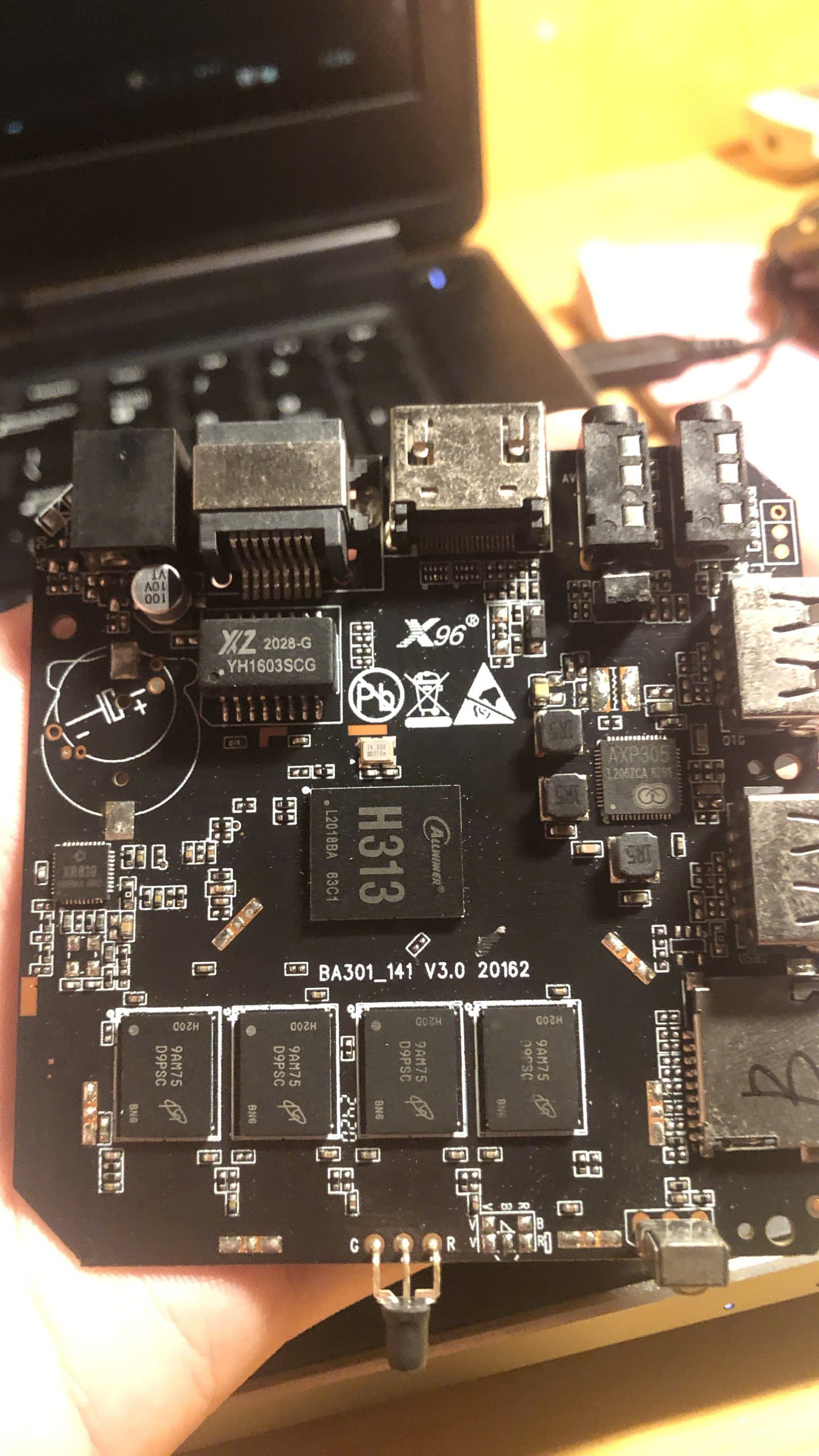
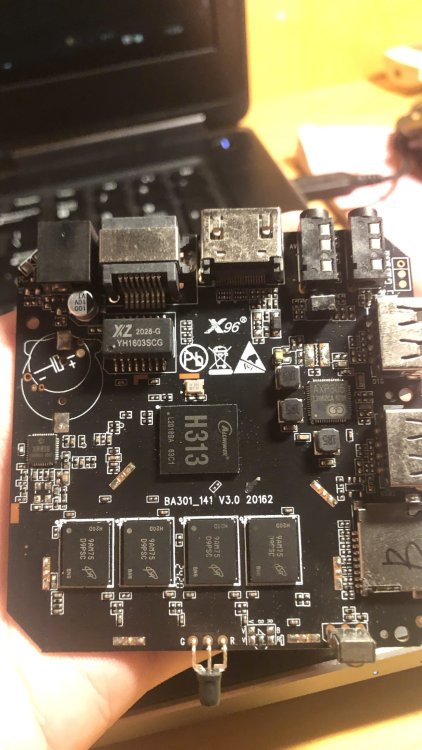
hello, i need some help with this box, i have tried a lot of image but only stayed red light or just blue light and shown nothing, my version using ddr3
-
Hi I installed Armbian_community_26.2.0-trunk.151_Odroidhc4_trixie_current_6.18.2_minimal.img Trying to build zfs-dkms I discovered that I was missing the linux-headers for this kernel version and there is no package containing it. At least apt-cache didn't find anything. Any idea where to find it? Thanks, Chris
-
Hello @JamesCL! The current image from https://privat-in.de/ should work. I will upload new images any minute now. However: if you only need Ethernet, Orange Pi R2S [1] is a better choice probably, b/c you got extra 2 times 2.5 gbit with that... Best // Sven-Ola [1] http://www.orangepi.org/html/hardWare/computerAndMicrocontrollers/service-and-support/Orange-Pi-R2S.html
-
Hello @Malay. Never mind - I' am not a native English speaker too. I have not tested the GUI intensively because my Goal is using this little board as a mini-server. Also, I think it's best getting the basics up before turning to the high-level GUI and media stuff. The "current" 6.6.99 kernel seems not to work with Wayland. You can switch to X11, change /etc/gdm3/custom.conf. The "edge" 6.18.7 is works with Wayland. Integrating GPU support is out of my focus currently, I am even unsure if this applies for Orange Pi RV2: https://sdk.spacemit.com/en/graphics/graphics_driver_framework/ ? HW Video decoding is another rabbit hole. The documentation is Chinese at best 🤪 LG + HTH // Sven-Ola
-
Thanks for your work, @sven-ola. I'm going to try your image. I only need Ethernet (no sound, no wireless, no Bluetooth, and definitely no HDMI). Cheers!
-
Hello, I just created this account! I just want to ask if the newer OS / Firmware has VPU + MPP support? I've been trying to build OpenAuto for the RK3229 and the only issue im having is the lack of h264 decoding (i only need h264, but it would be nice to have a full support) I'm using the latest trixie (minimal) with somewhat of a success, except for a laggy video decoding due to again lack of h264. I can't seem to find an older build with a kernel of 4.4.xxx that probably has the full GPU support with VPU + MPP working.
-
Unfortunately, English is not my native language, and you may have misunderstood me. I apologize. I didn't mean to do anything like that. And I am grateful for your work! So, following your suggestion, I compiled the versions from your other git branch - git clone https://github.com/sven-ola/armbian-build.git --branch orangepi-rv2-ky ./orangepi-rv2-ky I first tried building an image with Orangepirv2_noble_current_6.6.99_xfce_desktop. The network worked, and booting from the rear m.2 2280 also worked, but unfortunately, there was no HDMI video, just a black screen. Then I tried building a different build with Orangepirv2_trixie_current_6.6.63_xfce_desktop, and lo and behold, almost everything worked – the network worked, there was HDMI sound, HDMI output worked, Bluetooth worked, and the built-in WiFi worked. I just have one question: is video really that bad on RISCV? It's impossible to watch anything, it's incredibly slow. I assume they're using software video decoding?
-
Got HDMI audio working. We need to enable SPACEMIT_DUMMYCODEC (done with a Kconfig change). And we need a working audio DMA. But this raises questions: the fix was to enable the extra kthread found e.g. from Xunlong/Ky into drivers/remoteproc. This fixes the communication to the Realtime CPU (the esos.elf driven Undoc) -> ADMA working -> HDMI audio working for edge and current. However, with edge the extra kthread addon was removed upstream recently [1]. I think it's best to ask the change authors. I will upload fixed images in an hour or so. Best // Sven-Ola [1] https://github.com/jmontleon/linux-spacemit/commit/d6a6ebede205669d2def873c3ab694a6ef1a4826
-
I'll start on congratulating you for all you have accomplished. Now to your questions. I've never experienced a case where installing to emmc took away the ability to boot from the SD card, nor have I ever heard that reported by other users in the forums. So that one is a mystery. To debug that you would need to find your uart connection on the board and hook up a usb-uart adapter to monitor the uboot process. I would also recommend you try putting your image on a usb thumb drive and see if that works for a workaround. For autologin, you should just be able to follow any standard guidelines for doing that with a google search of 'xfce4 auto login' and you will likely need to edit some config file somewhere to enable this. Exactly what may depend on are you running Ubuntu or Debian userland with the Armbian kernel.
-
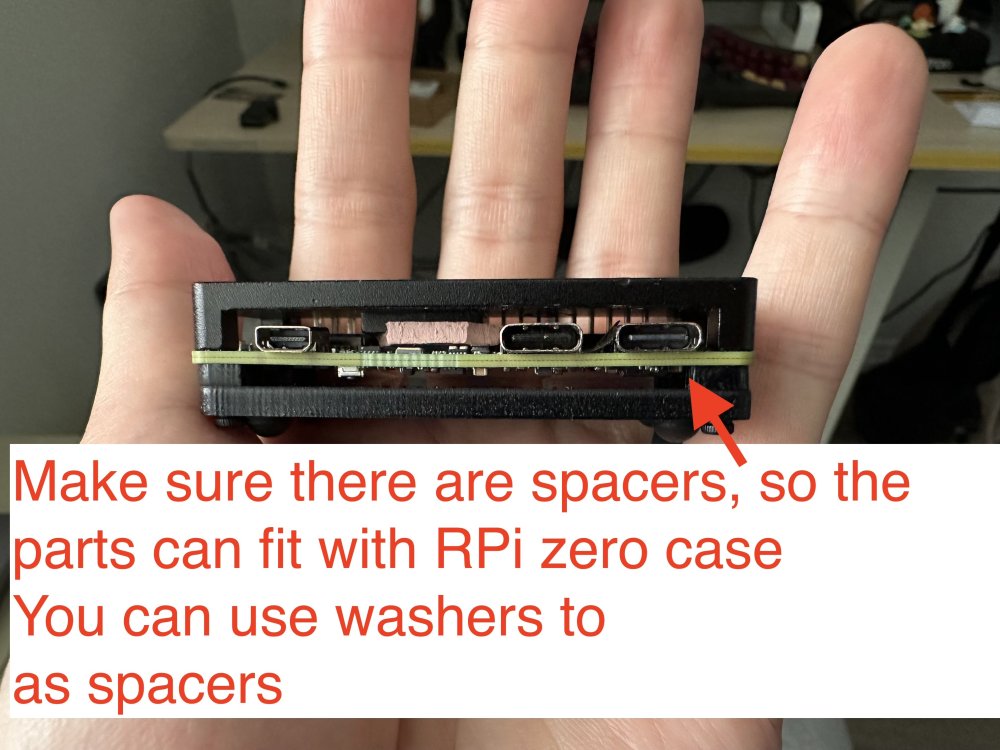
 Oh, I do not have a nanopi r3s, and I do not plan to buy it. The image is for the radxa zero 3w, but as I provided the source of building it, you can customize it to build with nanopi, too. The reason I mentioned nanopi r3s is because it has a dedicated case for it. I ended up using raspberry pi zero case for it, with some custom modifications, which is also nice. Raspberry Pi 1/2/3, zero/zero w/zero w2 won't work, because they only have 1 USB controller. The trick here is to have at least 2 USB controllers: 1 in host mode to connect to the UAC2.0 speakers, and 1 in gadget mode as a UAC1.0 USB device. Raspberry Pi 4/5 should work, but you need to make sure the power supply is strong enough, which is a big issue here, because with the official image, you can only connect the USB C port for power and as a USB gadget port, yet PS5 probably won't support that much power for RPi 4/5, so you ended up needing a USB power and data splitter for that, and connect the data port to PS5, then a separate power supply for the power port (simliar things happened in PiKVM).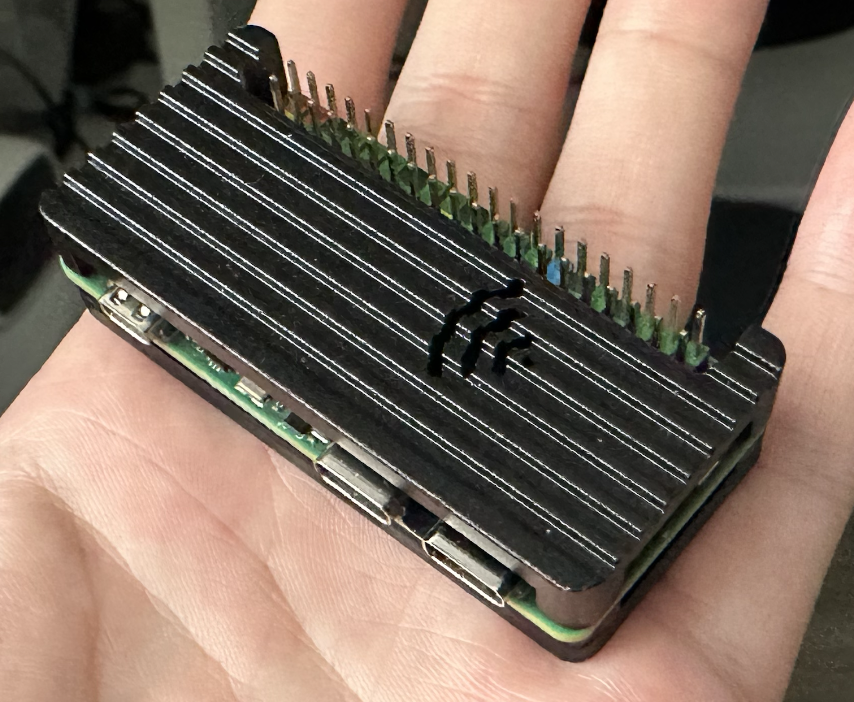
-
 I am working on a new version of the Luckfox Core3566 Board and Patches, as well as adding the Orange PI CM4 board to Armbian. Both rely on the Rockchip RK3566. Luckfox Core3566 Starting with the Core3566: The current board is just the vendor u-boot and kernel. It lacks PCIe support, but surely it is helpful to be as near to manufacturer configuration in their patches. My board config on the other side is not supporting the vendor specific patches, but based on a clean u-boot v2025.10 and runs nicely with current and edge kernels and also runs smoothly with nvme storage. The luckfox-core3566 config is currently maintainerless, but maybe users would like to have this vendor kernel version. My question: 1) Would the Armbian rather like to replace the vendor board config with a more future proof board config like mine or 2) Keep both board versions ( like rename config/boards/luckfox-core3566.csc to config/boards/luckfox-core3566_vendor.csc ) and let my variant replace the config/boards/luckfox-core3566.csc as default? 3)rd option would be combine both configs, but I had struggle to do so, as my version is using a different u-boot, using a simplified partition setup etc. Orange Pi cm4 I created a new board configuration to let Orange PI CM4 to work with Armbian as well. It is pretty similar to the bigtreetech cb2, but it's ethernet wiring and pcie powering device config differs from latter. Is it okay to create a MR directly in Github or does it need alignment with Moderators first? Cheers, Daniel PS: Nice to have time to work on embedded arm systems again. I did work on the sunxi based cubieboard and cubietruck back in the days, but job, family and basically life pulled me away from it for such a long time.
 -
I've spent the last couple of months playing around (low-end testing just to see what the software and I are capable of) with Debian and docker: RSS, Nextcloud, navidrome, immich, nothing earth-shattering. I was doing this in a VM so I could wipe and restart in case of failure/learning curve issues, which was great. Everybody's got to have a hobby, right? After much foibles, I had gotten the setup into something I liked and understood the pratfalls to expect in installation. Ready for primetime, I didn't want to leave this in the VM (I have constant paranoia about usage on my power-sucking desktop), but I have a T95 Max plus TV box sitting around doing nothing but Kodi and it's on all the time, so I started dreaming about how I could get a version of Linux on it and do all my docker homelab junk and kodi and maybe make a diy NAS out of the thing. Armbian to the rescue! I grabbed the wrong image (I got the barebones CLI only version instead of something with a graphic interface that I figured would be easier to manage) and I was able to boot off the sdcard and was able to install docker and portainer and had a working web interface, so...great...for a first try. I then installed it to the emmc and managed to get xfce4 for a desktop interface so I can see what I'm doing. The CLI version didn't really match any of the tutorials I was reading (there are suggestions that I could change the desktop with arnbian-config, but that's either false or was published for an early version and weeded out in later version, iDK). Anywho, after mixing and matching instruction from amlgoic s905x3 and s905 versions, I have a working armbian with an xfce4 interface with working sound, USB, wireless and Ethernet. I was warned that all of those peripherals may or may not work in this endeavour, but I am happy to say they all work after I did a bunch of updates and upgrades of the armbian. Docker is going and the containers are all going and after 2x installs, I have a working Kodi going, so I am delighted and amazed. Now I have a couple of smallish problems. Honestly they are minor, but I have succeeded so far and I'm full of false bravado so I an hoping I can Gert some insight or suggestions: First, when I write the armbian to the emmc, the sdcard stopped working, period. Armbian refuses to see it as a device and I can't boot off it using the toothpick reset method. I've also tried using the amlogic flash utility with a male-to-male usb cable and my PC won't see it either, which tells me the sdcard interface is bunged, either the kernel can't see it or does not have drivers. Either way, if I have future problems I have to trash the whole setup because I am incapable of reflashing the box. Plus, the box is only 32gb and I was hoping to use the sdcard as storage, but I guess not. I've also thought of adding a USB card reader and seeing if I can get the box to see an sdcard through that, but I don't have a lot of faith there if it's a driver issue. Second, the xfce interface asks for my username and password every boot but my mouse and keyboard take a minute to kick in. It's annoying to me to be waving a mouse around and thinking the system has locked up, when it's really just taking some time to activate the USB. What would be attractive to me is that I bypass the login screen,but I can't find the spot in arnbian-config that allows me to set an automatic login (again, the tutorial I'm reading may be old, but the options just aren't there in my version). Sigh. So my questions to the geniuses and gurus out there: Has anyone had the same problem with the sdcard and/or were able to fix it and how, and How can I set an automatic login through terminal? The interface I have really doesn't have any real system settings like peripherals to show and won't let me adjust anything anyways.
-
I'll buy a new USB cable today and try connecting via ADB again. I can't even find the original firmware for this console. It seems like a trivial task to restore build.prop, but it's already driving me crazy. It won't connect via ADB, I can't find the firmware for this device, and it doesn't see the internal memory via Multitool. I'm at a dead end.