All Activity
- Past hour
-
@Ryzer pcduino definitely works fine with dwc2. I cannot get OTG to work without it. I am not qulified to make any comments on whether this makes sense or is a coincidence, but if I don't load the module, it's doesn't work. For some reason, the mass storage gadget is still a little unstable in Windows (sometimes the File Explorer window shuts down for no reason), but on a Linux laptop, it is rock stable. It has also been running for two days in my car and doesn't seem to miss a beat there either (Linux host).
-
I'm putting together a build for a 3D printer, rk3308b-s board that has no ethernet, just a Fn-link wifi chip that is a knock-off of an rtl8192fs. I pulled the OEM dts and it describes the chip as an rtl8192cs. I'm pretty sure this is an out of kernel driver and my searches indicate I put source in userpatches. What do I need to add in the board/*.csc file to build to an image with the kernel module(s)? I do have a ralink ra2400, a mt7201 and some supported realtek dongles and If connected, I could git the code build and moprobe the module to test. Ideally, I would like to incorporate the driver via dkms in a armbian build. Can someone point me to the process?
- Today
-
I found a solution: downgrade the kernel to version 5.10.218 on SD-card_images by Johang Gunarsson in sweden. I used his Bookworm image. It does require a bit of work: Rsync is often broken on his images for pcduino (it looks for a libcryto.1 module but that module is obsolete), so you may need to downoad and compile rsync if you need it. The wifi is also unstable with the main line driver. I fixed the issue by installing morrownr's driver, but it takes ages to compile on the old lady (about 45 mins). I took the kernel and headers from this archive: https://archive.debian.org/debian/pool/main/l/linux/ Apparently, the big change between kernel 5 and 6 wrt OTG is usb-role-switch. Pcduino can support this new requirement, but someone with the right knowledge needs to take the time to update the device tree, and since the board is old, this may take time, or at this stage, may never happen.
-
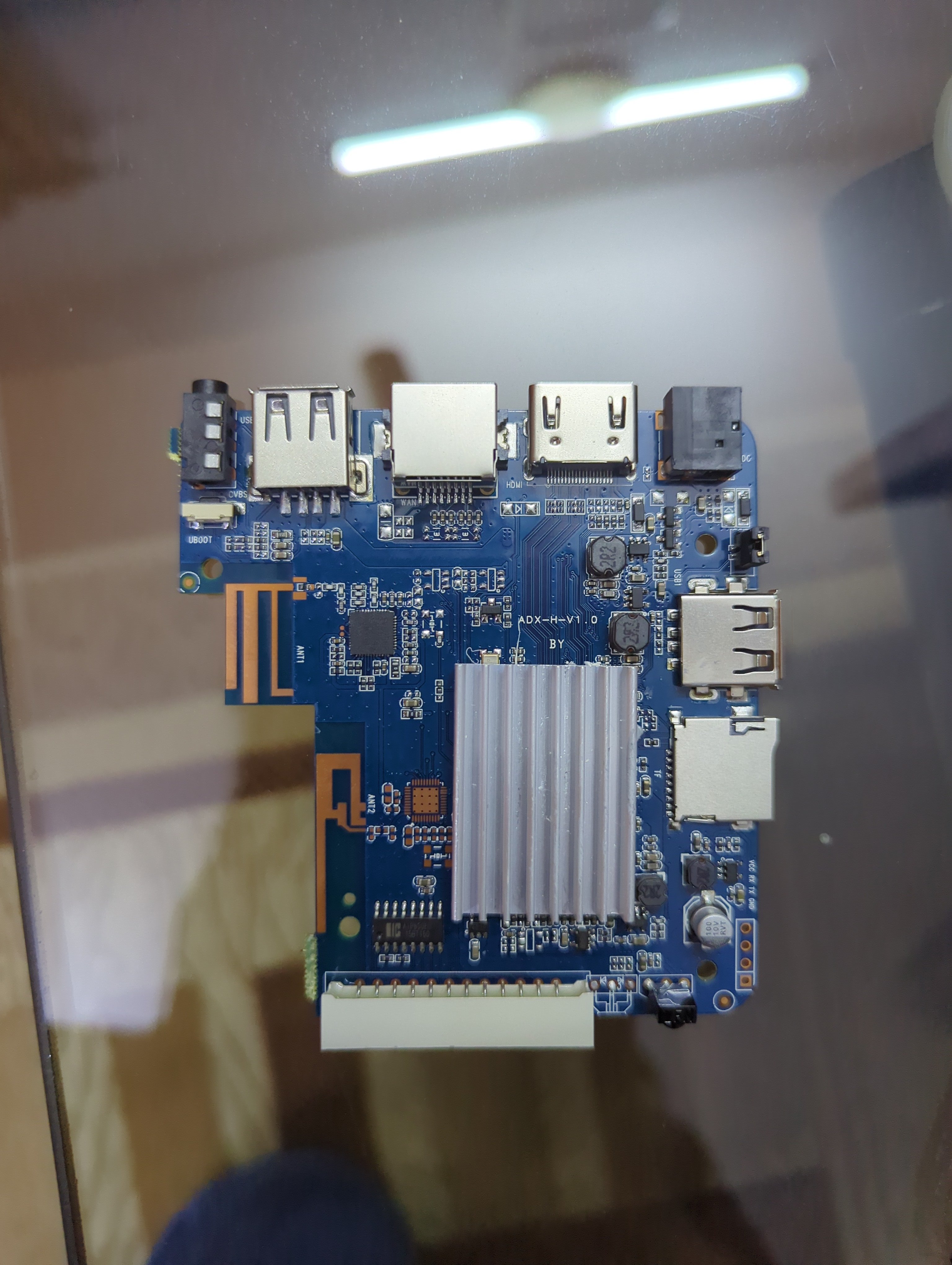
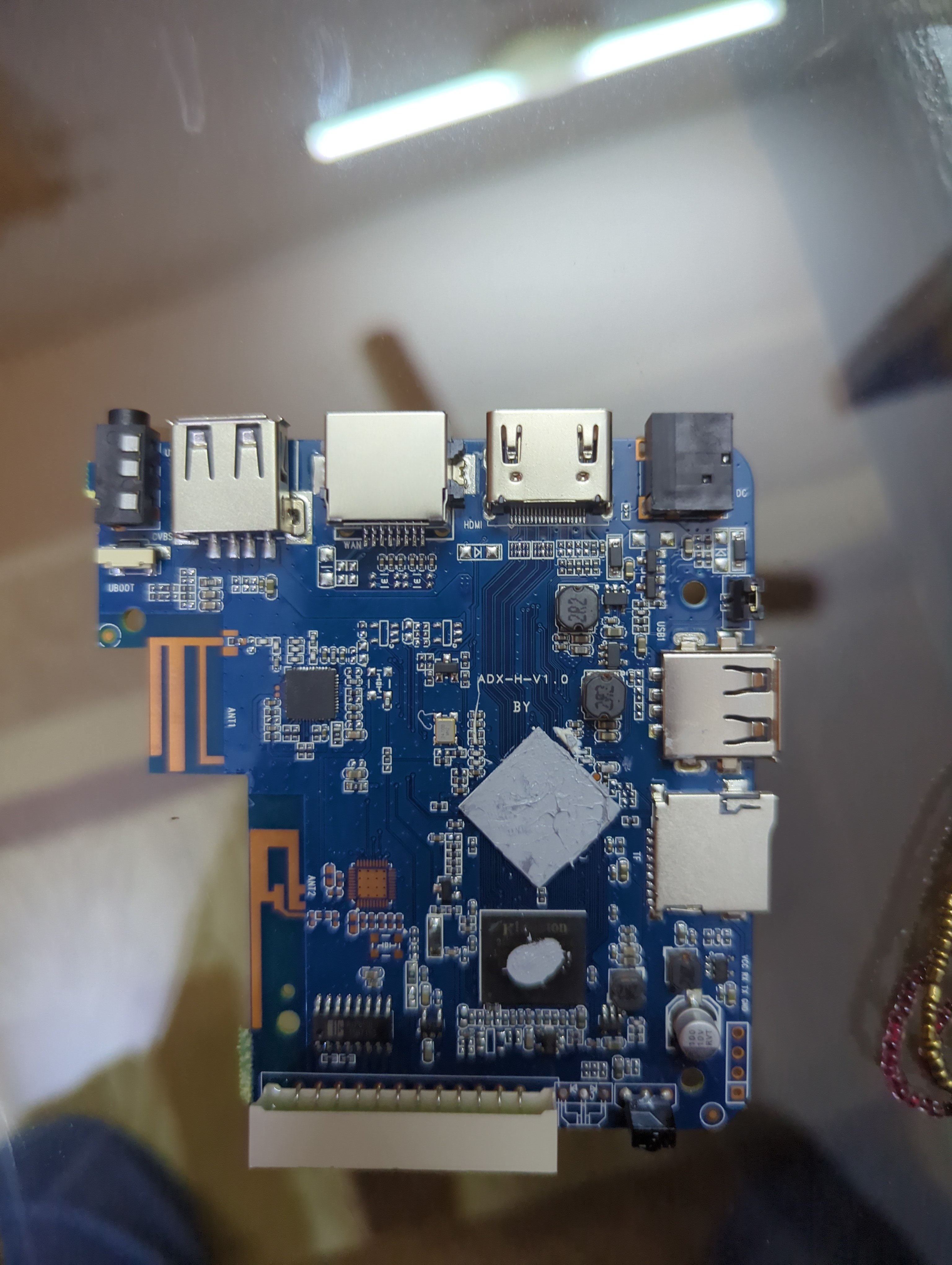
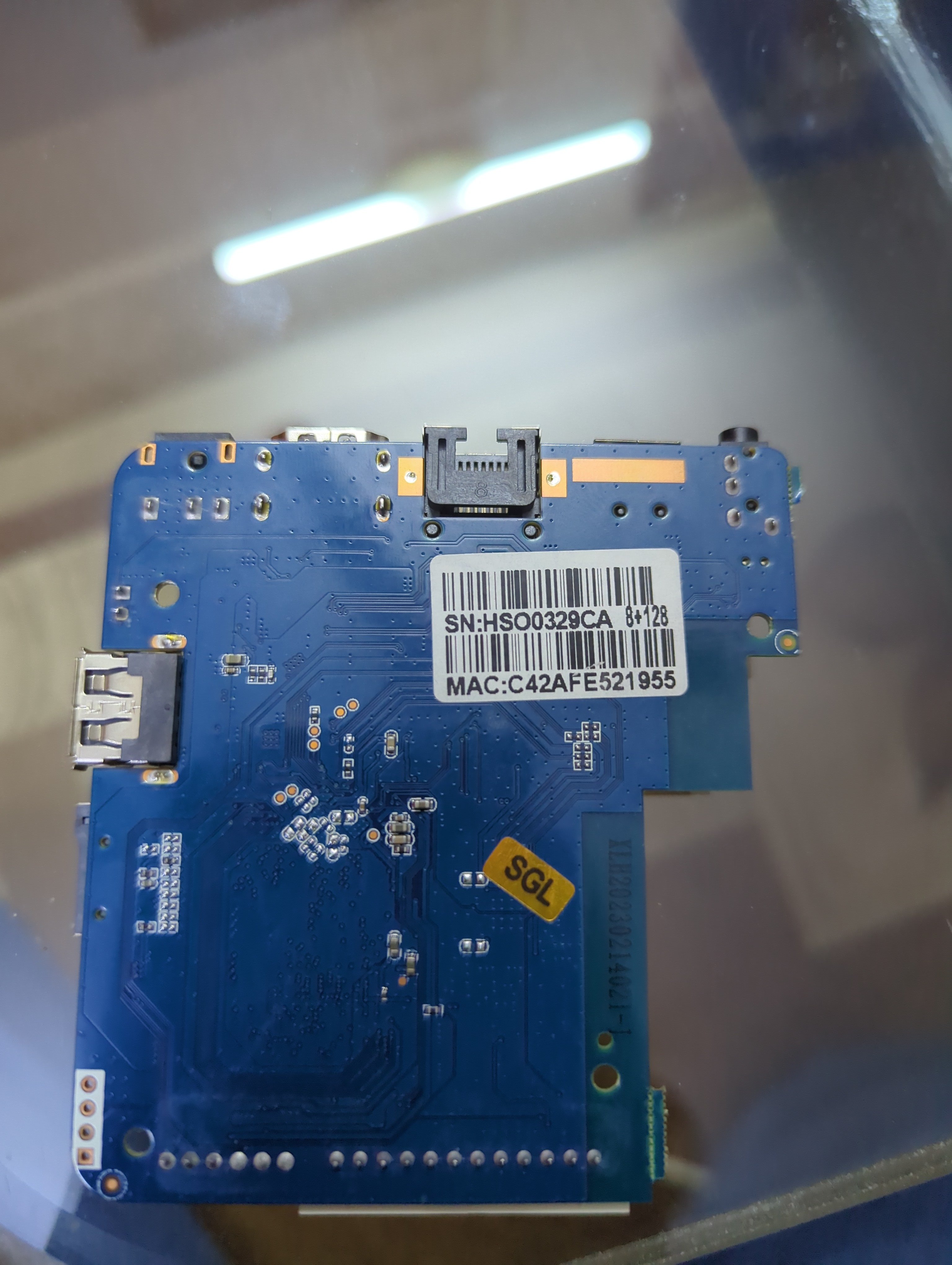
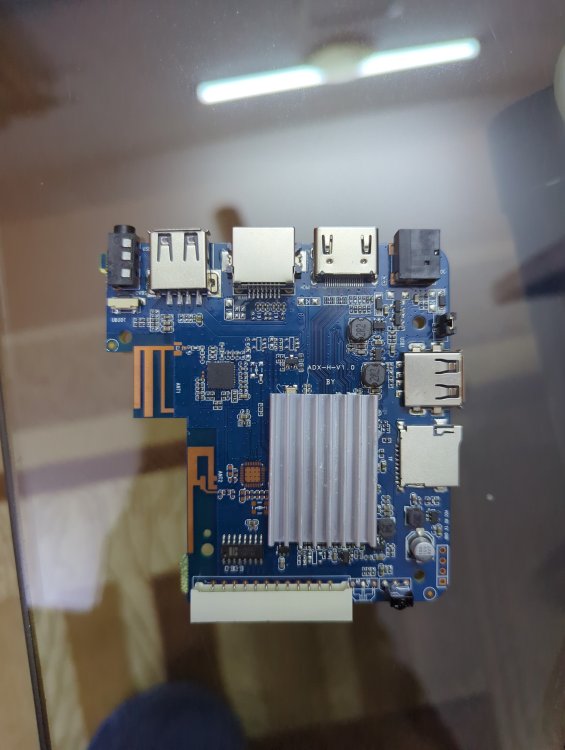
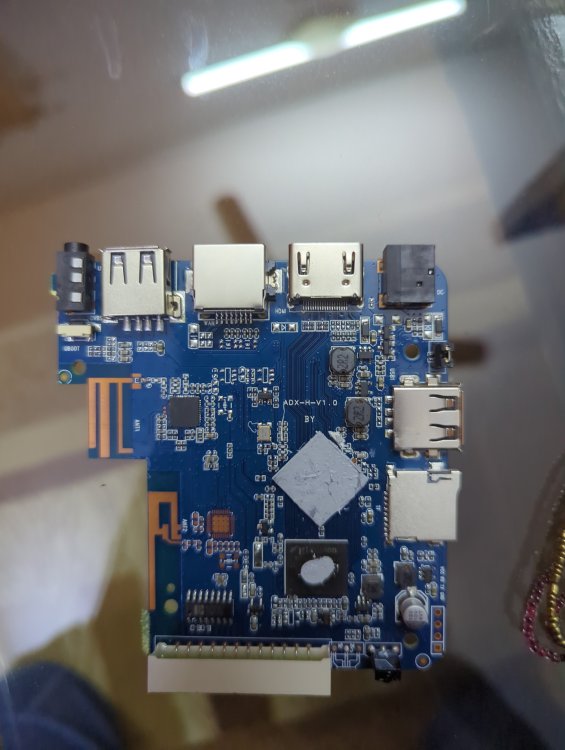
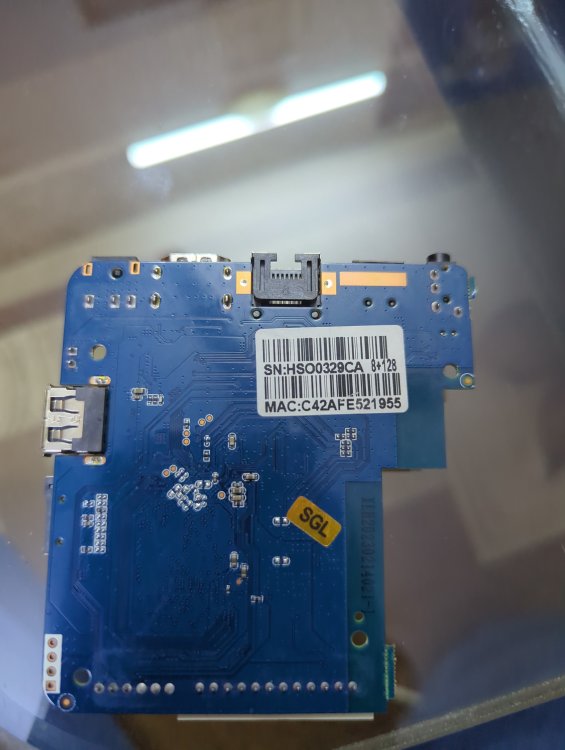
Basically it has 1 gb ROM 8gb ram h3 chip and I HAVE put many img files on SD card NONE of them boot and as soon as I take the SD card out it boots into android perfectly fine... I'm lost on words and what to do I have also tried FEL mode on linux but the request times out with error -7 power supply is 5v 2a which is fine for this so not that and I'm using a 256gb a1 rated SD card. This is from a generic Chinese tv box called meecom and it has ADX-H-V1.0 written on it. I also changed the dtb files a lot but it still gave no display or sign that it was booted into armbian idk what to do help ( btw I repasted it that's why it has no thermal putty on it)
-
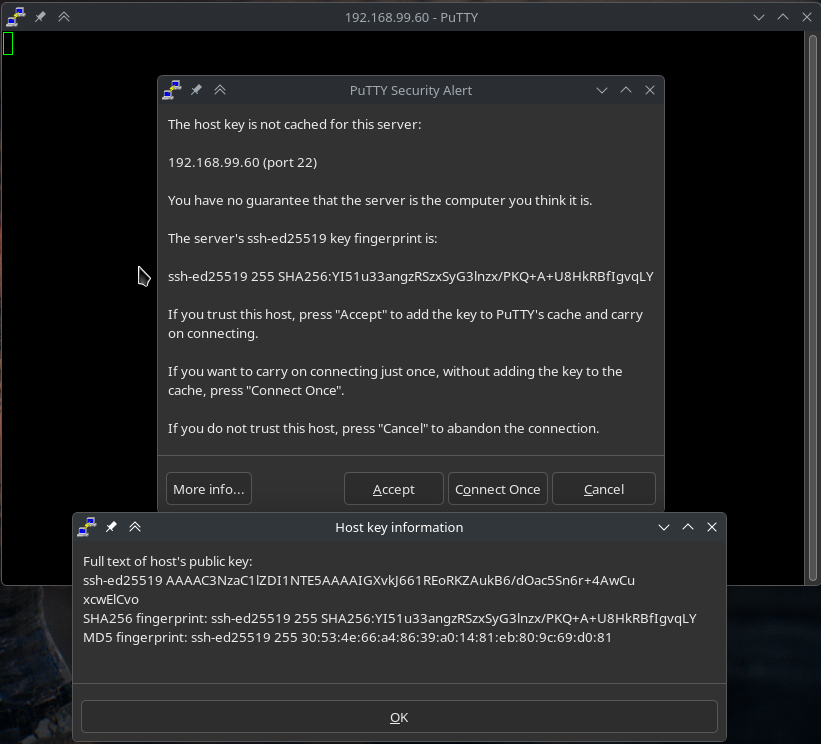
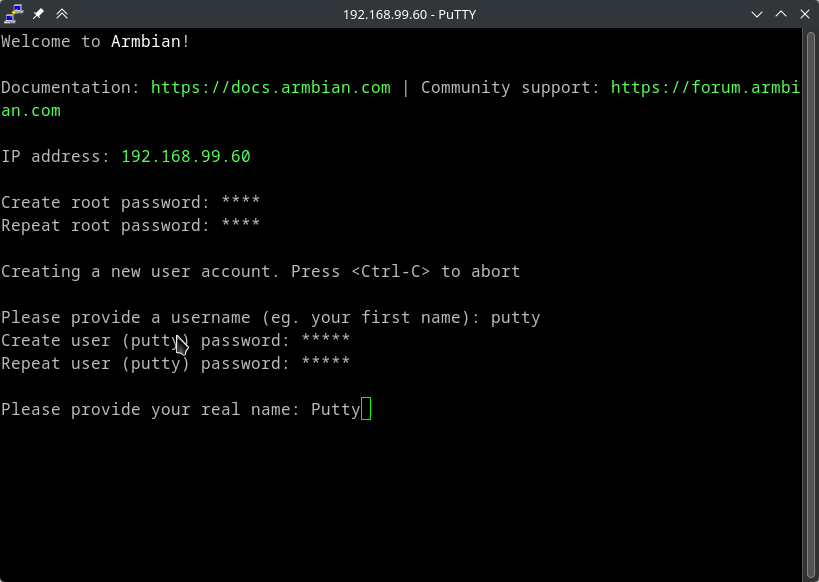
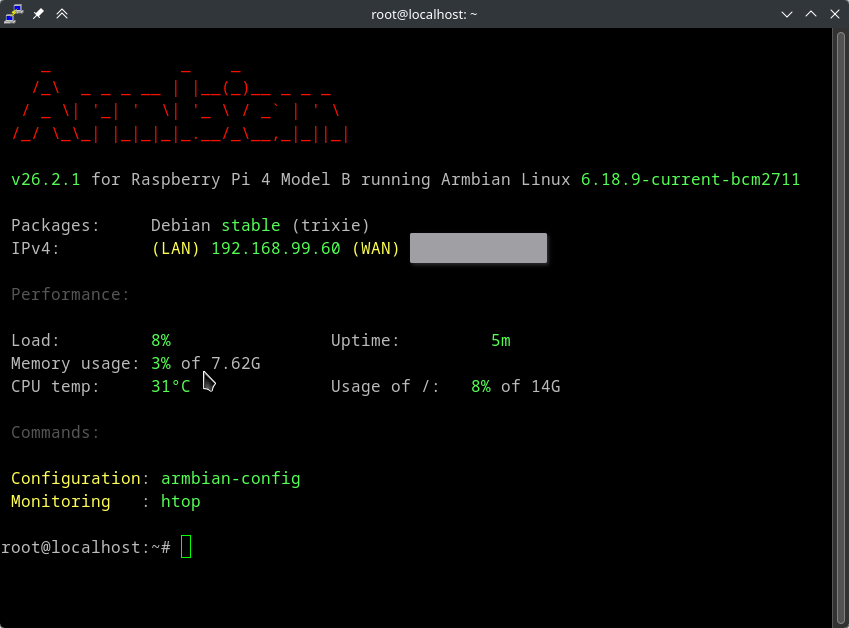
It really is as simple as possible on Armbian. Pretty good documentation too, I posted it before, but here you go again: https://docs.armbian.com/ All you have to do is to login as root from an ssh client following standards. I do not have access to a windows installation where I can confirm if what you say is true, that the ssh client does not let you login with "ssh root@xxx.xxx.xxx.xxx", so maybe you are correct, but it sounds very unlikely to me. But what I can guarantee is using an ssh client from another unix system will definitely let you connect. So use a mac or a linux computer to access. Or install wsl on windows and do it from there. https://learn.microsoft.com/en-us/windows/wsl/install Edit: I actually forgot, but I had putty installed on my system. I used it to check colors in a script I maintain and it exists in the extras repo on arch. Downloaded latest minimal image for rpi (so not same hardware as you) and... No settings changed in putty, just a standard root@192.168.99.60 that I added into the "Host Name (or IP address)" field and clicked "open". Name : putty Version : 0.83-1 So I don't know what to tell you...
-
-

Clarification on GPL 2.0 License Applicability
tparys replied to Clark McCauley's topic in Off-topic
This seems like an excellent question for a lawyer. That said, the Armbian Build system is GPL v2, which Wikipedia has an excellent Article on, and has the following to say: That said, even if you're not distributing modifications of the build system, the final image still has GPL components. -

Gaming experience with Orange Pi 5 (RK3588) on Armbian
KhanhDTP replied to KhanhDTP's topic in Orange Pi 5
GTA V OG on Orange Pi 5+ 1080p Low DXVK / PanVK / Debian13 - Yesterday
-
 I haven't got my head around what the differences are with -copy options. I'm able to use drm-copy but it produces a small stutter when watching 1080p hevc content whereas drm is very smooth. As previously mentioned, drm-copy does allow mpv to display videos with problematic file widths instead of just a black screen. I don't understand it all enough to know why that is.
 -
I think building a new image is probably beyond me at the moment. I uninstalled the existing headers, rebooted and installed the updated headers and rebooted. The issue persists. I'm just going to give up on it. I don't really need to LCD display to work. I just wanted confirmation I wasn't missing something stupid. Thanks.
-
hm yes. I am not a Linux guru and would have liked to get a base for an up-to-date omv8. For me to just burn a recent armbian image on a Odroid hc2 - what a schmuck can do based on simple how-to's - this is not it. I see that you would have to modify the sd card up-front with either a key entrance to ssh or with another user. Console is "out" for a headless install and I do not have an XU4 so that you could do console/hmi supported install first steps. I think I call it a day. Thanks for all the support.
-
 The patches that were available out-of-tree for a long time were a kind of hack using the DRM subsystem for decoding. For inclusion in mainline, they were further developed into a more correct request method. It is hwdec=v4l2request-copy in fact, because the stateless decoder is an m2m device and the scan-out is still carried out via the DRM subsystem. However, the copy is cheap because it is executed via dmabuf as zero copy.
 -

Orange Pi Zero 3 WiFi Issues (unisoc_wifi Driver)
ValdikSS replied to Thomas Waterfall's topic in Allwinner sunxi
I found a workaround: disabling BSS transition management from AP to STA seems to work. There won't be roaming on AP's request obviously. wpa_cli set disable_btm 1 or in Debian's interfaces configuration file: iface wlan0 inet dhcp wpa-ssid YourSSIDJere wpa-psk blablabla post-up wpa_cli set disable_btm 1 Regular roaming (device-initiated) still works fine. -
For the longest time I have struggled with Timezone for Iceland in Armbian. The initial Armbian config has Europe -> and then places in Europe, in this list then it even has exotic places like Jan Mayen and or Swalbard (I forgot which ?). But it does not have Iceland at all. I know at this point in time (at initial install you can manually enter in some time zone format also). If you go in Armbian Config after it has been installed then the Armbian Config tool only displays Cities, so at this point in time you have missed the chance to enter it in the time zone format. Iceland uses UTC / GMT0, as in same time as London half of the year, but differs by one hour the other half since we do not have daylight savings like they have. I guess what I am asking for is something equal to this in the setup windows both in intial setup and in the Armbian Config sudo timedatectl set-timezone Atlantic/Reykjavik
-
so im currently running v25.11.2 for Orange Pi 5 running Armbian Linux 6.1.115-vendor-rk35xx did i will get same problem if upgrade to the latest build?
-

oops when I restart - works fine if I shut down and cold boot.
xsetiadi replied to jondowd's topic in Orange Pi 5
how do you solve this man? im also have this issue using v25.11.2 for Orange Pi 5 running Armbian Linux 6.1.115-vendor-rk35xx im using official power adapter. so i guess nothing wrong with my power. can we fix this without reinstalling the entire os? i have several running container and services. -
As someone not familiar with all the ins and outs of GPL specifically, how does GPL in the armbian/build project play with userpatches? Is it expected that a commercial hardware device using Armbian would need to open-source the customize-image.sh script? Thanks!
-

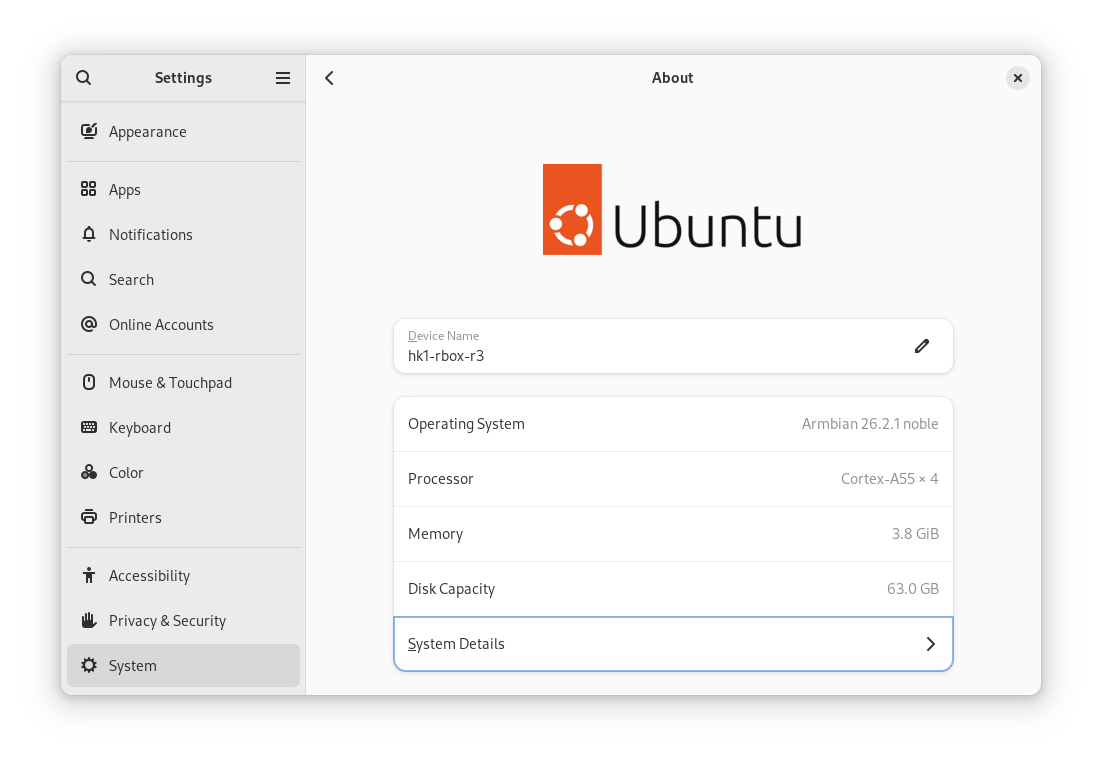
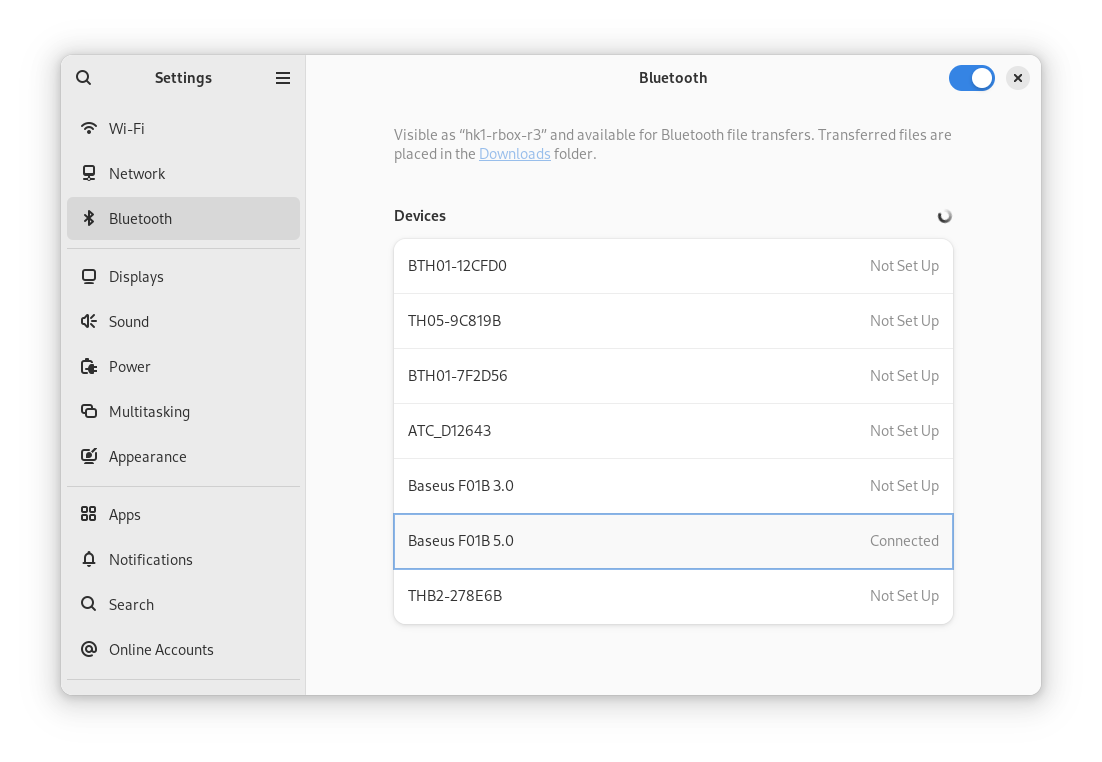
Vontar KK MAX / HK1 RBOX R2 / R3 - RK3566 4GB/32GB(or 64GB)
Deoptim replied to Deoptim's topic in Rockchip CPU Boxes
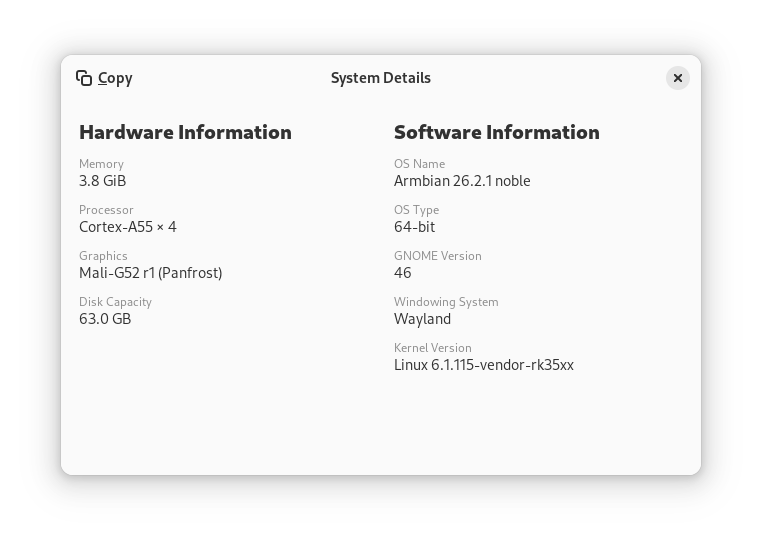
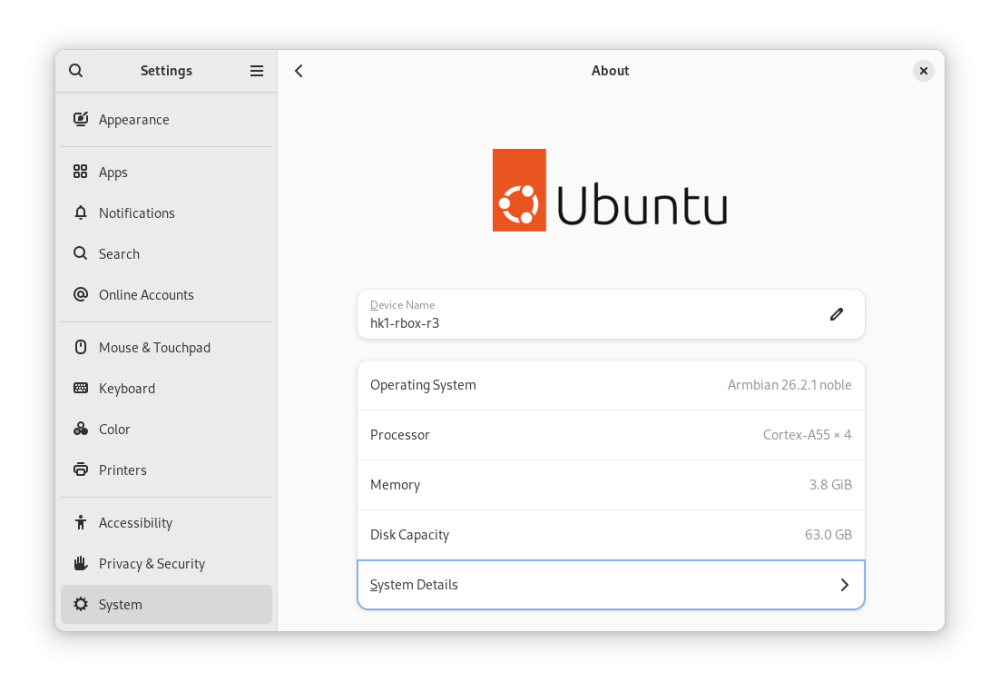
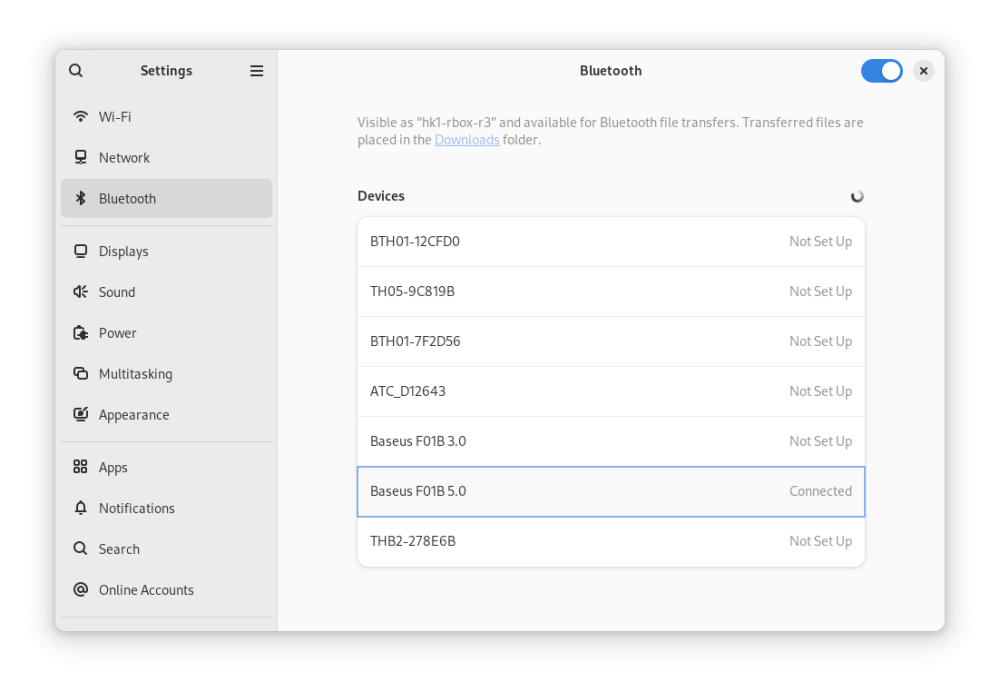
Here are the modified latest official Armbian-supported images for Radxa Zero 3W/3E. Everything works for me, including hardware-accelerated YouTube playback in Chromium (however, with a caveat): Armbian_26.2.1_hk1-rbox-r3_trixie_vendor_6.1.115_minimal.img.xz Armbian_26.2.1_hk1-rbox-r3_noble_vendor_6.1.115_gnome_desktop.img.xz MD5: 28654e87a39ac3e0b2bec4ce4211f5ca *Armbian_26.2.1_hk1-rbox-r3_noble_vendor_6.1.115_gnome_desktop.img.xz ce74829c43c6d27b02bdf314580c4dc4 *Armbian_26.2.1_hk1-rbox-r3_trixie_vendor_6.1.115_minimal.img.xz What you MUST do after installing Armbian: Freeze auto-updates for the bootloader and DTB (kernel updates are OK, except for these two packages since we use a different bootloader, not for Radxa Zero 3): sudo apt-mark hold linux-u-boot-radxa-zero3-vendor linux-dtb-vendor-rk35xx Install dependencies for hardware-accelerated playback Youtube in Chromium: sudo apt update sudo apt install chromium-codecs-ffmpeg-extra ffmpeg In Chromium, install the enhanced-h264ify extension. Then, in the extension's options, leave only AV1 disabled (i.e., enable VP8 and VP9). Screenshots: Instructions on how to modify any Armbian image yourself: Source: 4PDA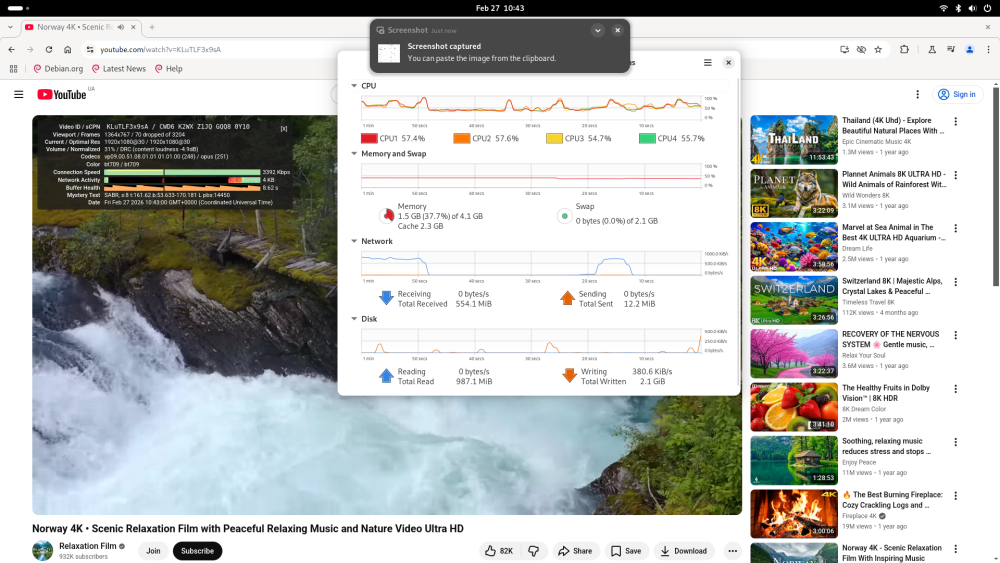
-
@BoringNameHave you tried building a new image? Use the image and kernel headers from that specific build. I believe the problem exists because the DTS source was updated after the header release. I updated the linux kernel headers. https://github.com/NickAlilovic/build/releases/download/20250306/linux-headers-edge-sunxi64_25.05.0-trunk_arm64__6.12.11-S62b2-Da873-P6755-C1a9bH02eb-HK01ba-Vc222-B9bbb-R448a.deb
-
This repo is a bit behind what you are running. drm has been changed to v4l2request. I'm going to assume you have hwdec=v4l2request in your mpv.conf file.
-
So we are perhaps looking at potential changes on SSH app / encrypting introduced in Debian Trixie? That affects certain clients. On Armbian side - we didn't change anything in this regard. Eventually we will get down to why this doesn't work. Software developers have to learn how to live with constant frustration. It never goes away ...
-
Some other info that may be relevant. Pretty much the only thing I could find that seemed to indicate different versions. cat /proc/version Linux Version 6.12.11-edge-sunxi64 (build@armbian) (aarch64-linux-gnu-gcc (Ubuntu 11.4.0-1ubuntu1~22.04) 11.4.0, GNU ld (GNU Binutils for Ubuntu) 2.38) #1 SMP PREEMPT Thu Jan 23 11:23:05 EST 2025 gcc --version gcc (Debian 12.2.0-14+deb12u1) 12.2.0
-
mpv_--hwdec=help.logis what I get, and everything works as expected, but I am on current mainline releases with in-flight patches for mpv and ffmpeg on top. Gstreamer framework based applications work out-of-the-box. The log entries that contain the 'request' component are the ones that matter. But you're right, it can still take a while before current mainline releases are declared stable by some distributions and adopted. But this is not the fault of mainline development, which continues to progress and does not take outdated versions into account any longer.
-

Armbian Debian suggestion
Fabricio Martínez Tamayo replied to Fabricio Martínez Tamayo's topic in Off-topic
I always use minimal CLI and deploy k3s. Might be the request amounts are too many or who knows. But the service hangs and stops working. Just my 2 cents. -
No need to thank me in this case. You don't even read or understand or act upon it from the start; I mentioned essentially twice earlier what the problem is and now that I again opened that ssh log and you don't seem to understand how to handle ssh links. Is trivial for decades, you need to read docs or maybe ask an AI-bot, else forget about Linux and stay with Windows only.