All Activity
- Past hour
-
Hello, @Geoffrey F4FXLyou just saved me a lot of debugging time. I have multiple orange pi zero with h2+ and h3 and I had the same problem as you. With the reboot command, the sbc shutsdown but doesn't boot again, i need to reset the power for getting it booting again. On my side , this command extraargs=reboot=warm didn't worked but extraargs=reboot=watchdog worked perfectly. I just rebooted it 5 times in a row and it always rebooted well. My version : v25.11.2 for Orange Pi Zero running Armbian Linux 6.12.58-current-sunxi
-

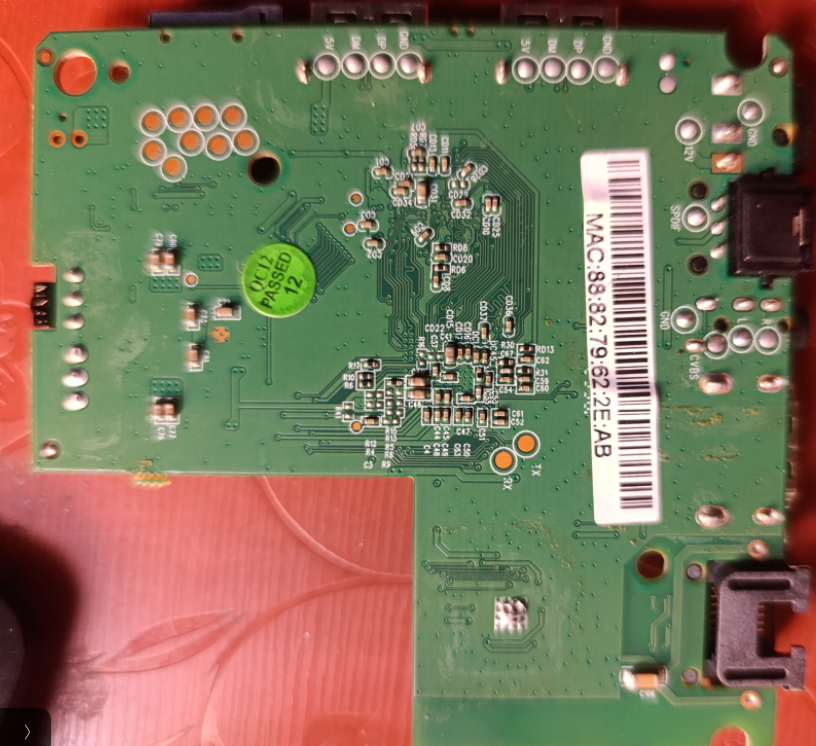
Where is the RAM present in this setup box?
abhishek timalsina posted a topic in Allwinner CPU Boxes
It is an h313 all winner box. But i can't point the RAM at all.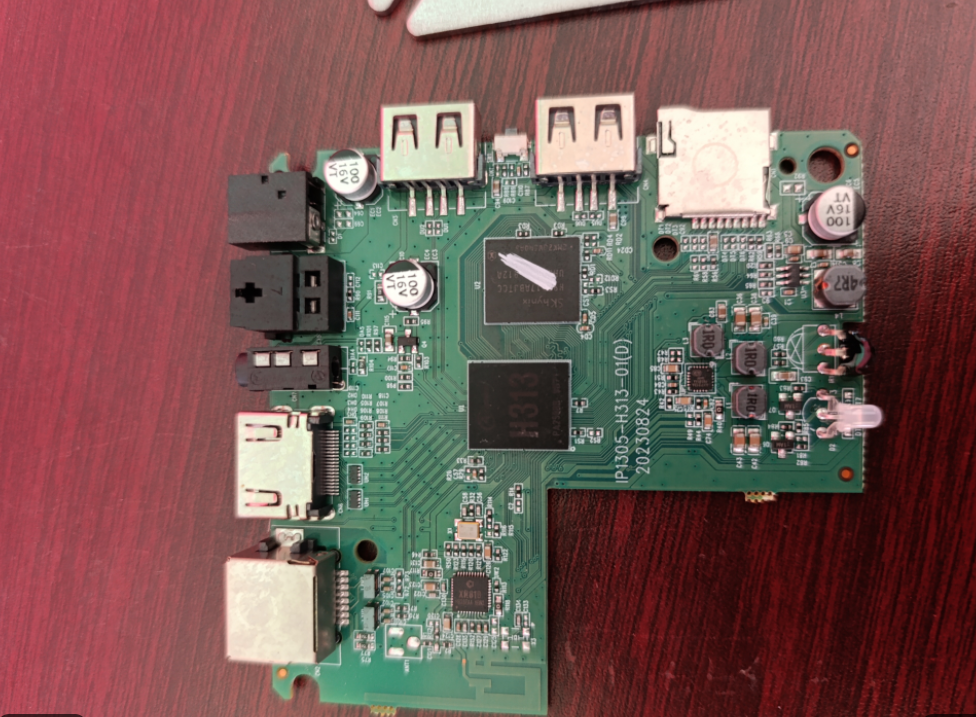
- Today
-
Excelent! That works. I didn't, notice that pinctrl-rk805 was externalized and can't be loaded automatically. For now I've just add pinctrl-rk805 to /etc/initramfs-tools/modules and update-initramfs. Werner: device tree has no changes for a long time. Thanks!
-
Which DTB did you use? I extracted the Android files and found a resource file named ENTRrk-kernel.dtb. The file began with "Rockchip RK3399 Excavator Board edp (Android)". Could it be possible that the device is compatible with this board?
-
Hi Brent; YES! I did figure it out, finally. The issue is that almost all information on the web is for the older pipewire and wireplumber which works completely differently than the new versions. Bookworm used the "old way" and Trixie uses these new versions for which there isn't much info. Compounding the issue is that most information is regarding desktop versions of Linux, not headless like I run. So, when you use bluetooth on linux, wireplumber auto-creates profiles and pw nodes. Or at least it's supposed to. It wasn't creating these profiles because I was missing a conf file which is only needed when your NOT running on desktop, AFAICT. Add this file: /etc/wireplumber/wireplumber.conf.d/50-bluez-no-seat.conf wireplumber.profiles = { main = { monitor.bluez.seat-monitoring = disabled } } If you do that, all of sudden, bluetooth "just works". Took forever to find that stupid little piece of information.
-
@sicxnull I ran into the same issue when flashing "Armbian-unofficial_26.02.0-trunk_Mxqpro_bookworm_current_6.12.65_minimal" (worked only in SD Card). The issue was gone when I switched to "Armbian-unofficial_25.05.0-trunk_X96q-lpddr3-v1-3_bookworm_edge_6.12.11_server" built by @Nick A
-

The Rock Pi S completely freezes during OOMs
brentr replied to solaris3308's topic in Radxa Rock Pi S
Could you send me just the (short) list of packages you installed atop the base Armbian distro rather than a dump of every installed package? The goal is to provide me a simply procedure I can use to replicate the freeze you observe. You might also try running repeating the "free" command to monitor memory usage just after you start your tests. I expect you will see the swap usage steadily increasing. If you disable swap, the system will likely start killing processes. -
Have you gotten bluetooth working with trixie and pipewire on other Armbian devices? I gave up on pipewire after trying it a year or so ago. Too many little audio glitches and bugs. Maybe it's better now? Anyway, if this is unique to the RockPI-S, I'll investigate further.
-
 Hello everyone, I have a Lemfo H96 Max V56 (8GB RAM / 64GB eMMC). Board PCB Version: HCY RK3566 - 1X32 - V13 - 2021-03-27 I am relatively new to the Linux world. So far, the only image I have managed to flash and boot successfully is an old Linaro Debian 10 (vendor image from 2019). However, this version lacks hardware acceleration (it runs on llvmpipe), which makes it unusable for my specific needs. My Goal: I want to run a modern Linux with a Desktop environment to use PortMaster and RetroArch. For this, I critically need a system with working Panfrost/Mali GPU drivers. The Problem: I have read through this thread, but I am finding it quite confusing to pinpoint exactly where to start given the various methods (Legacy vs Mainline/Chainloader). Also, it seems some file links are dead or pointing to empty repositories. Request: Could someone please guide me to the correct/updated files for my specific 8GB board? The correct MiniLoader/SPL (.bin) for RKDevTool. A working Desktop Image (.img) (Armbian Bookworm or Ubuntu) that supports GPU acceleration. I am already comfortable using RKDevTool and putting the device into Maskrom mode, so I just need the correct file set to avoid bricking the device. Thanks in advance for any help!
 - Yesterday
-
Update on this box. Got wifi working fine. Everything works well with SD Boot. Installing to EMMC brings me to this error U-Boot SPL 2024.01_armbian-2024.01-S866c-Pa67d-H5afb-Vc88c-B2eb2-R448a (Feb 15 2026 - 18:20:18 -0500) DRAM base address is defined as 0x40000000 DRAM has 14 b/raw, 10 b/col, 4 B/width, 2 #rank and 8 #bank DRAM top address must be less than 0x40000000 DRAM: 1024 MiB Trying to boot from MMC2 MMC Device 1 not found spl: could not find mmc device 1. error: -19 SPL: failed to boot from all boot devices ### ERROR ### Please RESET the board ### Chasing down what could be causing this.
-
I'm back at it, but this time I can boot by setting netplan wifi up. On reboot wifi never comes up. Do the following: Since end0 is reporting as "busy," let's see if forcing it back to eth0 helps udev clear the conflict. Edit /boot/armbianEnv.txt. Add or modify the extraargs line to include: extraargs=net.ifnames=0 biosdevname=0 Fix hash errors: # Remove the cached package lists that are causing the mismatch sudo rm -rf /var/lib/apt/lists/* # Create the partial directory again just in case sudo mkdir -p /var/lib/apt/lists/partial # Clean out the local repository of retrieved package files sudo apt clean # Update the package index again sudo apt update This is latest build.
-
 What Armbian image are you using? Full boot log would be helpful as well.
 -
 moved to tvboxes
 -
BalenaEtcher has known issues and therefore not recommended. Use Armbian Imager or USBimager. Also verify that the downloaded image is good by utilizing the checksum. https://docs.armbian.com/User-Guide_Getting-Started/#download-and-verification https://github.com/armbian/imager https://bztsrc.gitlab.io/usbimager/
-
 Hello everyone, I’m trying to flash the following Armbian image, but Balena Etcher throws an error as soon as I load the image: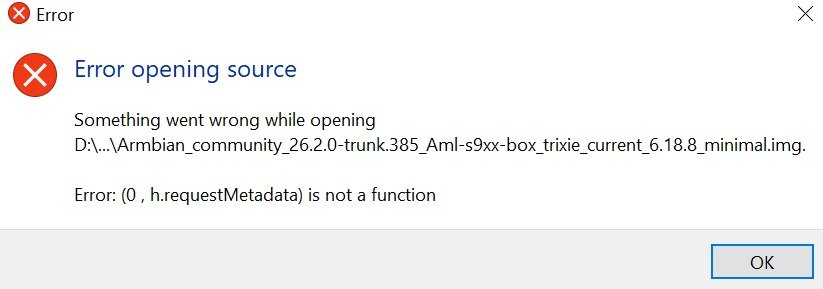
-
Hello everyone, I successfully installed Armbian to eMMC on an Amlogic S805X (gxl_p241 / p241 board). The system boots correctly when I manually start it from U-Boot, but autoboot fails every time. I believe my bootloader / U-Boot environment is not properly configured. During flashing, I only selected the DTB, and I am not sure how the bootloader variables should be set for eMMC boot. if it didnt work ,how to manually install u-boot U-Boot log ----------------------------------------------------------------------------------- USB XHCI 1.00 scanning bus 0 for devices... 2 USB Device(s) found scanning usb for storage devices... init_part() 282: PART_TYPE_DOS 1 Storage Device(s) found fail in cmd [fatsize usb 0 factory_update_param.aml], rcode 1 File factory_update_param.aml not exist in Upan?? get upgrade version failed Hit Enter or space or Ctrl+C key to stop autoboot -- : 0 gxl_p241_v1#
-
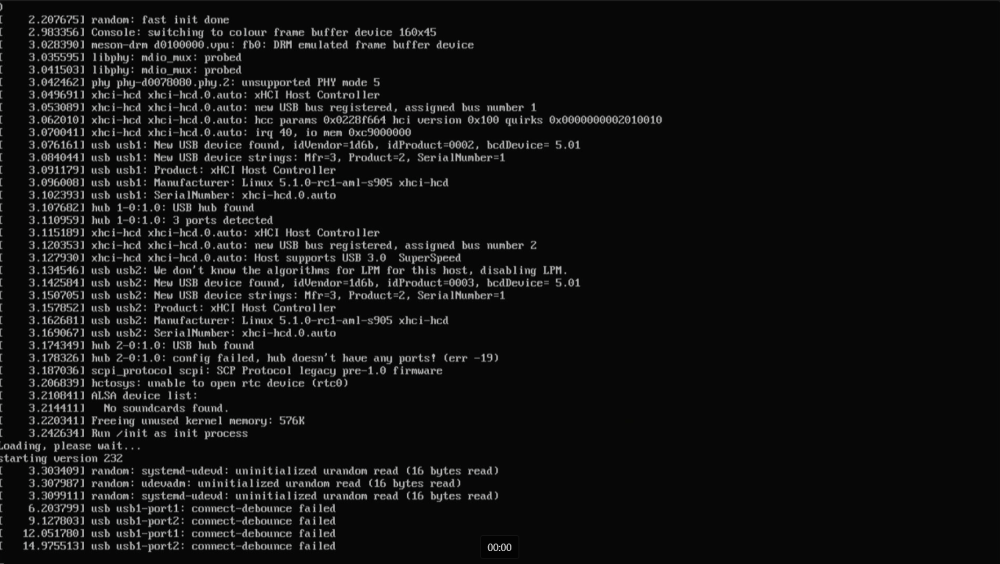
Which device? which armbian version? nobody here has a second sight. from the screenshot you aren't even using armbian or at least nothing official.
-
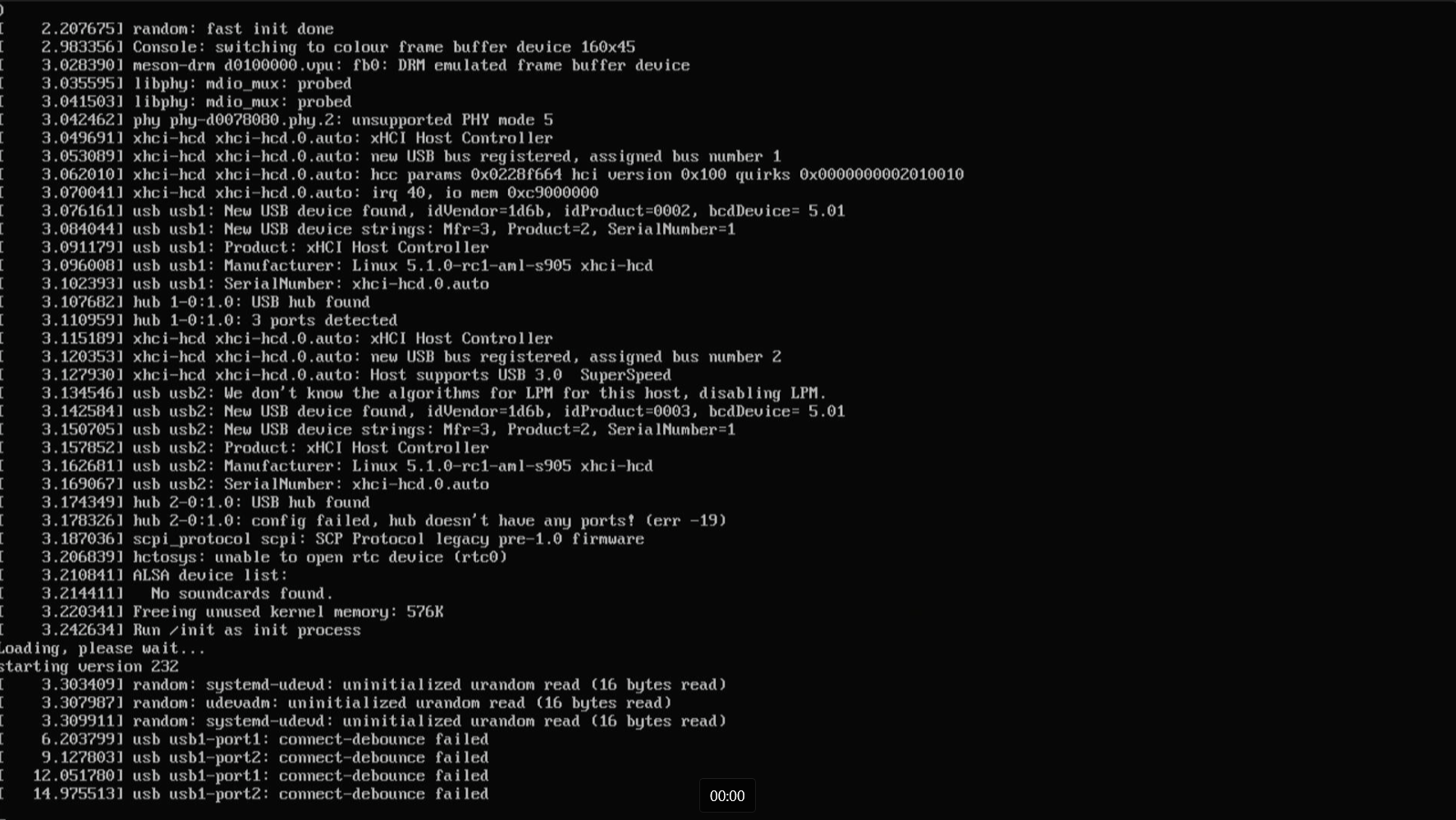
Please help, I can't figure out this error for a month now. I've tried all the .dtb files, but nothing works.
-
Did you try loading the "pinctrl-rk805" module? This was once directly compiled into the kernel and later externalized into a module. And IIRC that happened when switching to 6.12. If loading that module helps, then adding it to the MODULES line of the board's config like this should fix it.
-
moved
-
 I'm experiencing something unusual. A device of mine, running Armbian, cannot communicate with an Android device in my LAN. Otherwise everything else works. My Orange Pi Zero 2w running Armbian can ping all of my LAN IPs (and access theyre net services also) , but fails at pinging an Android device (which is connected through WiFi): "Destination Host Unreachable". Same goes the other way around where Termux runs on the above mentioned Android 15 device but cannot ping ("Destination Host Unreachable") the host running Armbian or access it via ssh (it simply stalls). Everything else works just fine, all of my devices connect with each other without a glitch; they can all access every other running ssh instance inside the lan (which is a mix of Windows, Linux and Android devices). The very same Orange Pi Zero 2w running Armbian is perfectly accessible via ssh from all other hosts and vice versa. The Android device running Termux is capable of pinging and accessing all other ssh hosts. And there's more; I'm running Wireguard on the Orange Pi and it works fine. it works so good that once I access the lan with the Android Device through Wireguard, I can suddenly ping the Armbian host and ssh login into it. Always using the very same IP address (no dns involved). I wonder where I should look. I cannot imagine what's causing it. Any suggestions? Is this a known scenario? ArmBian Community running on Orange Pi Zero 2w v26.2 rolling for Orange Pi Zero2W running Armbian Linux 6.12.71-current-sunxi64 Packages: Debian stable (trixie) Android 15 running Termux Android REL 15 aarch64 Linux 5.10.236-android12-9-00020 Termux googleplay.2026.02.11 There's no WiFi separation on the router side.
 -
Yes, shorting the pins I was switch the device into MaskRom mode and install Android. Now I trying to identify and use the debug console, not much success so far
-
Will check it when i back to PC, will be away from pc for around a week
-
I do get multiple warnings while compiling the DTS file, about 50-100 warnings similar to this: ttt.dts:1752.3-32: Warning (gpios_property): /usb0-vbus:gpio: cell 0 is not a phandle reference ttt.dts:1764.3-32: Warning (gpios_property): /usb1-vbus:gpio: cell 0 is not a phandle reference ttt.dts:1776.3-32: Warning (gpios_property): /usb2-vbus:gpio: cell 0 is not a phandle reference ttt.dts:1823.4-34: Warning (gpios_property): /leds/led-3:gpios: cell 0 is not a phandle reference ttt.dts:1828.4-34: Warning (gpios_property): /leds/led-4:gpios: cell 0 is not a phandle reference The phandles are in this kind of format on the dts file: phandle = <0x20>; phandle = <0xc2>; phandle = <0x1c>; phandle = <0xc3>; phandle = <0xc4>; phandle = <0x16>; phandle = <0xc5>; example: Note: the usb0 vbus was originally disabled but I enabled it as the pcduino3 nano has a single regulator for all ports and it is attached to usb0 apparently. In the closing section of __symbols__, I have redirected all 3 regulators to usb0. I believe that the fact it is disabled is because they don't recommend powering the board through the OTG port as it can cause voltage drops when connecting devices as host. My setup will be a gadget with a wifi dongle in a USB A port, so voltage drops should not be a concern, this is just my assumption... usb0-vbus { compatible = "regulator-fixed"; regulator-name = "usb0-vbus"; regulator-min-microvolt = <0x4c4b40>; regulator-max-microvolt = <0x4c4b40>; enable-active-high; gpio = <0x17 0x01 0x09 0x00>; status = "okay"; phandle = <0xc2>;
-
I'd start by comparing the device tree on a working and non-working image.