All Activity
- Today
-

Driving the ili9488 LCD (4.0 inch cheap chinese clone)
forumtrekker replied to robertoj's topic in Allwinner sunxi
With modifications to lightdm.conf I got lightdm working with your tutorial, however lightdm and labwc don't seem to use the SPI display. I verified the setup works on an HDMI screen (with some weird artifacts on the right quarter side but thats a later problem). Do i need to specify lightdm / labwc to use the /sys/class/drm/card0-SPI-1? The only difference between your guide and my setup is I am running kernel 6.18, as I can't seem to find how to compile or install kernel 6.13. I only have 6.12, 6.14, and 6.18 available to install, and can only compile current and edge (6.12 and 6.18), but the compile script failed with a not found error when I attempted to specify 6.13. Not sure if that is relavent, since my setup seems to be working otherwise. -
Thank you very much for your reply. That's exactly what I did. I have a custom Armbian image. When compiling, I selected my board for the 618 processor, as I couldn't find it in the standard section. I also found the panel-mipi-dbi parameter in the module selection menu. However, after compiling, writing the image to the flash card, and checking the module, the system didn't find it. I was able to build the image and include the module after correcting the boardconfig. It may have mistakenly listed the 616 processor, but I changed it to 618, and the image built successfully. After writing it to a flash drive and checking it in the system, I was finally able to find the required module. It was also displayed in the /boot/config(uname) configuration file.
-
Update: I was right, it is an allwinner system U-Boot 2014.07 (Aug 28 2020 - 08:44:29) Allwinner Technology Mali: ERR: /home/work/share/akrd6/custom_relese/H3_ANDROID7.0_BOX_SDK_V1.0_20190702_eng/lichee/linux-4.4/modules/gpu/mali-utgard/kernel_mode/driver/src/devicedrv/mali/linux/mali_platform.c These where the smoking guns that caught my eye, i will likely install Armbian in this anyhow.
-

SSH Login Speed Issue: Armbian significant slower than DietPi on RPi4B
eselarm replied to 1ssuc's topic in Raspberry Pi
I get this on a Debian Trixie VM allocated only 4x Cortex-A76 on ROCK5B 1048576+0 records in 1048576+0 records out 1073741824 bytes (1.1 GB, 1.0 GiB) copied, 4.5407 s, 236 MB/s 2097152+0 records in 2097152+0 records out 1073741824 bytes (1.1 GB, 1.0 GiB) copied, 4.24198 s, 253 MB/s Numbers are lower on RPi4B and ROCK3A. However, since in-place upgrade from Bookworm to Trixie, this slow ssh login is very noticeable and also rather annoying. So this is a Debian issue as far as I can see. I had the same Debian VM running on ROCK3A and was all nice with Bookworm, although only 1GB allocated and of course is 4x Cortex-A55, so slow for crypto and compression (real-time Zstd). Just after upgrade and reboot into Trixie I spent a lot of time trying to figure out why ssh login was so delayed/slow. Also noticeable that it was random, sometimes it was OK, mostly took multiple seconds. I did strace sshd and I saw just delay, waiting time in the process. More I could not figure out, would take me too much time and I had no clue where to look. The plan was anyway to move the VM (and NVME and HDD, the whole NAS setup) to ROCK5B so that is what I did then the next day or so. On the ROCK5B, I do not notice the delay that much, but it seems still to be there. I have no clue why. I use quite a lot ssh unattended, so that I don't care and notice. So I basically still do not know what this is, I have not searched for It, I just see this topic and I recognise it. -
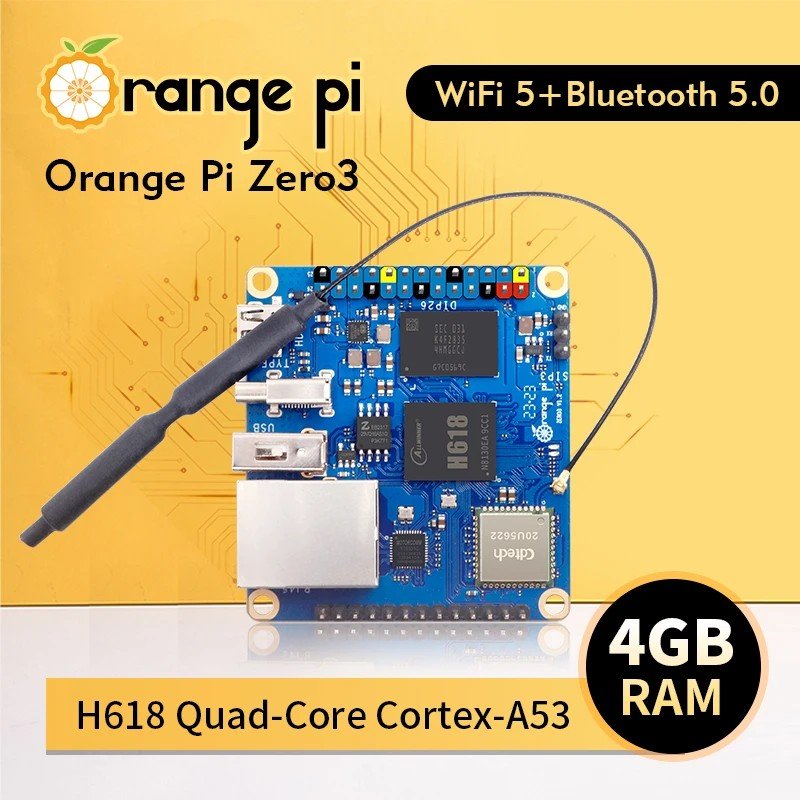
All this time, I thought you were using a custom H618 board hardware. Now it is clear to me, that you have an Orange Pi Zero 3, In armbian build, make sure you don't add any configuration files. Just do "./compile.sh" and when you get the menu for board selection, press the button "Unsupported/CSC" (or something like that). The text menu will turn red. Press OK and you will see a list of more Linux boards. Press "P" to quickly scroll down, then "UP" to find Orange Pi Zero 3. Then choose the option for Linux edge, and choose that you want to configure linux.
-

Edge kernel image parameters
Marco Schirrmeister replied to Marco Schirrmeister's topic in NanoPi R76S
I don't think I forgot anything. I was just curious about the conditions for the current version, since these sentences are relative generic and don't list issues, before I layout the details that I noticed. I flashed the image to a SanDisk Ultra, A1, Class 10 sdcard. System booted fine, but was relative slow which seemed to be related to constant sdcard speed switching issues. The following was constantly going on in the logs. [Wed Dec 3 13:30:34 2025] mmc_host mmc1: Bus speed (slot 0) = 400000Hz (slot req 400000Hz, actual 400000HZ div = 0) [Wed Dec 3 13:30:34 2025] mmc_host mmc1: Bus speed (slot 0) = 198000000Hz (slot req 200000000Hz, actual 198000000HZ div = 0) [Wed Dec 3 13:30:34 2025] dwmmc_rockchip 2a310000.mmc: Successfully tuned phase to 235 The workaround for this was changing power control from auto to on. Messages stopped after executing the following. cat /sys/devices/platform/soc/2a310000.mmc/power/control auto echo on > /sys/devices/platform/soc/2a310000.mmc/power/control cat /sys/devices/platform/soc/2a310000.mmc/power/control on My permanent workaround was this, to avoid manual intervention after a reboot. # /usr/local/sbin/fix‑sd‑pm.sh #!/bin/sh # Disable runtime PM for SD controller (fixes repeated re-init) echo on > /sys/devices/platform/soc/2a310000.mmc/power/control # /etc/systemd/system/fix-sd-pm.service [Unit] Description=Disable runtime‑PM for SD controller After=multi-user.target [Service] Type=oneshot ExecStart=/usr/local/sbin/fix‑sd‑pm.sh RemainAfterExit=yes [Install] WantedBy=multi-user.target # Enable chmod +x /usr/local/sbin/fix‑sd‑pm.sh systemctl daemon-reload systemctl enable --now fix-sd-pm.service systemctl status fix-sd-pm.service Without the workaround the mmc1 switched between 2 states. root@nanopir76s ~# cat /sys/class/mmc_host/mmc1/mmc1:*/name SD128 root@nanopir76s ~# grep . /sys/kernel/debug/mmc1/ios clock: 400000 Hz vdd: 21 (3.3 ~ 3.4 V) bus mode: 2 (push-pull) chip select: 0 (don't care) power mode: 2 (on) bus width: 0 (1 bits) timing spec: 0 (legacy) signal voltage: 0 (3.30 V) driver type: 0 (driver type B) # OR clock: 200000000 Hz actual clock: 198000000 Hz vdd: 21 (3.3 ~ 3.4 V) bus mode: 2 (push-pull) chip select: 0 (don't care) power mode: 2 (on) bus width: 2 (4 bits) timing spec: 6 (sd uhs SDR104) signal voltage: 1 (1.80 V) driver type: 0 (driver type B) With the workaround it always showed this and system felt also snappy. root@nanopir76s ~# cat /sys/class/mmc_host/mmc1/mmc1:*/name SD128 root@nanopir76s ~# grep . /sys/kernel/debug/mmc1/ios clock: 200000000 Hz actual clock: 198000000 Hz vdd: 21 (3.3 ~ 3.4 V) bus mode: 2 (push-pull) chip select: 0 (don't care) power mode: 2 (on) bus width: 2 (4 bits) timing spec: 6 (sd uhs SDR104) signal voltage: 1 (1.80 V) driver type: 0 (driver type B) root@nanopir76s ~# --- EMMC was visible under Linux. But the emmc problem I noticed is related to u-boot. When I flashed the image to emmc and started from sdcard nothing at all happened. If I boot from sdcard and interrupt the u-boot prompt, the emmc card was not really visible. or accessible. I do not have the full serial output anymore when the Armbian image was flashed to emmc. => mmc list mmc@2a310000: 0 (SD) mmc@2a320000: 2 => # switching to emmc gives this => mmc dev 2 Card did not respond to voltage select! : -110 mmc_init: -95, time 22 => To debug this better, I build my own u-boot and image based on Armbians dts and defconfig. Here is what it looks like when booted from emmc with no sdcard inserted. U-Boot SPL 2026.01-msc-1 (Dec 02 2025 - 23:42:14 +0100) Trying to boot from MMC1 Card did not respond to voltage select! : -110 mmc_init: -95, time 21 spl: mmc init failed with error: -95 Error: -95 SPL: Unsupported Boot Device! SPL: failed to boot from all boot devices ### ERROR ### Please RESET the board ### I created a patch for the dts, which modifies the sdmmc and sdhci nodes in the dts file. The patch is in my u-boot repo. https://github.com/mschirrmeister/PKGBUILDs/blob/f02af83ae5e0180ae1fd50706624dee348b820d7/core/uboot-rk3576-nanopi-r76s/arm64-dts-rockchip-rk3576-nanopi-r76s-fix-sdmmc-sdhci-coexistence.patch I added also the following Kconfig options to the u-boot defconfig. CONFIG_MMC_SDHCI=y CONFIG_MMC_SDHCI_ROCKCHIP=y CONFIG_MMC_HS200_SUPPORT=y CONFIG_MMC_HS400_SUPPORT=y CONFIG_MMC_HS400_ES_SUPPORT=y Here is the raw patch data. From 0000000000000000000000000000000000000000 Mon Sep 17 00:00:00 2001 From: Marco Schirrmeister <mschirrmeister@gmail.com> Date: Sat, 6 Dec 2025 23:56:46 +0100 Subject: [PATCH] arm64: dts: rockchip: rk3576-nanopi-r76s: fix sdmmc/sdhci coexistence The NanoPi R76S (RK3576) features both a DW‑MMC controller for the microSD socket (sdmmc) and an Arasan SDHCI controller for the on‑board eMMC (sdhci). When both were enabled, the shared I/O voltage rail caused initialisation conflicts: the eMMC required 1.8 V signalling while the SD card logic expected 3.3 V. This patch aligns the DTS and U‑Boot configuration so that both storage controllers operate correctly: - Enable CONFIG_MMC_SDHCI and CONFIG_MMC_SDHCI_ROCKCHIP in U‑Boot. - Add explicit `vmmc-supply` and `vqmmc-supply` properties to the eMMC (sdhci) node. - Add `no-1-8-v;` to the SDMMC node to keep the µSD socket fixed at 3.3 V. With these adjustments the board can access both the microSD and eMMC devices simultaneously, and U‑Boot can boot directly from either medium. Signed-off-by: Marco Schirrmeister <mschirrmeister@gmail.com> --- diff --git a/dts/upstream/src/arm64/rockchip/rk3576-nanopi-r76s.dts b/dts/upstream/src/arm64/rockchip/rk3576-nanopi-r76s.dts index 11111111111..22222222222 100644 +++ a/dts/upstream/src/arm64/rockchip/rk3576-nanopi-r76s.dts 2025-12-06 23:33:40.013947291 +0100 +++ b/dts/upstream/src/arm64/rockchip/rk3576-nanopi-r76s.dts 2025-12-06 23:56:46.961392491 +0100 @@ -772,6 +772,7 @@ status = "okay"; }; +/* eMMC on the Arasan/SDHCI host */ &sdhci { bus-width = <8>; full-pwr-cycle-in-suspend; @@ -781,9 +782,13 @@ no-sdio; no-sd; non-removable; + /* add the supply rails for completeness */ + vmmc-supply = <&vcc_3v3_s3>; /* main VCC rail */ + vqmmc-supply = <&vcc_1v8_s3>; /* I/O rail */ status = "okay"; }; +/* µSD socket on the DW‑MMC host */ &sdmmc { max-frequency = <200000000>; no-sdio; @@ -795,6 +800,8 @@ sd-uhs-sdr104; vmmc-supply = <&vcc_3v3_s3>; vqmmc-supply = <&vccio_sd_s0>; + /* keep this host at 3.3 V so it works when eMMC uses 1.8 V */ + no-1-8-v; pinctrl-names = "default"; status = "okay"; }; With this patch and config changes u-boot detects emmc fine and I can boot from either emmc or sdcard. If this changes are good or bad, I have absolutely no idea. -

SSH Login Speed Issue: Armbian significant slower than DietPi on RPi4B
Werner replied to 1ssuc's topic in Raspberry Pi
I don't have a rpi4b for comparison here but 5b seems ok: root@localhost's password: 1048576+0 records in 1048576+0 records out 1073741824 bytes (1.1 GB, 1.0 GiB) copied, 11.4733 s, 93.6 MB/s 2097152+0 records in 2097152+0 records out 1073741824 bytes (1.1 GB, 1.0 GiB) copied, 4.72436 s, 227 MB/s root@rpi5b:~# uname -a Linux rpi5b 6.19.0-rc1-edge-bcm2711 #1 SMP PREEMPT Tue Dec 16 21:14:01 UTC 2025 aarch64 GNU/Linux -
 I've observed a significant difference in SSH login speed between DietPi and Armbian on Raspberry Pi 4B (headless setup). Environment Raspberry Pi 4B (headless) DietPi (recently installed) Armbian (previously used) Both systems use default settings Observations SSH login to DietPi is consistently faster than Armbian by a few seconds with default settings. Initially suspected MOTD settings, tested files under /etc/update-motd.d/. Discovered that 10-armian-header adds approximately 1 second to login time. Disabled this component but SSH login to Armbian still remained slow. Found related discussion on Raspberry Pi forums: SSH speed limit? Used the following command for testing which revealed significant speed differences: dd if=/dev/zero bs=1K count=1M | ssh localhost 'dd of=/dev/null' and console log root@DietPi:~# dd if=/dev/zero bs=1K count=1M |ssh localhost 'dd of=/dev/null' root@localhost's password: 1048576+0 records in 1048576+0 records out 1073741824 bytes (1.1 GB, 1.0 GiB) copied, 12.9425 s, 83.0 MB/s 2097152+0 records in 2097152+0 records out 1073741824 bytes (1.1 GB, 1.0 GiB) copied, 9.35135 s, 115 MB/s root@DietPi:~# uname -snrvm Linux DietPi 6.12.47+rpt-rpi-v8 #1 SMP PREEMPT Debian 1:6.12.47-1+rpt1 (2025-09-16) aarch64 root@rpi4b1:~# dd if=/dev/zero bs=1K count=1M |ssh localhost 'dd of=/dev/null' root@localhost's password: 1048576+0 records in 1048576+0 records out 1073741824 bytes (1.1 GB, 1.0 GiB) copied, 29.5451 s, 36.3 MB/s 2097152+0 records in 2097152+0 records out 1073741824 bytes (1.1 GB, 1.0 GiB) copied, 20.0137 s, 53.7 MB/s root@rpi4b1:~# uname -snrvm Linux rpi4b1 6.12.19-current-bcm2711 #1 SMP PREEMPT Thu Mar 20 17:34:53 UTC 2025 aarch64 kernel config attachments dietpi: raspberrypi-config-6.12.47+rpt-rpi-v8.zip raspberrypi_proc_crypto.zip armbian on rpi4b: armbian-rpi-config-6.12.19-current-bcm2711.zip armbian_rpi_proc_crypto.zip
 -
Hello, another Odroid M1S owner and user here. I tried the Ubuntu image because I was curious about video acceleration in particular. So I installed Kodi and played a few videos. There is no acceleration. This means that this image is not usable as a player. However, it will probably be usable as an SMB/NFS server (I'll try using it that way for a while). A few comments: - Gnome is relatively slower, but not unusably slow (I personally don't mind, because I don't intend to use the M1S as a desktop) - Gnome sometimes has problems rendering windows, there are strange stripes, only in certain parts of the windows, and at times it is so annoying that it becomes unusable - Personally, I would love it if someone experienced could take a working GPU driver and put it into this image. That would solve everything, and we could all use the M1S to our full satisfaction (however, it's probably not that easy, because otherwise the guys at Odroid would have already done it). - I will add relevant links to a functional accelerated solution that makes the M1S a fully functional driver, but based on the very old and not very usable 5.10 kernel - https://forum.odroid.com/viewtopic.php?f=217&t=47621 here is a functional Odroid based image solution for media player. - By the way, I managed to upgrade the image mentioned here to Ubuntu 24.04, using the Kodi build for Odroid M2 ( https://forum.odroid.com/ viewtopic.php?f=235&t=49005 ), but I had to stay on kernel 5.10, and even this version works relatively well as a functional player with accelerated videos (the old kernel is a prerequisite) I hope that I have contributed at least a little to making this Armbian image gradually become the standard for M1S, because this computer deserves it.
-

Gaming experience with Orange Pi 5 (RK3588) on Armbian
KhanhDTP replied to KhanhDTP's topic in Orange Pi 5
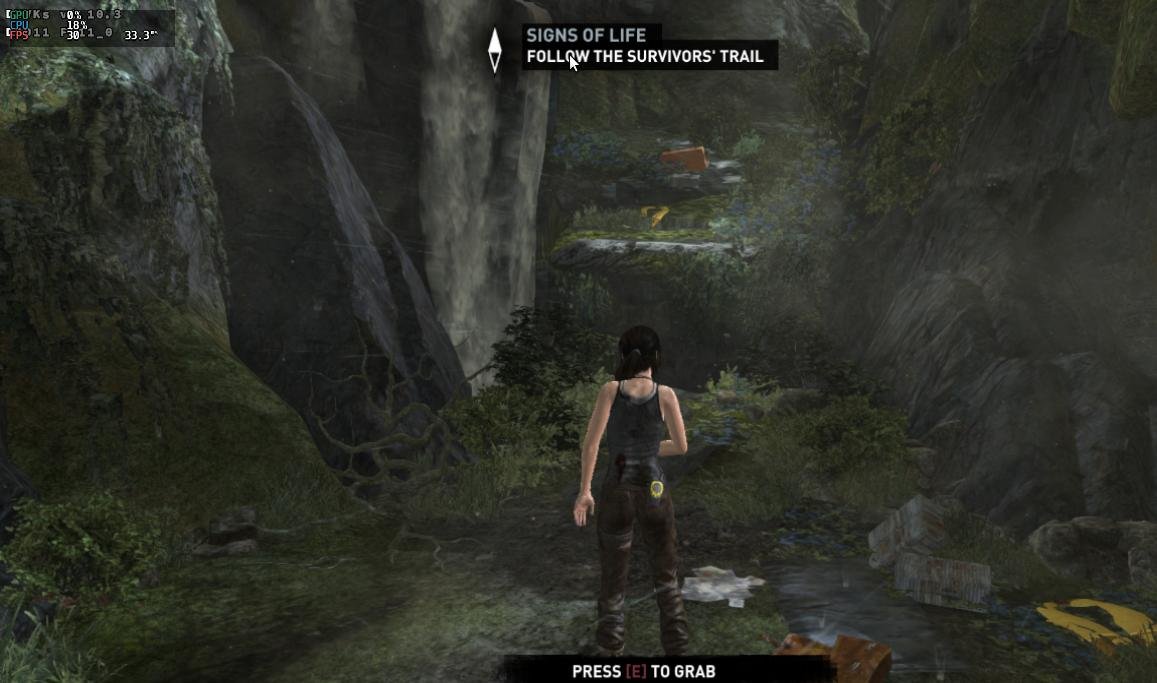
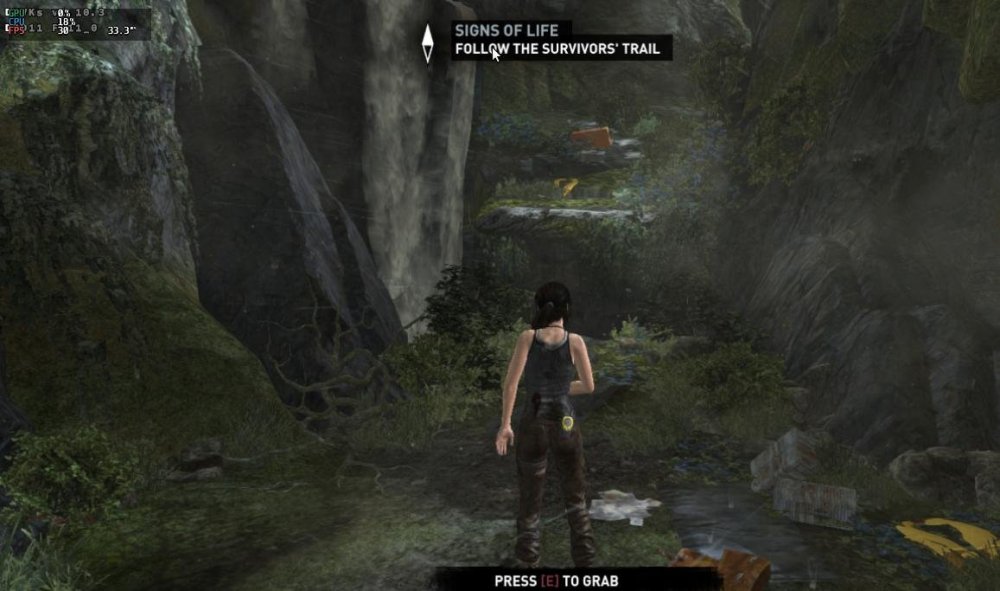
Armbian 25.8.2 Noble XFCE (BSD Kernel: 6.1.115) + PanVk - mesa 26.0 (https://launchpad.net/~ernstp/+archive/ubuntu/mesaaco) + FEX-Emu 2510 + hangover-10.18 (https://github.com/AndreRH/hangover/releases/tag/hangover-10.18) + Dxvk 1.10.3 (stripped) 30~60fps@720p (mixed settings) Tomb Raider (2013) Definitive Edition.thumb.jpg.95b8fe83c7904d982e5e1f330020a623.jpg)
-
OK good that is works now. I did not really read all history. I have a build running now (mainline/edge), but I will again need to dig into overlay/dts, hopefully I understand it now a bit better.
-
./compile.sh BOARD=rock-3a BRANCH=current EXPERT=yes ONLINE_WORK=yes COMPRESS_OUTPUTIMAGE=sha,gpg,xz KERNEL_CONFIGURE=no RELEASE=trixie This is my compilation. I actually find a fix to my problem. Like say on a older post, I just change rock-3b dtb ethernet compatibility by ethernet-phy-id001c.c916. With "dtc" command to convert dtb to dts, modify and revert to dts. After a reboot the dual ethernet working. Actually I can't test if NVMe working ...
-
Please post what you used as build command. Or the build log, see instructions at end of build. It needs to be clear what combination of U-Boot build and what kernel build. Else no-one can reproduce. I will maybe run a build, but RK3568 something a bit strange between RK3566 and RK3588(s). I use old U-Boot and 6.1.115 kernel on my ROCK3A as else I cannot get NVME+SATA working at the same time and that is why I bought the ROCK3A. SATA + SPI + ethernet should work, although have not tried. It at least makes NVMe unavailable, that was status a year ago.
-
There are 2 sentences below that set of download URLs that should say enough: Also see section title: "Bleeding" in normal life means something went wrong, blood dripping from your body might spoil the carpet, blood squirting from your body might mean death is near. So you are expected to do something maybe. You already did by doing that by creating this topic. In case of a device with new SoC (on the market after old 6.1 kernel) it seems wise to put also focus on new mainline kernel which is maybe a bit problematic w.r.t. certain things, but you can be sure it will be the main stable thing sometime. Maybe after years. If people who care about such a device/computer/board would only stick to old/stable Rockchip proprietary downstream kernel and firmware, this thing will be dead after 5 years from now. So in order to survive, it needs development/testing now and continuously actually (also w.r.t. security, that is the case for every computer). You are one of the testers, maybe you forgot to realize. 'images' is very low effort getting an integrated and pre-installed OS tested. If no images, you would point people to a rootfs.tar.gz or instructions to run debootstrap and let people guess how to build a kernel and some bootloader. Or run Debian Testing or a rolling distro like Arch Linux. You would be a better tester if you could more exactly inform where or what the issue is. Maybe it is so simple like a week ago or so that a listed image was only containing U-Boot, so the .xz file was something like 500 kilo not Mega Bytes.
-
Hi, I try to compile armbian with "Armbian Build Framework", and choosing the "rock-3a" board. No problem to compile, write on sd card with "dd". I only see one ethernet port. When I switch dtb file on "/boot/armbianEnv.txt", I see the second ethernet but it nor working at all .... I don't know how to fix this ...
-
The page for the NanoPi R76S has also an edge kernel (6.18) image. I noticed some issues related to sdcard and emmc. I know edge images are not officially supported and that is fine. But given the image is available I would like the parameters/configuration/conditions for the current available image. Could you explain the background or assumptions behind the 6.18 edge image for the R76S? (e.g., test conditions you used when building it)
-
HDMI audio and analog audio do not work on Opi5Plus
laibsch replied to ずっと一人's topic in Orange Pi 5 Plus
suggested solution is to move to kernel 6.18 -
I was able to get it out. I'm pretty good at Linux, but not at screens. Maybe I'm missing something?
-
No overlays when kernel 6.18.1-edge-sunxi compile
Werner replied to eselarm's topic in Allwinner sunxi
https://github.com/armbian/build/pull/9094 -
No overlays when kernel 6.18.1-edge-sunxi compile
Werner replied to eselarm's topic in Allwinner sunxi
Hm yes, around line 26785 there should be the overlay folder. Oddly when I tried it was there. -
As a follow up: got my board yesterday. 2GB RAM as announced, no obvious bringup probs. The Ubuntu image runs from SD, UART ok, got 80mb/s from SD and around ~300mb/s from an 128GB 2230 NVME. No boot from upper m.2, only lower m.2 boots (works as announced). The SBC starts via uboot stored on the 16mbyte SPI flash, so I think it should be possible to also boot from upper m.2 since the uboot recognizes media both m.2 slots. Currently unclear how to recover from damaged SPI flash, so I need to proceed carefully. Uboot env is closed (bootdelay=0), so first task is to open up uboot cmd line. Theres a boot switch that seems to trigger some USB boot from ROM but thats undocumented AFAICT. Plenty to investigate for my 50 bucks 😉
-
What kernel version are you using?
- Yesterday
-
Updade: i tried to flash to memory using a male to male USB "Bus 003 Device 008: ID 1f3a:efe8 Allwinner Technology sunxi SoC OTG connector in FEL/flashing mode" Needless to say, i've been duped, scammed, fooled perhaps. I found a picture of a model exactly the same as that one, and it had a H3 chip, since from what i see Rockchip is best supported by the comunity, i'll give up on this board. Tomorrow i'll do one last update when the USB-TTL arrives, to see if my suspicions are confirmed.
-
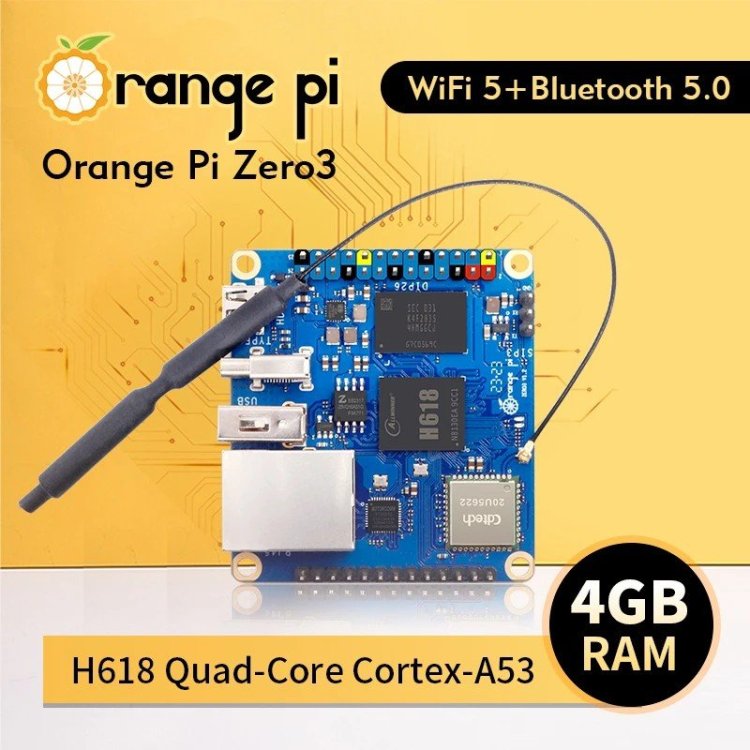
Can you get an orange pi zero 3? As a hardware beginner, you need a very stable, well known linux board.
-
Sorry, I've never done anything like this before. I tried setting it up according to instructions in various GitHub threads, but it always failed. You're the only person who helps me with advice, and thanks to you, I've only been able to build an image with the required kernel module. I haven't achieved anything else, except for the white screen.




.jpg.41b56c87e5b5ad93e3c842f84338911c.jpg)