All Activity
- Past hour
-

Armbian with preinstalled Home Assistant supervised
bedna replied to Igor's topic in Software, Applications, Userspace
Really? You changed the network config, installed a massive application AND enabled apparmor in the same boot... Cmon dude... It probably does, if you don't also change the network. -
@SecLyzer U-Boot can boot from a FAT32 or Linux file system. You can change this in your board configuration file.
-
Due to the shortage of memory chips these days, Radxa is using different emmc models in their boards. For example, I recently ordered a big batch of Rock S0 boards, but they had to be delivered with Sandisk iNAND 32GB emmc drives instead of the typical 8GB option. The problem is that Armbian did not reliably boot on these new boards. It randomly gets stuck during initialization with the onboard LED endlessly blinking. Some boards works, some did not, some only works sometimes. Long story short, in case other people also have this problem: I found the solution. I believe it is caused by Armbian's Rock S0 device tree enabling the HS200 high speed mode for the emmc device. (source) I guess not all emmc chips reliably support this. To fix it, I had to remove the line in the device tree linked in the source above. Actually this should probably be done with a proper device tree modification, but in my case, just to test, I modified the boot scripts. In /boot/boot.cmd, add these lines near the bottom, but ABOVE the "booti ..." line: fdt rm /mmc@ff490000 mmc-hs200-1_8v fdt set /mmc@ff490000 max-frequency <0x02faf080> Then recompile in terminal with: mkimage -C none -A arm -T script -d /boot/boot.cmd /boot/boot.scr If you update the kernel/armbian distro these script will probably get overwritten, hence why it should preferably done with a custom device tree instead. But in my case I have frozen updates, and either way this will serve as a starting point for others having the same issue. Actually, I cannot see this troublesome patch on the 6.18 distro source, so maybe this is old news and no longer a problem on modern images anyway. But my image is still on 6.12, so I figured I'd share anyway.
- Today
-
@Sand_DeathDid you extract the image and use BalenaEtcher? It works fine on my Radxa Cubie A7A board.
-
https://github.com/sicXnull/armbian-build/releases MXQ-PRO H313 https://github.com/sicXnull/armbian-build/archive/refs/tags/mxqpro.zip Summary: compile from source halts with error. Traceback (most recent call last): [🔨] File "/home/e***o/Downloads/armbian-build-mxqpro/lib/tools/patching.py", line 491, in <module> [🔨] raise exit_with_exception [🔨] Exception: Failed to apply 2 patches. Log uploaded and available at https://paste.armbian.com/dimokofipe Thanks in advance
-

Armbian with preinstalled Home Assistant supervised
ebin-dev replied to Igor's topic in Software, Applications, Userspace
The installation of Home Assistant through armbian-config ends with a reboot in order to enable AppArmor. No modification. If that installation does not work out of the box I will leave it for now as it would not provide a solid basis for the automation of an entire home. -

Teclast T60 AI rooting + armbian possibility Allwinner A733
Nick A replied to Taz's topic in Allwinner CPU Boxes
@Taz Radxa's u-boot won’t load the kernel image. So I used vmlinux. -

Armbian with preinstalled Home Assistant supervised
eselarm replied to Igor's topic in Software, Applications, Userspace
This topic is 2 years old and HA formally does not support supervised anymore. And doing 2 such modifications and then hoping all will be fine is false hope IMO. If you don't have a serial console cable to watch kernel en journal log etc to see what your system is doing, maybe it is time now to get one. I have an old supervised inatsllation (not use for many months, but it is plain Debian and a VM so I have free/easy CLI console. -
Armbian with preinstalled Home Assistant supervised
ebin-dev replied to Igor's topic in Software, Applications, Userspace
Same here: Installed Home Assistant using armbian-config on a Rock 5b with Armbian Trixie (v26.2.1 for Rock 5B running Armbian Linux 6.18.32-current-rockchip64). I switched from NetworkManager to systemd-networkd. Reboot to enable AppArmor left a system not accessible via ssh after more than 100s. Do we have to wait somewhat longer, or is there currently an issue with the installation of Home Assistant on Armbian Trixie ? -
I just received a new Radxa Cubie A7A board. I decided to try flashing @Nick A firmware (https://github.com/NickAlilovic/build/releases/tag/Radxa-Cubie-A7A-A7Z-A7S-Mainline-V0.1), but the board simply wouldn't boot. I used a Netac 32 GB microSDHC card, class 10, UHS-I. I've attached the UART logs below.load.log
-
Ok, just wanted to know if you used the flatpak since they indicate on their wiki that could be troublesome. When you say "none of them can start automatically", what methods did you use to configure autostart? As they state at the top of the wiki/setup: "Distribution may provides some specific tool for autostart Fcitx and usually also set up environment variable together." Take notice of the word MAY. Seems Armbian does not. So what does im-config do as described on the next line after that on the wiki page? Does it fail or give you some hints of why autostart is not working? https://fcitx-im.org/wiki/Special:MyLanguage/Setup_Fcitx_5#im-config_(Debian/Debian-based/Ubuntu) This question is more fitting to ask the devs of the application, not the operating system. If you have problems with an application on windows for example, you generally don't ask microsoft for help but rather the developers of the application. But if you provide good enough information, we might be able to help you figure it out on this forum...
-

Enable ethernet port on expansion board for OrangePi zero 2w
Werner replied to Golecom's topic in Allwinner sunxi
none which doesn't break other boards. -
 1. Ubuntu 26.04 current 6.18.29 xfce / Debian 12 bookworm Xfce current6.12.23 I have tried two different Armbian community‑build images, and no matter which input method I use (ibus, gcin, fcitx4, or fcitx5), none of them can start automatically. In offical Ubuntu/Debian desktop releases, input methods normally start by themselves without such complicated setup 2. just apt install fcitx5 and more 3 i have read wiki setup fcitx5 4. i use Firefox Please check the problems Thanks
 -
 Armbian has limited resources. And given that there are hundreds of different boards out there, generally that means that new boards only get supported either because the company behind them is willing to contribute to Armbian (and Orange Pi has made if very clear that they don't do anything to support their boards software after the fact as it would reduce sales for new boards they are constantly introducing), or some volunteer from the community steps up to volunteer their time to add support. Most boards under Armbian are community supported. So it relies on volunteers like you to do the work.
 -
More information is needed. What armbian release do you use? How did you install fcitx5? Have you followed the instructions on their wiki? https://fcitx-im.org/wiki/Special:MyLanguage/Setup_Fcitx_5 Or read the FAQ? https://fcitx-im.org/wiki/Special:MyLanguage/FAQ Are you using a chromium based browser?
-
 Why this board, the orange pi 4 Pro, isn't supported?
 -
Embedded Recipes returns to Nice for its second standalone edition, along with Linux Media Summit, PipeWire, libcamera, GStreamer Spring Hackfest, and new Display Next Hackfest & BlueZ F2F. Visit our table for Tyr, ML video analytics & Flipper One prototype! View the full article
-
Hi everyone, I have a ZQ01-v1.51 board (a clone of the MXQ Pro 5G—way to go, China!) with an RK3228A chip and Kingston eMCP memory. I’ve tried the Armbian and Educabox images, as well as LibreELEC 10, 11, and 12, and they all have a common issue: the system boots up to the login screen. The screenshots I’m sharing now are from Armbian 23.08.0 Edge 6.5.5 Minimal. The problem is that at a certain point during the boot process, the screen starts flickering, and then when I finally reach the login screen, the image lasts a few seconds before the screen goes black. However, the screen doesn’t turn off—there’s simply no image, the red LED stays lit, and nothing else happens. I don't have an SD card, so I'm using Lubuntu and Rkdeveloptool for flashing.
-

Enable ethernet port on expansion board for OrangePi zero 2w
im-vmn replied to Golecom's topic in Allwinner sunxi
Thank you for quick reply! So if I get it right there is no working fix for the issue now? -
Enable ethernet port on expansion board for OrangePi zero 2w
Werner replied to Golecom's topic in Allwinner sunxi
I have up on this approach as this break ethernet on an actually supported board. -
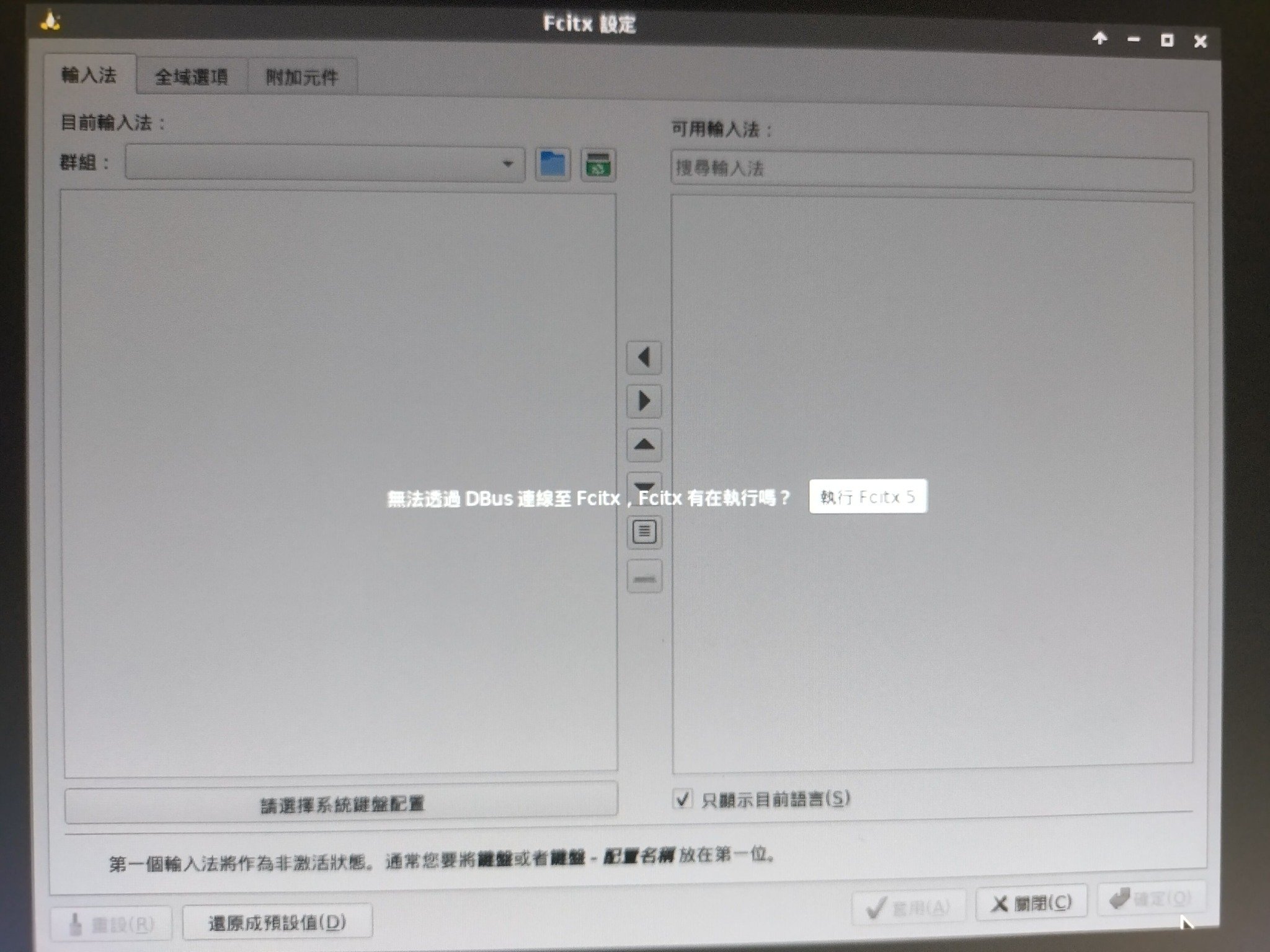
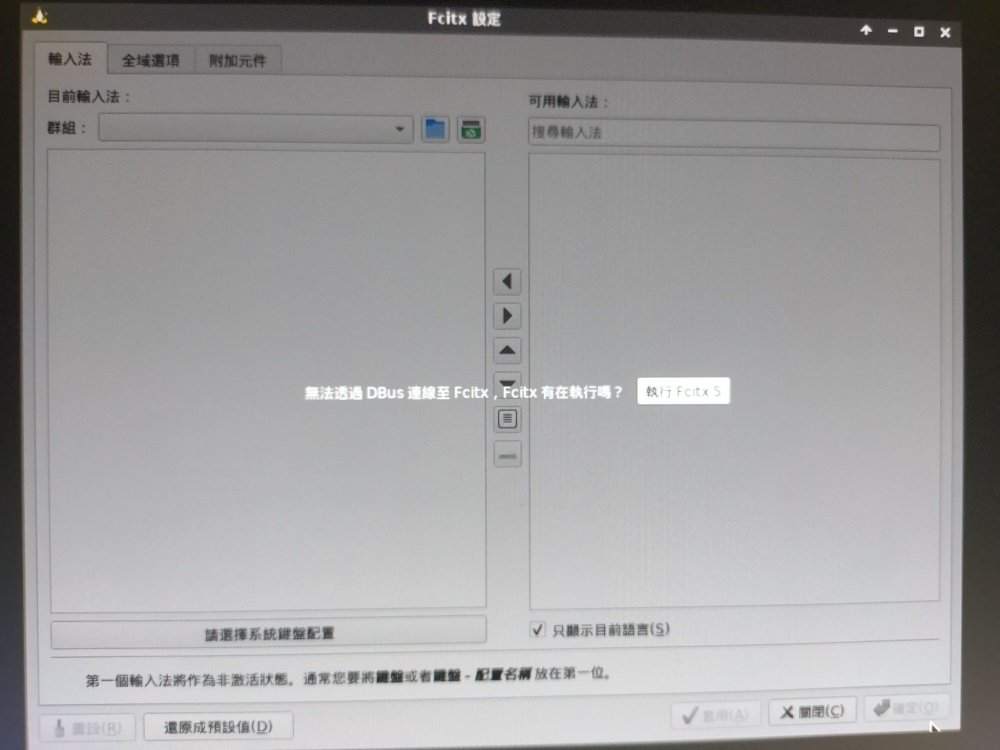
Why doesn’t it start automatically after I log out or reboot after installation? What is causing this issue? The official Orange Pi kernel version (Orangepizero3_1.0.4_debian_bookworm_desktop_xfce_linux6.1.31) does not have this problem and runs automatically. Instead, I get the error: “dbus can't connect to fcitx5.” Every time I need to open the fcitx5 settings again and click “Run” before I can input Chinese. I have no idea what is going on. Thanks.
-
zfs on Bookworm depends on unavailable libc6 version
bedna replied to Salamandar's topic in Software, Applications, Userspace
Are you using the rolling release? Otherwise you should not use "full-upgrade" but rather just "upgrade". Not saying that is the reason for missing deps, but it definitely could be. -
@Giunti & @samlevy0515 It would be helpful to the community if you responded to the developer trying to fix this issue rather than state a workaround. Thank you.
-
Enable ethernet port on expansion board for OrangePi zero 2w
im-vmn replied to Golecom's topic in Allwinner sunxi
Have the same issue. I confirmed that my hardware works fine with other OS images. I tried to build this https://github.com/armbian/build/commit/b880d98b07090b0b59bb3096c508e5123b224037 commit, but no luck, ethernet still doesn't work. Maybe I built it wrong (are there specific instructions for building such variants?). Thank you -

Games Compatible With Armbian on Pinebook Pro
LivingLinux replied to Katsujinken's topic in Pinebook Pro
Did you try Yamagi Quake 2 with OpenGL ES1? A developer optimized it, and I assume it will also be a lot faster on a PBP, but it might be that certain mods don't work with GLES1. You have to build it like this: make -j4 WITH_SDL3=no with_gles1 Select OpenGL ES1 in the Video Settings. If you don't see blood particles (or they are squares), go to the game console and disable a certain module: gl1_pointparameters 0 Restart the game and have fun!