Active threads
Showing topics posted in for the last 365 days.
- Today
-
Hi Gaetano, I'd be suprised if Buster did work with such a newer kernel. dwc2 is Pi specific and will not work on Allwinner/Sunxi hardware. The OTG usb controller is completely different, please see the wiki: https://linux-sunxi.org/USB_OTG_Controller_Register_Guide Overlays will only load overlays found in /boot/dtb/overlay/ while user defined ones exist in /boot/overlay-user/ As expected otg is the default mode, firstly those warnings are normal when decompiling the dtb back dts as not everything gets translated back. For small modifications you can use sudo armbian-add-overlay which compiles the overlay and places it within /boot/overlay-user This problem seems to occur every now and again in some kernel releases, please refer to here: for a solution. I would refer back to the board schematic before adjusting the dts. On the Pcduino2 and Pcduino3, the OTG micro USB passes through a small resistor rather than a fuse so causes a slight voltage drop. Just make sure that you have a good quality lead that ensures the board gets 5V but slightly over is better. sudo armbianmonitor -m Stop monitoring using [ctrl]-[c] Time CPU load %cpu %sys %usr %nice %io %irq Tcpu PMIC DC-IN C.St. 22:19:42 960 MHz 0.39 14% 9% 5% 0% 0% 0% 33.7 °C 30.2 °C 5.34V 0/6^C Best of luck Ryzer
-
I see there is a "UART" on the front board image, but I guess it does not work for you. Check the sorroundings for possibile missing resistors, sometimes they remove some small SMD resistors to make the UART non-functional. Also note that you must use an adapter that is capable of 1.5Mbps; not all of them can reach such baud rates (AFAIR pl2303 can't, but CH301 should work)
-
 Some logs that might help in resolving: cat /proc/asound/card0/eld* monitor_name SONY AVAMP connection_type HDMI eld_version [0x2] CEA-861D or below edid_version [0x3] CEA-861-B, C or D manufacture_id 0xd94d product_id 0x9301 port_id 0x0 support_hdcp 0 support_ai 1 audio_sync_delay 0 speakers [0x5f] FL/FR LFE FC RL/RR RC RLC/RRC sad_count 12 sad0_coding_type [0xc] MLP (Dolby TrueHD) sad0_channels 2 sad0_rates [0x1ec0] 44100 48000 88200 96000 176400 192000 sad1_coding_type [0xc] MLP (Dolby TrueHD) sad1_channels 6 sad1_rates [0x1ec0] 44100 48000 88200 96000 176400 192000 sad2_coding_type [0xc] MLP (Dolby TrueHD) sad2_channels 8 sad2_rates [0x6c0] 44100 48000 88200 96000 sad3_coding_type [0xb] DTS-HD sad3_channels 2 sad3_rates [0x1ec0] 44100 48000 88200 96000 176400 192000 sad4_coding_type [0xb] DTS-HD sad4_channels 6 sad4_rates [0x1ec0] 44100 48000 88200 96000 176400 192000 sad5_coding_type [0xb] DTS-HD sad5_channels 8 sad5_rates [0x6c0] 44100 48000 88200 96000 sad6_coding_type [0x1] LPCM sad6_channels 2 sad6_rates [0x1ee0] 32000 44100 48000 88200 96000 176400 192000 sad6_bits [0xe] 16 20 24 sad7_coding_type [0x1] LPCM sad7_channels 6 sad7_rates [0x1ee0] 32000 44100 48000 88200 96000 176400 192000 sad7_bits [0xe] 16 20 24 sad8_coding_type [0x1] LPCM sad8_channels 8 sad8_rates [0x1ee0] 32000 44100 48000 88200 96000 176400 192000 sad8_bits [0xe] 16 20 24 sad9_coding_type [0x2] AC-3 sad9_channels 6 sad9_rates [0xe0] 32000 44100 48000 sad9_max_bitrate 680000 sad10_coding_type [0x7] DTS sad10_channels 6 sad10_rates [0x6e0] 32000 44100 48000 88200 96000 sad10_max_bitrate 1536000 sad11_coding_type [0xa] E-AC-3/DD+ (Dolby Digital Plus) sad11_channels 8 sad11_rates [0xc0] 44100 48000 dmesg | grep -i hdmi [ 0.024452] /vop@fdd90000: Fixed dependency cycle(s) with /hdmi@fde80000 [ 0.024468] /hdmi@fde80000: Fixed dependency cycle(s) with /vop@fdd90000 [ 0.030657] /hdmi@fde80000: Fixed dependency cycle(s) with /hdmi-con [ 0.030674] /hdmi-con: Fixed dependency cycle(s) with /hdmi@fde80000 [ 1.328504] dwhdmiqp-rockchip fde80000.hdmi: registered DesignWare HDMI QP I2C bus driver [ 1.329303] rockchip-drm display-subsystem: bound fde80000.hdmi (ops rockchip_drm_fini [rockchipdrm]) [77523.181767] hdmi-audio-codec hdmi-audio-codec.4.auto: HDMI: Unknown ELD version 0 [77523.184450] hdmi-audio-codec hdmi-audio-codec.4.auto: ASoC error (-19): at snd_soc_dai_prepare() on i2s-hifi [77529.747875] hdmi-audio-codec hdmi-audio-codec.4.auto: HDMI: Unknown ELD version 0 [77529.749599] hdmi-audio-codec hdmi-audio-codec.4.auto: ASoC error (-19): at snd_soc_dai_prepare() on i2s-hifi [84820.893274] hdmi-audio-codec hdmi-audio-codec.4.auto: HDMI: Unknown ELD version 0 [84947.092875] dwhdmiqp-rockchip fde80000.hdmi: registered DesignWare HDMI QP I2C bus driver [84947.100550] rockchip-drm display-subsystem: bound fde80000.hdmi (ops rockchip_drm_fini [rockchipdrm])
 -
Collabora is excited to see Monado at the heart of the new OpenXR runtime for Android XR, a major milestone for Open Source XR interoperability. View the full article
-
 Disclaimer: I know it's not a good idea XD Is it possible somehow to upgrade the prebuilt image Armbian 12/OpenMediaVault 7 to Armbian 13/OpenMediaVault 8? Is there a guide?
 -
Hi all. i got Armbian for luckfox, compiled by builder, and also tried downloaded img binaries. but cannot find clear and complete instruction how to write thtat img to eMMC and for SDCard . what tools and steps should be used for get Armbian img boots and works on that board. thanks in advance PS. BigTreetech CB2 same problem - no clear info about flash eMMC and SDCard.
-

Concerns before trying to boot Armbian from SD card on GS King-X
SteeMan replied to marfalk's topic in Amlogic CPU Boxes
As long as you don't install Armbian to your emmc, you should be able to still boot android by removing the SD and/or usb drives. Once you install to emmc you will overwrite the android installation -

[Latest] Armbian Build HDMI Audio support Fix
rsbuffalo replied to just_facking_about's topic in Radxa Dragon Q6A
To get audio working on the Radxa Dragon (QCS6490) when the standard UCM (Use Case Manager) fails, you have to bypass the "official" path and manually bridge the hardware to the software. Here is the complete summary of the "manual bridge" method developed. I installed Armbian 25.11.1 Edge Image and below is how I fixed HDMI Audio. Step 1: Create the Hardware Bridge Script This script manually flips the hardware switches in the Qualcomm DSP that route audio to the HDMI/DisplayPort pins. File: /usr/local/bin/fix-hdmi-audio.sh Command: sudo nano /usr/local/bin/fix-hdmi-audio.sh Bash #!/bin/bash # Wait for hardware to initialize sleep 2 # Open the HDMI/DP Audio Bridge amixer -c 0 cset name='DISPLAY_PORT_RX_0 Audio Mixer MultiMedia1' 1 # Set initial hardware volume amixer -c 0 cset name='stream0.vol_ctrl0 MultiMedia1 Playback Volu' 75% Make it executable: sudo chmod +x /usr/local/bin/fix-hdmi-audio.sh Step 2: Create the Systemd Service This ensures the hardware switches are flipped automatically every time the board boots up. File: /etc/systemd/system/hdmi-audio.service Command: sudo nano /etc/systemd/system/hdmi-audio.service Ini, TOML [Unit] Description=Fix HDMI Audio Routing After=sound.target [Service] Type=oneshot ExecStart=/usr/local/bin/fix-hdmi-audio.sh RemainAfterExit=yes [Install] WantedBy=multi-user.target Enable it: Bash sudo systemctl daemon-reload sudo systemctl enable hdmi-audio.service Step 3: Configure the Desktop Audio Sink Since the system's "Built-in Audio" often defaults to a "Dummy Output" when UCM is broken, we force PulseAudio to create a manual "Sink" pointing directly to the hardware. File: /etc/pulse/default.pa Command: sudo nano /etc/pulse/default.pa Add these lines to the very bottom of the file: Plaintext # Manually bridge PulseAudio to the working hardware path load-module module-alsa-sink device=plughw:0,0 sink_name=Manual_HDMI sink_properties=device.description=HDMI_Audio_Output set-default-sink Manual_HDMI Step 4: Clean Up UCM (Optional but Recommended) To stop the "HDMI Audio failure" warnings during boot, you can ensure your UCM files are at least syntactically correct, even if the system ignores them. File: /usr/share/alsa/ucm2/QCS6490RadxaDra/HiFi.conf Plaintext Syntax 2 SectionDevice."HDMI" { Comment "HDMI Output" Value { PlaybackPriority 200 PlaybackPCM "hw:0,0" } } SectionVerb { EnableSequence [] DisableSequence [] } Summary of the Audio Path By following these steps, you have constructed the following data flow: Hardware: Qualcomm DSP (Card 0, Device 0). Bridge: amixer opens the path from the CPU to the HDMI port. ALSA: Provides the plughw:0,0 interface. PulseAudio: Grabs that interface and names it "HDMI_Audio_Output." Applications: YouTube/Browsers send audio to the "Default Sink," which is now your working HDMI path. Now I will put all these commands into a single "one-click" shell script so you can save it as a backup for future installs? The Radxa Dragon Audio "One-Click" Fix Create the file: nano fix_audio.sh Paste the code below. Run it: chmod +x fix_audio.sh && sudo ./fix_audio.sh Bash #!/bin/bash echo "🚀 Starting Radxa Dragon QCS6490 Audio Fix..." # 1. Create the Hardware Bridge Script echo "🔧 Creating hardware bridge script..." cat <<EOF | sudo tee /usr/local/bin/fix-hdmi-audio.sh > /dev/null #!/bin/bash # Wait for hardware to initialize sleep 2 # Open the HDMI/DP Audio Bridge amixer -c 0 cset name='DISPLAY_PORT_RX_0 Audio Mixer MultiMedia1' 1 # Set initial hardware volume amixer -c 0 cset name='stream0.vol_ctrl0 MultiMedia1 Playback Volu' 75% EOF sudo chmod +x /usr/local/bin/fix-hdmi-audio.sh # 2. Create the Systemd Service echo "⚙️ Creating boot-time service..." cat <<EOF | sudo tee /etc/systemd/system/hdmi-audio.service > /dev/null [Unit] Description=Fix HDMI Audio Routing After=sound.target [Service] Type=oneshot ExecStart=/usr/local/bin/fix-hdmi-audio.sh RemainAfterExit=yes [Install] WantedBy=multi-user.target EOF # 3. Enable and Start the Service sudo systemctl daemon-reload sudo systemctl enable hdmi-audio.service sudo systemctl start hdmi-audio.service # 4. Configure PulseAudio Sink echo "🔉 Configuring PulseAudio/PipeWire sink..." PA_CONFIG="/etc/pulse/default.pa" if [ -f "$PA_CONFIG" ]; then # Check if we already added the fix to avoid duplicates if ! grep -q "Manual_HDMI" "$PA_CONFIG"; then cat <<EOF | sudo tee -a "$PA_CONFIG" > /dev/null # Manually bridge PulseAudio to the working hardware path load-module module-alsa-sink device=plughw:0,0 sink_name=Manual_HDMI sink_properties=device.description=HDMI_Audio_Output set-default-sink Manual_HDMI EOF fi else echo "⚠️ Warning: /etc/pulse/default.pa not found. You may need to manualy add the sink to your specific sound server config." fi echo "✅ Success! Please reboot to finalize settings." echo " After reboot, select 'HDMI_Audio_Output' in Sound Settings if it doesn't auto-switch." Why this works for your specific board: This script performs a "Direct Injection." Instead of asking the operating system to figure out where the audio goes (which fails because the Qualcomm UCM profiles are currently buggy), it tells the hardware exactly which gate to open and tells the software exactly which "sink" to pour the audio into. -

Efforts to develop firmware for H96 MAX V56 RK3566 4G/32G
Hqnicolas replied to Hqnicolas's topic in Rockchip CPU Boxes
Salve Marcão, did you try this method? https://github.com/armbian/community/releases/ https://forum.armbian.com/topic/28895-efforts-to-develop-firmware-for-h96-max-v56-rk3566-8g64g/page/8/#findComment-187569 -
Thank you for the support. I made a short break tinkering with the tv box, but recently I did try installing to emmc, using the install-aml.sh script. Everything working as expected. I should have been more careful in the first place. It was a good lesson anyway. Tnx
-

Have Armbian for Tanix TX1 QHZIW_H313_TX1_EMCP_V2.0?
Nick A replied to Lesano's topic in Allwinner CPU Boxes
@billymore I got this from AI. It's not perfect. I haven't done this before. To convert a standard Armbian root filesystem (typically an ext4 partition) into the rootfs.cpio.lzma.uboot format required for RAM booting, you must package the file tree into a CPIO archive, compress it with LZMA, and then wrap it with a U-Boot header. 1. Extract the Armbian RootFS First, you need the actual files from your Armbian image. Mount the image to a temporary directory on your Linux PC: mkdir -p /tmp/armbian_root If you have your Armbian .img file ready, run this command to find the start sector of the root partition (usually the second partition): fdisk -l armbian_image.img Multiply that Start number by 512 to get the exact offset for the mount command. sudo mount -o loop,offset=YOUR_OFFSET armbian_image.img /tmp/armbian_root A standard Armbian rootfs doesn't have an init file in the root directory; it uses sbin/init (a symlink to systemd). A RAM disk requires an executable at /init. sudo ln -s sbin/init /tmp/armbian_root/init 2. Create the CPIO Archive Pack the entire filesystem into a newc format CPIO archive. It is critical to perform this step as root to preserve file permissions. cd /tmp/armbian_root sudo find . | sudo cpio -H newc -o > /tmp/rootfs.cpio 3. Compress with LZMA Compress the archive using the LZMA algorithm to minimize its size for RAM loading: lzma -9 /tmp/rootfs.cpio # This creates /tmp/rootfs.cpio.lzma 4. Add the U-Boot Header Use the mkimage tool (from the u-boot-tools package) to add the 64-byte legacy header that U-Boot uses to identify the ramdisk. mkimage -A arm64 -O linux -T ramdisk -C lzma -n "Armbian Initramfs" -d /tmp/rootfs.cpio.lzma /tmp/rootfs.cpio.lzma.uboot -A arm: Target architecture (use arm64 if applicable). -T ramdisk: Identifies the image type as a RAM filesystem. -C lzma: Specifies the compression used. -d: Input data file. sunxi-fel -v uboot u-boot-sunxi-with-spl.bin \ write 0x40080000 Image \ write 0x4fa00000 dtbs/allwinner/sun50i-h313-tanix-tx1.dtb \ write 0x4fe00000 rootfs.cpio.lzma.uboot (Note: If you are using a raw Image instead of a uImage, use booti instead of bootm). Once U-Boot initializes over the USB cable, it will drop to a prompt. You must run this to start the OS: Armbian’s default kernel might not have a large enough ramdisk_size allocated in its config. Update your bootargs to include a size limit (in KB). If your rootfs is 500MB: setenv bootargs "console=ttyS0,115200 root=/dev/ram0 rw" booti 0x40080000 0x4fe00000 0x4fa00000 ramdisk_size=600000 -

Is Netplan acting like hidden malware?
Wyk72 replied to bushw's topic in Software, Applications, Userspace
Netplan, like the whole systemd is the worst thing that ever happened to what we call "linux" overall. It was a dirty hack by canonical to overscript things and mantain a "foot in the door" to coerce users into a useless .yaml. A classic example of a solution in search of a problem that DID NOT EXIST. It's made with the same mentality of SYSTEMD by redhat, systemwide-cancer that was useless in its inception, just to make "a brand" and softly "vendor-lock" your product and give credibility - and make a lot of moooney - on HELPDESK SERVICES. But many years have passed and since nobody removes the crap, because "UBUNTU=LINUX" in peoples mind, and distros have adapted to it, since not many care about complex networking, it's just an icon flashing on their desktop, and most of the time it boils down to just make a laptop wifi work reliably (not as trivial as it seems). If you have to deal with a LOT of complex networking setups i.e. bridges, lot of network interfaces,VPNs, VLAN/VXLAN etc, those YAML scripts are just something you REALLY DO NOT WANT. Even the "ifupdown" route sometimes is not feasible, because systemd is such a systemwide-cancer that silently breaks things because you know, 1000000 lines of init code - that even spreads to your boot code in EFI environments - seemed such a GREAT idea to redhat, and it -incredibly- linux users swallowed this lump of sh*t like it was fine a chocolate cookie, I read people all the time in forums saying "ohhh it's SOO easy!". My advice: go Alpine Linux or OpenWRT or other similar "skeletal" distros to regain control of your network interfaces (and your system as a whole). It's a lost battle with anything netplan/systemd, you have to rely on a script that writes another script that get interpreted by another script and finally by another "black box" like systemd JUST TO do things like "echo <PARAMETER> > /sys/something". It's exactly what we needed, 3 or 4 more "abstraction layers" with 3 or 4 different syntax. It was obvious vendor-locking, but hey, let's jump into the bandwagon, because why not ? I'm pretty sure lots of people made a lot of money out of this, also. -

Rupa X88 Pro 13 - RK3528 board with images
fedes_gl replied to fedes_gl's topic in Rockchip CPU Boxes
I didn't notice it. I'm away from Home now. Will try to do some tests this weekend -
http://blog.armbian.com/content/images/2026/02/githubhighlights-2.pngThis week’s Armbian development saw significant progress across board support, software modules, and workflow enhancements. Notable additions include new board images for ForLinx OK3506-S12, Cix-ACPI, and expanded support for Raspberry Pi 400, 500, and RPi3 series. Improvements to build targets and kernel patches were implemented, alongside fixes for overlayfs module logic and OpenMediaVault installation. The imager received updates for macOS compatibility and enhanced handling of write-protected devices. Several workflow optimizations and cleanup tasks were completed, streamlining concurrency and retry logic. Updates also targeted Debian trixie/sid for app builds and refined base images for specific boards. Overall, the changelog reflects a strong focus on broadening hardware compatibility, improving reliability, and optimizing development processes. Add exotics board to apps blacklist. by @igorpecovnik in armbian/armbian.github.io#233Add ForLinx Vendor // OK3506-S12 Board. by @vidplace7 in armbian/armbian.github.io#235Add Rpi 400 and 500 series. by @igorpecovnik in armbian/armbian.github.io#227Add RPi3 series as reusable / virtual targets. by @igorpecovnik in armbian/armbian.github.io#225Add: Cix-ACPI board image & Cixtech Vendor image. by @HeyMeco in armbian/armbian.github.io#237arch: arm: dts: add ForLinx OK3506-S12 (RK3506J). by @vidplace7 in armbian/linux-rockchip#446Build targets: enable and disable build targets. by @igorpecovnik in armbian/build#9377bump to next rc. by @EvilOlaf in armbian/build#9376cleanup leftover traces of oftc and matrix. by @EvilOlaf in armbian/documentation#876create rewrite-patches workflow. by @EvilOlaf in armbian/build#9364descrube update #9191 custom LOGLEVEL with UBOOT_LOGLEVEL. by @iav in armbian/documentation#868Exclude armhf, riscv64, and loongarch64 from apps builds. by @igorpecovnik in armbian/armbian.github.io#234extensions: radxa-aic8800: allow 6.19; skip DKMS only on >= 6.20. by @HackingGate in armbian/build#9397feat(software): add OpenMediaVault installation module. by @igorpecovnik in armbian/configng#751feat: add locked badge and disable selection for write-protected devices. by @SuperKali in armbian/imager#97feat: detect macOS /Applications folder on update failure. by @SuperKali in armbian/imager#101Fix OMV installation - via armbian-config. by @igorpecovnik in armbian/os#429fix(system): correct overlayfs module status logic and conditions. by @igorpecovnik in armbian/configng#749fix(system): improve overlayfs module config handling and status check. by @igorpecovnik in armbian/configng#750fix: align macOS ARM artifact naming to aarch64 (#99). by @SuperKali in armbian/imager#100fix: enable multi-stream XZ decompression for Khadas OOWOW images. by @SuperKali in armbian/imager#98mekotronics-r58x-4g: mainline u-boot v2026.01; mainline 6.19 kernel (edge). by @rpardini in armbian/build#9398meson64-edge and rockchip64-edge: rewrite kernel patches against 6.19. by @EvilOlaf in armbian/build#9382Normalize kernel config hash inputs. by @iav in armbian/build#9277Orange Pi 3B: Generate alternate SPI image for booting from SATA. by @dust-7 in armbian/build#9388Orangepi lite2 and one plus: change crust config. by @igorpecovnik in armbian/build#9374Race conditions: installing packages before adding a repo. by @igorpecovnik in armbian/build#9393Refactor RPi imager JSON generation to Python script. by @igorpecovnik in armbian/armbian.github.io#228Remove redundant git pull --rebase that causes failures. by @igorpecovnik in armbian/armbian.github.io#230Revert "build(deps): bump setuptools from 80.10.2 to 82.0.0". by @iav in armbian/build#9392Revert "Sunxi64 EDGE: Add missing audio related modules and other". by @pyavitz in armbian/build#9380RK3506: Pin U-Boot to known-working commit. by @vidplace7 in armbian/build#9390rockchip: Add CSC board ForLinx OK3506-S12 (RK3506J). by @vidplace7 in armbian/build#9394rockchip: Allow dt overlays that disable nodes. by @vidplace7 in armbian/build#9396RV1106: Reduce kernel memory footprint (fix boot on 64MB boards). by @vidplace7 in armbian/build#9399Set DESKTOP_APPGROUPS_SELECTED to empty for nightly desktop images. by @igorpecovnik in armbian/armbian.github.io#231Sunxi64 EDGE: Add missing audio related modules and other. by @pyavitz in armbian/build#9373Treat legacy branch same as vendor in target generation. by @igorpecovnik in armbian/armbian.github.io#226Update apps targets to Debian trixie/sid, headless builds. by @igorpecovnik in armbian/armbian.github.io#232Update base image for specific boards in config. by @igorpecovnik in armbian/os#427Workflow improvements: standardize concurrency and retry logic. by @igorpecovnik in armbian/armbian.github.io#229 View the full article
- Yesterday
-
 So far no dice with Armbian. I am trying my luck with the Radxa official image and will report how that goes eventually. Meanwhile feel free to offer ideas or procedures i could tackle
 -
If you want to understand what should be happening under a normal installation: Installing "multiboot" (i.e. pressing the hidden reset button while powering the device) runs the script aml_autoscript That script sets some uboot environment variables that are used by subsequent boots The boot process for these boxes is to use the original android uboot to intiialize the device and then hand off the boot process to the u-boot.ext from armbian. This is done in the script s905_autoscript (or emmc_autoscript). Which then essentially just runs (for emmc): if fatload mmc 1 0x1000000 u-boot.ext; then go 0x1000000; fi; (or "mmc 0" for SD card). The chainloaded u-boot then boots via the information in the extlinux/extlinux.conf file.
-

Cannot run ARMbian on my tv box (TX10 PRO)
Jain Ziad replied to erebus041's topic in Allwinner CPU Boxes
log into android and poweroff via any "power menu" apk inside android put you armbian flashed sd (try balena etcher) and use half of ear cleaning cotton bud's stick to put and press in AV/audio port ; keep pressing then put dc power - until anything comes in hdmi out-you can try 3sec 8sec method; put bud and press count 3 put dc in while pressing count upto 8 then let go -
 Over the past year, Collabora has pushed mainline GStreamer toward a first-class media and Machine Learning platform, with new inference backends, extended metadata/tensor handling, and production-ready analytics building blocks. View the full article
 -
With its latest release, GStreamer adds native support for AI inference engines including ONNX Runtime, LiteRT, and Burn, along with tensor decoders for YOLO, face detection, tracking, and more. View the full article
-

Gaming experience with Orange Pi 5 (RK3588) on Armbian
KhanhDTP replied to KhanhDTP's topic in Orange Pi 5
Armbian 25.11.2 Noble XFCE (BSP Kernel: 6.1.115) + PanVk - mesa 26.0 (https://launchpad.net/~ernstp/+archive/ubuntu/mesaaco) + Box64 arm64 v0.4.1 ed9827920 (https://ryanfortner.github.io/box64-debs/) + proton-10.0-4-amd64-wow64 (https://github.com/Kron4ek/Wine-Builds/releases/download/proton-10.0-4/wine-proton-10.0-4-amd64-wow64.tar.xz) + dgVoodoo2 (https://github.com/dege-diosg/dgVoodoo2/releases) + DXVK-stripped v1.6.1 ~40fps@720p (low settings) box64 environment variables: Dead Space.thumb.jpg.07288e6b7c09eb14adb902a763b57540.jpg)
.thumb.jpg.98ed75d74b0f6519e1ba384d926d193d.jpg)
-
Cheers, will do!
-
Please use a build that isn't 7 years old. https://www.armbian.com/amlogic-s9xx-tv-box Read the FAQ and the install instructions linked there
-
Hello, @Geoffrey F4FXLyou just saved me a lot of debugging time. I have multiple orange pi zero with h2+ and h3 and I had the same problem as you. With the reboot command, the sbc shutsdown but doesn't boot again, i need to reset the power for getting it booting again. On my side , this command extraargs=reboot=warm didn't worked but extraargs=reboot=watchdog worked perfectly. I just rebooted it 5 times in a row and it always rebooted well. My version : v25.11.2 for Orange Pi Zero running Armbian Linux 6.12.58-current-sunxi
-

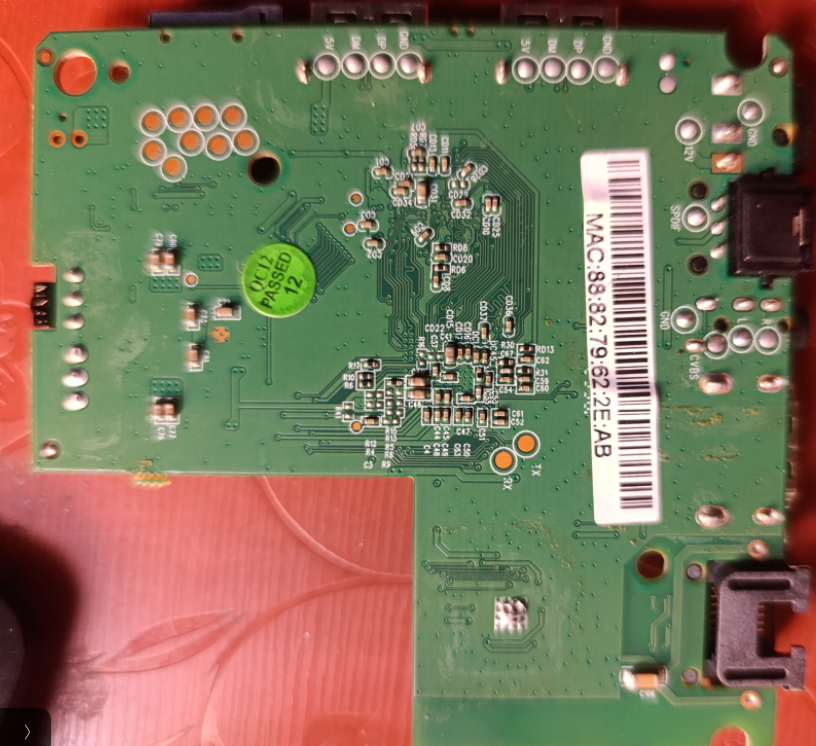
Where is the RAM present in this setup box?
abhishek timalsina posted a topic in Allwinner CPU Boxes
It is an h313 all winner box. But i can't point the RAM at all.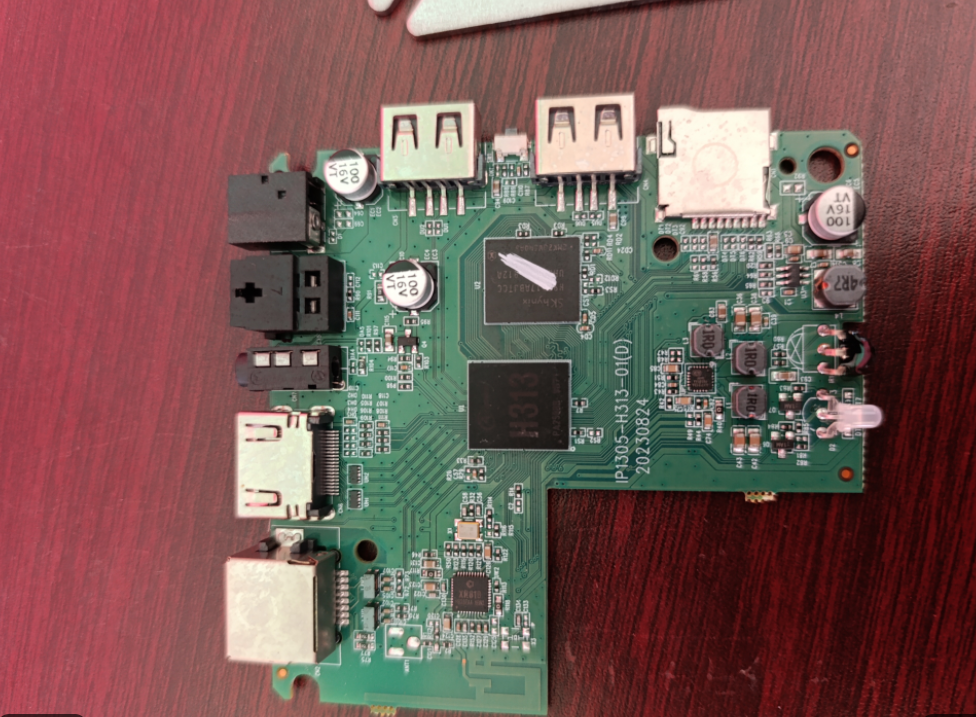
-
Excelent! That works. I didn't, notice that pinctrl-rk805 was externalized and can't be loaded automatically. For now I've just add pinctrl-rk805 to /etc/initramfs-tools/modules and update-initramfs. Werner: device tree has no changes for a long time. Thanks!




.jpg.96cb54d1993f64e02fce404e44db97dc.jpg)
.jpg.357c6ac97fe69e2f5f5e85c27775b45e.jpg)