All Activity
- Today
-
Just to note some more: I use none of those images, instead is it in-place upgraded Armbian, originally: root@banlipi:/tmp# grep VERSION /etc/armbian-image-release VERSION=23.11.1 Now Trixie: root@banlipi:/tmp# cat /etc/os-release PRETTY_NAME="Armbian 25.8.1 trixie" NAME="Debian GNU/Linux" VERSION_ID="13" VERSION="13 (trixie)" VERSION_CODENAME=trixie DEBIAN_VERSION_FULL=13.0 ID=debian HOME_URL="https://www.armbian.com/" SUPPORT_URL="https://forum.armbian.com" BUG_REPORT_URL="https://www.armbian.com/bugs" ARMBIAN_PRETTY_NAME="Armbian 25.8.1 trixie" I log some stuff to terminal in my backup script; I see: U-Boot SPL 2024.01-armbian-2024.01-S866c-P7738-Hb9d3-Vf23c-Bb703-R448a (Jun 21 2025 - 02:53:13 +0000) Maybe also good to know, I use extlinux on real HW, grub on KVM root@banlipi:/boot/efi/extlinux# cat extlinux.conf menu title Select the kernel variant DEFAULT default TIMEOUT 80 LABEL default KERNEL zImage INITRD uInitrd FDT sun7i-a20-bananapi.dtb FDTOVERLAYS sun7i-a20-analog-codec.dtbo APPEND root=LABEL=armbianrfs rootwait rw earlyprintk console=ttyS0,115200 But I am not sure how valid the release info is, will need to look at lists files etc and also run update to it is latest Debian 13.3 I think. I just ran apt update && apt full-upgrade and now it is 'latest debian trixie' but I use apt pinning and I see it is too strict and also an error, so os-release not changed It is essentially Debian Trixie armhf up to date with manually written U-Boot and manually copied sunxi kernel.
-
I have this SBC and it is still nice one as it includes LiPo charging/operation and SATA. I changed Armbian OS drastically, such that the raw SD-card as blockdevice/image also runs as KVM on my ROCK3A or ROCK5B for example as standard UEFI machine. I have not tested that yet, but done several similar for NanoPi-NEO and some RPi3. Last thing done was use kernel 6.18 as default. Had not tested/connected a SATA recently, so good time to do it now; It works, see below: root@banlipi:~# lsblk NAME MAJ:MIN RM SIZE RO TYPE MOUNTPOINTS sda 8:0 0 119.2G 0 disk ├─sda1 8:1 0 512M 0 part └─sda2 8:2 0 118.7G 0 part mmcblk0 179:0 0 59.6G 0 disk ├─mmcblk0p1 179:1 0 256M 0 part /boot/efi ├─mmcblk0p2 179:2 0 6G 0 part /.snapshots │ /local/fsroot │ / ├─mmcblk0p3 179:3 0 1G 0 part [SWAP] └─mmcblk0p4 179:4 0 52.4G 0 part /local/sdata root@banlipi:~# dmesg | grep ata [ 0.000000] CPU: PIPT / VIPT nonaliasing data cache, VIPT aliasing instruction cache [ 0.000000] Memory policy: Data cache writealloc [ 0.000000] printk: log buffer data + meta data: 131072 + 409600 = 540672 bytes [ 0.045731] Memory: 859656K/1015868K available (11264K kernel code, 1761K rwdata, 9604K rodata, 1024K init, 377K bss, 53644K reserved, 98304K cma-r eserved, 229436K highmem) [ 0.742930] libata version 3.00 loaded. [ 1.268996] ahci-sunxi 1c18000.sata: supply ahci not found, using dummy regulator [ 1.269351] ahci-sunxi 1c18000.sata: supply phy not found, using dummy regulator [ 1.269470] ahci-sunxi 1c18000.sata: supply target not found, using dummy regulator [ 1.311601] ahci-sunxi 1c18000.sata: controller can't do PMP, turning off CAP_PMP [ 1.311632] ahci-sunxi 1c18000.sata: forcing PORTS_IMPL to 0x1 [ 1.311727] ahci-sunxi 1c18000.sata: AHCI vers 0001.0100, 32 command slots, 3 Gbps, platform mode [ 1.311748] ahci-sunxi 1c18000.sata: 1/1 ports implemented (port mask 0x1) [ 1.311762] ahci-sunxi 1c18000.sata: flags: ncq sntf pm led clo only pio slum part ccc [ 1.316206] ata1: SATA max UDMA/133 mmio [mem 0x01c18000-0x01c18fff] port 0x100 irq 34 lpm-pol 0 [ 1.630949] ata1: SATA link up 3.0 Gbps (SStatus 123 SControl 300) [ 1.632905] ata1.00: ATA-9: SanDisk SDSSDP128G, 1.0.0, max UDMA/133 [ 1.632934] ata1.00: 250069680 sectors, multi 1: LBA48 NCQ (depth 32) [ 1.633567] ata1.00: configured for UDMA/133 [ 11.515496] systemd[1]: Expecting device dev-disk-by\x2dlabel-sdata.device - /dev/disk/by-label/sdata... [ 22.764093] BTRFS: device label sdata devid 1 transid 36 /dev/mmcblk0p4 (179:4) scanned by mount (378) [ 23.002238] FAT-fs (mmcblk0p1): Volume was not properly unmounted. Some data may be corrupt. Please run fsck. root@banlipi:~# uname -a Linux banlipi 6.18.2-edge-sunxi #1 SMP Thu Dec 18 13:03:43 UTC 2025 armv7l GNU/Linux root@banlipi:~# cd /tmp root@banlipi:/tmp# mkdir 1 2 root@banlipi:/tmp# mount /dev/sda1 1 root@banlipi:/tmp# mount /dev/sda2 2 -osubvolid=0 root@banlipi:/tmp# ddrescue -f /dev/sda /dev/null GNU ddrescue 1.29 Press Ctrl-C to interrupt ipos: 1731 MB, non-trimmed: 0 B, current rate: 75366 kB/s opos: 1731 MB, non-scraped: 0 B, average rate: 133 MB/s non-tried: 126304 MB, bad-sector: 0 B, error rate: 0 B/s rescued: 1731 MB, bad areas: 0, run time: 12s pct rescued: 1.35%, read errors: 0, remaining time: 15m time since last successful read: n/a Copying non-tried blocks... Pass 1 (forwards)^C Interrupted by user So I can browse the filesystems on the SSD, seems I had used it for conversion of RPi Trixie Ext4 to Btrfs. Raw speed is fine I see. So I still can use it also with large 3.5inch HDDs, that is what I prepared the surrounding 12V powersupply for.
-
Probably, my guess, issue with a boot loader - fail to / disabled by mistake power SATA port? We don't have anyone actively maintaining this kind of (10+years) hardware anymore. Support is "community / upstream" maintained "as is". But this forum / community can provide assistance to fix this. I gave a tip - where I think is the problem. Not working feature on particular hardware is not Armbian problem. This is custom hardware world and our work is tooling https://github.com/armbian/build and best effort hardware maintenance on this principle https://docs.armbian.com/User-Guide_Board-Support-Rules/ If we try to fix everything, everyone would be long burned out ...
-
OK so how can I help to fix this issue?
-
fdisk -l Disk /dev/ram0: 4 MiB, 4194304 bytes, 8192 sectors Units: sectors of 1 * 512 = 512 bytes Sector size (logical/physical): 512 bytes / 4096 bytes I/O size (minimum/optimal): 4096 bytes / 4096 bytes Disk /dev/ram1: 4 MiB, 4194304 bytes, 8192 sectors Units: sectors of 1 * 512 = 512 bytes Sector size (logical/physical): 512 bytes / 4096 bytes I/O size (minimum/optimal): 4096 bytes / 4096 bytes Disk /dev/ram2: 4 MiB, 4194304 bytes, 8192 sectors Units: sectors of 1 * 512 = 512 bytes Sector size (logical/physical): 512 bytes / 4096 bytes I/O size (minimum/optimal): 4096 bytes / 4096 bytes Disk /dev/ram3: 4 MiB, 4194304 bytes, 8192 sectors Units: sectors of 1 * 512 = 512 bytes Sector size (logical/physical): 512 bytes / 4096 bytes I/O size (minimum/optimal): 4096 bytes / 4096 bytes Disk /dev/mmcblk0: 14.84 GiB, 15931539456 bytes, 31116288 sectors Units: sectors of 1 * 512 = 512 bytes Sector size (logical/physical): 512 bytes / 512 bytes I/O size (minimum/optimal): 512 bytes / 512 bytes Disklabel type: dos Disk identifier: 0x4c58faaa Device Boot Start End Sectors Size Id Type /dev/mmcblk0p1 8192 30801920 30793729 14.7G 83 Linux Disk /dev/zram0: 483.1 MiB, 506564608 bytes, 123673 sectors Units: sectors of 1 * 4096 = 4096 bytes Sector size (logical/physical): 4096 bytes / 4096 bytes I/O size (minimum/optimal): 4096 bytes / 4096 bytes Disk /dev/zram1: 50 MiB, 52428800 bytes, 12800 sectors Units: sectors of 1 * 4096 = 4096 bytes Sector size (logical/physical): 4096 bytes / 4096 bytes I/O size (minimum/optimal): 4096 bytes / 4096 bytes Out of desperation, I plugged in an SSD via USB adapter, and it is recognized as: /dev/sda: Detected One might think the SATA connection is defective, but when I boot with the Ubuntu 16.04 image without changing anything, the SATA SSD is recognized! So the SATA connection on the BPI M1+ works, and so does the SSD. It's definitely the Armbian image that's the problem, but where exactly is it?
-
Userspace has nothing to do with hardware features. I don't know what is the case for A20, but for many others, OTG functionality is driven with overlays. If there are no overlays, you need to edit device tree and change its role. If that doesn't help, it is more complex problem. More complex, perhaps days / weeks to debug and fix. Most of (Armbian) kernel developers are long gone from this 10+ years old platform and users can't help. Also look into previous builds. Finding out when this broke is half of the solution https://fi.mirror.armbian.de/oldarchive/ or by finding a kernel that works https://docs.armbian.com/User-Guide_Armbian-Config/System/#alternative-kernels With any userspace (trixie/noble/jammy ...) Probably all A10 and A20 boards share this problem.
-
BPI M1+ tested with: Armbian_23.8.1_Bananapim1plus_jammy Armbian_24.11.1_Bananapi_noble Armbian_26.2.0-trunk.342_Bananapi_noble and the SATA interface doesn't work on any of the three. Does nobody use a BPI M1+ with an Armbian image where the SATA interface works?
-
For your information, I have a BPI M1 BPI M1+ BPI M3 All three are currently running Ubuntu 16.04, where SATA works, but it's a very old version. All tests with Armbian were performed using the BPI M1+, although SATA did not work.
-
Feature regressions are sadly something that happens all the time. There are many variants out there and (part of) Armbian OS is different for every board ... First resolve confusion - do you have M1 (we call it just bananapi) or M3. You mention M3 in the text, while title says M1+. Those are totally different boards. Proceed from older images and find out when this feature stopped working: https://fi.mirror.armbian.de/archive/ https://fi.mirror.armbian.de/oldarchive/
-
Good morning I have a BPI M1 and M1+ currently running an image from https://banana-pi.org/. Everything works, except it's Ubuntu 16.04. Since yesterday, I've been testing the Armbian images, which are great and up-to-date, but none of them recognize the SATA connection on my SSD. ` fdisk -l ` shows no SATA SSD. Since I absolutely need this connection, I'm stuck. What am I doing wrong, or where do I need to activate the SATA connection? The SATA connection is what makes the BPI M1+ unique. With Ubuntu 16.04, the SATA connection is recognized with both SSD and HDD on the BPI M3. Can someone please help me? I'm completely lost. Regards, Henry
- Yesterday
-

Installation Instructions for TV Boxes with Amlogic CPUs
gustavoppw replied to SteeMan's topic in FAQ
Some boxes with unmodified bls might accept reboot update on shell and boot via the sdcard that way, worked for me on both coreelec and now worked with armbian (I formatted via os and installed termux and typed su, then reboot update), way too useful for boxes with no buttons (yes, they exist) -
I am trtying to keep my pcduino 3 nano alive. It has been working perfectly under a debian bullseye distro from Johan Gunarsson for 4 years and now I can't get the OTG to work under any release (bullseye, bookworm or trixie) I have explored many avenues, but even a plain manual setup of g_mass_storage doesn't work in a workable way. The drive appears in Windows Explorer after several minutes, and any copy or delete to that gadget drive takes ages (3+ minutes for a 12kb file) before it fails or succeeds silently. I am looking for a forum where pcduino users can help each other. Thank you, Gaetano.
-

Rupa X88 Pro 13 - RK3528 board with images
Joao Cordeiro replied to fedes_gl's topic in Rockchip CPU Boxes
@shexplorer Control +c should have worked after: U-Boot SPL board init U-Boot SPL 2017.09_armbian-2017.09-S93fe-Pe5fd-Hbdb5-Va5b2-Bbf55-R448a (Nov 06 2025 - 16:35:49) SPL Hotkey: ctrl+c Make sure that USB TX is well connected to RX and try to spam it. Or use another terminal emulator, like putty instead of screen on a bash terminal. Maybe control is being intercepted. -

Rupa X88 Pro 13 - RK3528 board with images
shexplorer replied to fedes_gl's topic in Rockchip CPU Boxes
Hi, first of all thank you for your support. Unfortunately, I could not get it to work. I just don't want to boot anything I store on the SD card. Also, the CTRL+C method won't work. I have to reset the board manually after every try and when powering on while holding CTRL+C the only thing I see in the console is "SPL Hotkey: ctrl+c" as additional line. Maybe the only option is to get into Mask Mode and flash the emmc over USB. But the onboard button won't work to enable it at boot. Maybe I can short some pads but without labeling I dont know which. I attached some output logs and photos of the board. boot_with_armbian_sd_insert.log boot_with_ctrl_c.txt boot_without_sd_insert.log.thumb.jpg.ae3b0306ed908aa67bb89ff653dbeafb.jpg)
.thumb.jpg.5c029536d92cbabd94f60e0d33e735a2.jpg)
-
@Harleyyyu my 2 cents thought ..... We are talking about a 10 dollars soc . Is already a great milestone it is " just working" Anyway.. If you achieve any good result let's us know
-
For now i just went back to 6.6.22 version and ill focus on applying ffmpeg patches instead to openauto. Not gonna lie, it was fun seeing even just a small result from trying to build a kernel with hantro vpu working.
-
@jock thanks for the information! The reason I was experimenting with the kernel is because I’m testing OpenAuto (Android Auto) on top of Armbian-minimal. While MPV works fine with hardware decoding, I noticed that using things like kmssink to process the Android feed (720p, 30/60fps) introduces significant latency between touch input and screen response. For example, in today’s test I tried decoding a 720p 60fps H.264 stream using GStreamer with this command: gst-launch-1.0 filesrc location=test.h264 ! \ h264parse ! v4l2h264dec capture-io-mode=dmabuf ! \ queue max-size-buffers=2 leaky=downstream ! kmssink sync=false While the pipeline runs, the latency is too high for Android Auto responsiveness clicks and touch inputs visibly lag behind the video output. This is why I also tried patching Armbian to kernel 6.16-rc1, which gave me the following devices: [ 1.340230] rockchip-rga 20060000.rga: Registered rockchip-rga as /dev/video0 [ 1.345260] hantro-vpu 20020000.video-codec: registered rockchip,rk3399-vpu-enc as /dev/video2 [ 1.345656] hantro-vpu 20020000.video-codec: registered rockchip,rk3399-vpu-dec as /dev/video3 …but unfortunately, HDMI output stopped working completely, so that approach wasn’t usable for my setup. The goal is still to achieve smooth, low-latency video decoding that can keep up with real-time Android Auto interaction, which is why I’m exploring alternatives like the FFmpeg v4l2-request interface, even if it requires patching OpenAuto. PS: i also just like to explore how the rk322x works, so yeah I've been testing a lot for a few days now. Another thing is i plan to make a DIY head unit with this unused rk3229 box i have
-

Gaming experience with Orange Pi 5 (RK3588) on Armbian
KhanhDTP replied to KhanhDTP's topic in Orange Pi 5
Armbian 25.11.2 Noble XFCE (BSP Kernel: 6.1.115) + PanVk - mesa 26.0 (https://launchpad.net/~ernstp/+archive/ubuntu/mesaaco) + Box64 arm64 v0.4.1 3ec5de03c (https://ryanfortner.github.io/box64-debs/) + proton-10.0-3-amd64-wow64 (https://github.com/Kron4ek/Wine-Builds/releases/download/proton-10.0-3/wine-proton-10.0-3-amd64-wow64.tar.xz) + dgVoodoo2 (https://github.com/dege-diosg/dgVoodoo2/releases) + DXVK-stripped v1.7.1 50~60fps@720p (medium/high settings) box64 environment variables: F.E.A.R. Platinum Collection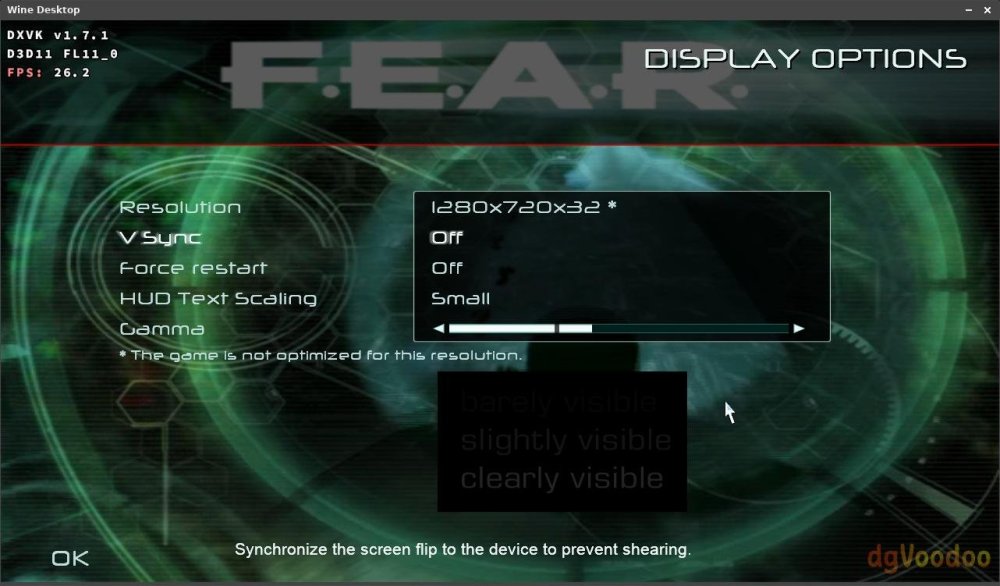
.thumb.jpg.0ba6f34c0cca36105313fe9fd0a00a41.jpg)
.thumb.jpg.137dc406ff17d24c5c238bda5a4068c0.jpg)
.thumb.jpg.613f8b49e4050bdc1e80a8e97a17f02c.jpg)
-
Rupa X88 Pro 13 - RK3528 board with images
Joao Cordeiro replied to fedes_gl's topic in Rockchip CPU Boxes
@shexplorer, connect it to the internal serial port using a USB-to-serial adapter. If you don’t have one, they’re very cheap—search for CH340G on Amazon. Quick safety guide on serial adapters: 1 - Your device has 3.3v serial , check the jumper on the CH340G to make sure its on 3.3v and not 5v 2 - DO NOT CONNECT VCC/3.3v/5v Pin!!! Only connect: ground RX TX 3 - Connect ground from to ground from device Connect RX from usb to TX from device Connect TX from usb to RX from device Let us know if you are having issues with the bound rate or the pinout on your serial header in your device (send us a picture, in that case) Once you get serial, you should see the boot looping endlessly, holding control + c should stop the loop. Then you get an uboot console. there you can chainload your usb or external mmc uboot. With something similar to(ask chatgpt to help you in case of issues): usb start # starts usb devices usb tree # lists devices and partitions usb info # shows USB device info ls usb 0:1 / # lists files on partition 1 of usb 0 fatload usb 0:1 0x82000000 u-boot.bin # 0x82000000 is an example that may work. if it does not, ask chatgpt for other values # u-boot.bin is the usb uboot you want to chanload, might have another name.... ls usb 0:1 will help you find other files # go 0x82000000 # chainloads what you loaded into 0x82000000 memory address. if you change this on the previous line, change it here also. Besides trying to chainload uboot, you can also load linux kernel + initrd + dbt files directly. Again, chatgpt will help you with those commands. But i found chainloading usb uboot easier. It you reach linux console, remember that once you reboot, everything will loop again. So you need to fix what you did to the emmc before rebooting. You have 3 options to fix: 1 - Restore your full backup. -> you get manufactorer android back 2 - Restore 10MB of your backup or johlnx's backup -> you should be able to boot again from usb or external mmc 3 - You can calculate exacly what you need to copy, to maintain your emmc linux but also recover uboot. There should be some space between the partition table data and the 1st partition. Lets imagine, GPT uses 1MB and 1st partition starts at 10MB, you can copy the data between 1MB and 10MB from your backup into the space between 1MB and 10MB of your EMMC. (this is not trivial to do, but again chatgpt can help) This way, you still have a linux on the EMMC, but you have recovered the Uboot env. -
 I think it depends on what you want. If you want to have some fun, then building this one is interesting actually, and there is more extensibility, and since radxa zero GPIO pin is compatible with Raspberry pi's, you can also get a DAC Mini Hat raspberry pi module, so there is more you can play or customize. But, if you just want to solve the problem and don't want to have these hassle, buying an existing product is a better option, so you have the warranty, customer support, and everything should work out of the box. I don't have Fosi Audio DS1 or Fiio Ka13, so every information I get is from the google search and cannot guarantee the correctness. From what I saw, Fiio Ka13 seems to be unable to work with PS5, and Fosi Audio DS1 can. This project only handles digital audio data, so I do not need to pay attention to the audio electronic properties when outputting (because that's the job of that USB speaker), and I do not know the sound quality of Fosi Audio DS1. One last word, if your original plan is to use this converter to connect to Hiby R3II, then to your headphone, that should work, but that is kind of redundant; there is more latency introduced, and the robustness could be wore because you have a longer output chain (from the engineering perspective). It would be easier to just get a high quality UAC 1.0 Amp.
 -
 Tried this?
 -
Sorry @Harleyyyu, but me and @fabiobassa were a bit puzzled about your journey within the hardware video decoding. I recently tested the kernel 6.18 (but I am pretty sure it works fine also in kernel 6.12/6.6/6.1), but everything was already in place even with zero-copy DMA buffers, using the LibreELEC patches which are already compiled in the mainline kernel shipped with armbian for years right now. Then there is also this apt repository I brought up few months ago with ffmpeg already patched and some instructions to run mpv with hardware decoding, which so far works for me either in virtual terminal and wayland (although sometimes with some glitches). Just to let you know, because it looks like hardware video decoding, HDMI and GPU things are unsupported, but actually everything works fine.
-
There is none. Its csc device. Community supported. You are community
-

Panfrost power transition timeout errors
SteeMan replied to dreamlayers's topic in Amlogic CPU Boxes
What exact image are you running? Or better yet providing full logs with armbianmonitor -u -
 Thanks a lot, I´m in doubt about buying the radxa and use it with my hiby r3II or just buy a Fosi Audio DS1 or Fiio Ka13. I have bought nice headphones and I´m sad I can´t use them on my ps5 correctly. If just for that matter what would you do? Thanks again





.jpg.a9c771a210dfd840e739b9d059b97ba0.jpg)
.jpg.2ec24f2d712fb1b01bd298b9d79b32d9.jpg)


.jpg.a8adcac2c8515e6cd158e8a2649d50b5.jpg)
.jpg.8acb3af0f3cad05601ad4631cfbf593c.jpg)
.jpg.f2f283a8ae4c7f329c7bbab5d7745a61.jpg)