Search the Community
Showing results for 'youtube'.
-
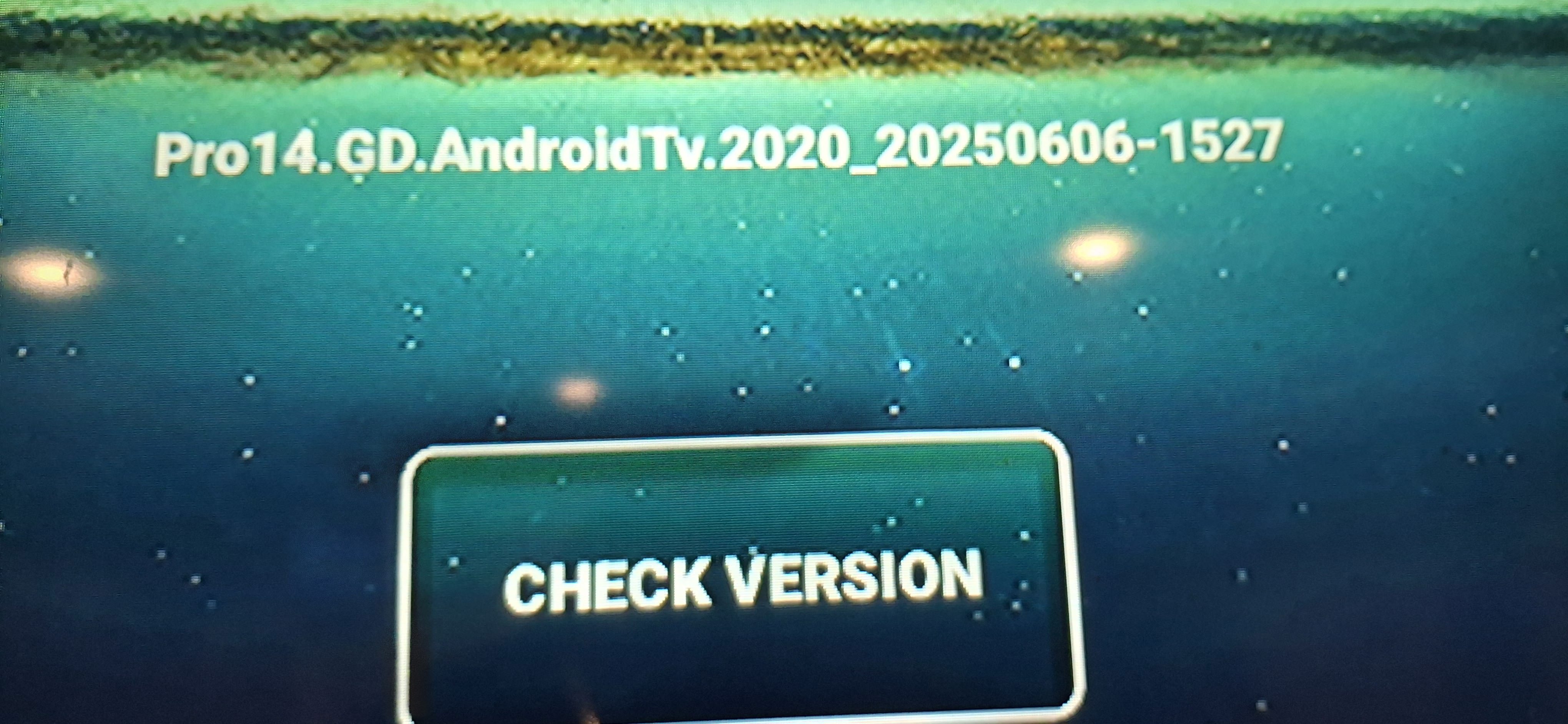
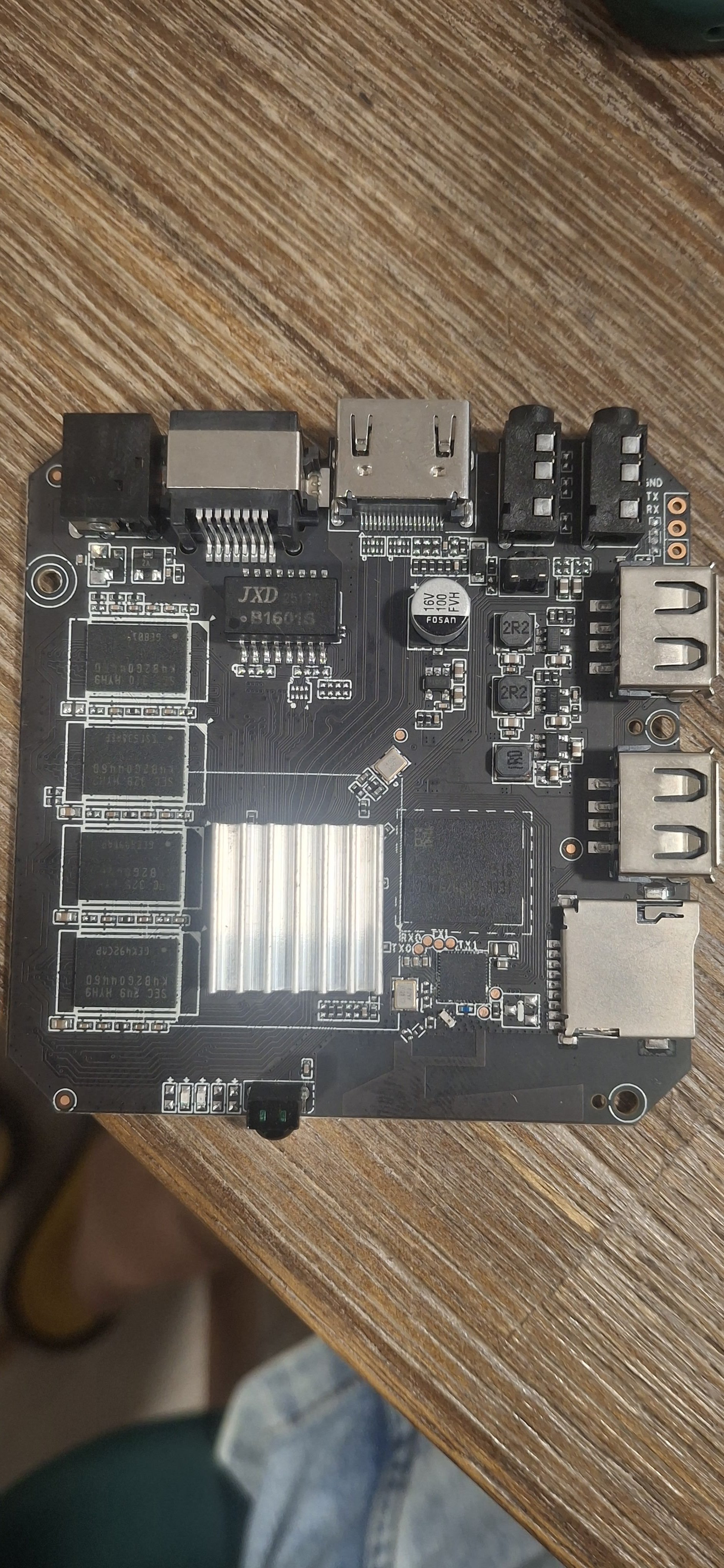
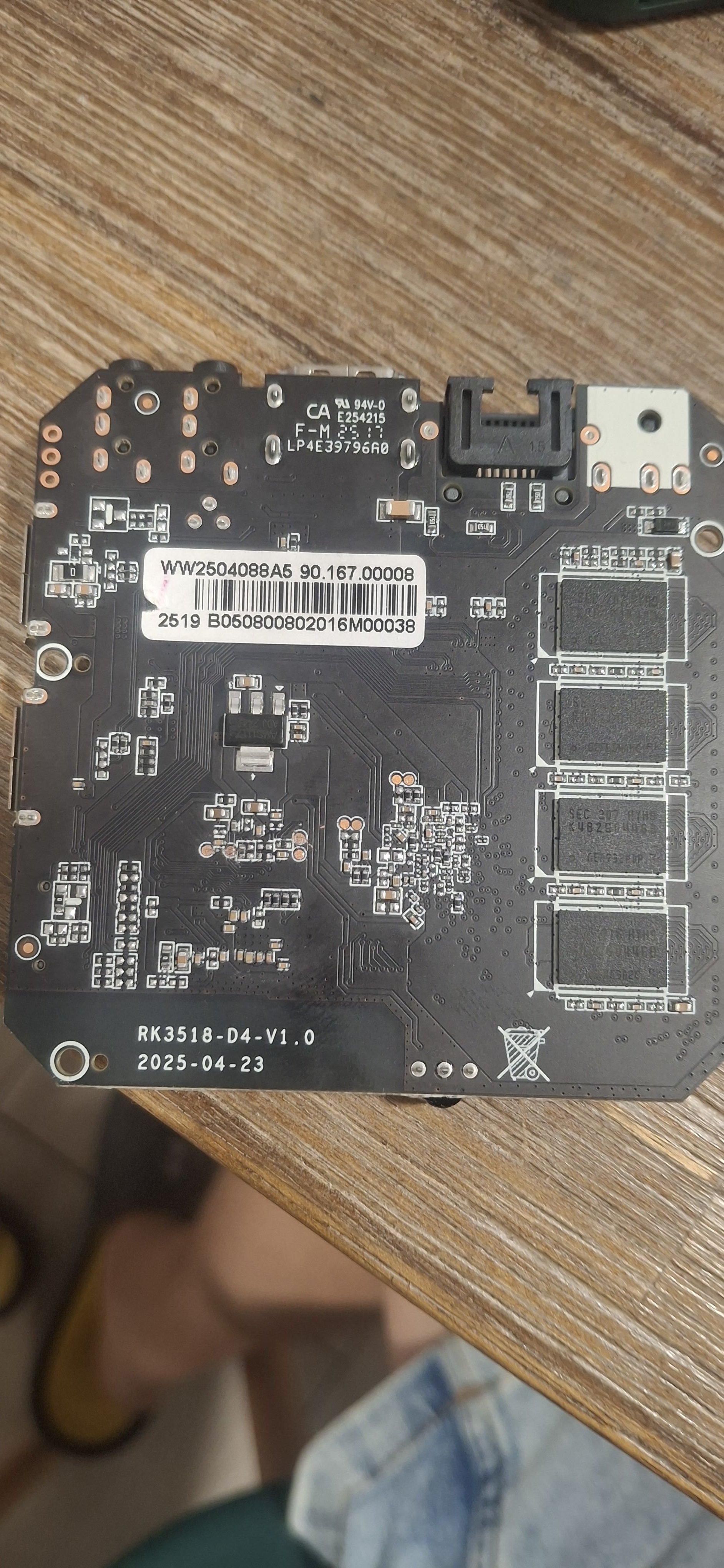
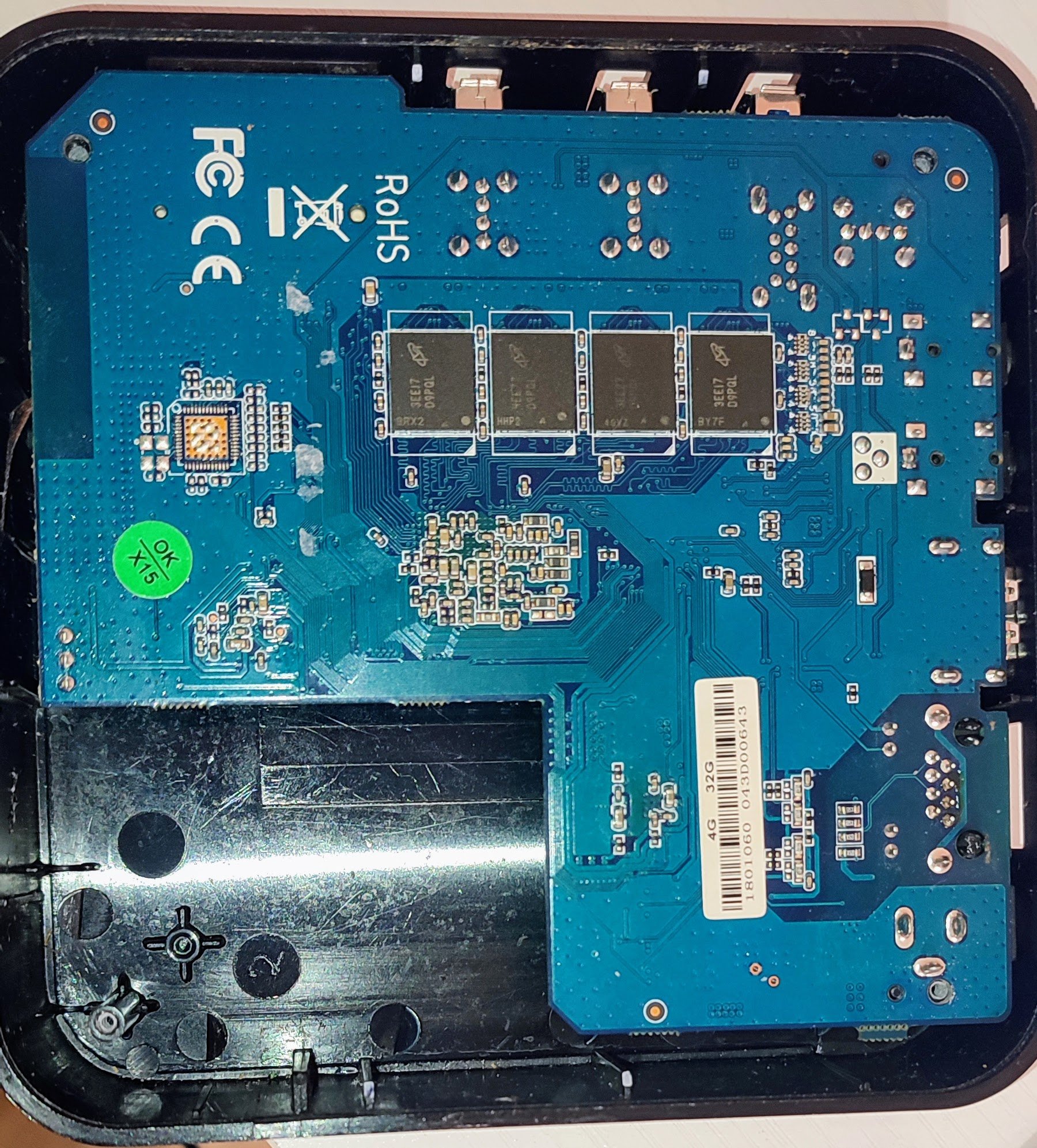
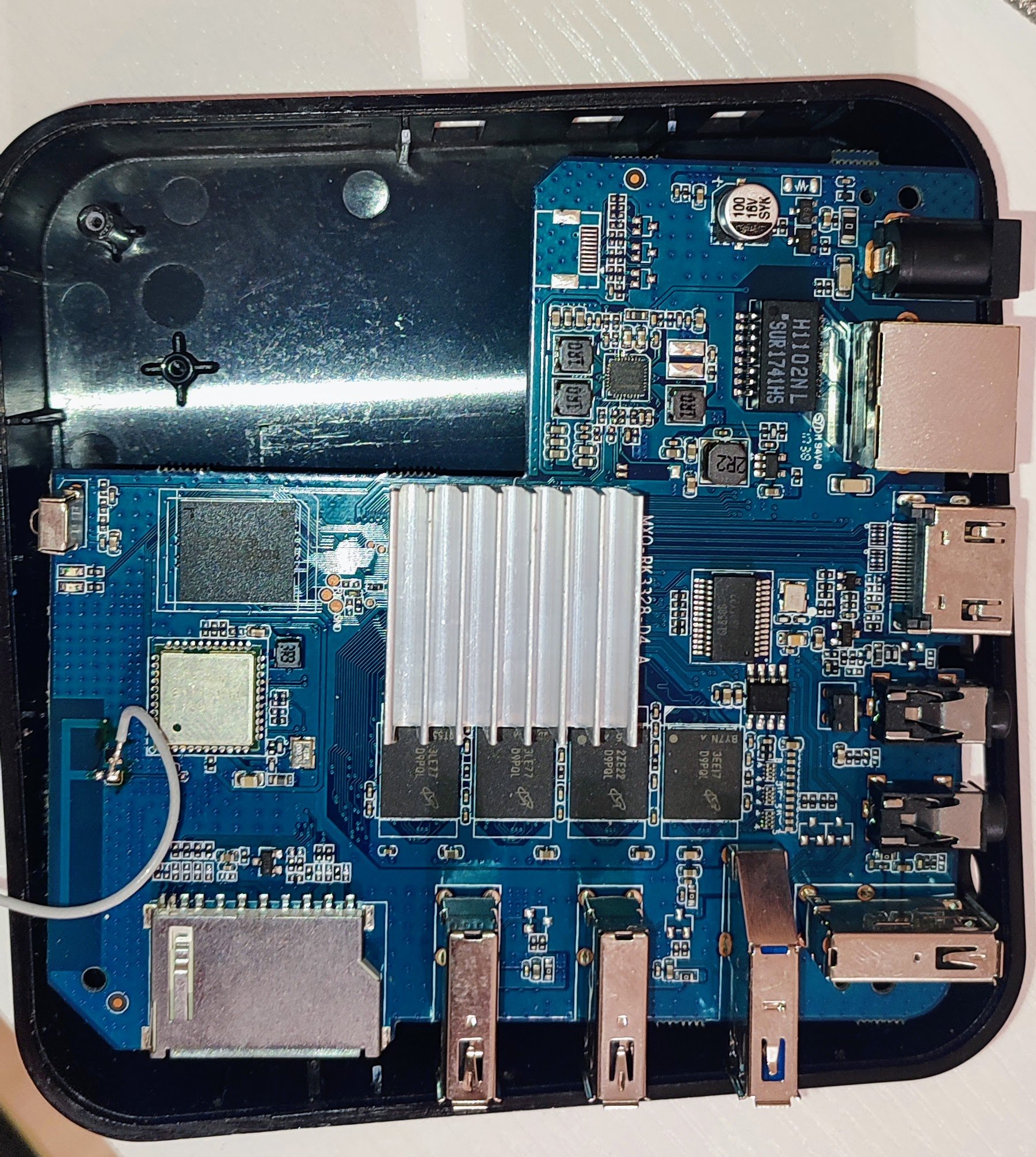
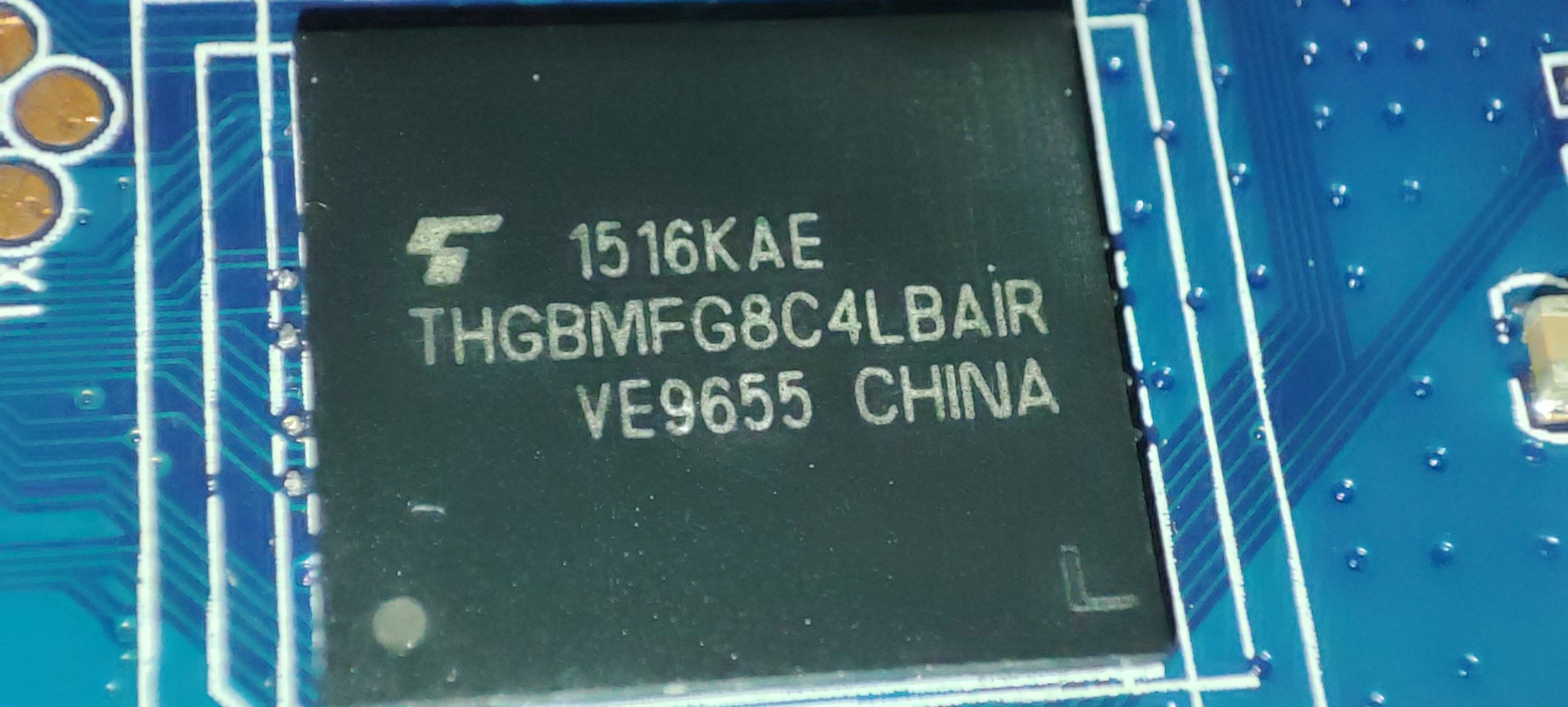
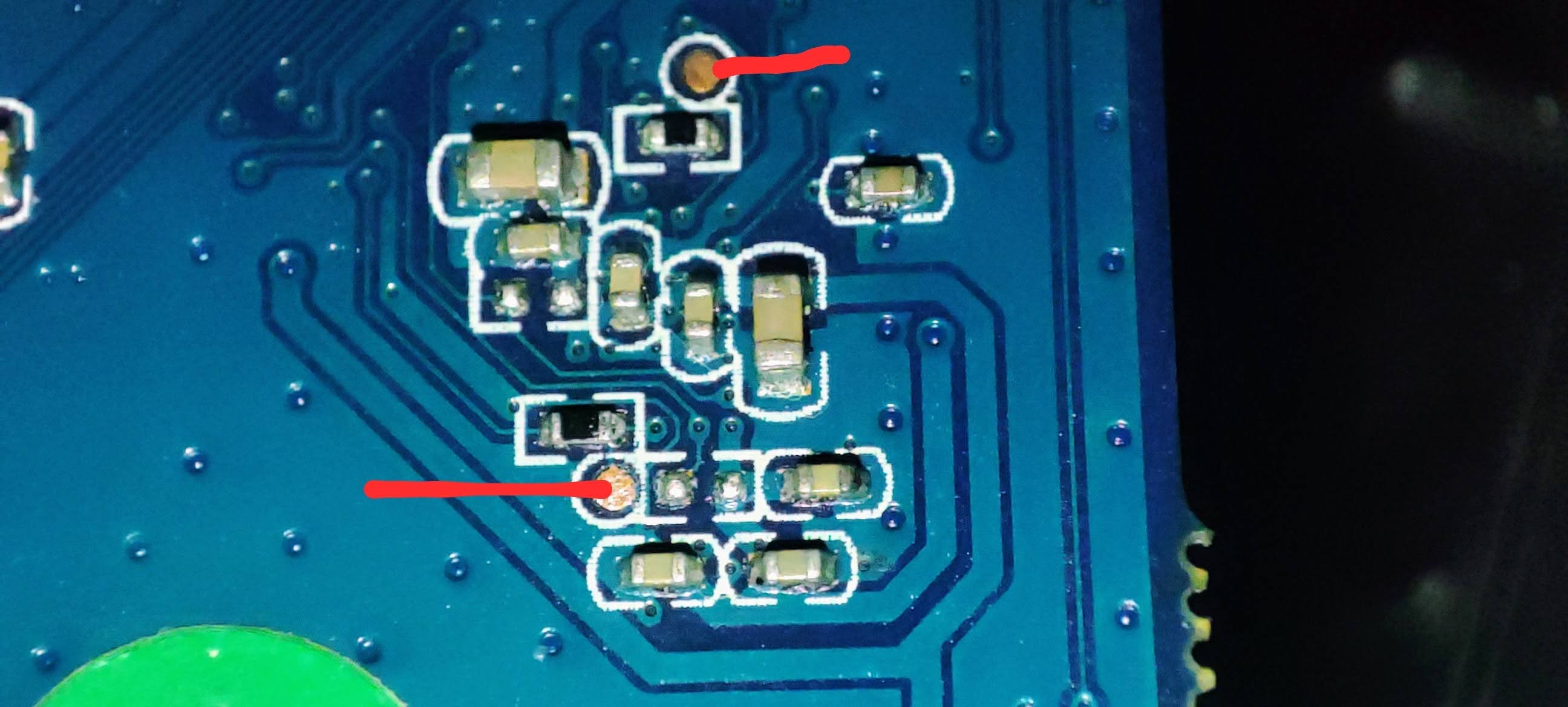
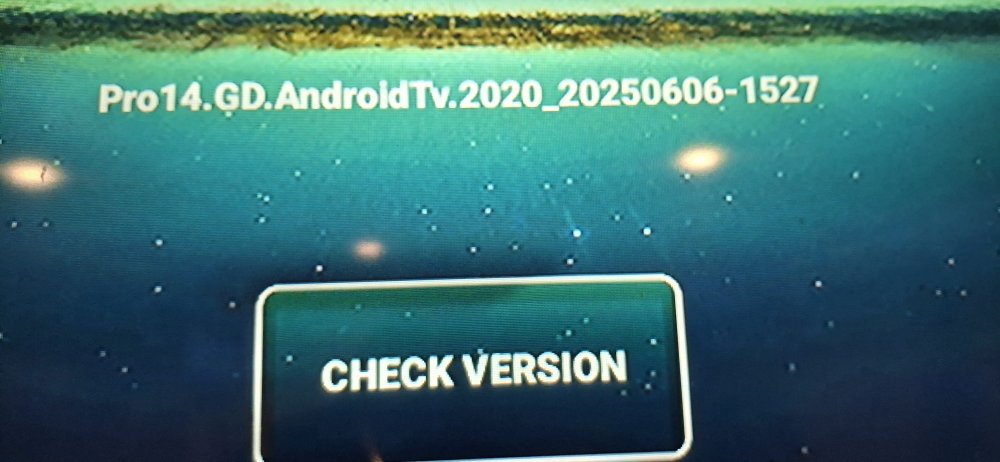
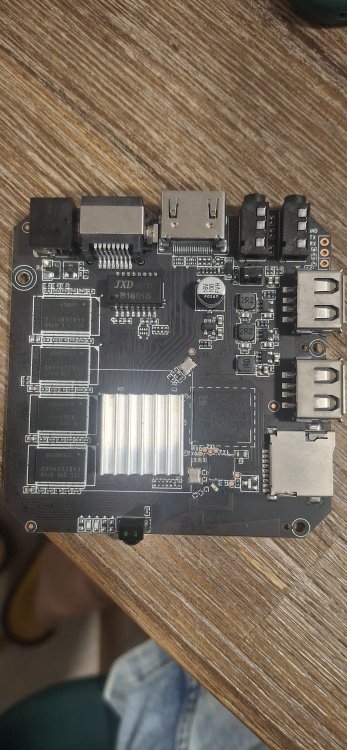
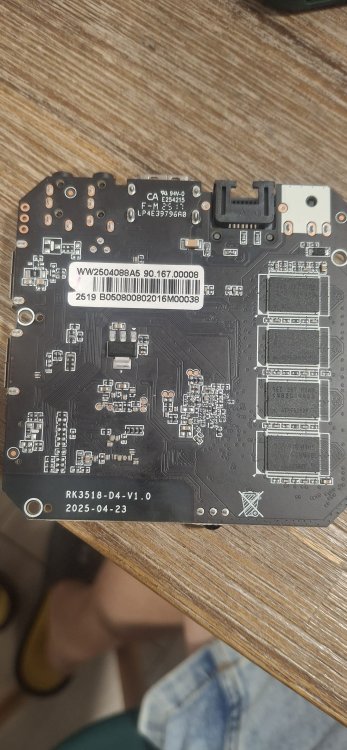
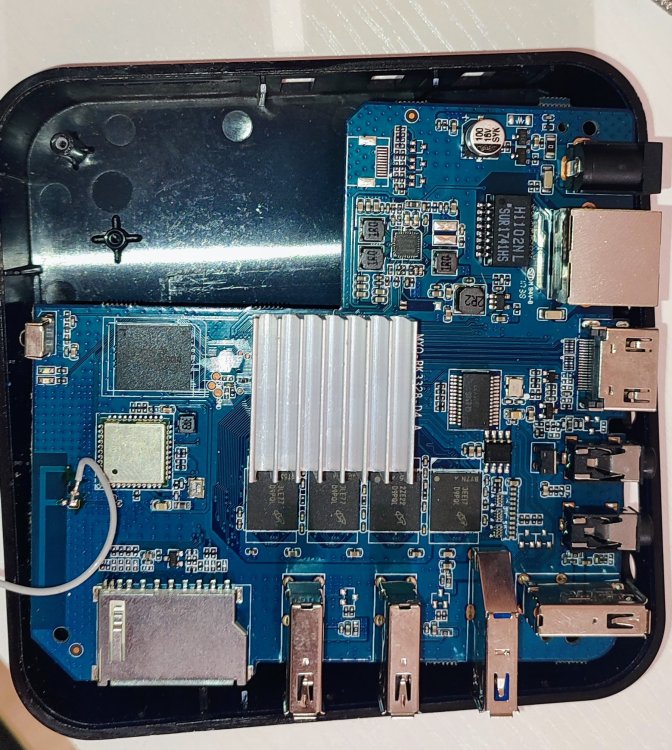
hello everyone! I bought this tv box..https://www.aliexpress.com/item/1005009346784515.html?spm=a2g0o.order_list.order_list_main.11.79e81802pgNRxu but after starting it was not possible to log in to googleplay even though I had a connection via wifi or ethernet. the preinstalled version for applications was Aptoide TV..through it I wanted to update all applications (youtube, netflix, etc.) I managed to do that but no application could be started. the original file manager did not show the internal memory or USB disk or SD card until I managed to download ES file manager through aptoide and it showed my flash disk I installed HW info device and there I found out that it was an RK3528 chip. so I wanted to flash the firmware and I used a rom image for H96max with the same parameters. the firmware upgrade went OK but the device is dead. I can't find the correct firmware. I'm attaching a photo--- maybe someone will recognize the board and identify which rom-img should be correct. the seller can't help me in any way.
-
Tried booting cli minimal with vendor kernel from microsd, boots just fine. How to debug boot issues: https://www.youtube.com/watch?v=UpVMO7gbnYM
-
This week, Collabora is at the YouTube Device Partner Summit in Tokyo showcasing our ongoing work with YouTube, notably on their TV app and the RDK platform, which has resulted in the RDK's integration as a core platform for Cobalt development. View the full article
-
--- Hey everyone! Long-time lurker, first post here. I picked up one of those cheap RK3229 TV boxes and decided to see how far I could push it on a mainline kernel — no Android, no BSP, no blobs. What started as curiosity about whether rkvdec actually worked on kernel 6.6 turned into a full rabbit hole of GStreamer pipelines, PHY register dumps, and DRM memory bandwidth math. The whole debugging and documentation process was done collaboratively with Claude (Anthropic's AI assistant), which made it a lot easier to dig into kernel driver internals and iterate on the pipeline without spending weeks at it. All the results were validated on real hardware. Sharing here in case it saves someone else the same rabbit hole. --- [GUIDE] Hardware H.264 decode at 720p — mainline kernel 6.6, GStreamer, no blobs After spending some time on my RK3229 TV box running Armbian 24.2.5 Bookworm (kernel 6.6.22-current-rockchip), I got hardware H.264 decode working at 720p real-time using only mainline kernel drivers and open-source GStreamer plugins. Posting here in case it helps others. --- What works - H.264 720p@30fps fully hardware decoded via rkvdec (the mainline V4L2 stateless decoder) - Direct HDMI output via kmssink (DRM/KMS — no X11, no Wayland needed) - Audio output via ALSA (HDMI or analog) - YouTube streaming with audio+video in sync using a small proxy server What doesn't work and why - 1080p: The decoder itself handles it, but writing ~90 MB/s of NV12 frames to uncached DRM memory saturates the Cortex-A7 memory bus. Not a software problem — there's no fix without DMA-BUF zero-copy between rkvdec and the DRM subsystem. - YouTube in a browser: Browsers do their own software decode — no VA-API bridge exists for rkvdec on mainline. Even with a desktop environment installed, frame rate will be unusable. - HEVC / AV1: Not supported by rkvdec on RK3228/RK3229. --- The GStreamer pipeline # Local H.264 file — video only gst-launch-1.0 filesrc location=video.mp4 ! qtdemux ! h264parse \ ! v4l2slh264dec ! videoconvert ! kmssink driver-name=rockchip sync=true # YouTube streaming with audio (requires proxy — see repo) gst-launch-1.0 -e \ souphttpsrc location="http://PROXY_IP:8091/play?v=VIDEO_ID&q=720&fmt=ts" automatic-redirect=true ! \ tsdemux name=demux \ demux. ! queue ! h264parse ! v4l2slh264dec ! videoconvert ! kmssink driver-name=rockchip sync=true \ demux. ! queue ! aacparse ! avdec_aac ! audioconvert ! audioresample \ ! "audio/x-raw,rate=44100,channels=2" ! alsasink device=hw:2 Key points: - v4l2slh264dec is the stateless GStreamer element — do not use h264_v4l2m2m (that's for stateful decoders like RPi) - kmssink driver-name=rockchip uses /dev/dri/card0 (Rockchip DRM display), not the Lima GPU - For YouTube, MPEG-TS (fmt=ts) is required — fragmented MP4 with empty_moov breaks GStreamer cap negotiation --- Why this is different from Jock's media framework Jock's framework uses kernel 4.4 + RKMPP proprietary blobs. This uses kernel 6.6 mainline + rkvdec upstream driver + open-source GStreamer. No blobs, works with current Armbian, survives kernel upgrades. --- Requirements - Armbian 24.x with kernel 6.6-current-rockchip (kernel 5.15 / Bullseye not tested — V4L2 stateless API wasn't stable until 5.18) - GStreamer 1.22 from Debian Bookworm sudo apt install -y gstreamer1.0-tools gstreamer1.0-plugins-base \ gstreamer1.0-plugins-good gstreamer1.0-plugins-bad \ gstreamer1.0-libav gstreamer1.0-alsa --- Repo with scripts and full setup guide https://github.com/Reinoldo-Ozy/rk322x-mediaplayer Includes the yt-play playback script and the proxy server (yt_proxy.py) with systemd unit. The README covers the full setup, performance numbers, and a detailed limitations section. Tested on a generic MXQ Pro-style box with RK3229, 2 GB RAM, Armbian 24.2.5 Bookworm, kernel 6.6.22-current-rockchip, DTB rk322x-box.dtb.
-
I've just installed Ubuntu KDE vendor image and now the proper refresh rates are detected. Thank you However, now it seems video players are not working properly. No HW decoding and no audio. It works if I play youtube videos through via Chrome though Strange thing is that after the clean installation, lots of basic KDE packages were missing (dolphin, Konsole, mpv, etc), which I had to install via apt. After that I also performed a apt full-upgrade, but it didnt solve the problem Tried to play h264 and 265 with no success I add some logs, but feel free to request more if they may help
-
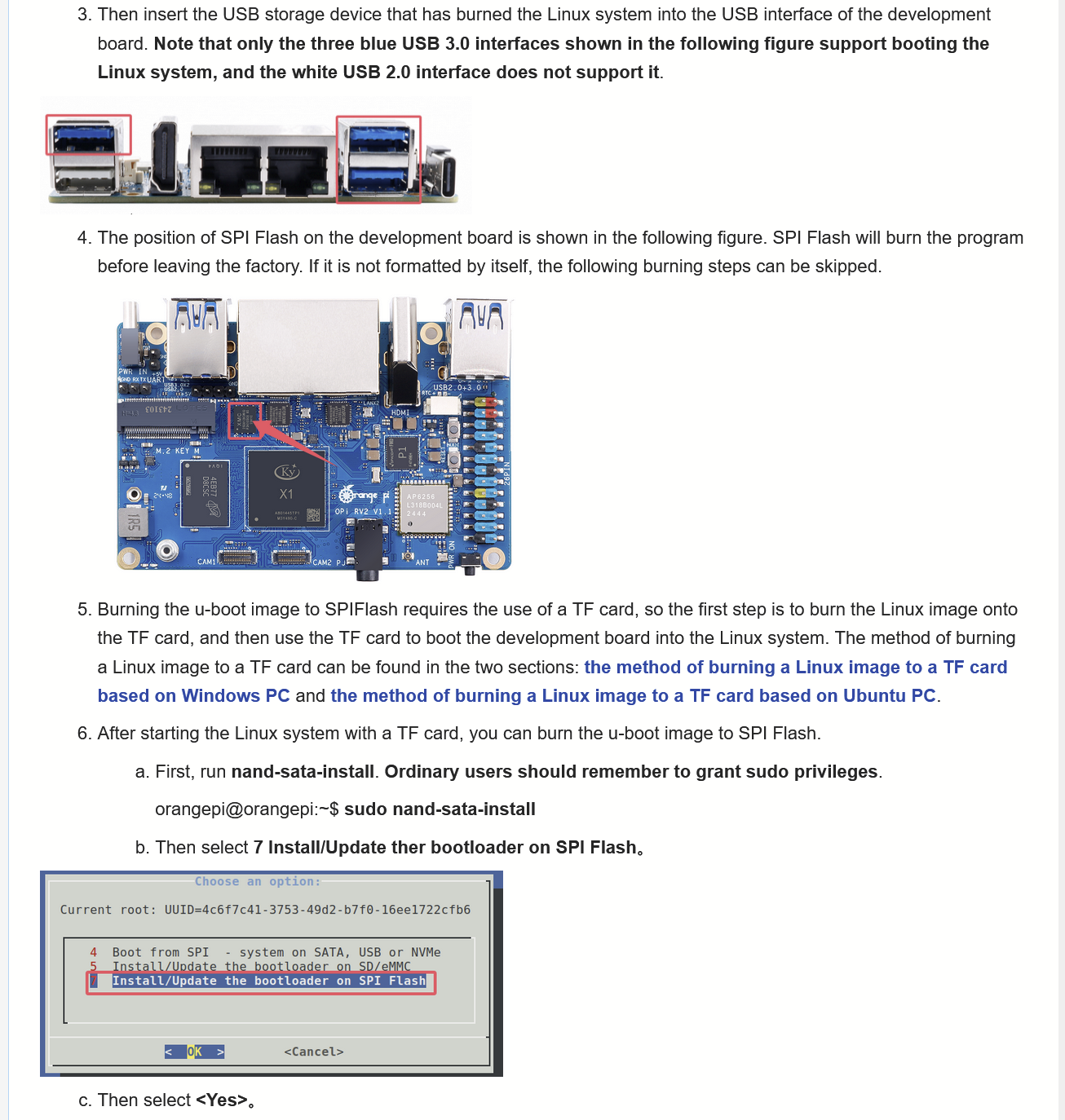
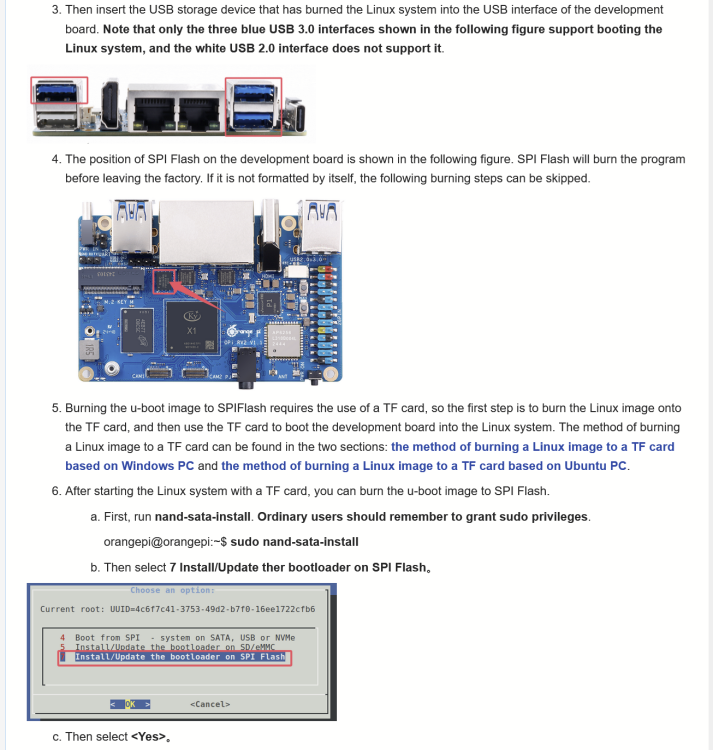
Ah right, the OrangePI RV2 WIKI page http://www.orangepi.org/orangepiwiki/index.php/Orange_Pi_RV2#Method_for_burning_Linux_images_to_SPIFlash.2BUSB_storage_devices says the RV2 can be booted from USB directly, via SPI flash. The WIKI is not very clear though - does RV2 come with the SPI pre-flashed? It kind of sounds like that from this YouTube video https://www.youtube.com/watch?v=YzajoWMJgKI which does not mention flashing the SPI at all. The WIKI does not say clearly, but it says, if you need to flash the SPI, then just boot Linux off MicroSD card. But it does not say which Linux. They must most likely mean their own Ubuntu distribution downloable on http://www.orangepi.org/html/hardWare/computerAndMicrocontrollers/service-and-support/Orange-Pi-RV2.html , right? Then do "sudo nand-sata-install" which is expected to exist, and it will install UBoot to the SPI flash chip. After this is done, when booting, UBoot will load from the SPI flash, and it will auto-detect that there is a bootable OS on an USB device, and just boot it, right? @sven-ola
-
Hello everyone, I urgently need help, as I am on the verge of throwing my Khadas out the window. I bought a used Khadas Vim3L HTPC Kit (S905D3) and want to use it for Navidrome and Audiobookshelf. The FLAC files are located on an external 2.5" WD Elements hard drive, first I intended to format this hard drive to ext4 and set it up in the setup process but it doesnt work and the first thing now is to setup the system,i will add the hd later. Currently, the Vim boots into CoreELEC (which appears to be installed on the internal storage of the vim). Im a total noob and thats my first vim / Board. I just can't seem to get it to work; no matter what I do, it always boots into CoreELEC. I have flashed the recommended Debian 13 (Trixie) → Minimal / CLI image (Armbian_25.11.1_Khadas-vim3l_trixie_current_6.12.58_minimal.oowow.img.xz) using balenaEtcher—onto two different SD cards as well as a USB stick, and I am attempting to boot from them. I have tried various key combinations, but nothing works. For example, when I attempt the method suggested by ChatGPT: Recovery Button Method Unplug the power supply Insert the SD card Hold down the FUNCTION button Briefly press RESET Continue holding the FUNCTION button for another 2–3 seconds I briefly see the Khadas logo, and then it reboots; this process then gets stuck in a loop. I tried using three different power adapters and usb-c cables, thinking that might be the issue... but it was always the same result. I tried a different SD card and various USB sticks and different formats always the same outcome. As a test, I even selected a different image just to see if it would progress any further, but again, I just saw the Khadas logo followed by a boot loop. As soon as I remove the SD card or USB stick, it boots back into CoreELEC from the internal storage. Now I’ve read on another site that I shouldn't use BalenaEtcher, but instead format the SD card/USB stick to FAT32 and place the image in the root directory. I did exactly that and tested it on both the USB 3.0 and 2.0 ports and with the SD because it boots before usb ?!?. Then: disconnect the power supply. Insert the USB stick. Connect HDMI + keyboard. Hold down the FUNCTION button. Plug in the power supply. Immediately press RESET briefly. Continue holding FUNCTION for another 3–5 seconds. And once again, I only see the Khadas logo for a sec and am stuck in a boot loop. Could someone please give me a direct link or the name of the correct image, and tell me the right key combination I need to press or let me know what I'm doing wrong? A step by step guide for an idiot would be great and sorry if the question is stupid, i watched youtube videos, read in the forum etc. but i dont get it, i need really your help. Thank you
-
 Hi I managed to fix an issue with the usb-c port of the orange pi 5 plus. It seems the device is not activated unless you put it in host mode yourself: as user root: echo host >/sys/kernel/debug/usb/fc000000.usb/mode I have tried a usb-c network card and usb stick. Both work after this command! I noticed this when I installed the 6.1.115-vendor-rk35xx kernel. This one does not need this setting, it switches automatically from device mode to host and vice versa. I had alot of problems with analog sound on older kernels, e.g. youtube just hangs unless you mute the sound. But sound in noble 6.19.0-edge-rockchip64 works now, I switched to pipewire however. Thanks to the maintainers of Armbian and OrangePi for this awesomeness!
 -
Just a small note here - I recently added Bianbu desktop (can be installed from armbian-config), where acceleration works on K1 based Musebook (legacy kernel). This should be possible to adopt to any other K1 board. Youtube video works fine in Chromium ...
-
 Hello everyone, I bought an H96 Max M9 TV box. I mainly use it for YouTube and watching movies, but later I wanted to use it for gaming, including emulators and modern community-made ports. This TV box, with its 8GB of RAM, has a lot of potential, but it is being wasted due to a common issue: the file manager. The problem is not the file explorer apps you install—I’ve tried them all—but the system’s storage manager (Android’s SAF), which seems to be poorly implemented or limited by the firmware. This causes issues such as: Selecting folders in PPSSPP (memory stick) Access for emulators like Dolphin Emulator Installing game ports that should run perfectly on this TV box, but cannot be installed due to bugs in the system file manager To be honest, I’m not very knowledgeable about these topics, but if anyone has experienced this or knows a possible solution and can share the information, I would really appreciate it in advance.
 -
Hy all, For some time now I have a Rock 5b + with 16Gig memory. The problem I have is playback video' s in youtube. Video's are not even watcheble in the lowest resolution. Other 4k video' s play fine. I tried several bechmark video' s from online sources. I looked around to see if others experiance the same problem but cannot find anny clu in this matter. I use Armbian ver. 25.5.1 Do others have the same issue? Is there a soltion for this problem? Also I find this board not the fastest. It's a bit faster than mi RPI5 with 4Gig mem. The PI5 plays HD on youtube. I also have a OrangePi 5 ultra with 16 gig memory on stock Orangepi ubuntu witch is a dream to work with. This board is fast, has a small formfactor and became my daily PC for everything. This board also play's youtube video' s in HD. A direct comparacing with the Rock 5b+ is not possible because no Armbian version will boot on this OrangePi board sadly. I tested on wired and WiFi network with no vissible difference. Anny advise is welcome! Ernst-Jan
-

Raspberry Pi 5 missing video decode hardware acceleration in chromium
LivingLinux replied to otte's topic in Raspberry Pi
It will only work for h265, as that is the only hardware decoder available in the Pi 5. So it won't help you with for instance YouTube, as they use VP9 and AV1 (or you can force h264 with a browser plugin). You can try Firefox. https://bugzilla.mozilla.org/show_bug.cgi?id=1833354 Or change some of the flags in Chromium, but it feels as if they keep changing, so you might find other suggested flags all over the internet. You can set the mentioned flags in: chrome://flags/ https://bbs.archlinux.org/viewtopic.php?id=244031 -
Hi, First of all i'd like to thanks thanks all of you for your job or questions that help me to rescue from trash rk3318 based devices. I recover from a friend a X88 pro 10 (4G/128G), witch is a really chip old android-box. I looking for making a media center running kodi and and minimal web browser for unsupported kodi streaming services. I successfully install armbian_community trunk (Rk3318-box_noble_current_6.xx.xx_xfce_desktop.img.xz) using multitool. _ _ _ _ _ /_\ _ _ _ __ | |__(_)__ _ _ _ __ ___ _ __ _ __ _ _ _ _ (_) |_ _ _ / _ \| '_| ' \| '_ \ / _` | ' \ / _/ _ \ ' \| ' \ || | ' \| | _| || | /_/ \_\_| |_|_|_|_.__/_\__,_|_||_|_\__\___/_|_|_|_|_|_\_,_|_||_|_|\__|\_, | |___| |__/ v26.2 rolling for RK3318 Box running Armbian Linux 6.18.21-current-rockchip64 Packages: Ubuntu stable (noble) Support: for advanced users (rolling release) IPv4: (LAN) 192.168.xxx.xxx (WAN) xxx.xxx.xxx.xxx Performance: Load: 2% Uptime: 1d 22h 21m Memory usage: 14% of 3.87G CPU temp: 45°C Usage of /: 6% of 114G RX today: 1 MiB Tips: Becoming a sponsor? https://github.com/sponsors/armbian I run rk3318-config and choose this config: RK3318 (max 1.1Ghz...) no selection on eMMC additional speed options rk3318-box-led-conf2 X88_PR_B_boards Reboot and Install kodi and codec with : sudo apt install ffmpeg mpv kodi kodi-repository-kodi --install-recommends I have some issues : xfce menu is quite slow when I navigate for choosing app. chromium is very very slow and video on youtube are too lagy when decoding Kodi works on xfce but can't decode video, i try on standalone (choose on connection window), still can't decode. I looking on this post without success and this one, same issue. If anyone have a idea to help me to save this device and make me able to use it as a media center. Thanks
-
 Hi. I am not complaining. I just would like to understand why I must deactivate https://ppa.launchpadcontent.net/liujianfeng1994/rockchip-multimedia/ubuntu/ if I want watching video on Youtube. If it's needed to disable this repo for watching video. I am ok. But why I can't read video with package from this repo? https://paste.armbian.com/vaxedisuda
 -
 Hi @Werner, I bought an UART USB device and followed your video here https://www.youtube.com/watch?v=UpVMO7gbnYM to read boot logs. I'm not a huge expert but looks like there is a problem finding /boot when two nvme are connected. Please find attached the following logs: uart-bootcorrectnvme.log -> one nvme plugged (the one with os installed in slot 1) - works! uart-bootdualnvme.log -> two nvme plugged (the one with os installed in slot 1) - fails! uart-bootmicrosd.log -> two nvme plugged + microsd plugged - works! Tests have been executed with official 30W Radxa Power adapter ( same result with POE+ 25W hat) Please, let me know if there is anything else I can provide. Thanks uart-bootcorrectnvme.log uart-bootdualnvme.log uart-bootmicrosd.log
 -
@4A studio You can run the spacemit-gpu-addon.sh on forky. This should install the trixie binaries. If there is something that does not work or wants an unavailable depend, you may try recompiling, the source should be with you: apt-get build-dep somepack and apt-get source -b somepack will get you going. If that works, you can tell me and I'll integrate. @Uhtred2 No 1080p youtube for you? Maybe not every codec works. I have tried with German TV, such as Anyhow, the IMG BXE 2-32 GPU is not very fast, only 500 fish with https://webglsamples.org/aquarium/aquarium.html Hopefully, the K3 successor uses something better. @maxsub You sure use our kernels? Can you post "uname -a" output? I tried the R2S image on my RV2 which shows a zero load with "uptime". Also, why do you need to manually boot USB from uboot? That "kydevtool" together with boot switch does not work either?
-
Youtube did not work with the Trixie image for me before or after the script. The Noble image did a decent job at 720p., would not work at 1080. I have the RV2 with 8GB of memory. Very nice progress!
-
Wrote a script to change an Armbian desktop system for Spacemit GPU drivers and Chromium (attached). Tested with the two pre-installed Gnome images on my site (see https://privat-in.de/ goto Downloads). Some testing results: Spacemit offers Ubuntu noble and Debian trixie *.deb from their Bianbu site http://archive.spacemit.com/ For us, main diff here is Noble=chromium (Spacemit customized version) and Trixie=chromium-browser-stable (older and not customized). We need Wayland for the GPU, X11 does not work. With lightdm, each Wayland login freezes. Thus use gdm3. With gdm3, Xfce4 exits immediately, Kde-plasma shows drawing errors, Cinnamon works to some extend, e.g has video placing and window sizing problems. So the only useable GUI is Gnome. With Chromium under Gnome we can watch Youtube with 1080p (video / audio sync should stablize after some seconds). When doing this, CPU temperature is up to 75°C from the ususal 65°C, power is 4 Watts from the ususal 3 Watts. Script should work on other Spacemit K1 boards as well. If you miss some package from Bianbu, write a wishlist or make an PR on https://codeberg.org/sven-ola/spacemit-mirror spacemit-gpu-addon.sh
-

Vontar KK MAX / HK1 RBOX R2 / R3 - RK3566 4GB/32GB(or 64GB)
Deoptim replied to Deoptim's topic in Rockchip CPU Boxes
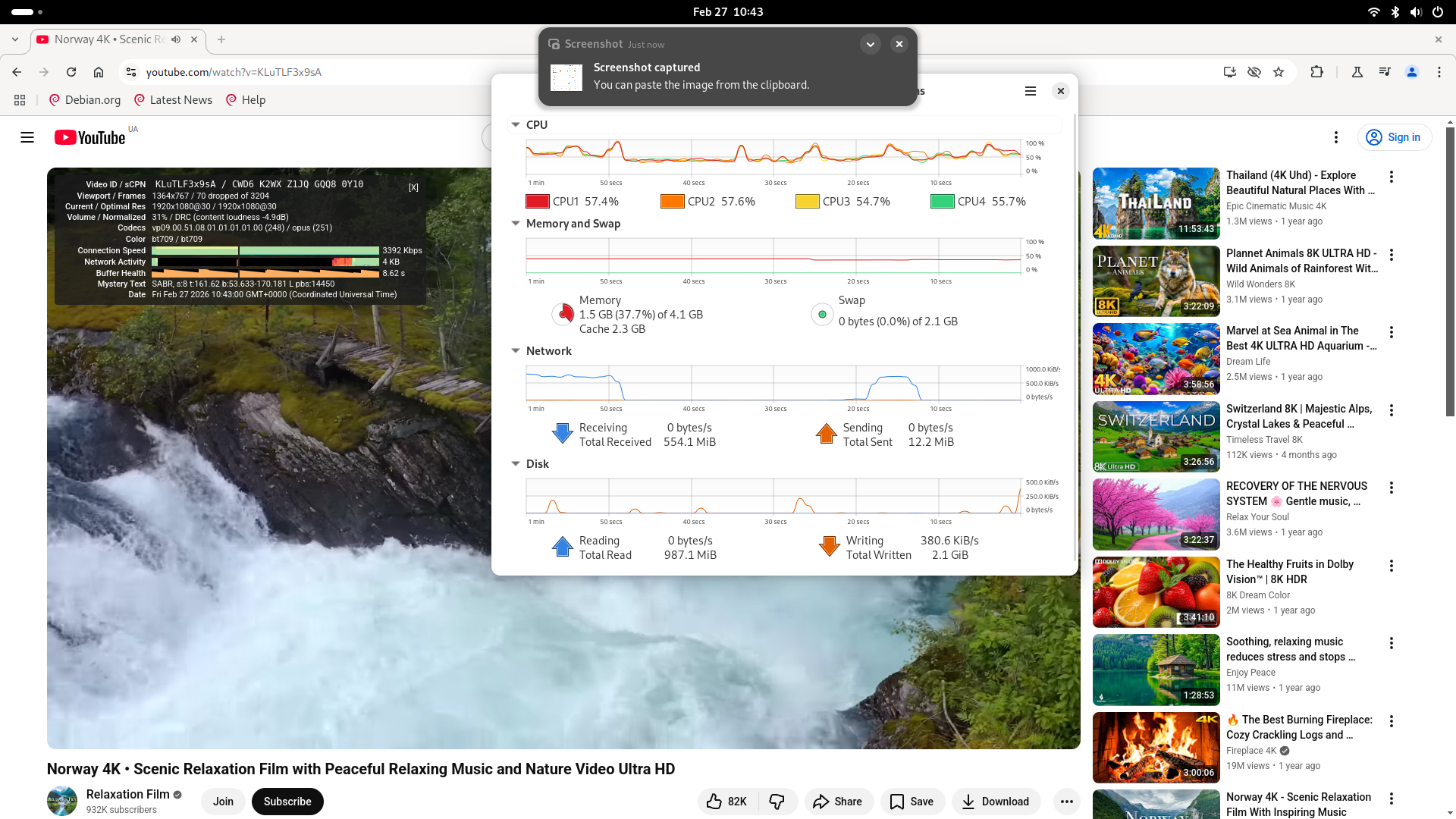
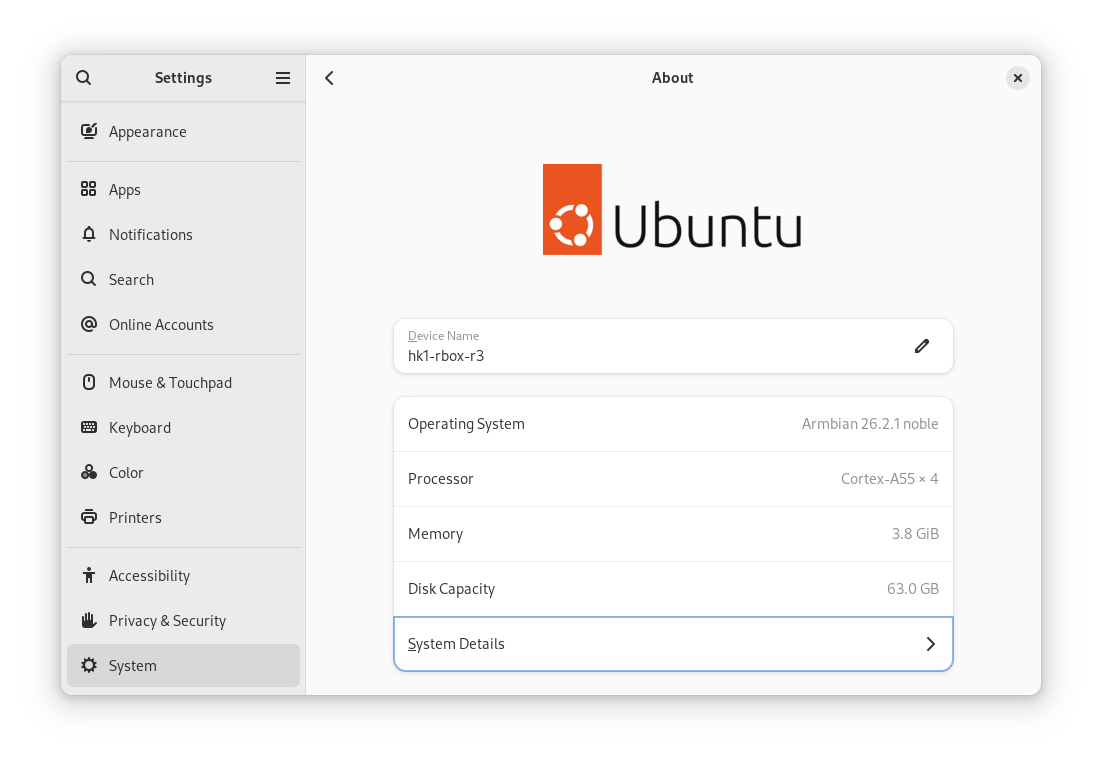
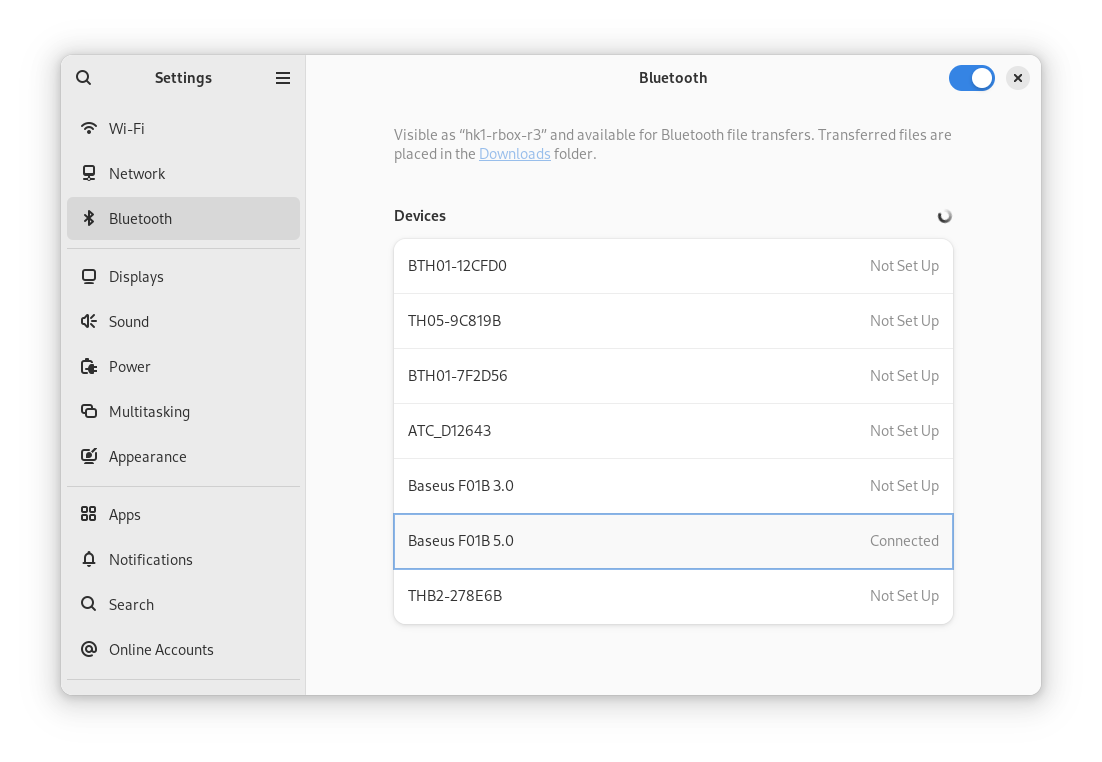
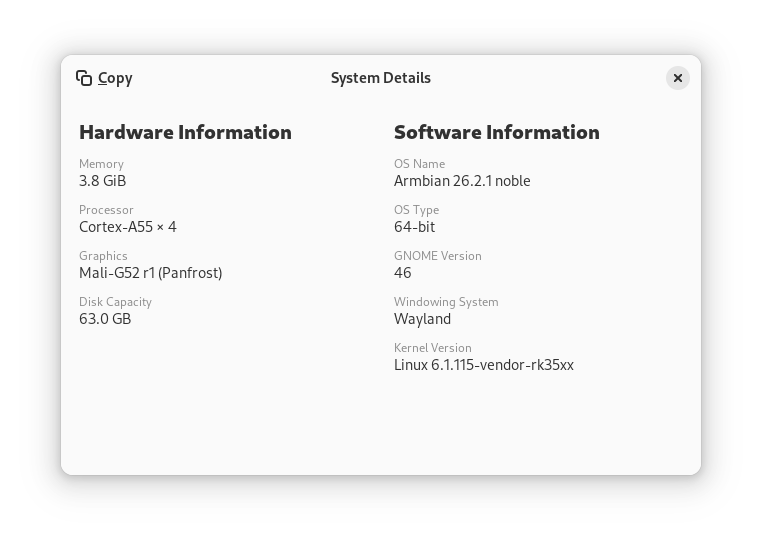
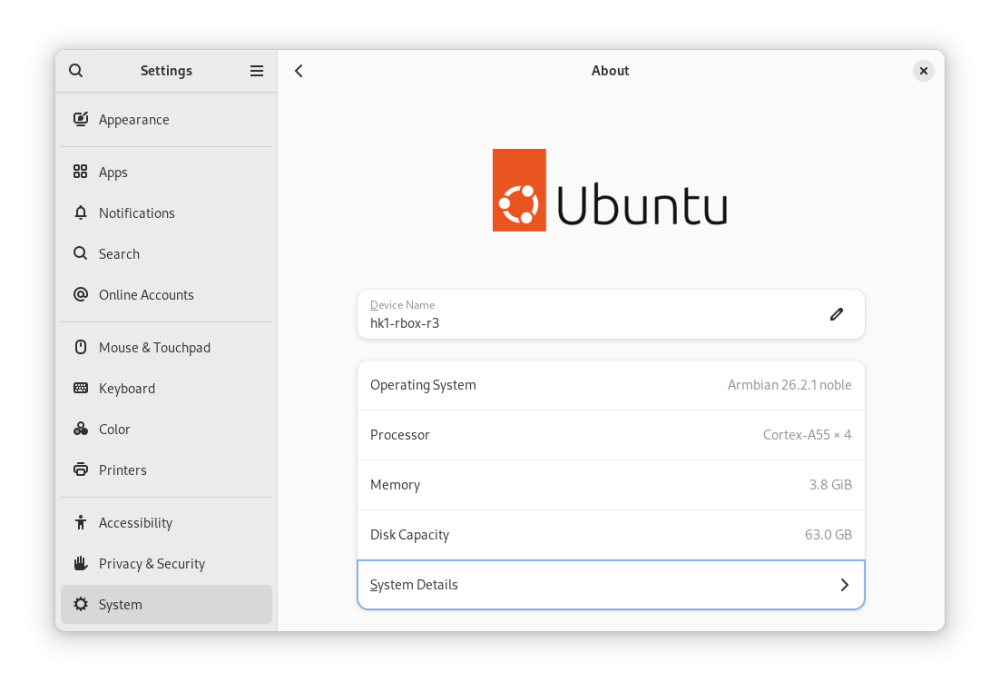
Here are the modified latest official Armbian-supported images for Radxa Zero 3W/3E. Everything works for me, including hardware-accelerated YouTube playback in Chromium (however, with a caveat): Armbian_26.2.1_hk1-rbox-r3_trixie_vendor_6.1.115_minimal.img.xz Armbian_26.2.1_hk1-rbox-r3_noble_vendor_6.1.115_gnome_desktop.img.xz MD5: 28654e87a39ac3e0b2bec4ce4211f5ca *Armbian_26.2.1_hk1-rbox-r3_noble_vendor_6.1.115_gnome_desktop.img.xz ce74829c43c6d27b02bdf314580c4dc4 *Armbian_26.2.1_hk1-rbox-r3_trixie_vendor_6.1.115_minimal.img.xz What you MUST do after installing Armbian: Freeze auto-updates for the bootloader and DTB (kernel updates are OK, except for these two packages since we use a different bootloader, not for Radxa Zero 3): sudo apt-mark hold linux-u-boot-radxa-zero3-vendor linux-dtb-vendor-rk35xx Install dependencies for hardware-accelerated playback Youtube in Chromium: sudo apt update sudo apt install chromium-codecs-ffmpeg-extra ffmpeg In Chromium, install the enhanced-h264ify extension. Then, in the extension's options, leave only AV1 disabled (i.e., enable VP8 and VP9). Screenshots: Instructions on how to modify any Armbian image yourself: Source: 4PDA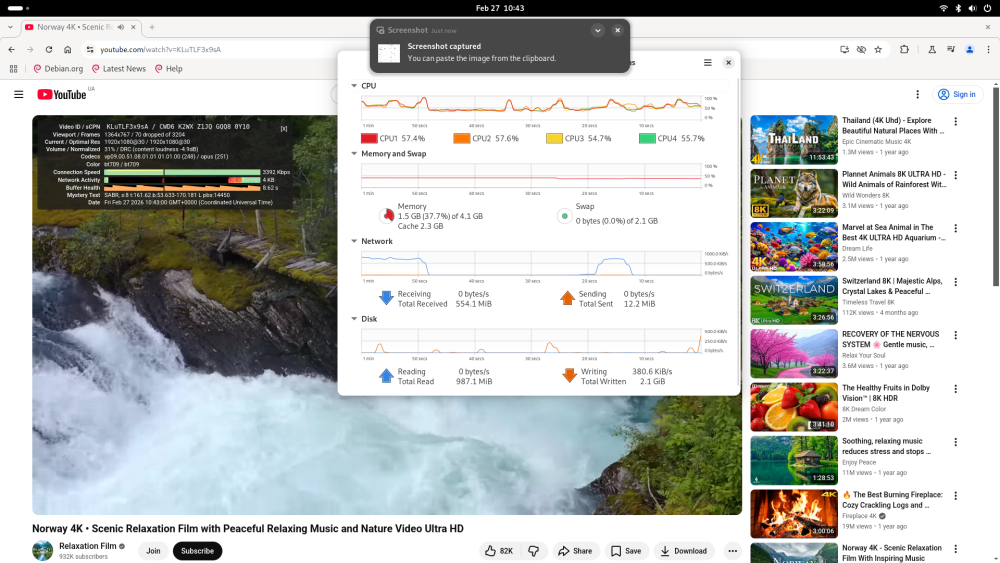
-
i recently purchased an orange pi 5 plus 16gb with the wifi / bt card, the aluminum wifi case, fan and 1tb ssd. when i go to the official website i see different images there none of which seem to work 100%. i mean i was able to get each up and running but what i noticed is that the graphical drivers would not load. i saw a youtube video claiming armbian has the right driver support for the mali 610 gpu. can someone assist me getting this to work? im big into emulation gaming and right now it doesnt even have Vulkan support i crave. someone help thanks
-

[Latest] Armbian Build HDMI Audio support Fix
rsbuffalo replied to just_facking_about's topic in Radxa Dragon Q6A
To get audio working on the Radxa Dragon (QCS6490) when the standard UCM (Use Case Manager) fails, you have to bypass the "official" path and manually bridge the hardware to the software. Here is the complete summary of the "manual bridge" method developed. I installed Armbian 25.11.1 Edge Image and below is how I fixed HDMI Audio. Step 1: Create the Hardware Bridge Script This script manually flips the hardware switches in the Qualcomm DSP that route audio to the HDMI/DisplayPort pins. File: /usr/local/bin/fix-hdmi-audio.sh Command: sudo nano /usr/local/bin/fix-hdmi-audio.sh Bash #!/bin/bash # Wait for hardware to initialize sleep 2 # Open the HDMI/DP Audio Bridge amixer -c 0 cset name='DISPLAY_PORT_RX_0 Audio Mixer MultiMedia1' 1 # Set initial hardware volume amixer -c 0 cset name='stream0.vol_ctrl0 MultiMedia1 Playback Volu' 75% Make it executable: sudo chmod +x /usr/local/bin/fix-hdmi-audio.sh Step 2: Create the Systemd Service This ensures the hardware switches are flipped automatically every time the board boots up. File: /etc/systemd/system/hdmi-audio.service Command: sudo nano /etc/systemd/system/hdmi-audio.service Ini, TOML [Unit] Description=Fix HDMI Audio Routing After=sound.target [Service] Type=oneshot ExecStart=/usr/local/bin/fix-hdmi-audio.sh RemainAfterExit=yes [Install] WantedBy=multi-user.target Enable it: Bash sudo systemctl daemon-reload sudo systemctl enable hdmi-audio.service Step 3: Configure the Desktop Audio Sink Since the system's "Built-in Audio" often defaults to a "Dummy Output" when UCM is broken, we force PulseAudio to create a manual "Sink" pointing directly to the hardware. File: /etc/pulse/default.pa Command: sudo nano /etc/pulse/default.pa Add these lines to the very bottom of the file: Plaintext # Manually bridge PulseAudio to the working hardware path load-module module-alsa-sink device=plughw:0,0 sink_name=Manual_HDMI sink_properties=device.description=HDMI_Audio_Output set-default-sink Manual_HDMI Step 4: Clean Up UCM (Optional but Recommended) To stop the "HDMI Audio failure" warnings during boot, you can ensure your UCM files are at least syntactically correct, even if the system ignores them. File: /usr/share/alsa/ucm2/QCS6490RadxaDra/HiFi.conf Plaintext Syntax 2 SectionDevice."HDMI" { Comment "HDMI Output" Value { PlaybackPriority 200 PlaybackPCM "hw:0,0" } } SectionVerb { EnableSequence [] DisableSequence [] } Summary of the Audio Path By following these steps, you have constructed the following data flow: Hardware: Qualcomm DSP (Card 0, Device 0). Bridge: amixer opens the path from the CPU to the HDMI port. ALSA: Provides the plughw:0,0 interface. PulseAudio: Grabs that interface and names it "HDMI_Audio_Output." Applications: YouTube/Browsers send audio to the "Default Sink," which is now your working HDMI path. Now I will put all these commands into a single "one-click" shell script so you can save it as a backup for future installs? The Radxa Dragon Audio "One-Click" Fix Create the file: nano fix_audio.sh Paste the code below. Run it: chmod +x fix_audio.sh && sudo ./fix_audio.sh Bash #!/bin/bash echo "🚀 Starting Radxa Dragon QCS6490 Audio Fix..." # 1. Create the Hardware Bridge Script echo "🔧 Creating hardware bridge script..." cat <<EOF | sudo tee /usr/local/bin/fix-hdmi-audio.sh > /dev/null #!/bin/bash # Wait for hardware to initialize sleep 2 # Open the HDMI/DP Audio Bridge amixer -c 0 cset name='DISPLAY_PORT_RX_0 Audio Mixer MultiMedia1' 1 # Set initial hardware volume amixer -c 0 cset name='stream0.vol_ctrl0 MultiMedia1 Playback Volu' 75% EOF sudo chmod +x /usr/local/bin/fix-hdmi-audio.sh # 2. Create the Systemd Service echo "⚙️ Creating boot-time service..." cat <<EOF | sudo tee /etc/systemd/system/hdmi-audio.service > /dev/null [Unit] Description=Fix HDMI Audio Routing After=sound.target [Service] Type=oneshot ExecStart=/usr/local/bin/fix-hdmi-audio.sh RemainAfterExit=yes [Install] WantedBy=multi-user.target EOF # 3. Enable and Start the Service sudo systemctl daemon-reload sudo systemctl enable hdmi-audio.service sudo systemctl start hdmi-audio.service # 4. Configure PulseAudio Sink echo "🔉 Configuring PulseAudio/PipeWire sink..." PA_CONFIG="/etc/pulse/default.pa" if [ -f "$PA_CONFIG" ]; then # Check if we already added the fix to avoid duplicates if ! grep -q "Manual_HDMI" "$PA_CONFIG"; then cat <<EOF | sudo tee -a "$PA_CONFIG" > /dev/null # Manually bridge PulseAudio to the working hardware path load-module module-alsa-sink device=plughw:0,0 sink_name=Manual_HDMI sink_properties=device.description=HDMI_Audio_Output set-default-sink Manual_HDMI EOF fi else echo "⚠️ Warning: /etc/pulse/default.pa not found. You may need to manualy add the sink to your specific sound server config." fi echo "✅ Success! Please reboot to finalize settings." echo " After reboot, select 'HDMI_Audio_Output' in Sound Settings if it doesn't auto-switch." Why this works for your specific board: This script performs a "Direct Injection." Instead of asking the operating system to figure out where the audio goes (which fails because the Qualcomm UCM profiles are currently buggy), it tells the hardware exactly which gate to open and tells the software exactly which "sink" to pour the audio into. -
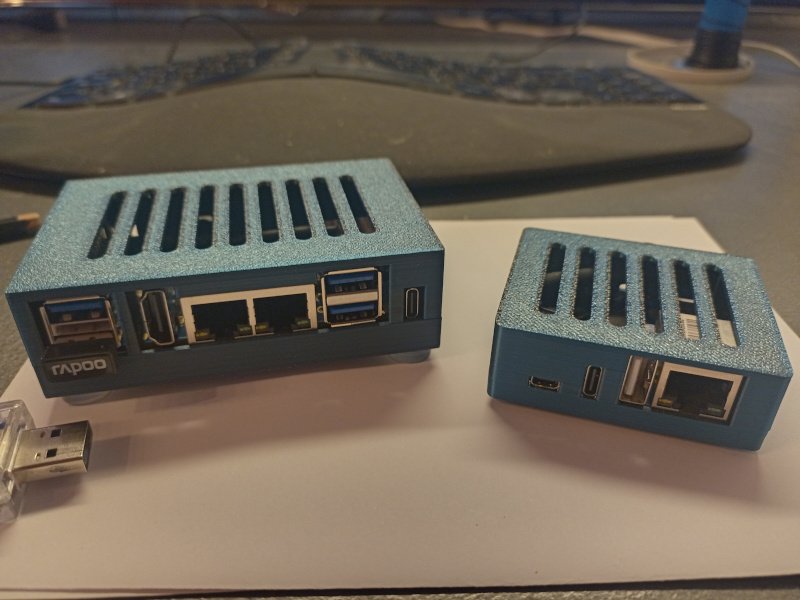
Hello @Malay, et.al, the motivation behind my attempt to include Armbian support for OpiRV2 is to have a better device for my Nextcloud-for-private-persons project. For this, I need a device that can be run at home with a current kernel and headless, but with decent storage. I already have a device (Orange Pi Zero 3, right on the photo), but Orange Pi RV2 (to the left) offers two(!) m.2 slots for NVMEs, some Wifi and Eth as well as decent computing power. Also, both have some extra NOR flash to store LUKS keys and decent pricing. Also that RiscV64 has some appeal, admitted 😉 Without GPU support, you can run Mate, LXDE, and XFCE for a GUI, which should be OK for some management tasks. I doubt that RV2 will ever make a good Youtube player, however that may be archived by replacing the Armbian userspace with that Ubuntu-Noble userspace that you can download from Xunlong. This Ubunut also comes with a RiscV64 port of Chromium which is also needed for Youtube and not avail from Debian, but source code *.dsc seems to be offered in the Bianbu pool so that may work out. Anyhow - that GPU porting attempt was based on the PowerVR addons offered as code drop on git@gitee.com:spacemit-buildroot/mesa3d.git. Our Chinese friends grabbed mesa 22.3.5, added their IMG BXE-2-32 this+that to the sources, cherry-picked their way up to mesa 24.0.1 and throw the result over the fence. At least without inking the code via Windows notepad, so no white-space chaos this time. Now, porting this with the closed binary *.so as heavy baggage is all about stable API. Large internal API change -> end of party. I am no graphics specialist, so take this with a pinch of salt. Debian offers mesa since 24.3 with an additional package: mesa-libgallium, you need this for the GPU desktops (Cinnamon, and probably Gnome / KDE). OK - someone or something needs the API from the Mesa internal Gallium driver suite, this needs to be compiled (a *.a is there). So I started to bring that code drop from 24.0 to 24.3, only to stumble over internal API changes. Concrete: we previously have some numeric constants __DRI_IMAGE_COMPONENTS_this+that 0xabcde in Mesa describing image formats (RGB32, BGRA24, 656-16, and so on). The code drop adds a couple of formats probably specific for PowerVR, but the Mesa project completely removed those constants ("nobody uses this"). At that point I thought: this is pointless, I'll pass... HTH // Sven-Ola
-

CSC Armbian for RK3318/RK3328 TV box boards
SanchopansA replied to jock's topic in Rockchip CPU Boxes
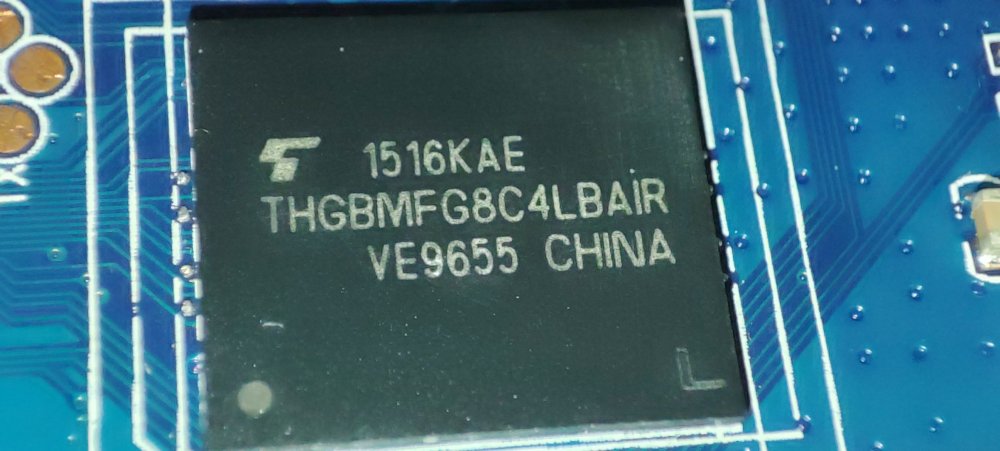
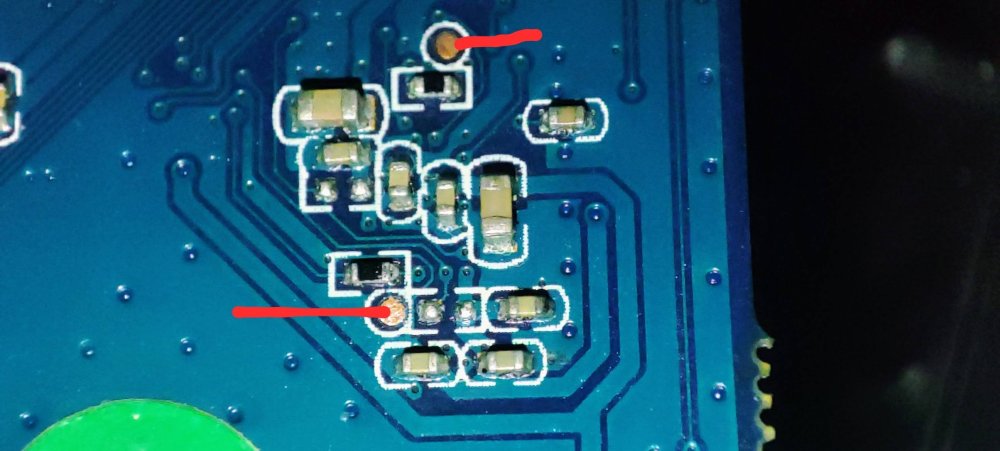
@jock Thank you for your reply. Unfortunately, I can't do it I tried to short it, but it doesn't load from the SD card. I shorted it with a piece of wire. When I do it with USB connected, I see the device is in Maskrom. Here the console output from rkdeveloptool using: root@lensky-lp:~# lsusb Bus 001 Device 001: ID 1d6b:0002 Linux Foundation 2.0 root hub Bus 001 Device 004: ID 10c4:8105 Silicon Labs USB OPTICAL MOUSE Bus 001 Device 005: ID 04ca:707f Lite-On Technology Corp. HP Wide Vision HD Camera Bus 001 Device 006: ID 0bda:b00b Realtek Semiconductor Corp. Realtek Bluetooth 4.2 Adapter Bus 001 Device 008: ID 1ea7:0066 SHARKOON Technologies GmbH [Mediatrack Edge Mini Keyboard] Bus 001 Device 009: ID 2207:320c Fuzhou Rockchip Electronics Company RK3328 in Mask ROM mode Bus 002 Device 001: ID 1d6b:0003 Linux Foundation 3.0 root hub root@lensky-lp:~# rkdeveloptool ld DevNo=1 Vid=0x2207,Pid=0x320c,LocationID=104 Maskrom root@lensky-lp:~# rkdeveloptool td Test Device failed! root@lensky-lp:~# rkdeveloptool ---------------------Tool Usage --------------------- Help: -h or --help Version: -v or --version ListDevice: ld DownloadBoot: db <Loader> UpgradeLoader: ul <Loader> ReadLBA: rl <BeginSec> <SectorLen> <File> WriteLBA: wl <BeginSec> <File> WriteLBA: wlx <PartitionName> <File> WriteGPT: gpt <gpt partition table> WriteParameter: prm <parameter> PrintPartition: ppt EraseFlash: ef TestDevice: td ResetDevice: rd [subcode] ChangeStorage: cs [storage: 1=EMMC, 2=SD, 9=SPINOR] ReadFlashID: rid ReadFlashInfo: rfi ReadChipInfo: rci ReadCapability: rcb PackBootLoader: pack UnpackBootLoader: unpack <boot loader> TagSPL: tagspl <tag> <U-Boot SPL> ------------------------------------------------------- root@lensky-lp:~# rkdeveloptool rid Reading flash ID failed! root@lensky-lp:~# rkdeveloptool cs 2 AMO: ERR_DEVICE_WRITE_FAILED Change Storage failed! root@lensky-lp:~# rkdeveloptool ppt Read GPT failed! Read parameter failed! Not found any partition table! root@lensky-lp:~# rkdeveloptool db /home/lensky/Downloads/For\ RK3328\ devices/RK3328MiniLoaderAll_V2.50.bin Downloading bootloader succeeded. root@lensky-lp:~# rkdeveloptool ppt **********Partition Info(parameter)********** NO LBA Name 00 00002000 uboot 01 00004000 trust 02 00008000 misc 03 0000A000 baseparamer 04 0000A800 resource 05 00012000 kernel 06 00022000 boot 07 00032000 recovery 08 00042000 backup 09 00062000 cache 10 000A2000 metadata 11 000AA000 kpanic 12 000AC000 system 13 003AC000 userdata As you see after boot it looks like the flash is empty. I can't ready any info and there no partitions. But after download bootloader command I see partiosions and can read flash info and chip info. After reboot all is disappear again. This is my board: This is my eMMC chip: I have found YouTube video how to short the clock pin for my board. On the opposite side, I need to short these pins: When I insert the SD card and boot the device, it just lights the red led and nothing more. Is something I do wrong?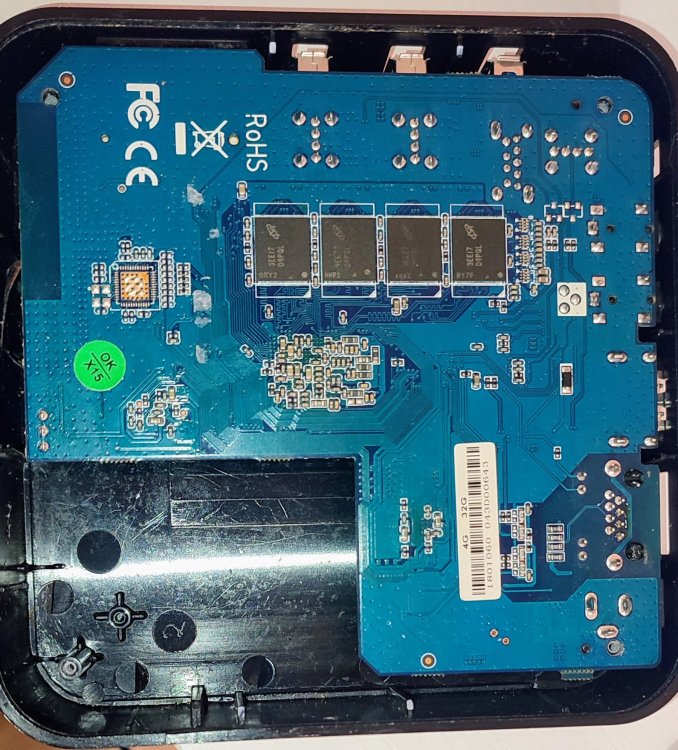
-
@jock your armbian build (Bookworm) plus my modified version of openauto works now, its done by using kmssink for drm overlay plane for video (Added to codebase) and RTAudio patched to use ALSA. Youtube: OpenAuto - RK322x Test run with Hardware Acceleration if you want to try it here's a prebuilt version of it, armhf compiled. Github: OpenAuto RK322x Armbian, openauto-rk322x-v1 i would love to make it run better on our hardware
-
Klipper Load Cell Documentation The kx711 is specifically referenced near the bottom of the documentation. It needs slow speeds and I believe has been incorporated into recent Klipper releases. I posted the file output on graphics, framebuffer and drm to @Torte github link. Also found an informative YouTube video on adding a Klipper Touch Screen, over serial, and configuring it. I'm adverse to tossing electronics into landfills - motivation to invest some time into a build for the Sovol boards and tolerate the mksclient propriatary blob. If the touch screen proves to be a show stopper, I think the makerbase MKS-SKIPR board, A supported USB wifi dongle and an HDMI touch screen could be used.