All Activity
- Past hour
-

Driving the ili9488 LCD (4.0 inch cheap chinese clone)
robertoj replied to robertoj's topic in Allwinner sunxi
Hi Pami, I haven't had time to check your connection list and DTS. The LCD you showed is exactly the same I have I have both ili9486 and ili9488, and they work with the same connections, same DTS, same bin, same driver You should be able to copy all the wiring I describe in the DTS, the DTS, bin/txt and armbianEnv.txt line, and it should work. Start from a fresh self-built armbian OS, with the panel-mipi-dbi driver activated in the linux config phase. -
I currently have a X96 Air S905X3 4GB/64GB box that has 1Gbit ethernet and a USB 3.0 port that works well with Armbian. This was bought 5 years ago for only 35 USD. I would like to find another box for Armbian that also has 1000M/1Gbit ethernet + USB 3.0. The same or similar boxes are selling for 50-60USD at the moment which is a lot for an old box. Are there any other boxes with 1Gbit ethernet at a low price that work with Armbian? Not bothered about other features, wifi quality, performance otherwise - just Gbit ethernet and USB 3. Open to all processors - Amlogic, Allwinner, Rockchip etc
-
If I look at https://www.armbian.com/bananapi-m5/ the SBC is still supported. There were infrastructure problems, but that was before last weekend. I upgraded several Armbians (rockchip64 and sunxi) but are Debian Trixie based. I do not know about Ubuntu based and Amlogic/meson, but kernel is anyway Armbian and Ubuntu servers should be online. If you still have the old Ubuntu, it should be possible to upgrade in-place, so not new image, but edit sources.list files and then run normal upgrade.
- Today
-
Back again with a diff problem. I just tried to update 141 pkgs, from a meson-56 kernel to a meson-58 but the update died at the new initrd stage. Last update run was in November 25. Then I find on a reboot, that the noble 25.xx I was using no longer has a release file. So I dl'd the newest xfce version, burn it, boot it, get the net working & find its expired too. No updates or additions like mdadm can be downloaded. This is my backup server & has 11.2T of raid6 storage with backups of my whole 8 machine network on it. Or did have. Do you intend to support the bpi-m5 with further releases or is it now history? I know the release file timeout is not Your problem & you cannot fix it, but a respin of the latest ubuntu LTS would sure would be appreciated.
-
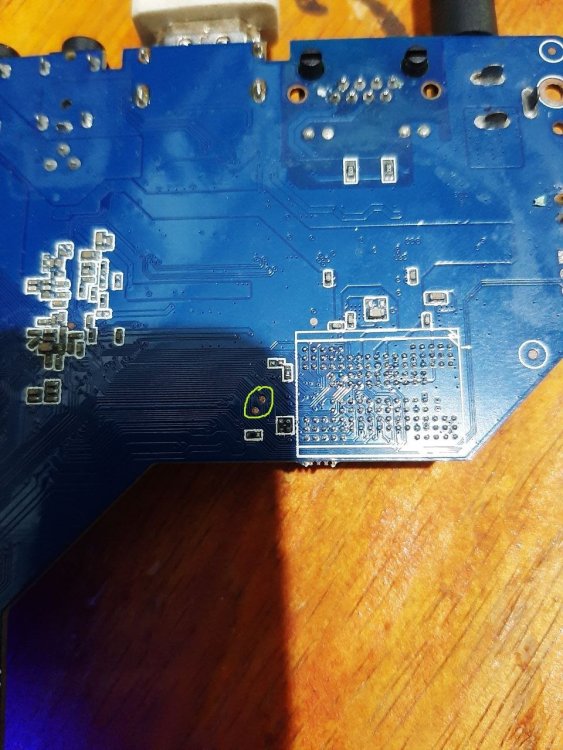
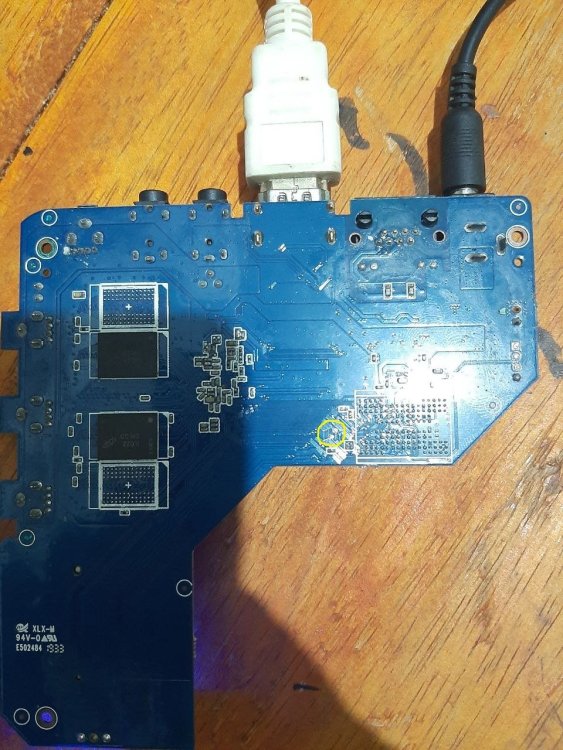
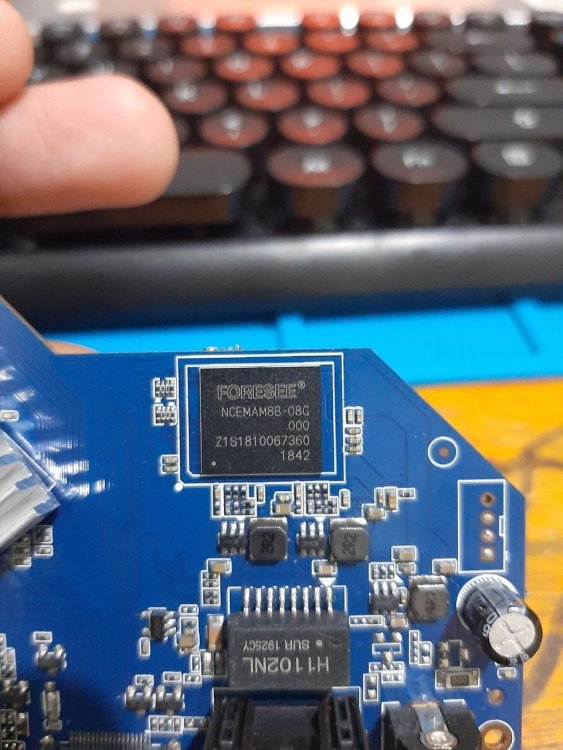
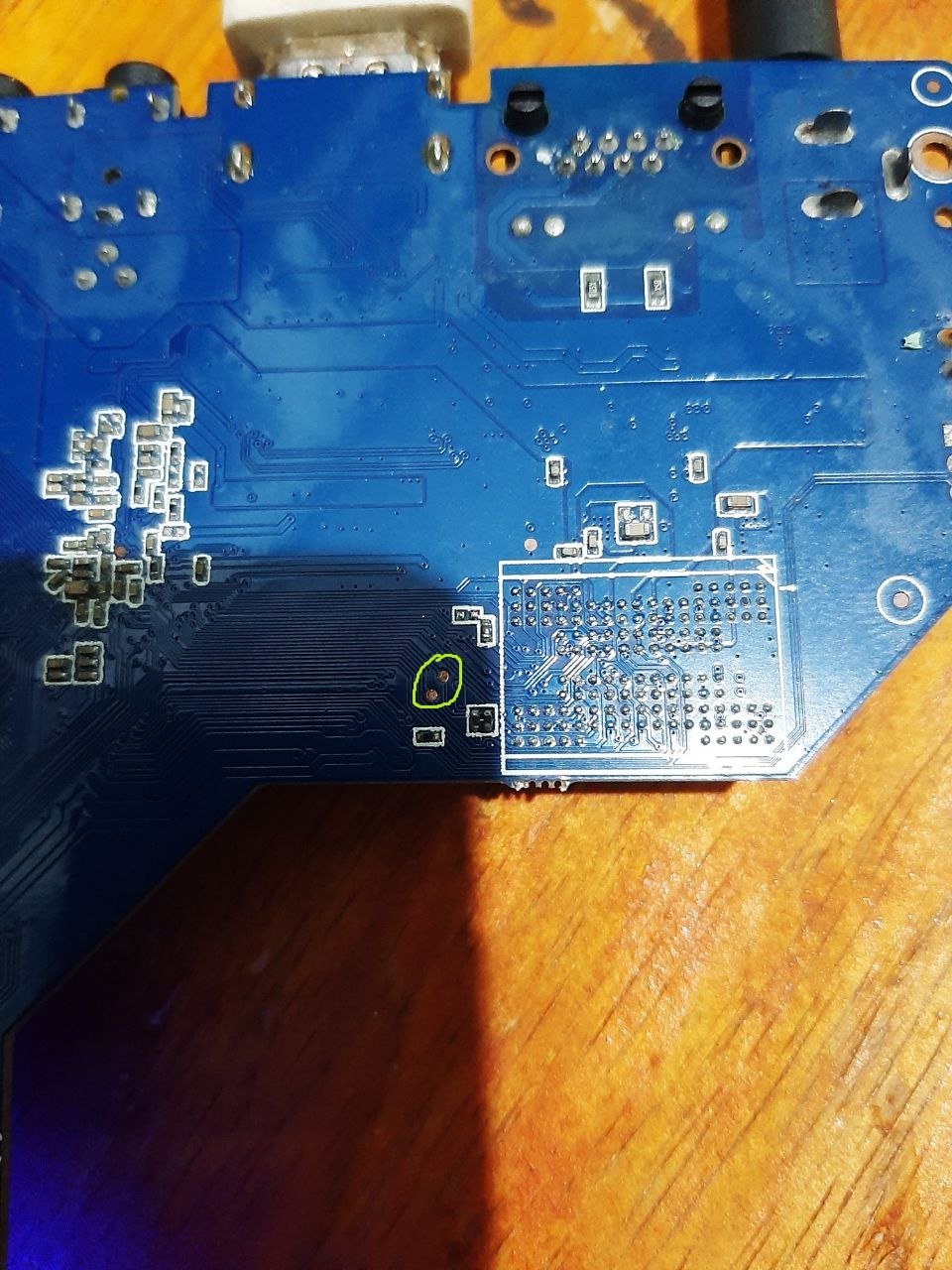
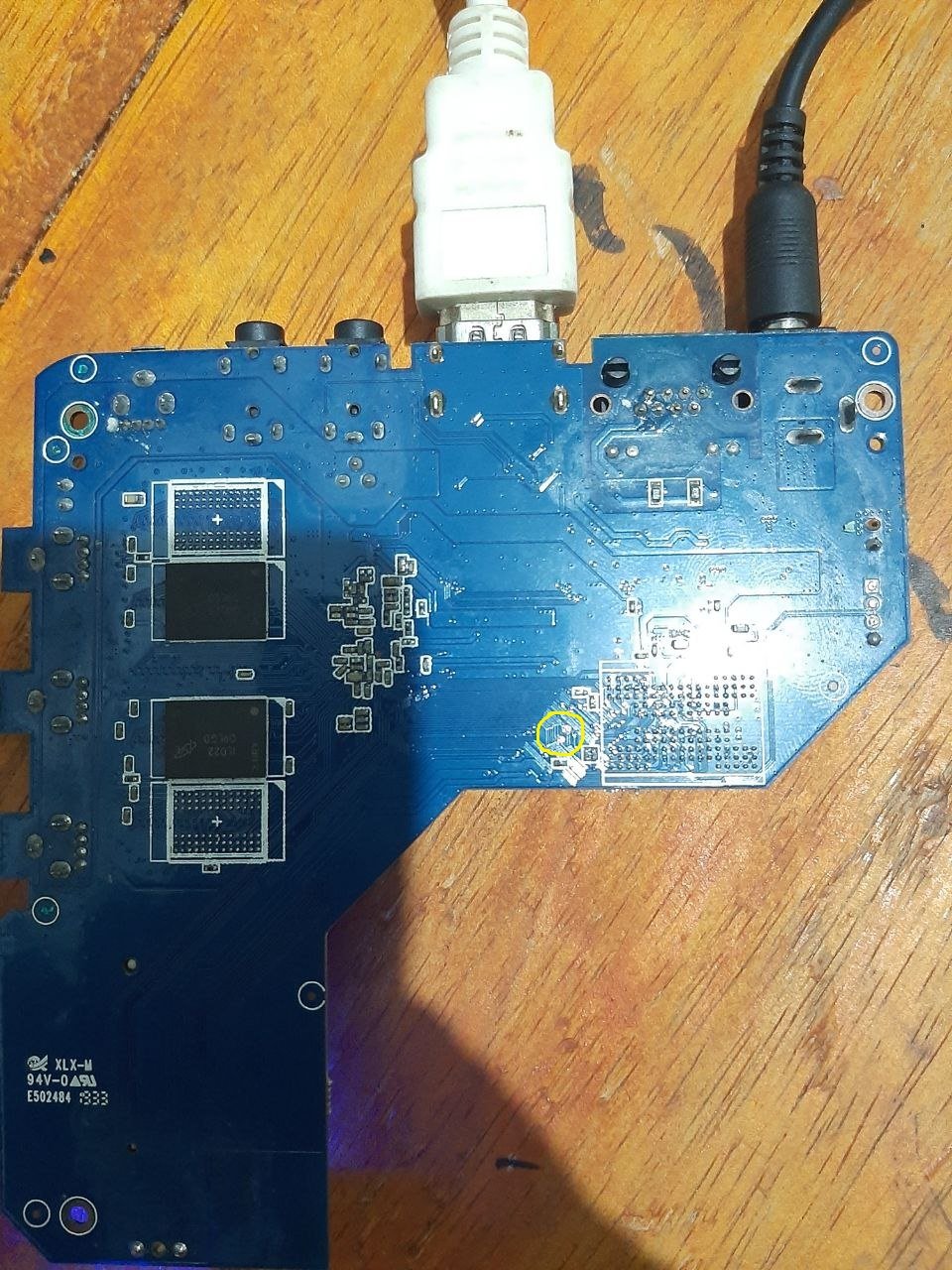
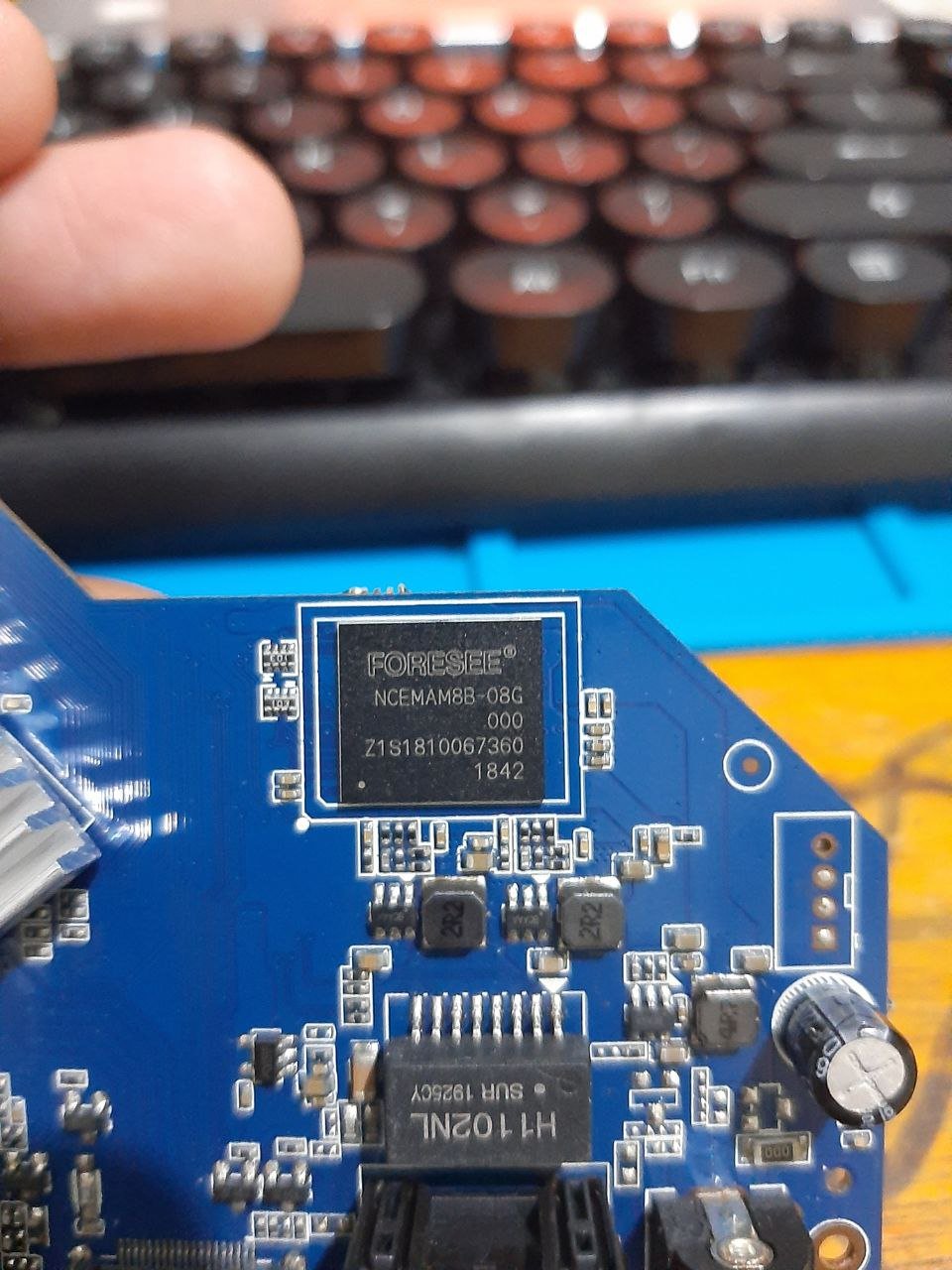
mxq pro 4k maybe "shortpin" Hope it is useful
.thumb.jpg.566e994fddc34a4e80c5a23d3375f36f.jpg)
-
Have you followed the information available on the download page? https://www.armbian.com/amlogic-s9xx-tv-box
-
Maybe are you experiencing the same issue ? https://forum.armbian.com/topic/56946-h3-reboot-issue/
-
Today I needed to reboot one of the Orange Pi which is at a remote location.... It did not come back to life.... Maybe some update removed the extraargs=reboot=warm parameter ....
-
Hi.I want to install the armbian in the mini ms8 pro with the amlogic s912 and 2gb ram ddr3 but i don't know how to install it.I have burned the s912 iso in the microsd but i can't run the installation. Benchmarks Antutu – 40142 GeekBench4 – 476 Single-Core and 2473 Multi-Core 3D Mark Ice Storm Extreme – 6284 A1 SD Bench Memory – RAM Copy 3347.01 Mbps / ROM (R)35.65 Mbps and (W)11.31 Mbps / SD Card (R)14.15 Mbps and (W)12.76 Mbps
-

Install on amlogic tv box without working emmc
SteeMan replied to Игорь Шаповалов's topic in Amlogic CPU Boxes
No standard way to do what you want. The Armbian images from this site depend on the original android bootloader on the emmc to boot. Since you don't have working emmd these images wont boot. Theoritically if you found a working boot loader for your box and it was put on the SD card, then you would have more options. -
Hello everyone, I have three Amlogic S905x TV boxes with a dead EMMC, and one with a desoldered EMMC (since I thought without it, they would boot from the microSD card). Is there a way to force them to boot into Armbian? Holding the power button doesn't work, and desoldering the EMMC didn't help either. I was able to boot Armbian using UART. A workaround is to use Ardruino, which sends commands to boot Armbian after a while, but that's a workaround, and I'd like a more elegant solution. 1) Download the *.img.gz image for the amlogic_s905x 2) Write the image to the microSD card using Rufus. 3) Connect the UART. Steps 2-6 in the brick instructions. 4) Insert the microSD card with Armbian into the console. 5) Turn on the console, close the testpoint, and at a certain point, the UART boot log will stop at gxl_p212_v1#. 6) Execute the following commands: mmc dev 1 env default -a -f;save setenv preboot 'if fatload mmc 0 1020000 aml_autoscript; then autoscr 1020000; fi; if fatload usb 0 1020000 aml_autoscript; then autoscr 1020000; fi; if fatload mmc 1 1020000 emmc_autoscript; then autoscr 1020000; fi;' save reboot Is there a simpler way to boot from a microSD card to default settings? Maybe I need to cleverly write a bootloader to it?
-
Hi Armbian community, I'm trying to install Armbian on my Worldchip K16 tablet and would appreciate guidance on compatibility and installation steps. Device Specifications: · Model: Worldchip K16 · SoC: Allwinner sun50iw10p1 (likely A64/H5 variant) · CPU: Quad-core Cortex-A53 (ARMv8 64-bit) · Current OS: Android 11 · Architecture: aarch64 (ARMv8l) · GPU: Mali-400MP2 (typical for this SoC) · RAM: Unknown (estimated 2-4GB based on similar devices) · Storage: Unknown (likely 32-64GB eMMC)
-
Hi all. I reproduced the same behaviour on my custom uboot built with enabled debugging. The problem is not solved, but I got more detailed information. It turns out spl freezes at loading main uboot loader. Here is part from logs: Jumping to U-Boot... SPL malloc() used 0x198 bytes (0 KB) image entry point: 0x4a000000 More detailed logs can be found here
-
If inserted, SD is booted first. If not inserted or SD read err, NOR flash is booted. NOR flash in turn boots from lower 2280 NVME. I have added boot-from-upper 2230 NVME to uboot. To install Boot via SD. Log in as root. Start armbian-install Select 7 Install to MTD Put fresh image to NVME via dd of=/dev/nvme... Eject SD, press [reset] If anything is wrong, start over with 1. Boot via SD. I am not sure wich NVME (upper or lower?) is used first. Note: If you put the same image to both NVMEs and insert SD, you may have up to three ext4 partitions with the same UUID in the box. So on reboot it is very unclear which of the three ext4 is used as root. Check with df -h /. If necessary, you can use uuidgen from uuid-runtime package and tune2fs -U as well as nano to change extlinux.conf for a different ID. HTH // Sven-Ola
-
Thank you! I will check later today. If there is anything else I can help about, let me know. By the way, both of my nvme drives are `Capabilities L1 PM Substates`, what is the best way to install everything there? I suppose it's not as simple as a dd of the image on them... My "low-level" skills are not what they used to be (and they were not that good in my good days), but I will check if I can build some stuff around here Thank you, and again sorry about my technical limitations
-
So if this works for you and you apparently know how to change bootloader, I can not really say or conclude more in addition to what is already said. I do not use images nor Imager and also do not own the ITX, I only tried to see if this issues is maybe something RK3588 generic.
-
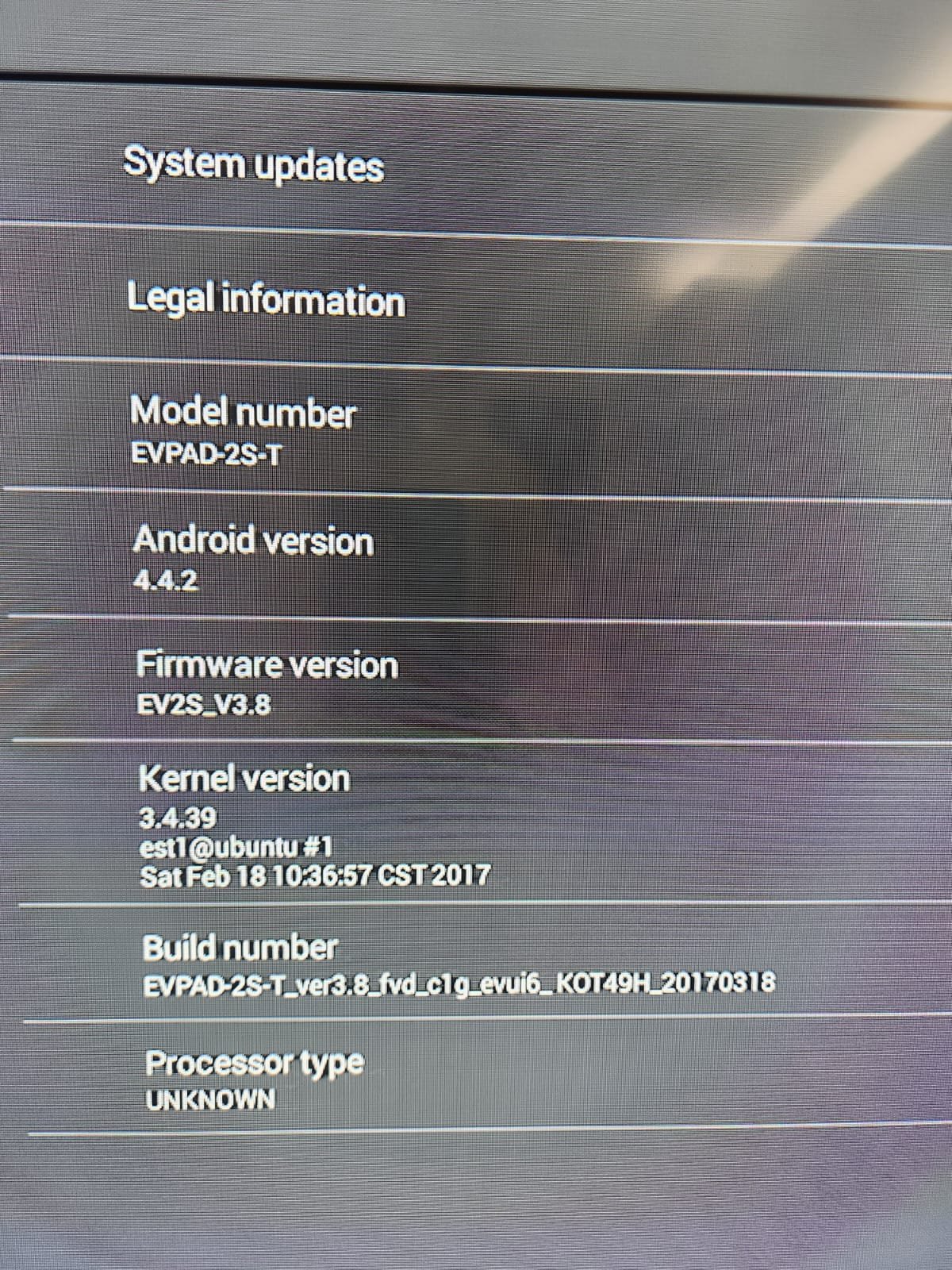
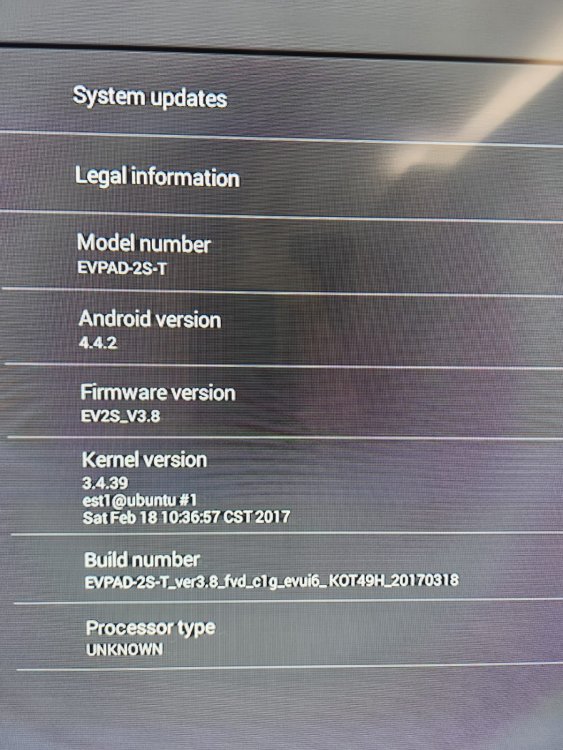
Hi all, I know this is a bit of a long shot given the age of the hardware, but I’m wondering if anyone here has ever experimented with running Armbian on an EVPad 2S (the old Android TV box). I’ve been tinkering with some older devices and thought it might be interesting to see if this one can be repurposed. I’ve attached a screenshot of the system info - unfortunately, it’s pretty sparse. The box is running Android 4.4.2 with kernel version 3.4.39, but the processor type is listed as “UNKNOWN,” and I haven’t found much documentation on the chipset or board layout. so before I dive deeper I wanted to ask: Has anyone managed to get Armbian (or any Linux distro) running on it? Are there known limitations with the chipset or bootloader that make it a dead end? Any tips, resources, or even “don’t bother” experiences would be appreciated. Thanks in advance for any insights - sometimes these older boxes surprise us, but I realize support may be very limited.
-
Hello @brunorro. That "current.txt" from above: the UART output shows you are booting an older KY-Uboot from NOR flash. Probably SD card not fully inserted. "edge.txt" shows a correct SD card boot sequence. Best // Sven-Ola
-
@JuanEsf Is possible first acces via SSH? no HDMI for me 😞 Just led of network activity. But no dhcp
-
Hi @ff255, It's been a while, I'm assuming you are still getting the same error as mentioned below: Applying kernel provided DT fixup script (rockchip-fixup.scr) ## Executing script at 09000000 Wrong Ramdisk Image Format Ramdisk image is corrupt or invalid SCRIPT FAILED: continuing... The output you shared helps, but can you share a little bit more? Would need to know the following for your case: Filesize of your kernel image file Filesize of your initrd file If possible, filesize of the DT file being loaded. With those three values, we should be able to calculate the correct load addresses and try booting. (All this also presuming that your issue is that the load addresses used by U-Boot/the bootscript do not leave enough room for either a kernel or initrd file, causing one of those to overlap the start of the other.) Groetjes,
- Yesterday
-
Hello all, nice to see helios64 is still alive. I have mine and i was a bit worried about needing to switch to something else, there is not really other stuff as cool as this one. I'm using my helios64 since i go it for small it task: small webserver, xmpp server, vpn, NAS. Btrfs "raid1-like" work without issue for me an allow me to upgrade the disks one by one (it allow different sizes). The UPS shutdown mechanism stuff still work without issue. I'm thinking about upgrading it to armbian trixie to use quadlet (podman feature) on it. I just have to find the motivation. It frighten me a bit because there is very few discussion and mostly about issues in this forum.
-
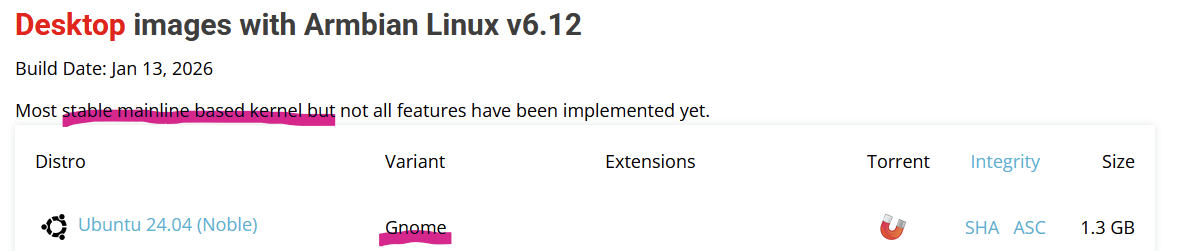
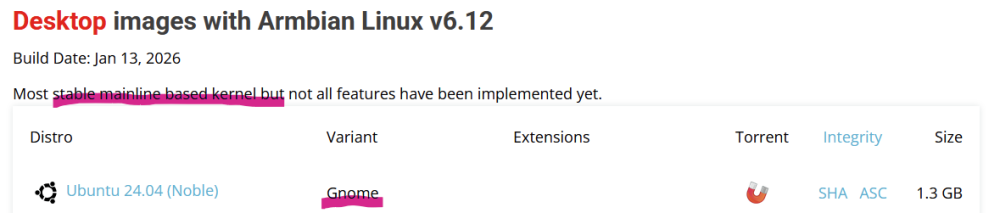
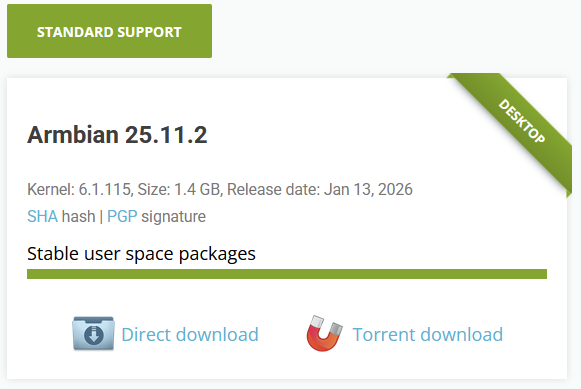
Many thanks for your replies. @Werner I can only say that I got the image via Armbian Imager, well designed for lazy people like me. This: On the Armbian Rock5 ITX web page, There are two candidates: 1 ) This one, because it's the only image in the list with variant "Gnome": or 2) this one, because it has the same size (1.4 GB), but doesn't say anything about the variant. The two images above have two different sha hashes. If it's true that isn't good for desktop (I agree with you because it doesn't work properly), I don't understand why it's tagged as "Recommended" on Armbian Imager. Anyway, I deleted everything and started from scratch, using another image tagged as "Recommended" based on Debian 13 and CLI only. This one is less complicated and till now works. @eselarm I tried two different monitors: the first one is quite modern as it supports not only many resolutions, but also different frequencies and other stuff. The second one is very basic: it can support up to 1980p at 60hz. In both cases, I got the same behavior. I also tried in the past EDK2-UEFI, but it didn't work very well on my Rock 5 ITX due to unexpected behaviors that I could not control in an effective way. That being said, unfortunately I don't have the exact filename and sha256sum of the previous image because I changed the image.

-
Booting armbian manually from u-boot shell over UART
SteeMan replied to user03's topic in Amlogic CPU Boxes
Yes you can work to make things better. But since I don't have this box (nor even one with that specific cpu version) there isn't anything I can really help you with. But anything you find/improve can be submitted back to Armbian as a PR. This stuff is all community supported, thus it depends on people like you to make improvements and submit them back for others to benefit from. -
Thanks @JuanEsf
-
 Hi Everyone, I managed to have it booted off the SD card only without FEL fiddling (also because my A-to-A OTG cable was dumb so I've soldered a UART and get on there trying to dodge the hardcoded protected boot on eMMC by playing with u-boot and tricking it with DTB hacks forcing an internal eMMC disable in favor of SD boot.) I've ultra simplified the procedure for mere mortals: 1- Flash Pine64 Armbian image on an SD card 2- Flash the "magic 1st Magabyte" (dd brutally the first meg) 3- Insert the SD card in your Remix Mini 4- Boom The stupid part is that I've done this in a 24 hours rush and kind of tried of backtrack what I did to make it happen... I'm not able to reproduce it but I have all the notes here: https://gist.github.com/penzoiders/582bfab2c9265716dd375fb5e7679bcf if anyone of the deveolpers is interested in this I can ship to the maintainers a couple of units (I have dozens of these used-to-be-ewaste devices). I'll attach the 1M magic boot sector. remix_mini_armbian_first_1m_pine64.bin




.jpg.44b2897ad04e4cc12493ec40c16ec3e0.jpg)