
Active threads
Showing topics posted in for the last 365 days.
- Past hour
-

Is Netplan acting like hidden malware?
Wyk72 replied to bushw's topic in Software, Applications, Userspace
Netplan, like the whole systemd is the worst thing that ever happened to what we call "linux" overall. It was a dirty hack by canonical to overscript things and mantain a "foot in the door" to coerce users into a useless .yaml. A classic example of a solution in search of a problem that DID NOT EXIST. It's made with the same mentality of SYSTEMD by redhat, systemwide-cancer that was useless in its inception, just to make "a brand" and softly "vendor-lock" your product and give credibility - and make a lot of moooney - on HELPDESK SERVICES. But many years have passed and since nobody removes the crap, because "UBUNTU=LINUX" in peoples mind, and distros have adapted to it, since not many care about complex networking, it's just an icon flashing on their desktop, and most of the time it boils down to just make a laptop wifi work reliably (not as trivial as it seems). If you have to deal with a LOT of complex networking setups i.e. bridges, lot of network interfaces,VPNs, VLAN/VXLAN etc, those YAML scripts are just something you REALLY DO NOT WANT. Even the "ifupdown" route sometimes is not feasible, because systemd is such a systemwide-cancer that silently breaks things because you know, 1000000 lines of init code - that even spreads to your boot code in EFI environments - seemed such a GREAT idea to redhat, and it -incredibly- linux users swallowed this lump of sh*t like it was fine a chocolate cookie, I read people all the time in forums saying "ohhh it's SOO easy!". My advice: go Alpine Linux or OpenWRT or other similar "skeletal" distros to regain control of your network interfaces (and your system as a whole). It's a lost battle with anything netplan/systemd, you have to rely on a script that writes another script that get interpreted by another script and finally by another "black box" like systemd JUST TO do things like "echo <PARAMETER> > /sys/something". It's exactly what we needed, 3 or 4 more "abstraction layers" with 3 or 4 different syntax. It was obvious vendor-locking, but hey, let's jump into the bandwagon, because why not ? I'm pretty sure lots of people made a lot of money out of this, also. - Today
-

Have Armbian for Tanix TX1 QHZIW_H313_TX1_EMCP_V2.0?
billymore replied to Lesano's topic in Allwinner CPU Boxes
Thanks Nick for the reply and the explanation - Appreciate your assistance. I think this is where I'm facing the problem with the Armbian version I have found (vs. MiniArch) I don't know what exactly and where to write using sunxi-fel. For MiniArch, image builder for the TX1 explains to use the following commands to boot via FEL (but where it crashes): sunxi-fel -v -p uboot bootloader/u-boot-sunxi-with-spl.bin write 0x40200000 Image write 0x4fa00000 dtbs/allwinner/sun50i-h313-tanix-tx1.dtb write 0x4fc00000 load-kernel.scr While for Armbian, I don't know exactly what to send (except sending the bootloader u-boot which works but starts Android). @Nick A : you suggested a command: write 0x4ff00000 rootfs.cpio.lzma.uboot I understand that I should use this with sunxi-fel - but could you tell me more? Should I add it to existing Sunxi-fel command or? What is the purpose of this command? -
The Nanopi M4 (not V2) has only 2GB of RAM. It could also possible that my device has an other (or older) Android. And you have to use the HDMI port 1 in the "middle". Not the HDMI under the TF slot!
-

Rupa X88 Pro 13 - RK3528 board with images
fedes_gl replied to fedes_gl's topic in Rockchip CPU Boxes
I didn't notice it. I'm away from Home now. Will try to do some tests this weekend -
http://blog.armbian.com/content/images/2026/02/githubhighlights-2.pngThis week’s Armbian development saw significant progress across board support, software modules, and workflow enhancements. Notable additions include new board images for ForLinx OK3506-S12, Cix-ACPI, and expanded support for Raspberry Pi 400, 500, and RPi3 series. Improvements to build targets and kernel patches were implemented, alongside fixes for overlayfs module logic and OpenMediaVault installation. The imager received updates for macOS compatibility and enhanced handling of write-protected devices. Several workflow optimizations and cleanup tasks were completed, streamlining concurrency and retry logic. Updates also targeted Debian trixie/sid for app builds and refined base images for specific boards. Overall, the changelog reflects a strong focus on broadening hardware compatibility, improving reliability, and optimizing development processes. Add exotics board to apps blacklist. by @igorpecovnik in armbian/armbian.github.io#233Add ForLinx Vendor // OK3506-S12 Board. by @vidplace7 in armbian/armbian.github.io#235Add Rpi 400 and 500 series. by @igorpecovnik in armbian/armbian.github.io#227Add RPi3 series as reusable / virtual targets. by @igorpecovnik in armbian/armbian.github.io#225Add: Cix-ACPI board image & Cixtech Vendor image. by @HeyMeco in armbian/armbian.github.io#237arch: arm: dts: add ForLinx OK3506-S12 (RK3506J). by @vidplace7 in armbian/linux-rockchip#446Build targets: enable and disable build targets. by @igorpecovnik in armbian/build#9377bump to next rc. by @EvilOlaf in armbian/build#9376cleanup leftover traces of oftc and matrix. by @EvilOlaf in armbian/documentation#876create rewrite-patches workflow. by @EvilOlaf in armbian/build#9364descrube update #9191 custom LOGLEVEL with UBOOT_LOGLEVEL. by @iav in armbian/documentation#868Exclude armhf, riscv64, and loongarch64 from apps builds. by @igorpecovnik in armbian/armbian.github.io#234extensions: radxa-aic8800: allow 6.19; skip DKMS only on >= 6.20. by @HackingGate in armbian/build#9397feat(software): add OpenMediaVault installation module. by @igorpecovnik in armbian/configng#751feat: add locked badge and disable selection for write-protected devices. by @SuperKali in armbian/imager#97feat: detect macOS /Applications folder on update failure. by @SuperKali in armbian/imager#101Fix OMV installation - via armbian-config. by @igorpecovnik in armbian/os#429fix(system): correct overlayfs module status logic and conditions. by @igorpecovnik in armbian/configng#749fix(system): improve overlayfs module config handling and status check. by @igorpecovnik in armbian/configng#750fix: align macOS ARM artifact naming to aarch64 (#99). by @SuperKali in armbian/imager#100fix: enable multi-stream XZ decompression for Khadas OOWOW images. by @SuperKali in armbian/imager#98mekotronics-r58x-4g: mainline u-boot v2026.01; mainline 6.19 kernel (edge). by @rpardini in armbian/build#9398meson64-edge and rockchip64-edge: rewrite kernel patches against 6.19. by @EvilOlaf in armbian/build#9382Normalize kernel config hash inputs. by @iav in armbian/build#9277Orange Pi 3B: Generate alternate SPI image for booting from SATA. by @dust-7 in armbian/build#9388Orangepi lite2 and one plus: change crust config. by @igorpecovnik in armbian/build#9374Race conditions: installing packages before adding a repo. by @igorpecovnik in armbian/build#9393Refactor RPi imager JSON generation to Python script. by @igorpecovnik in armbian/armbian.github.io#228Remove redundant git pull --rebase that causes failures. by @igorpecovnik in armbian/armbian.github.io#230Revert "build(deps): bump setuptools from 80.10.2 to 82.0.0". by @iav in armbian/build#9392Revert "Sunxi64 EDGE: Add missing audio related modules and other". by @pyavitz in armbian/build#9380RK3506: Pin U-Boot to known-working commit. by @vidplace7 in armbian/build#9390rockchip: Add CSC board ForLinx OK3506-S12 (RK3506J). by @vidplace7 in armbian/build#9394rockchip: Allow dt overlays that disable nodes. by @vidplace7 in armbian/build#9396RV1106: Reduce kernel memory footprint (fix boot on 64MB boards). by @vidplace7 in armbian/build#9399Set DESKTOP_APPGROUPS_SELECTED to empty for nightly desktop images. by @igorpecovnik in armbian/armbian.github.io#231Sunxi64 EDGE: Add missing audio related modules and other. by @pyavitz in armbian/build#9373Treat legacy branch same as vendor in target generation. by @igorpecovnik in armbian/armbian.github.io#226Update apps targets to Debian trixie/sid, headless builds. by @igorpecovnik in armbian/armbian.github.io#232Update base image for specific boards in config. by @igorpecovnik in armbian/os#427Workflow improvements: standardize concurrency and retry logic. by @igorpecovnik in armbian/armbian.github.io#229 View the full article
- Yesterday
-
 So far no dice with Armbian. I am trying my luck with the Radxa official image and will report how that goes eventually. Meanwhile feel free to offer ideas or procedures i could tackle
 -
 If you want to understand what should be happening under a normal installation: Installing "multiboot" (i.e. pressing the hidden reset button while powering the device) runs the script aml_autoscript That script sets some uboot environment variables that are used by subsequent boots The boot process for these boxes is to use the original android uboot to intiialize the device and then hand off the boot process to the u-boot.ext from armbian. This is done in the script s905_autoscript (or emmc_autoscript). Which then essentially just runs (for emmc): if fatload mmc 1 0x1000000 u-boot.ext; then go 0x1000000; fi; (or "mmc 0" for SD card). The chainloaded u-boot then boots via the information in the extlinux/extlinux.conf file.
 -

Cannot run ARMbian on my tv box (TX10 PRO)
Jain Ziad replied to erebus041's topic in Allwinner CPU Boxes
log into android and poweroff via any "power menu" apk inside android put you armbian flashed sd (try balena etcher) and use half of ear cleaning cotton bud's stick to put and press in AV/audio port ; keep pressing then put dc power - until anything comes in hdmi out-you can try 3sec 8sec method; put bud and press count 3 put dc in while pressing count upto 8 then let go -
 Over the past year, Collabora has pushed mainline GStreamer toward a first-class media and Machine Learning platform, with new inference backends, extended metadata/tensor handling, and production-ready analytics building blocks. View the full article
 -
With its latest release, GStreamer adds native support for AI inference engines including ONNX Runtime, LiteRT, and Burn, along with tensor decoders for YOLO, face detection, tracking, and more. View the full article
-

Gaming experience with Orange Pi 5 (RK3588) on Armbian
KhanhDTP replied to KhanhDTP's topic in Orange Pi 5
Armbian 25.11.2 Noble XFCE (BSP Kernel: 6.1.115) + PanVk - mesa 26.0 (https://launchpad.net/~ernstp/+archive/ubuntu/mesaaco) + Box64 arm64 v0.4.1 ed9827920 (https://ryanfortner.github.io/box64-debs/) + proton-10.0-4-amd64-wow64 (https://github.com/Kron4ek/Wine-Builds/releases/download/proton-10.0-4/wine-proton-10.0-4-amd64-wow64.tar.xz) + dgVoodoo2 (https://github.com/dege-diosg/dgVoodoo2/releases) + DXVK-stripped v1.6.1 ~40fps@720p (low settings) box64 environment variables: Dead Space.thumb.jpg.07288e6b7c09eb14adb902a763b57540.jpg)
.thumb.jpg.98ed75d74b0f6519e1ba384d926d193d.jpg)
-
Cheers, will do!
-
Please use a build that isn't 7 years old. https://www.armbian.com/amlogic-s9xx-tv-box Read the FAQ and the install instructions linked there
-
Hello, @Geoffrey F4FXLyou just saved me a lot of debugging time. I have multiple orange pi zero with h2+ and h3 and I had the same problem as you. With the reboot command, the sbc shutsdown but doesn't boot again, i need to reset the power for getting it booting again. On my side , this command extraargs=reboot=warm didn't worked but extraargs=reboot=watchdog worked perfectly. I just rebooted it 5 times in a row and it always rebooted well. My version : v25.11.2 for Orange Pi Zero running Armbian Linux 6.12.58-current-sunxi
-

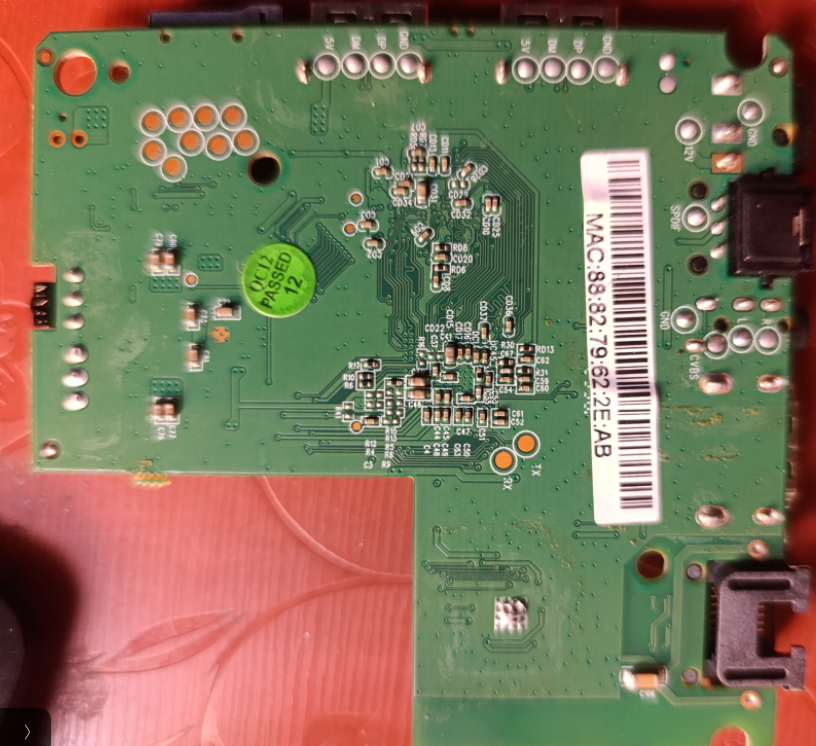
Where is the RAM present in this setup box?
abhishek timalsina posted a topic in Allwinner CPU Boxes
It is an h313 all winner box. But i can't point the RAM at all.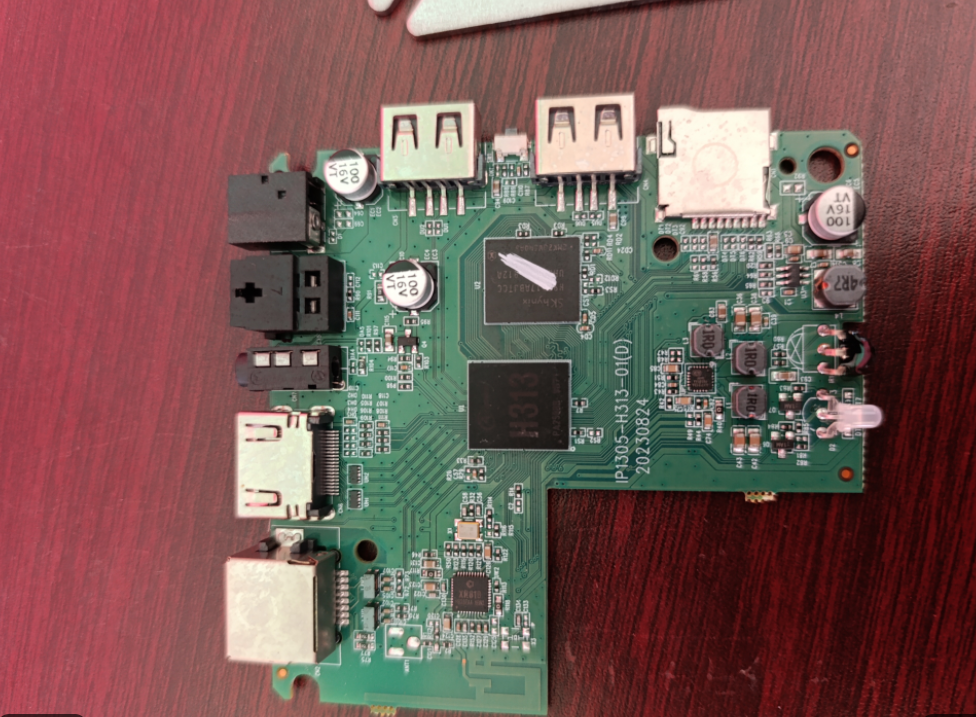
-
Excelent! That works. I didn't, notice that pinctrl-rk805 was externalized and can't be loaded automatically. For now I've just add pinctrl-rk805 to /etc/initramfs-tools/modules and update-initramfs. Werner: device tree has no changes for a long time. Thanks!
-
Hi Brent; YES! I did figure it out, finally. The issue is that almost all information on the web is for the older pipewire and wireplumber which works completely differently than the new versions. Bookworm used the "old way" and Trixie uses these new versions for which there isn't much info. Compounding the issue is that most information is regarding desktop versions of Linux, not headless like I run. So, when you use bluetooth on linux, wireplumber auto-creates profiles and pw nodes. Or at least it's supposed to. It wasn't creating these profiles because I was missing a conf file which is only needed when your NOT running on desktop, AFAICT. Add this file: /etc/wireplumber/wireplumber.conf.d/50-bluez-no-seat.conf wireplumber.profiles = { main = { monitor.bluez.seat-monitoring = disabled } } If you do that, all of sudden, bluetooth "just works". Took forever to find that stupid little piece of information.
-
@sicxnull I ran into the same issue when flashing "Armbian-unofficial_26.02.0-trunk_Mxqpro_bookworm_current_6.12.65_minimal" (worked only in SD Card). The issue was gone when I switched to "Armbian-unofficial_25.05.0-trunk_X96q-lpddr3-v1-3_bookworm_edge_6.12.11_server" built by @Nick A
-

The Rock Pi S completely freezes during OOMs
brentr replied to solaris3308's topic in Radxa Rock Pi S
Could you send me just the (short) list of packages you installed atop the base Armbian distro rather than a dump of every installed package? The goal is to provide me a simply procedure I can use to replicate the freeze you observe. You might also try running repeating the "free" command to monitor memory usage just after you start your tests. I expect you will see the swap usage steadily increasing. If you disable swap, the system will likely start killing processes. -
 Hello everyone, I have a Lemfo H96 Max V56 (8GB RAM / 64GB eMMC). Board PCB Version: HCY RK3566 - 1X32 - V13 - 2021-03-27 I am relatively new to the Linux world. So far, the only image I have managed to flash and boot successfully is an old Linaro Debian 10 (vendor image from 2019). However, this version lacks hardware acceleration (it runs on llvmpipe), which makes it unusable for my specific needs. My Goal: I want to run a modern Linux with a Desktop environment to use PortMaster and RetroArch. For this, I critically need a system with working Panfrost/Mali GPU drivers. The Problem: I have read through this thread, but I am finding it quite confusing to pinpoint exactly where to start given the various methods (Legacy vs Mainline/Chainloader). Also, it seems some file links are dead or pointing to empty repositories. Request: Could someone please guide me to the correct/updated files for my specific 8GB board? The correct MiniLoader/SPL (.bin) for RKDevTool. A working Desktop Image (.img) (Armbian Bookworm or Ubuntu) that supports GPU acceleration. I am already comfortable using RKDevTool and putting the device into Maskrom mode, so I just need the correct file set to avoid bricking the device. Thanks in advance for any help!
 - Last week
-
I'm back at it, but this time I can boot by setting netplan wifi up. On reboot wifi never comes up. Do the following: Since end0 is reporting as "busy," let's see if forcing it back to eth0 helps udev clear the conflict. Edit /boot/armbianEnv.txt. Add or modify the extraargs line to include: extraargs=net.ifnames=0 biosdevname=0 Fix hash errors: # Remove the cached package lists that are causing the mismatch sudo rm -rf /var/lib/apt/lists/* # Create the partial directory again just in case sudo mkdir -p /var/lib/apt/lists/partial # Clean out the local repository of retrieved package files sudo apt clean # Update the package index again sudo apt update This is latest build.
-
 BalenaEtcher has known issues and therefore not recommended. Use Armbian Imager or USBimager. Also verify that the downloaded image is good by utilizing the checksum. https://docs.armbian.com/User-Guide_Getting-Started/#download-and-verification https://github.com/armbian/imager https://bztsrc.gitlab.io/usbimager/
 -
moved
-
Will check it when i back to PC, will be away from pc for around a week
-
I do get multiple warnings while compiling the DTS file, about 50-100 warnings similar to this: ttt.dts:1752.3-32: Warning (gpios_property): /usb0-vbus:gpio: cell 0 is not a phandle reference ttt.dts:1764.3-32: Warning (gpios_property): /usb1-vbus:gpio: cell 0 is not a phandle reference ttt.dts:1776.3-32: Warning (gpios_property): /usb2-vbus:gpio: cell 0 is not a phandle reference ttt.dts:1823.4-34: Warning (gpios_property): /leds/led-3:gpios: cell 0 is not a phandle reference ttt.dts:1828.4-34: Warning (gpios_property): /leds/led-4:gpios: cell 0 is not a phandle reference The phandles are in this kind of format on the dts file: phandle = <0x20>; phandle = <0xc2>; phandle = <0x1c>; phandle = <0xc3>; phandle = <0xc4>; phandle = <0x16>; phandle = <0xc5>; example: Note: the usb0 vbus was originally disabled but I enabled it as the pcduino3 nano has a single regulator for all ports and it is attached to usb0 apparently. In the closing section of __symbols__, I have redirected all 3 regulators to usb0. I believe that the fact it is disabled is because they don't recommend powering the board through the OTG port as it can cause voltage drops when connecting devices as host. My setup will be a gadget with a wifi dongle in a USB A port, so voltage drops should not be a concern, this is just my assumption... usb0-vbus { compatible = "regulator-fixed"; regulator-name = "usb0-vbus"; regulator-min-microvolt = <0x4c4b40>; regulator-max-microvolt = <0x4c4b40>; enable-active-high; gpio = <0x17 0x01 0x09 0x00>; status = "okay"; phandle = <0xc2>;

.jpg.96cb54d1993f64e02fce404e44db97dc.jpg)
.jpg.357c6ac97fe69e2f5f5e85c27775b45e.jpg)