Active threads
Showing topics posted in for the last 365 days.
- Past hour
-
 Hi, how are you? Well, I don't know English very well, so this text will be translated using Google Translate since I'm Brazilian. Anyway. I found a way to boot the SD card with Linux on the Allwinner H3 chip, using a Chinese MXQ 4K 5G TV box. I booted Android normally and, using the remote control, pressed the power button and then confirmed. After shutting down, I booted with the remote control and Linux started normally. After that, every time I booted with the SD card, it booted perfectly. Another thing I did before, but I believe it doesn't affect this, was to enable USB0 device mode in developer mode. I hope this information helps with your Linux projects!
 - Today
-
 I really hope that Armbian will be released soon for this board. I have it, but the official ISO has an old kernel and no RT capability.
 -
your sbc has only 100mbit nic
-

ssh missfire on bpi-m5 noble
gene1934 replied to gene1934's topic in Software, Applications, Userspace
The puzzle seems to have resolved itself. I gave up and shut the printer off about 04:00 this morning and went to bed. Got back up, powered it on about 08:30, and its all working, updating 304 pkgs right now. It was rebooted at least 15 times as I worked last night w/o any affect. What the hell is the diff between a reboot and a full powerdown of 4+ hours??? Did dd-wrt flush its cache of MAC addresses? IDK. But w/o a global net, I was trapped, I could not DL the tools needed to troubleshoot. A very frustrating state of affairs. I do not see anyplace where I could mark this as solved. -
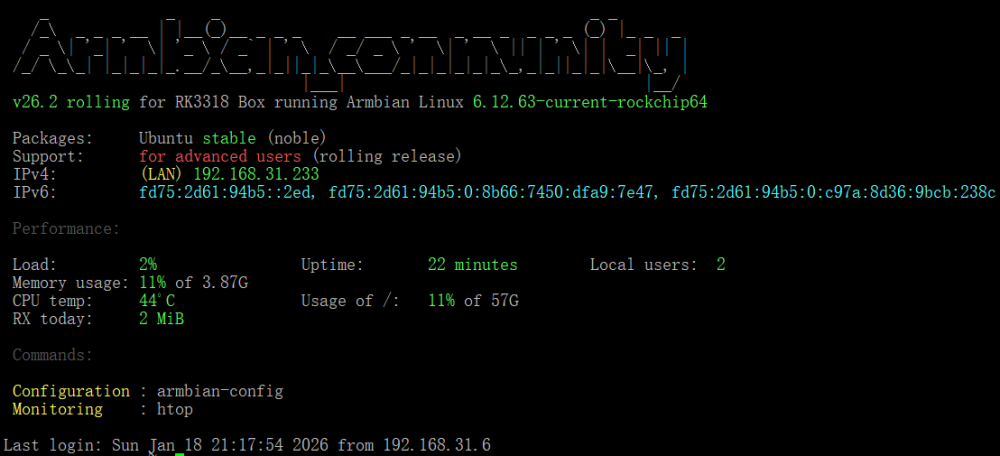
@jockNow, I've finally solved this problem. Successfully flashed the latest version of armbian, https://github.com/armbian/community/releases/download/26.2.0-trunk.151/Armbian_community_26.2.0-trunk.151_Rk3318-box_noble_current_6.12.63_gnome_ desktop.img.xz Next, I will share my problem-solving journey. I found that I couldn't enter maskrom/loader mode anyway, and when I accidentally inserted the USB flash drive into the multitool.img into the TV box and powered it directly on, I found that it actually started the system directly in the USB flash drive. So I guess that it may have changed the boot order after flashing the loader.bin before, and the armbian system I flashed in before it continued to toss before it could be configured, probably because the system files of the root partition were corrupted, causing it to not boot normally. Therefore, I simply tried to flash the firmware of the rk3188-box in the official community directly into the USB flash drive, because after these images are flashed into the USB flash drive, there is only the root partition, that is, the system. And there is no boot partition. I guess the boot partition may have been written somewhere else, and I don't need to worry about it anymore. So, I plugged the USB flash drive into the latest rk3318 firmware into the box and waited for a few minutes after powering on it directly and starting it, it obtained the IP address assigned by my router DHCP, I was so excited, I quickly connected to the rk3318-box through SSH, and made the preliminary configuration. Quickly enter the command armbian-install and select item 2, and immediately write the system on the USB flash drive to emmc. After the writing is completed, turn it off, unplug the USB flash drive, power on, wait for a few minutes, and the startup is successful. It means that I have successfully flashed the phone this time. Thank you very much for your help. @jockand @fabiobassa, You're passionate and highly skilled.
-
I found the reason. (Different function of Pin 100) cm5-io: PCIe_PWR_EN rpi-cm4-io: nEXTRST used for USB hub reset With rpi-cm4-io and no pcie device, linux sets PCIe_PWR_EN=0 (turn off pcie) But rpi-cm4-io thinks that nEXTRST=0 (always reset usb hub) The temporary solution is: For the pause of compile, please turn on kernel config When kernel config appears, sudo vi ./cache/sources/linux-kernel-worktree/6.1__rk35xx__arm64/arch/arm64/boot/dts/rockchip/rk3576-armsom-cm5-rpi-cm4-io.dts Add the following fix in order to always turn on pcie vcc3v3_pcie0: vcc3v3-pcie0 { ... regulator-boot-on; regulator-always-on; enable-active-high; ... }; Because "sudo apt dist-upgrade" overwrites .dtb, make sure backup and restore. I do not know how the .dts is generated, so the patch can be made by an expert of Armbian.
-
 To be honest I don't know how to do this and even more I am not sure in correctness of of my code in term of conventions. I mean that for example I add #define-s with names ES8388_xxx to header file ES8228 and so on.
 -
 URGENT: Kernel update already applied, bootloader points to 6.12.58! Current state: - Running: 6.12.44 - Boot configured for: 6.12.58 (symlinks updated) - usr-merge still broken (duplicate files in /bin, /sbin) Questions: 1. Should I revert boot symlinks to 6.12.44 immediately? 2. ODROID HC4 specific: Which file actually boots (Image vs vmlinuz)? 3. Will 6.12.58 boot with broken usr-merge? 4. Emergency procedure if forced to reboot? NOTE: I'm NOT taking any action until getting community advice.
 -
The boot partition presence doesn't depend directly on the Armbian version—it's determined by the board configuration. Some configs enable an extra boot partition, especially for boards using older U-Boot versions that can't boot directly from ext4. As a result, even for the same board and Armbian version, different branches (e.g., legacy, vendor, current, edge) may behave differently. Vendor branch might use an old BSP U-Boot requiring the extra partition while mainline branch uses newer U-Boot that boots straight from ext4.
-

Gaming experience with Orange Pi 5 (RK3588) on Armbian
KhanhDTP replied to KhanhDTP's topic in Orange Pi 5
Armbian 25.11.2 Noble XFCE (BSP Kernel: 6.1.115) + PanVk - mesa 26.0 (https://launchpad.net/~ernstp/+archive/ubuntu/mesaaco) + Box64 arm64 v0.4.1 2eb2fd9cd (https://ryanfortner.github.io/box64-debs/) + proton-10.0-3-amd64-wow64 (https://github.com/Kron4ek/Wine-Builds/releases/download/proton-10.0-3/wine-proton-10.0-3-amd64-wow64.tar.xz) + dgVoodoo2 (https://github.com/dege-diosg/dgVoodoo2/releases) + DXVK-stripped v2.4.1 30~60fps@720p (medium settings) box64 environment variables: Batman Arkham Asylum GOTY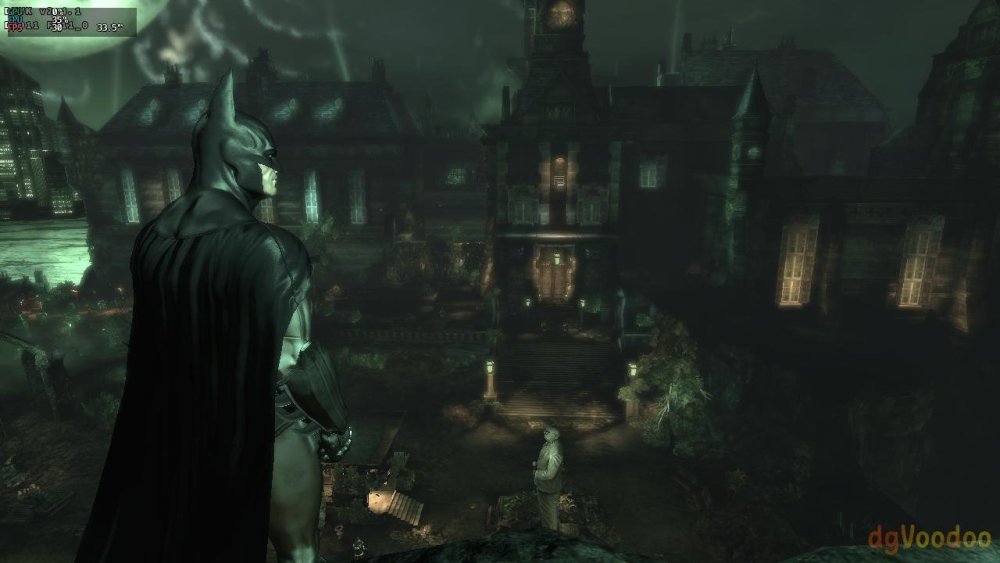
-
I've never used any other method. I'd suggest using a search engine to search for other methods to "enable multi boot on amlogic TV box"
-
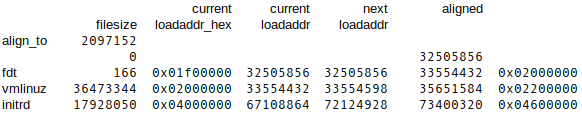
Hi @ff255, Can you try with the following changes/additions to armbianEnv.txt: # previous load addresses # fdt_addr_r=0x01f00000 # kernel_addr_r=0x02000000 # ramdisk_addr_r=0x04000000 # new load addresses fdt_addr_r=0x01f00000 kernel_addr_r=0x02200000 ramdisk_addr_r=0x04600000 # new kernel_addr_r is aligned to 2MiB boundary # new ramdisk_addr_r is aligned to 2MiB boundary - not really neccessary afaik but "why not both?" Quick calculation below: The "next loadaddr" for kernel and ramdisk are the <previous loadaddr>+<previous filesize> 'aligned' upwards to 2MiB, Groetjes,
- Yesterday
-
-

Efforts to develop firmware for H96 MAX V56 RK3566 8G/64G
GBEM replied to Hqnicolas's topic in Rockchip CPU Boxes
Heya, Of interest to anyone encountering the 2025 AIC8800 WiFi and Bluetooth hardware, and who is using Buildroot; this is the package that builds and installs everything into a Home Assistant image. Of academic interest in the present discussion also, offering minor suggestions in dts and service file. 👽 aic8800.zip -
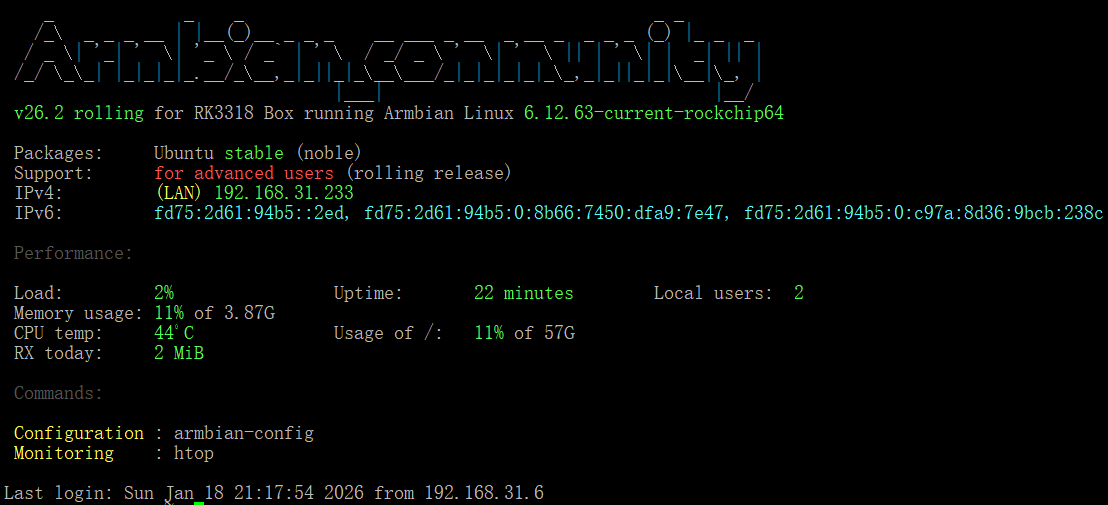
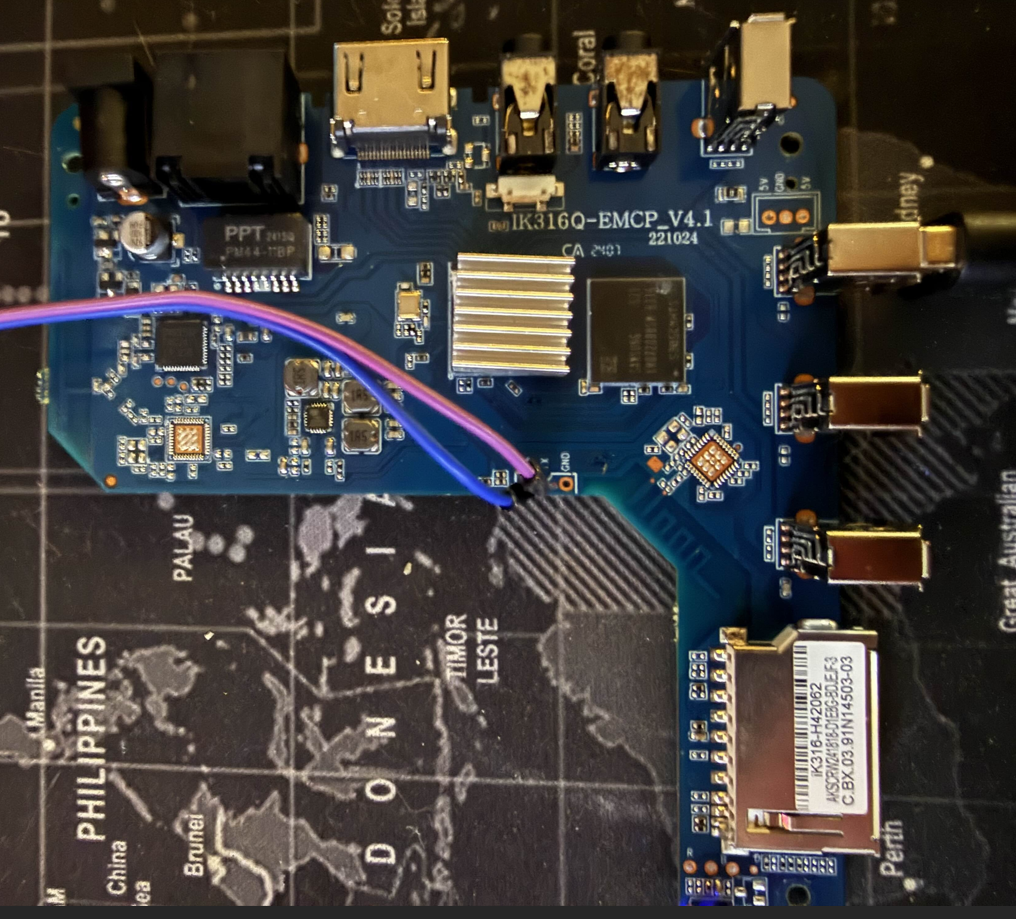
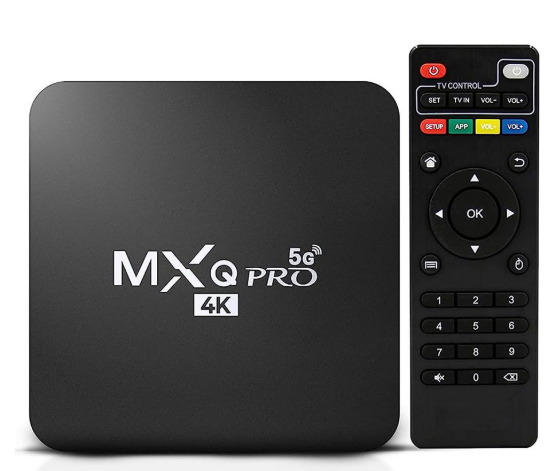
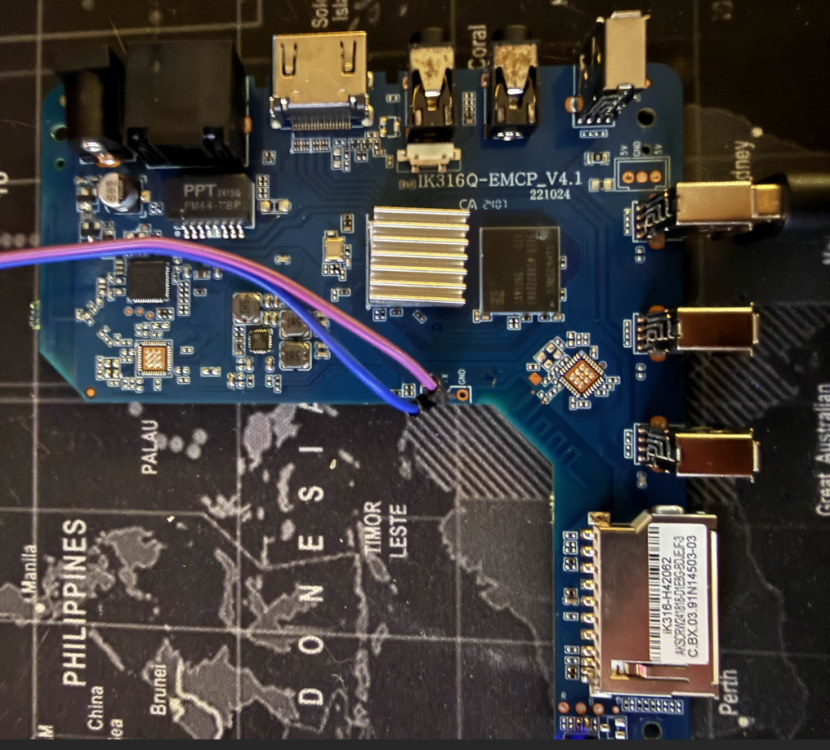
Hello Everyone, I've seen a few threads on these boards but wanted to create a centralized source for information. It's my understanding there are multiple variants of these boards, the one I have and used is IK316Q-EMCP_V4.1 I know there are other versions without UART ports, mine was lucky enough to have them. To build this image (adjust the compile command to your liking) git clone https://github.com/sicXnull/armbian-build cd armbian-build git checkout MXQ-PRO ./compile.sh build BOARD=mxqpro-h313 BRANCH=current BUILD_DESKTOP=yes BUILD_MINIMAL=no DESKTOP_APPGROUPS_SELECTED= DESKTOP_ENVIRONMENT=cinnamon DESKTOP_ENVIRONMENT_CONFIG_NAME=config_base EXPERT=yes KERNEL_BTF=no KERNEL_CONFIGURE=no KERNEL_GIT=shallow RELEASE=bookworm Prebuilt Images Armbian-unofficial_26.02.0-trunk_Mxqpro_bookworm_current_6.12.65_cinnamon_desktop.img Armbian-unofficial_26.02.0-trunk_Mxqpro_bookworm_current_6.12.65_minimal.img Unfortunately this board was already flashed with MiniArch by the time i got it, so i was unable to get the original DTB. Therefore, wifi does not work Is someone able to get the DTB from this board so we can get wifi working?
-
Bit late to the thread, but just a heads up. Been reading this thread and saw the DTS with the connector numbering. So I went to the manual to check the pinout and the pin number is listed as GPIO S/N. Just thought I would add to the thread.
-
Have uploaded a new "edge" image for RV2 for testing. This time, wifi works. "current" image is the same. If you want to test, go to https://privat-in.de and grab Downloads. If you want to compile, clone https://github.com/sven-ola/armbian-build/tree/orangepi-rv2 and run Edit: forget to activate Mediatek wifi drivers as well. Also merged current Armbian/main. Uploaded again. LG // Sven-Ola
-
ah yes, you're right. Well homassistant seems to depend on docker, so if the docker issue is resolved, hass will probably work too. Though no clue what the issue with docker is. Since it is an issue with configng, I suggest to report directly here: https://github.com/armbian/configng/issues Don't forgot to be as verbose as possible when reporting. Will raise chances getting it addressed sooner
-
 How to get this working on your Raspberry Pi (5) Hello all. Thanks again, @MMGen, for offering this fantastic tutorial. As mentioned before, it was the foundation for me to encrypt my Raspi 5, although the tutorial wasn't intended for that. I hat to make the some adjustments to get it working. But first some reasoning. What's the difference? The Armbian image for Raspi comes with two partitions: FAT32 for booting ext4 as a root Out of the box it already resembles the result that we try to achieve. I assume that this is due to the different booting process of a Raspi compared to other sige-board computers. Download the desired image from: https://www.armbian.com/rpi4b/ https://mirrors.dotsrc.org/armbian-dl/rpi4b/archive/ → more images (I only tested my approach with the minimal Trixie image, kernel version 6.12.41 to .58, and would be delighted to know if somebody also got it working with other derrivates.) Changes to the original tutorial: Basically I followed the tutorial (versions Oct 25 to Jan 26) except for the steps below where I had to make some adjustments. If the original tutorial receives major updates (e.g. in its structure) please consider that, as I might not keep this post up to date. Step 6: As the type of the boot partition needs to be FAT32 instead of ext4, in fdisk change the partition type (hit t) to FAT32 (0b or just b in the partition list l). I also adjusted the size of this partition to +1G, just in case, but that shouldn't make a difference. Here's final partition table: Device Boot Start End Sectors Size Id Type /dev/<your-drive>p1 8192 2105343 2097152 1G b W95 FAT32 /dev/<your-drive>p2 2105344 3907029167 3904923824 1.8T 83 Linux I'm using an NVME drive instead of a SD card. I guess that won't make a difference. I always repaced sda with nvme0n1 when I followed the tutorial. I also increased p1's size to a whole GB, just to be sure. Step 7: mkfs -t vfat /dev/<your-drive>p1 # NOT: mkfs.ext4 /dev/<your-drive>p1 # e2label /dev/sda1 CRYPTO_BOOT won't work on FAT32 partitions Step 8: Because there is no label on the FAT32 partition, just link it manually: BOOT_PART=/dev/<your-device>p1 In my image, the resolv.conf was already present and symlinked to /run/systemd/resolve/stub-resolv.conf. I had to rename it to etc/resolv.conf.old and only then did: cat /etc/resolv.conf > etc/resolv.conf Step 9: Now it gets a bit hairy. As already explained, the Armbian Raspi image works a bit differently. It holds the following partitions: P1: is the boot partition. During (or after?) the boot process it will be mounted to P2:/boot/firmware. P2 contains a cmdline.txt (content covered below) which is the config file to make the adjustments from Step 9.1 for the boot partition. P2: is our root partition. P1:/boot does contain an armbianEnv.txt but that is not the config file used during the initial boot process for the unlocking system . Step 9.1: At this point in the tutorial P2 is mounted to root/boot, so you can nano boot/cmdline.txt and change its content to: console=serial0,115200 console=tty1 loglevel=1 root=/dev/mapper/<custom-name-or-rootfs> rootdev=/dev/mapper/<custom-name-or-rootfs> rootfstype=ext4 fsck.repair=yes rootwait logo.nologo cgroup_enable=cpuset cgroup_memory=1 cgroup_enable=memory I was hesitant to make further changes besides the root and rootdev entries or break the line but probably that's also feasible. Step 9.2: Skipped. Step 9.7: As the boot partition is FAT32, etc/fstab has to know about it too. Also notice that commit=600 results in a failure to mount it to /boot/firmware after unlocking and rebooting (took me days before I could plug a display to my Raspi, read the boot log and figure out that line as the source of failure). Therefore I deleted the commit declaration. /dev/mapper/<custom-name-or-rootfs> / ext4 defaults,noatime,nodiratime,commit=600,errors=remount-ro 0 1 UUID=<BOOT_UUID> /boot/firmware vfat defaults,noatime,nodiratime,errors=remount-ro 0 2 tmpfs /tmp tmpfs defaults,nosuid 0 0 Step 10: Add systemd-cryptsetup (when using Trixie or higher) to the install list in the chroot (thanks to @The Tall Man for mentioning; automatic install worked for me btw). apt --yes install systemd cryptsetup cryptsetup-initramfs dropbear-initramfs In principle that should be it and i just followed the rest of the tutorial. But after the initrd.img got generated I always had to make adjustments, after which I had to recreate it. update-initramfs is always suspiciously fast so I just used the approach from this tutorial: KERNEL_VERSION=ls /lib/modules/ echo "CONFIG_RD_ZSTD=y" > /boot/config-$KERNEL_VERSION # to use the right decompression method mkinitramfs -o /boot/initrd.img $KERNEL_VERSION rm /boot/config-$KERNEL_VERSION # remove the config If you want to keep the original initrd.img as a backup you can just copy it before running the above commands but of course it won't be work with our encrypted boot. You can give the .img output file a different name. Don't forget to change the line initramfs initrd.img followkernel in boot/config.txt accordingly. Don't forget ssh-keygen -A. That's it Please let me know how if it worked for your Raspi. Good luck. @MMGen: If you find this sub-tutorial helpful enough, please consider to link it in your original post or feel free to incorporate it. It took me quite some days to figure out all the necessary changes and borow from other sources. Would be nice to spare others and this thread is a top rank in search engines. As you can see I used a name other than rootfs as my device name – the ability to change that could be a nice feature for the next version of your script Cheers!
 -
 http://blog.armbian.com/content/images/2026/01/T6-Plus-01.pngThe NanoPC T6 Plus, powered by the performance-optimized Armbian OS, is your ticket to a truly professional, high-speed edge computing experience. This industrial-grade device is built around the flagship Octa-core Rockchip RK3588 SoC and now features a massive upgrade to LPDDR5 RAM (up to 32GB), giving it the muscle to handle heavy virtualization, 8K media, and AI workloads effortlessly. Its core hardware is ideal for power users and enterprise integration. The dual 2.5GbE Ethernet ports ensure you can maximize the speed of high-bandwidth wired connections, while multiple M.2 slots (M-Key for NVMe and E-Key for Wi-Fi/BT) allow for blazing-fast storage arrays and wireless expansion. More importantly, the switch to LPDDR5 memory significantly boosts bandwidth, unleashing the full potential of the 8-core CPU and NPU. With Armbian, managing this SBC is simple and utilizes the device's full potential. To configure your system or install complex software stacks, just launch the terminal and run: sudo armbian-config. Navigate to Software and select from pre-packaged installers like Docker, Home Assistant or JellyFin. This single step leverages the RK3588’s processing power for seamless containerization and service hosting, combating supply chain bottlenecks with older LPDDR4X boards. Finally, the PCIe 3.0 x4 interface is perfect for attaching high-speed NVMe SSDs, instantly turning the T6 Plus into a high-performance NAS or media server capable of real-time transcoding. This is just one example of usage. It can serve as a compact 8K workstation, an advanced NVR surveillance hub, a powerful emulation gaming box, or a local LLM host utilizing the 6 TOPS NPU and RKLLM. Thanks to its rich interface options—including HDMI 2.1 output and 2.0 HDMI input—the T6 Plus excels in scenarios where multimedia performance and raw compute power are essential. From segmented home labs to industrial control systems. Combined with the efficiency of the new memory architecture and solid software support, it offers an unrivaled balance between performance, expandability, and reliability. Hardware specifications Feature Specification SoC Rockchip RK3588 CPU Octa-core ARM (4× Cortex-A76 @ 2.4GHz + 4× Cortex-A55 @ 1.8GHz) GPU ARM Mali-G610 MP4 Compatible with OpenGL ES 1.1/2.0/3.2, OpenCL 2.2, Vulkan 1.2 NPU 6 TOPS (INT8) Supports INT4, INT8, INT16, FP16 VPU 8K@60fps H.265 / VP9 / AVS2 decoder 8K@30fps H.264 decoder 8K@30fps encoder (H.265 / H.264) Memory 16 GB / 32 GB LPDDR5 (Upgraded from LPDDR4X) Storage 32GB / 64GB / 256GB eMMC 5.1 1 × M.2 M-Key (PCIe 3.0 x4) for NVMe SSD microSD (UHS-I) Ethernet 2 × 2.5 GbE ports (RTL8125BG) Wireless Optional via M.2 E-Key (PCIe 2.1 x1 + USB 2.0) Video Output 2 × HDMI 2.1 (Up to 8K@60fps) 1 × USB-C (DisplayPort 1.4) Video Input 1 × HDMI 2.0 Input (Up to 4K@60fps) USB 1 × USB 3.0 Type-A 1 × USB-C (Data/DP) Misc USB 2.0 headers Expansion 40-pin GPIO header Mini-PCIe connector Power Input DC 12V/2A (5.5 x 2.1mm jack) PCB 8-layer PCB, 110 × 80 mm Operating Temp 0 °C to 70 °C View the full article
 -
Hi, you need to provide a boot log, maybe something will be noticed. If you boot without wifi and can access a previous boot log when the machine is freezing, put it here.
-

Image for MXQ PRO 4K 5G (Q44_V4.1_20210120 - Allwinner H3)
Mjondolo Fam replied to Wel7on's topic in Allwinner CPU Boxes
find armbian 20 with 5.4.33 kernel most stable for that box -
did you even research what all these switches do? NEWPKG does not even exist, SKIP_EXTERNAL_TOOLCHAINS was removed recently and KERNELBRANCH is ususally a specific tag and EXPERT....well...are you?
-
Hey there! @arizonan so.. if your H96 is stock you wont need any of my instructions.. My box got bricked somehow and this was pretty much the "troubleshoot" to get it working again. What you need to do is follow this instructions: HERE
-
 "While it didn't give an solution, " Well actually it gave many solutions, none of which worked! I've learned from this experience never follow an AI bot blindly, without second-guessing it's suggestions; it will lead you down the Garden path till Christmas. Many of its instructions in other aspects of armbian worked first time like a charm whereas this did not. I'll take a break for a week or two and think about it. Thanks for your suggestions......