Active threads
Showing topics posted in for the last 365 days.
- Past hour
-
@Nick A Rising CPU temps aren't really a concern. I'm using a massive 40x40cm aluminum heatsink for passive cooling. Even without a fan, it keeps the CPU stable under full load for long periods. The real bottleneck is the frequency throttling, which is really holding back performance.
-
 When I replaced 6.12.58-current-sunxi with armbian-utility to 6.6.16-current-sunxi It did not fully boot up again. Hopefully, replacing the whole content of /boot with the 6.1.24-sunxi kernel from the original image worked and brought m2u back to life. Also, the related modules folder was transferred. So it looks like it is a kernel problem.
 -
 Most probably it is not because of formatting SPI. Are you sure you use same kernel version? because in some kernel there is issue with microphone. Of cause if we both speak about 3.5jack micro.
 -

Armbian for RK3128 TVBox board
Ngô Huỳnh Ngọc Khánh replied to Chiều Nhạt Nắng's topic in Rockchip CPU Boxes
First of all, a huge thank you for your work on bringing Armbian to RK3128 TV boxes. Your guide is incredibly detailed and practical — not just theoretically correct, but actually usable in real-world scenarios where hardware varies wildly. That’s something many tutorials lack. It’s clear you spent a lot of time testing across different boards, and it really helps people like me who are dealing with these unpredictable cheap TV boxes. I also want to say I truly appreciate how you approached the NAND installation process using rkdeveloptool. The way you structured the workflow, especially handling boot components and low-level flashing, made it much easier to understand what’s actually happening under the hood instead of just blindly following commands. I happen to have a bunch of RK3128 devices myself, and thanks to your work, I’ve successfully brought several of them back to life. Even with different variants of RK3128, I was able to get them running properly on NAND with kernel 4.x, which is honestly impressive given how inconsistent these boards can be. That said, I’d like to ask if you might consider extending your approach to RK3228/RK3229 devices using rkdeveloptool on Windows, similar to what you’ve done for RK3128. I’ve been trying to replicate a similar workflow based on your guide and also by studying the multitool source, especially the step-nand function. So far, I’ve attempted: Reusing trust.img and legacy U-Boot from the multitool BSP folder Manually creating a GPT at 0x8000 Writing the image with dd while skipping the first 4MB (similar to step-nand logic) Unfortunately, none of these attempts have worked so far. The main challenge is that many RK3229 boards don’t have an accessible SD card slot (or even pads for one), which makes recovery and testing much harder. If SD boot were available, this would be much easier to debug and iterate. Since you’ve already done the hard work of figuring things out for RK3128 using rkdeveloptool, I was wondering if you might be willing to give RK3229 a try using a similar method. Even a partial guide or some hints about differences in bootloader layout, trust image, or NAND handling would be extremely helpful. Thanks again for your contribution — it’s genuinely valuable for the community. Hopefully RK3229 can be the next one to crack Cheers! - Today
-
Maybe you already know, but to be sure (you guys are most likely always swamped), the keyrings workflow has failed the last two runs with the same error, on April 8 & April 15... https://github.com/armbian/armbian.github.io/actions/workflows/generate-keyring-data.yaml ERROR: Unable to find debian-archive-keyring package URL from https://packages.debian.org/sid/all/debian-archive-keyring/download Thanks for all you do!
-
 Good morning. I will learn how to extract Device Tree (DTS) and then I will update the thread.
 -
 Thank you. Could you recommend a system where all the hardware can work together?
 -
 Thank you for your reply, Werner. As I mentioned, all firmware versions from the very old ones to the latest are already installed. Since then, after some trial and error, I have confirmed that it works by building the RELEASE as resolute. The command I used for the build is as follows: ./compile.sh BOARD='nanopi-r5c' BRANCH=edge RELEASE=resolute DISABLE_IPV6=no EXTRAWIFI=yes BUILD_DESKTOP=no KERNEL_CONFIGURE=no BUILD_MINIMAL=no PREFER_DOCKER=no CONSOLE_AUTOLOGIN=no && pigz -9 -v output/images/*r5c*.img
 -
 I had encountered the same problem.Official images' driver were too old and customized.That means you can't change the DE easily.Have a try on Armbian Edge(mainline panthor instead) or build an Orange Pi OS by yourself.Github link.
 - Yesterday
-

SV6256P WiFi Now Working on Linux 6.x (Armbian Tested)
Kauã Fonseca replied to Kevin su's topic in Allwinner CPU Boxes
Excuse me for asking, I'm a total noob when it comes to TV boxes. But how do I install this on a ROM? I have an Android TV ROM that works fine but without Wi-Fi. -

H96 Max RK3528 - Cannot boot Armbian from TF/SD card
kalama yzd replied to Alexander Polko's topic in Rockchip CPU Boxes
@jock hi, I have the same box same prb, I used your multitool , same prb black screen like images from ophub, or I created IMG multitool in wrong way, I'm newby in this, plz I want a step by step. Or tutorial I will thankfull Have a good day -

Cheapest box with 1000M/1Gbit ethernet + USB 3.0?
ant_thomas replied to ant_thomas's topic in General Chat
Any suggestions? -

Trying to boot Armbian on LinknLink iSG Box SE
rosic replied to Sancho's topic in Rockchip CPU Boxes
I used the one from github link shared before - dq08_ha_supervised_3.0.0_r2.img But wifi, bt and remote controler are not working afterwards. USBs seem to work fine - screenshots from HomeAssistant. I have 3 of those LinknLink iSG boxes. First one went perfect, second one was flashing there and back, eventually got it working. 3rd one is still giving me troubles 🤷♂️😅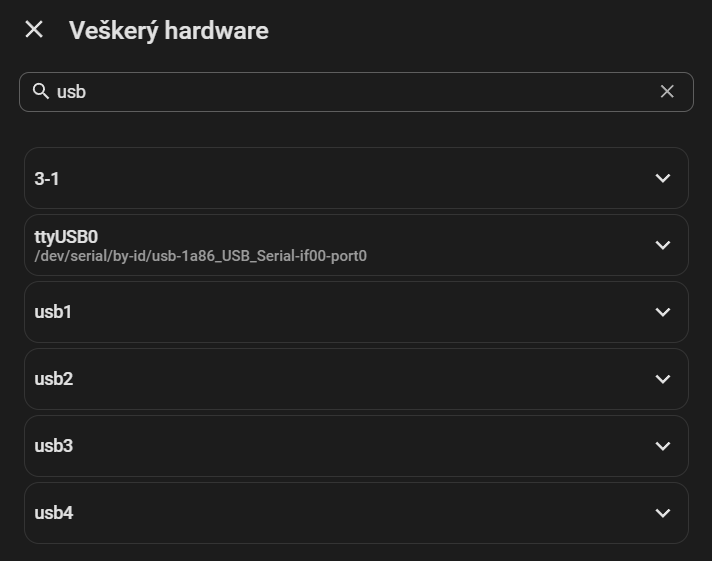
-

CSC Armbian for RK3318/RK3328 TV box boards
usual user replied to jock's topic in Rockchip CPU Boxes
I usually use Falkon in a Plasma environment with Wayland backend. -
Thx 2, but how do we go there from the boards page, these days!? After not been around for a while I'm happy to find out that Igor still (re)-supports the Espressobin board. Though the homepage had been redesigned heavily I was missing e.g. the links to the adapted u-boot files, rescue stuff, etc. - thx
-
I've found these firmware.Maybe they are helpful? nvram_ap6611s.txt clm_syn43711a0.blob SYN43711A0.hcd fw_syn43711a0_sdio.bin
-
 I am not sure if it is a configuration error on my side or intended behaviour, but I am getting apticron emails about armbian-config almost daily due to releases being made by CI/CD. Is there a "release" branch I could switch to to make it stop? Or do I need to blacklist armbian-config from apticron reports? Thanks!
 -
You are not using Armbian. This is a fork of Armbian which uses our name without permission and they do not contribute to the core development process. They trick you into thinking that you will get some sort of support at this place which isn't the case. We do not support 3rd party forks.
- Last week
-
Hi all, I finally could get 4GB in my Transpeed M98 Plus. For everyone that have this same problem, the solution is just use a patch to change 2 archives, the "configs/transpeed-8k618-t_defconfig" and the include/configs/sunxi-common.h to define the maximum dram to 4GB instead 2GB. Just put the patch in build/patch/u-boot/u-boot-aw before the compilation process. To be honest I don't know how Nick could put his box to work with 4GB, because the sunxi-common.h fix in 2GB the maximum amount of dram, #define PHYS_SDRAM_0_SIZE 0x80000000 /* 2 GiB */ instead of #define PHYS_SDRAM_0_SIZE 0x100000000ULL /* 4 GiB */. 174-define-DRAM_MAX_SIZE-to-4GB.patch
-
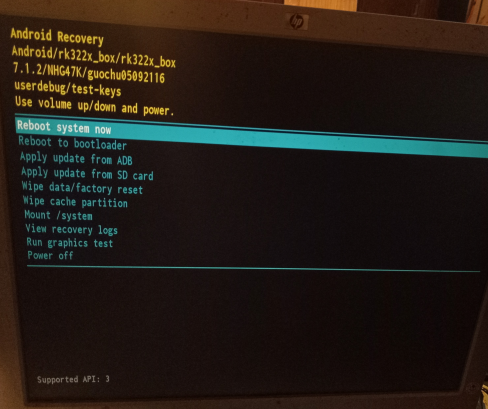
What do I do here? My box has no keys period save the reset button. I searched for the issue in this thread and didn't find anything, or in the internet at large. I have no remote for it (And it doesn't have bluetooth to start with) and usb devices didn't work, so that's not it either.
-
The Orange Pi CM4 isn’t as widely supported in Armbian as some other boards yet, so support can be a bit limited depending on what you’re trying to do. Your best bet is to check the Armbian download page or forums for any community builds, as some users have shared working images or tweaks. Otherwise, you may need to use the official Orange Pi OS or adapt an existing Armbian image with some manual configuration.
-
For some reason, the CPU frequency in Ubuntu is set to 1416000 while the hardware can reach 1512000, which is an improvement of about 6 and a half in CPU performance. I would appreciate a change or explanation. Thank you very much for everything.
-
Hi Tparys Sorry for the last reply, it has been a couple of busy days. > If they are exactly the same software, it sounds like a hardware issue. Yes that was my initial thought, and therefore I validated with the HardKernel images on one of broken nodes and since the PWM fan was a normal. It seems to be a software problem instead. > If the HardKernel images works as expected, perhaps you've updated all 3, but not rebooted the working one yet? After the second node broke have a turn all devices off each night and the healthy node has worked every day. > Can you post logs of both working and not working boards? Node 1 (Healthy): https://paste.armbian.com/ibofokalis Node 2 (Unhealthy): https://paste.armbian.com/ifihodukoj I am reinstalled armbian 26.2.1 Noble and here is the PWM not working. I am capable of setting a PWM but it doesn't respond to it. It was on this node I have tested the HardKernel Image Node 3 (Unhealthy): https://paste.armbian.com/kemesojuva I have done some additional debug on this node. The hwmon2/pwm1_enable is set to 1 for manual mode and pwm1 is zero even if the fan is speeding at full speed. If I disable the fancontrol service and manually control the pwm1, it is possible to set the pwm to a different speed and the fan will respond but after a split sensor would the value of pwm1 be reset to 0 instead of the assigned value.
-
My bad I didn't specify. On Windows. I lost 4h on it. I needed to use dd on a Mac to create a bootable SD card. Arbian Imager didn't help, it killed my Window stuck on storage finding and couldn't be killed. on Mac made a bad job of flashing, didn't even started boot. Btw on Windows, all methods I used (Raspberry Imager, Etcher, Rufus) all made like 50ish small 0 bite partitions and one big unallocated. Somehow it started booting, Armbian logo on, but then it failed.
-

HDMI audio and analog audio do not work on Opi5Plus
JFL replied to ずっと一人's topic in Orange Pi 5 Plus
Hi, Just an update on this issue. Upgraded to kernel-7.0.0-edge-rockchip64-26.2.0-trunk.733, still no audio output on Analog Headphone/Audio Jack.