
Active threads
Showing topics posted in for the last 365 days.
- Past hour
-
Got it connected now to a simple 13.8V PSU and it’s working a treat, just working my way around Linux and Runners but all good ! Thank you for the help @eselarm!
-

Gaming experience with Orange Pi 5 (RK3588) on Armbian
KhanhDTP replied to KhanhDTP's topic in Orange Pi 5
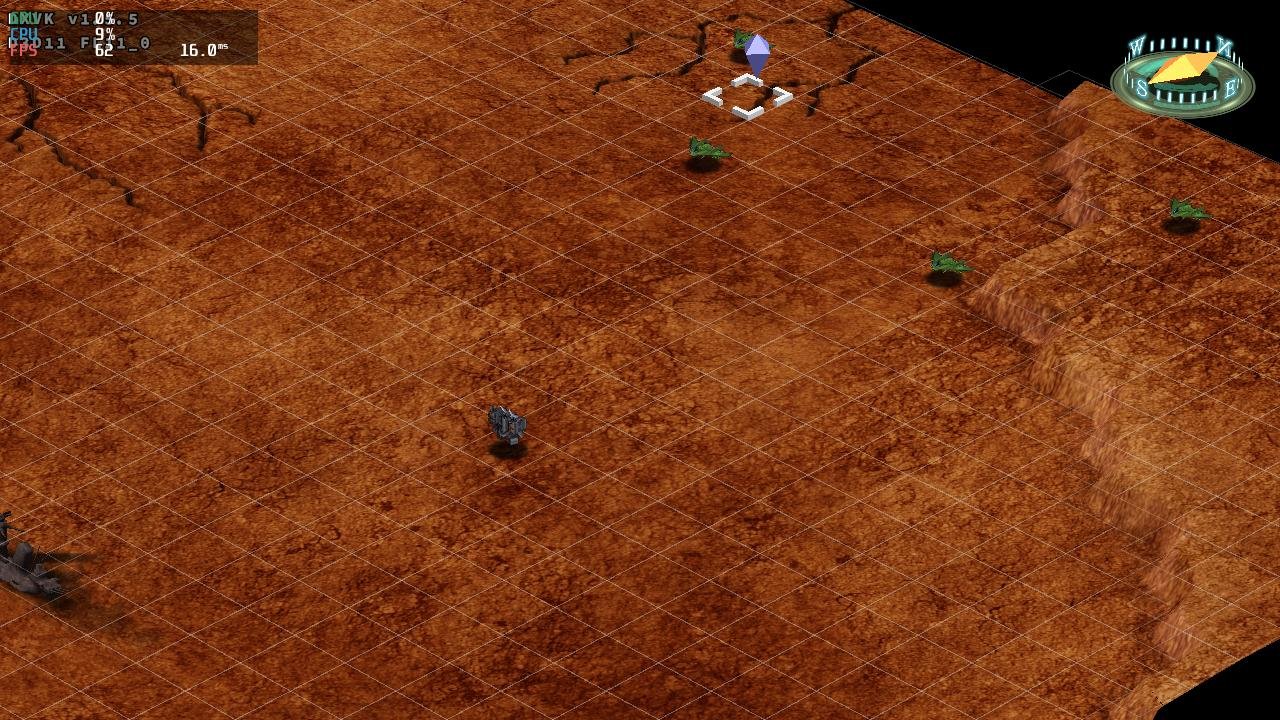
Armbian 25.8.2 Noble XFCE (BSD Kernel: 6.1.115) + PanVk - mesa 26.0 (https://launchpad.net/~ernstp/+archive/ubuntu/mesaaco) + box64 3.9 (https://ryanfortner.github.io/box64-debs/) + proton-10.0-3-amd64-wow64 (https://github.com/Kron4ek/Wine-Builds/releases/download/proton-10.0-3/wine-proton-10.0-3-amd64-wow64.tar.xz) + DXVK-stripped v1.5.5 >=60fps@720p Super Robot Wars V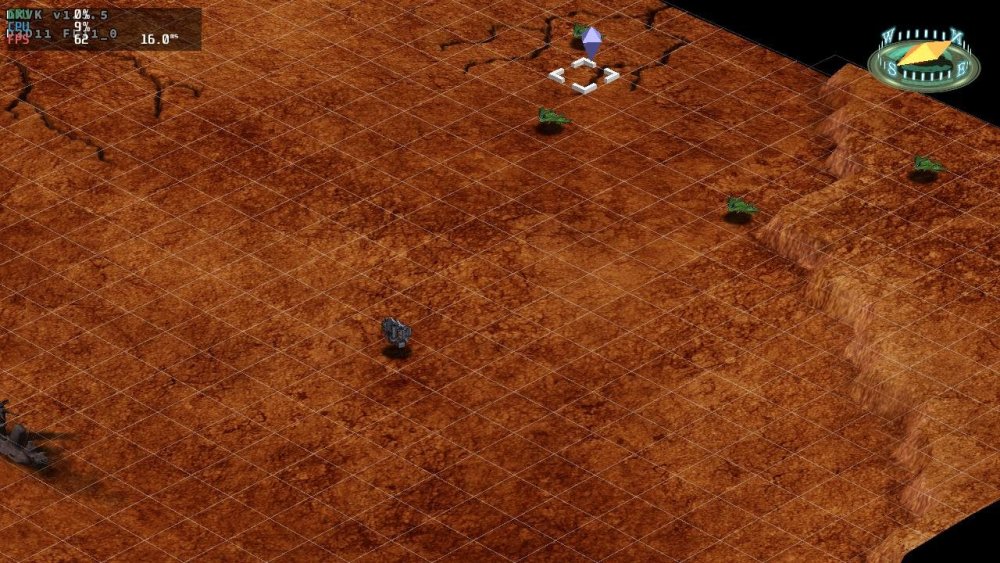
.thumb.jpg.95b03112fd1f5cbc5cfda8dfc6435fee.jpg)
.thumb.jpg.b02188d87462171fa3a30e39b97397c7.jpg)
-
@laibsch, the answer to your question is in my last post. All those bad/"half-broken" adapters don't have problems with sequential writing/reading. And if you consider helpful pointing me to some obscure GUI writing tools as helpful, sorry, it's was not. I trust "dd" more then any of them. Very helpful was, however, @eselarm's post and I expressed my gratitude for it. To be honest, I don't really understand the intention of your last post. Could be my English is not good enough... Anyway, if my tone was was too harsh, I apologize for it.
-
It is expected that the server image supports Framebuffer.
-

OrangePi Zero LTS ili9341 TFT LCD (and later OrangePi Zero 3)
Jeffrey replied to robertoj's topic in Allwinner sunxi
Does this still work with current armbian version? I am using v25.11.2 for Orange Pi Zero3 running Armbian Linux 6.12.58-current-sunxi64 and I can't even get the display to turn on. Now I'll admit I am a complete noob when it comes to linux so I am most likely doing something wrong. I know am doing something that's way over my head but I enjoy researching and learning things but it's hard to find things on the subject. I am using the DTS from this comment: - copied it into ~ili9341 then did: - cd ili9341 armbian-add-overlay ili9341-spi1-opiz3.dts I rebooted and notice the screen didn't come on, so I did: dmesg and then following message came up: sun6i-spi 5011000.spi: cannot register SPI host It's a cheap ili9341 tft from aliexpress, it says it's using ST7789V for display drivers, is that maybe why it isn't working? driver ili9341.ko does show up in /lib/modules/6.12.58-current-sunxi64/kernel/drivers/gpu/drm/tiny any help would be appreciated. - Today
-
Thank you, @Mangix. We bumped u-boot to v2025.10 for Helios, so I would assume those commits are already incorporated, aren't they? I have only looked at commit dates, not actual code.
-
I never mentioned any solution. Moving your post to an appropriate location is a forum moderation task and the post was FYI only. I don't have this board nor do I know how to fix it.
-
 I am strugling withthe AXP223 gpio LDO configuration to initialise properly, otherwise the i2C lines to the touchscreen controller are unpowered. Therefore I will add traces in the axP223 rsb (reduced signal bus) driver code. And I try to not be annoying here, but I am a bit lost. What is the common method for driver debugging/development in armbian? I mean how to recompile the kernel without rebuilding all the image? For now I changed the kernel configuration for the rsb driver to module. And I will compile it on the target to add my traces. In case someone has the solution to my problem, my dts looks like this: &axp_gpio { gpio1_ldo_pin: gpio1-ldo-pin { pins = "GPIO1"; function = "ldo"; }; }; ®_ldo_io1 { pinctrl-names = "default"; pinctrl-0 = <&gpio1_ldo_pin>; regulator-always-on; regulator-min-microvolt = <3000000>; regulator-max-microvolt = <3000000>; regulator-name = "i2C0-iovcc"; status = "okay"; }; And while the regulator initialises for the AXP223 GPIO1/LDO, I have nothing but GND on the pin. [ 1.223696] i2C0-iovcc: Bringing 3800000uV into 3000000-3000000uV Because the driver configures the pin in the regulators, it seems like the axp_gpio and pinctrl definitions are useless.
 -
@robertoj OK. I managed to build Armbian, selecting mipi-panel-dbi support and booting to 16-bit. After setting it up and running the dts you provided, my screen still doesn't work. I'm probably doing something wrong, because although the screen glows white, it still shows barely noticeable backlight flickering. I also tried to do it according to Pancake's instructions, but I also didn't have any success. This log with Pancake's cat log.txt [ 1.623324] gpio gpiochip0: Static allocation of GPIO base is deprecated, use dynamic allocation. [ 2.173154] gpio gpiochip1: Static allocation of GPIO base is deprecated, use dynamic allocation. [ 2.242555] sdiohal:sdiohal_parse_dt adma_tx:1, adma_rx:1, pwrseq:0, irq type:data, gpio_num:0, blksize:840 [ 7.591150] systemd[1]: Starting systemd-backlight@backlight:backlight_gpio.service - Load/Save Screen Backlight Brightness of backlight:backlight_gpio... [ 7.652908] systemd[1]: Finished systemd-backlight@backlight:backlight_gpio.service - Load/Save Screen Backlight Brightness of backlight:backlight_gpio. user@orangepizero3:~$ hostnamectl Static hostname: orangepizero3 Icon name: computer Machine ID: a5f7b63422b54dc5a365def0a7294555 Boot ID: 4445f89ef8cb4b999e3fa684f292ca2a Operating System: Armbian-unofficial 26.02.0-trunk bookworm Kernel: Linux 6.16.8-edge-sunxi64 Architecture: arm64 And this log with DTS from you cat log.txt [ 1.623908] gpio gpiochip0: Static allocation of GPIO base is deprecated, use dynamic allocation. [ 2.172898] gpio gpiochip1: Static allocation of GPIO base is deprecated, use dynamic allocation. [ 2.242212] sdiohal:sdiohal_parse_dt adma_tx:1, adma_rx:1, pwrseq:0, irq type:data, gpio_num:0, blksize:840 But I'm very happy that I managed to build my first Linux, albeit in such a simple way. My pinout Displ OpiZ3 Vcc - out 3.3v Gnd - gnd Cs - ph9 Reset - pc14 Dc/rc - pc7 Sdi(mosi) - ph7 Sck - ph4 Led - 5v Sdo(miso) - ph8
-
Hi, I’ve installed Armbian to my Vero4k+ and all works fine except wired ethernet, the thing is it kind of works, but when I use different dtb files: meson-gxl-s905d-vero4k-plus.dtb wifi works, bluetooth works eth doesn’t, eth0 interface is UP but can’t get IP or set one, meson-gxl-s905d-p230.dtb wifi works, bluetooth doesn’t, eth generally works but when testing with iperf3 in server mode it’s great cca 930mbps 0 errors, but in client mode it depends of OS (ubuntu or debian) and kernel (5 or 6) used from 1-350mbps but with looooot of errors (cca. 67000 for 10 sec test) and if I limit link speed to 100mbps it doesn’t change much, also lot of errors, if I boot it to osmc it works fine (920mbps symetrical, also some errors on client side but fine). Is there anything I can do to troubleshoot - fix this? Thank you
-

Driving the ili9488 LCD (4.0 inch cheap chinese clone)
forumtrekker replied to robertoj's topic in Allwinner sunxi
Did a fresh install of community Armbian desktop this time, running current 6.12.60 from here. It seems there is no need to compile from scratch if you are using the panel-mipi driver from kungfupanda, I copied my DTS, panel-mipi.bin, etc. from my edge custom compiled installation to the community one and it worked fine after repeating the initramfs process, but I still get a stuck display after a bit, this time on the Armbian loading screen. SSH and Serial console work fine, its just the system stops knowing how to use the display after the initial boot sequence is done, and the kernel hands off the display to X11 / Wayland? This is consistent with how I believe tinydrm works, which is storing the image in memory and displaying new ones from memory if given (which in this case, none are given after a certain stage in the boot process and this hand off to the window manager never happens.) Need to figure out how to tell the system to keep using the drm display. I already tried putting /dev/dri/card0 instead of /dev/fb0 in 99-fbdev.conf, and I've been trying the following extraarg in /boot/armbianEnv.txt to try and get it to work. Screen still pauses halfway through boot messages / loading screen. extraargs=video=SPI-1:480x320@30 -
go armbian-config - Wait warning message "The current OS (bookworm) is not a officially supported distro!" - Kernel - KER001 Use alternative kernels - Would you like to continue? <Yes> - Show only mainstream kernels on the list? <No> And there the list: then choose "linux-image-edge-sunxi64=25.8.1 v6.15.4 " mainstream kernels: linux-image-current-sunxi64/bookworm 25.8.2 arm64 Armbian Linux current kernel image 6.12.47-current-sunxi64 linux-image-edge-sunxi64/now 26.02.0-trunk arm64 [installed,local] Armbian Linux edge kernel image 6.16.8-edge-sunxi64 linux-image-legacy-sunxi64/bookworm 25.8.2 arm64 Armbian Linux legacy kernel image 6.6.75-legacy-sunxi64 6.16.8: 6.15.4: In the working kernel 6.15.4, the following audio-related modules are loaded: snd_soc_sunxi_machine, snd_soc_sunxi_ahub, snd_soc_sunxi_ahub_dam In the broken kernel 6.16.8, these three modules are completely missing. Only the generic snd_soc_hdmi_codec is present, but it doesn't seem to bind to the hardware correctly without the sunxi-specific modules. I don't know how, but there the list in 6.16.8: tried to activate all dtbs in armbian-config - DTO001 - Manage device tree overlays noghing happend
- Yesterday
-
I don't even think this has anything to do with Armbian / Debian / Ubuntu. It's simply someone mucking around too much for their own good and frankly being arrogant about it. Until I see the problem reproduced in a stock setup this is simply PEBKAC as far as I can tell. I mean, for anyone actually willing to read, it's right there: Nov 24 13:06:57 lab systemd-timesyncd[1185]: Network configuration changed, trying to establish connection. systemd is essentially a monolith, you don't really get to pick and choose for all intends and practical purposes. The choice @Quantum needs to make is whether he wants to have something that works or whether he prefers to be high-and-mighty and run around being condescending to those whose work he uses without paying a dime all the while making outlandish claims. This is a non-issue.
-
Hi Installed Armbian_25.11.1_Rock-5c_trixie_current_6.12.58_minimal.img and one of the USB-3 port, the top one, doesn't work. No reaction when inserting something, nothing in /var/log/syslog. The same with Armbian_25.11.1_Rock-5c_noble_current_6.12.58_minimal.img The Armbian_25.11.1_Rock-5c_trixie_vendor_6.1.115_minimal.img however is OK. What could be the cause of this problem? Thanks and regards, Chris
-
Hi I have a Rock5c with a Penta SATA hat and it works OK. It is the only (?) way of having several disk connected to Rock5c. Note, it cannot boot of the disks on the hat. Have two SSDs and mirrored ZFS pool. No problems at all. Setting it up to act as Frigate server. The fifth SATA, in fact e-SATA connector comes very handy to connect a large disc for constant recording. You may also consider Odroid HC4. I think it's the cheapest solution and it's fan is negligible 🙂 Have three of them, acting as mail/backup/HomeAssistant servers. Had in the past some problems with USB but recent kernels are OK. Hope it helps.
-

Orange Pi Zero 3 Sound Problem(Lineout-Analog Codec)
Taha YILDIRIM replied to Taha YILDIRIM's topic in Allwinner sunxi
With the H618 kernel, the system is very stable but there is no audio output at all. With the H616 kernel, audio works perfectly, but the system starts showing screen distortions, artifacts, and UI crashes. When I said “image became distorted” and “kernel artifacts”, I meant things like the screen going black, color blocks appearing, and the desktop environment crashing. I already tried enabling analog-codec, installing alsa-utils, using alsamixer, and testing with mpg123, but the result didn’t change. I haven’t built my own Armbian image yet, but I’m considering trying an edge kernel with the Armbian build system. -
@Learnincurve It is very easy to build only the kernel with the Armbian Build Framework. The result will then appear as output/debs/linux-image*.deb
-
 ping @amazingfate and @prahal
 -
maybe @schmiedelm has an idea?
-

Efforts to develop firmware for H96 MAX M9 RK3576 TV Box 8G/128G
cmuki replied to Hqnicolas's topic in Rockchip CPU Boxes
@xiaobao80I did manage to get 3.5mm working with the help of ChatGPT. The box is using HT5010. ChatGPT told me to disable the es8388 nodes, but it still works with them enabled. My sai@2a61000 looks like this: My ht5010-sound node looks like this: I got bluetooth working with a hack from the Radxa forums here (creating a shell script and adding it to the root's crontab): I tried to send audio from a TV to the rk3576 box - it did work, but the latency is too much for me. The brown box has beefier cooling than the purple one. I haven't recompiled, used my "stable" image from before to fix the 3.5mm issue, might need to recompile to try the GPU driver. Tried the rkr7.1 dts, but couldn't get it to work (might need additional time to look at it); armbian / linux-rockchip is still at rkr5.1. -
There are none. https://docs.armbian.com/User-Guide_Networking/#networking
-
Anyone knows how enable usb 3.0 with Radxa cubie a5e? I found cubie-a5e-enable-usb3.dts from radxa's git but could apply it. Currently I am running 26.2.0-trunk.22.
-

Getting vlc to play nice with pulseaudio
Popolon replied to Reluctant Linux User's topic in Radxa Rock 5 ITX
I'm not sure vulkan is the best solution, RK3588, as most ARM SoCs has a dedicated video engine, vulkan is mainly needed on hardware without dedicated engine, using graphic card to decode, as it's often the case in x86_64 worlld. You can then including it's decoding in vulkan if you want. Don't know wich version of kernel/mesa/video decoder you use. The best, is to remove all dedicated package, and use system one, today, everything work fine with standard linux kernel, as armbian one, standard video tools, rockchip specific libs/video tools was used with rockchip made tools, until everything was mainlined. I don' use VLC, that needs specific libs, but mpv, or several other video players (including firefox one), and everything plays fine. -
I dont know how to do that, sorry!
-
 Tried this with a Ubuntu PC today, and have the same result. lsblk shows one partition.

.jpg.63867a8f3245ae792fef3c440c906313.jpg)
.jpg.dbb5560ae1e82f053327b196182cb09f.jpg)