Active threads
Showing topics posted in for the last 365 days.
- Today
-
Well that was fun. Termux wouldn't load so I found an older version from 2022 thinking that version is older than the box so has a higher chance of working. That also wouldn't open until I went a bit silly and attempted to open it multiple times. Just like Mustafa in Austin Powers, once I attempted to load it 3 times in a row it would show up. Bizarre but I now have a dump of Device.DTB How do I view it properly? I opened it in notepad++ and most of it is gibberish but I can make out a few details that are a bit surprising. Namely - allwinner,h616 arm,sun50iw9p1 The label on this thing says H618 but it appears to be a H616. Where do I go to from here? Edit: I have attached the dtb file and two dumps of the file. One using fdtdump and the other using dtc. It seems the btlpm section has the same values of a device Nick referenced on page 4 of this thread. I don't know if that means anything.... Edit2: I tried "Armbian-unofficial_25.05.0-trunk_Transpeed-8k618-t_bookworm_edge_6.12.11_xfce_desktop.img" this boots ok, ethernet works but again, no wifi/bluetooth. I'm a little surprised every image I've tried so far has mostly worked. I guess these vendors just throw together whatever parts they can get cheap but the core of the units is the same. Thanks. dtsdump.txt fdtdump.txt device.dtb
-
 Nice, congratulations! I wonder why cursor does not show when video is playing by the way: there has always been a patch in the armbian code to support hardware cursor, in fact in X11/Wayland the cursor is handled in hardware and it is perfectly visible and usable when a hardware accelerated video is playing. Also I wonder why you need CMA=256M; normally rk322x VPU has its own MMU that is capable to handle direct to memory access without the need of CMA.
 -
@robertoj the problem is not ffmpeg, which already is works totally fine on debian Trixie (and backwards), the problem is within mpv that changed in v0.4.0 carried by debian Trixie, and at the moment I don't have enough motivation to carry on a custom mpv package for Debian Trixie. You may try with debian forky by the way, but it is a moving target as long as it is still in development.
-

CSC Armbian for RK3318/RK3328 TV box boards
SanchopansA replied to jock's topic in Rockchip CPU Boxes
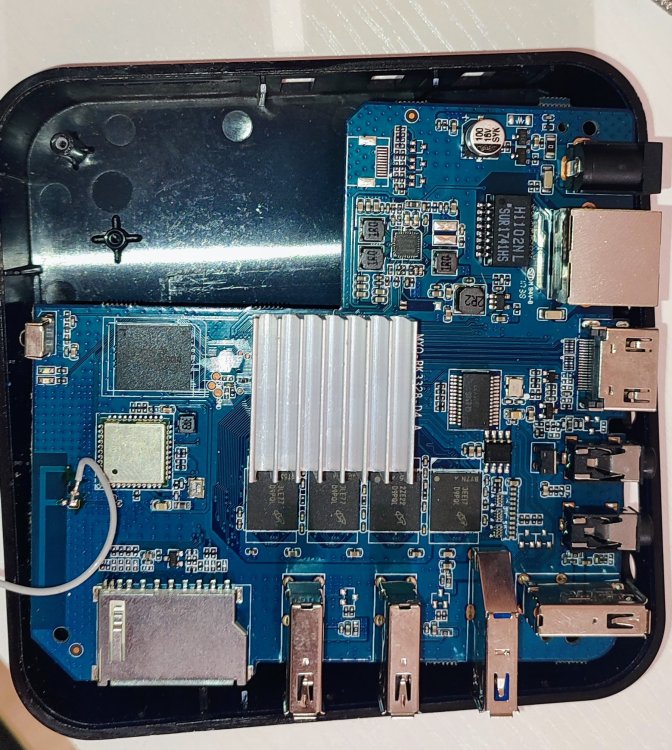
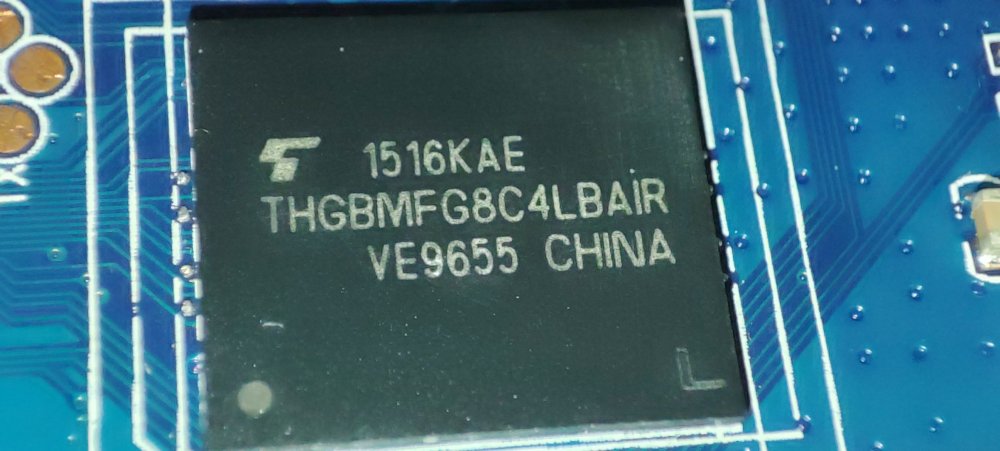
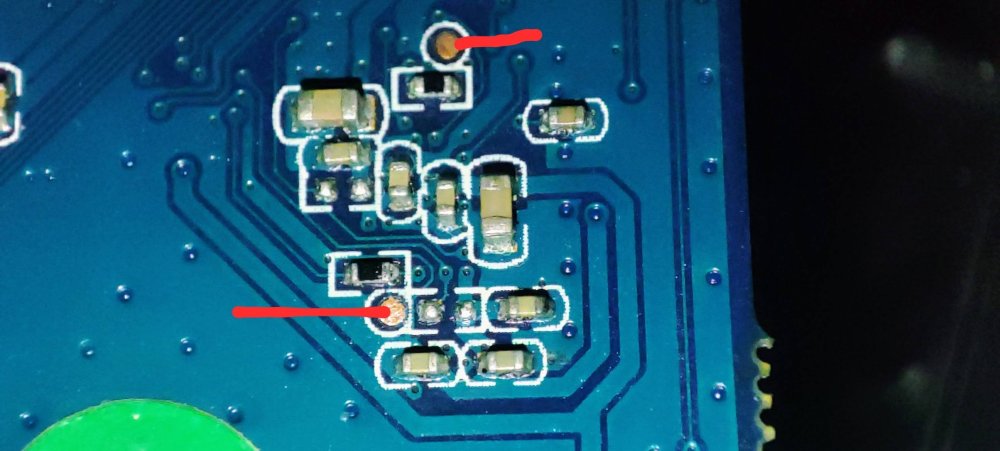
@jock Thank you for your reply. Unfortunately, I can't do it I tried to short it, but it doesn't load from the SD card. I shorted it with a piece of wire. When I do it with USB connected, I see the device is in Maskrom. Here the console output from rkdeveloptool using: root@lensky-lp:~# lsusb Bus 001 Device 001: ID 1d6b:0002 Linux Foundation 2.0 root hub Bus 001 Device 004: ID 10c4:8105 Silicon Labs USB OPTICAL MOUSE Bus 001 Device 005: ID 04ca:707f Lite-On Technology Corp. HP Wide Vision HD Camera Bus 001 Device 006: ID 0bda:b00b Realtek Semiconductor Corp. Realtek Bluetooth 4.2 Adapter Bus 001 Device 008: ID 1ea7:0066 SHARKOON Technologies GmbH [Mediatrack Edge Mini Keyboard] Bus 001 Device 009: ID 2207:320c Fuzhou Rockchip Electronics Company RK3328 in Mask ROM mode Bus 002 Device 001: ID 1d6b:0003 Linux Foundation 3.0 root hub root@lensky-lp:~# rkdeveloptool ld DevNo=1 Vid=0x2207,Pid=0x320c,LocationID=104 Maskrom root@lensky-lp:~# rkdeveloptool td Test Device failed! root@lensky-lp:~# rkdeveloptool ---------------------Tool Usage --------------------- Help: -h or --help Version: -v or --version ListDevice: ld DownloadBoot: db <Loader> UpgradeLoader: ul <Loader> ReadLBA: rl <BeginSec> <SectorLen> <File> WriteLBA: wl <BeginSec> <File> WriteLBA: wlx <PartitionName> <File> WriteGPT: gpt <gpt partition table> WriteParameter: prm <parameter> PrintPartition: ppt EraseFlash: ef TestDevice: td ResetDevice: rd [subcode] ChangeStorage: cs [storage: 1=EMMC, 2=SD, 9=SPINOR] ReadFlashID: rid ReadFlashInfo: rfi ReadChipInfo: rci ReadCapability: rcb PackBootLoader: pack UnpackBootLoader: unpack <boot loader> TagSPL: tagspl <tag> <U-Boot SPL> ------------------------------------------------------- root@lensky-lp:~# rkdeveloptool rid Reading flash ID failed! root@lensky-lp:~# rkdeveloptool cs 2 AMO: ERR_DEVICE_WRITE_FAILED Change Storage failed! root@lensky-lp:~# rkdeveloptool ppt Read GPT failed! Read parameter failed! Not found any partition table! root@lensky-lp:~# rkdeveloptool db /home/lensky/Downloads/For\ RK3328\ devices/RK3328MiniLoaderAll_V2.50.bin Downloading bootloader succeeded. root@lensky-lp:~# rkdeveloptool ppt **********Partition Info(parameter)********** NO LBA Name 00 00002000 uboot 01 00004000 trust 02 00008000 misc 03 0000A000 baseparamer 04 0000A800 resource 05 00012000 kernel 06 00022000 boot 07 00032000 recovery 08 00042000 backup 09 00062000 cache 10 000A2000 metadata 11 000AA000 kpanic 12 000AC000 system 13 003AC000 userdata As you see after boot it looks like the flash is empty. I can't ready any info and there no partitions. But after download bootloader command I see partiosions and can read flash info and chip info. After reboot all is disappear again. This is my board: This is my eMMC chip: I have found YouTube video how to short the clock pin for my board. On the opposite side, I need to short these pins: When I insert the SD card and boot the device, it just lights the red led and nothing more. Is something I do wrong?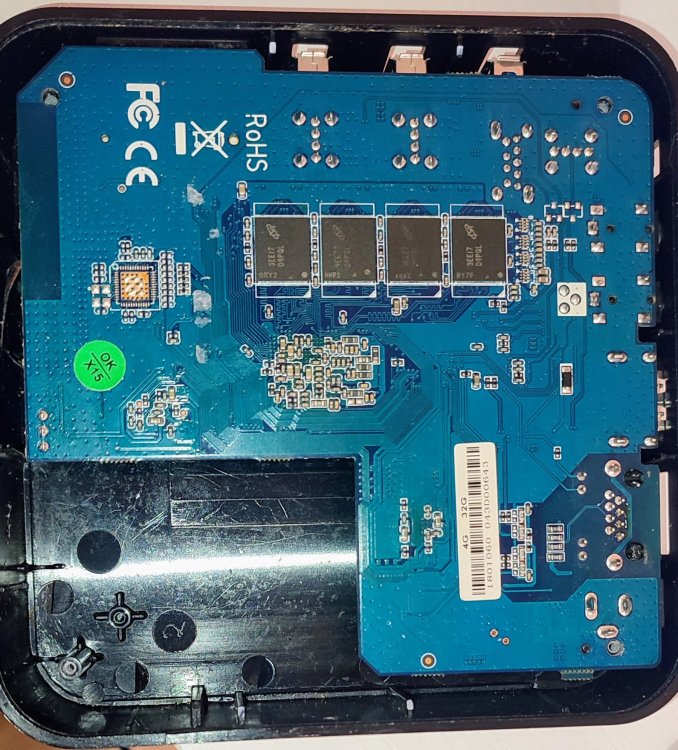
-

Gaming experience with Orange Pi 5 (RK3588) on Armbian
KhanhDTP replied to KhanhDTP's topic in Orange Pi 5
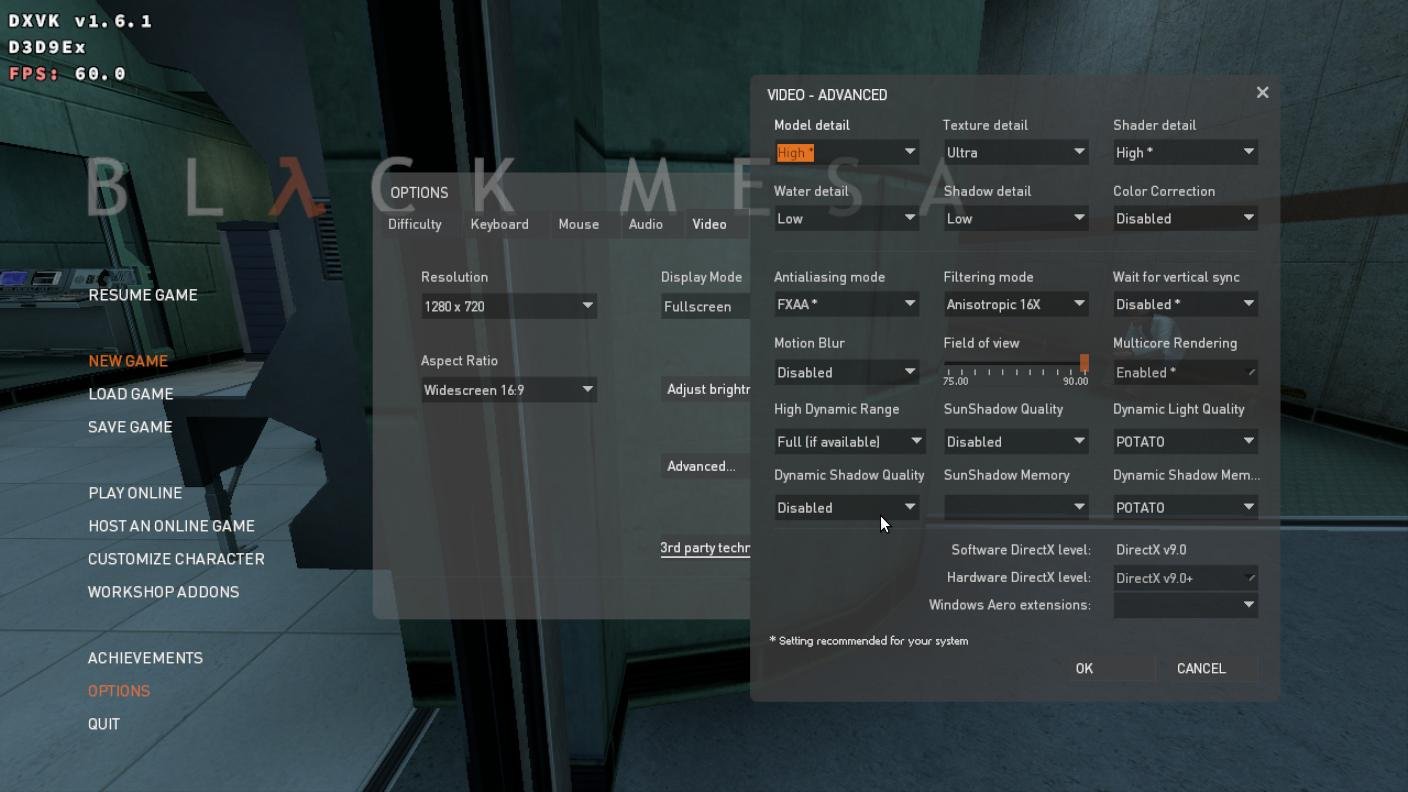
Armbian 25.11.2 Noble XFCE (BSP Kernel: 6.1.115) + PanVk - mesa 26.0 (https://launchpad.net/~ernstp/+archive/ubuntu/mesaaco) + Box64 arm64 v0.4.1 652da4fbc (https://ryanfortner.github.io/box64-debs/) + proton-10.0-3-amd64-wow64 (https://github.com/Kron4ek/Wine-Builds/releases/download/proton-10.0-3/wine-proton-10.0-3-amd64-wow64.tar.xz) + DXVK-stripped v1.6.1 30~60fps@720p (low settings, high texture, no AA) box64 environment variables: Black Mesa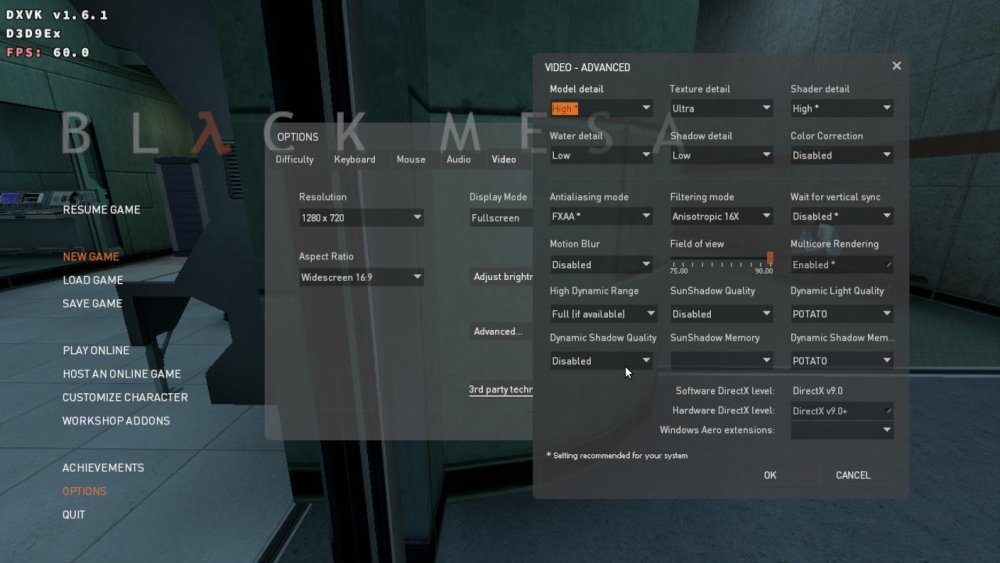
.thumb.jpg.5320f0ed7c0b1a851f264728ab382a01.jpg)
-
diy image and you get it immediately
-
Decided to see how far the LLM have come along and give this another crack. Gemini 3 Flash seems to have got me a few steps forward. It had me add zswap and build a swap file while adjusting some of the U-Boot variables. /boot/armbianEnv.txt additions/changes fdt_addr_r=0x42000000 ramdisk_addr_r=0x42800000 fdt_high=0xffffffff initrd_high=0xffffffff extraargs=zswap.enabled=0 swiotlb=1024 I had to expand the filesystem to use more of the SD card then added a 512M swapfile sudo fallocate -l 512M /mnt/pinecube/swapfile sudo chmod 600 /mnt/pinecube/swapfile sudo mkswap /mnt/pinecube/swapfile It took a solid 5 or so minutes but I got booted. It's very slow but at least I got this far! Just leaving this here for anyone else that may stumble along.
-
That isn't what you use for amlogic tv boxes. Follow the instructions linked from the download page: https://www.armbian.com/amlogic-s9xx-tv-box
- Yesterday
-
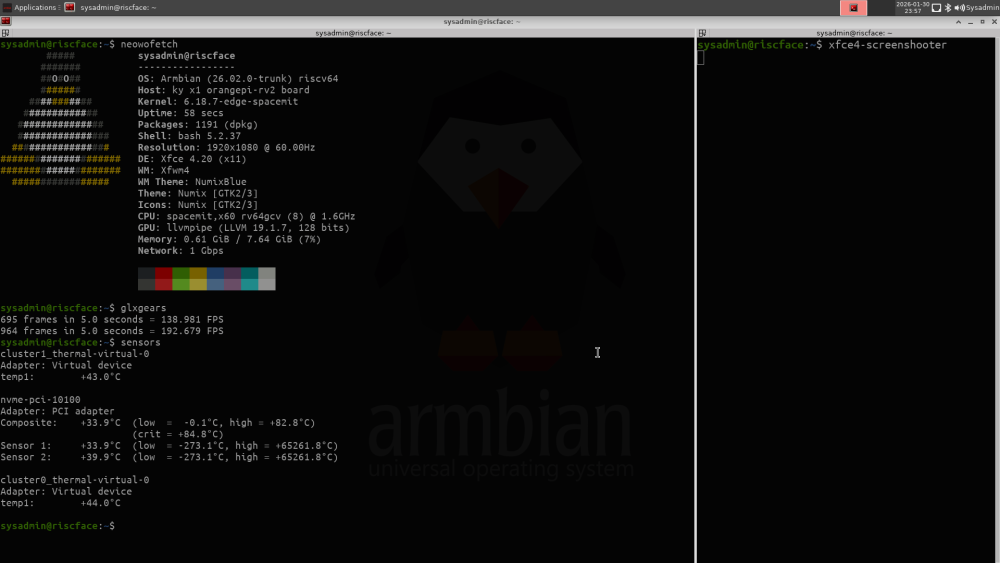
THANK YOU so much for this effort. I no longer regret buying an OrangePi RV2!
-
On the 25.11.1 Noble release, using the 6.12 kernel, there is no package to install the linux-headers for installed kernel. Is there some place to get them so that it is possible to install a kernel module for the provided ubuntu-rockchip kernel?
-
How do you power the bananapi m1? It has 2 microUSB connectors.
-
Rpi support for whatever of their devices is mainly on the level of RaspberryPi OS. We use their kernels sources as base, add some additional things and release timing is different - not much difference. If they added new device, it should just work. If anyone wants to improve support or fix WiFi -> https://github.com/armbian/build/pulls
-
@Bones558 I guess you are using a USB-C to HDMI adapter? I bought one and it doesn't work on kernel 6.6. I think it's because the DRM heap driver hasn't been updated yet. I got a Micro HDMI to HDMI cable, and that works.
-
http://blog.armbian.com/content/images/2026/01/coverleter.pngWelcome to the latest Armbian Newsletter: your source for the latest developments, community highlights, and behind-the-scenes updates from the world of open-source ARM and RISC-V computing. http://blog.armbian.com/content/images/2026/01/image-2.pngJoin Armbian at embedded world 2026. Meet us in Hall 3, Booth 3-556 (Seeed Studio), where we’ll be showcasing the Armbian build framework and how it powers reliable, production-ready Linux for ARM devices. FriendlyElec’s NanoPC T6 Plus: The flagship edge computing powerhouse and media stationThe NanoPC T6 Plus, powered by the performance-optimized Armbian OS, is your ticket to a truly professional, high-speed edge computing experience. This industrial-grade device is built around the flagship Octa-core Rockchip RK3588 SoC and now features a massive upgrade to LPDDR5 RAM (up to 32GB), giving it the muscle tohttp://blog.armbian.com/content/images/icon/favicon-40.icoArmbian blogMecid Urgancihttp://blog.armbian.com/content/images/thumbnail/T6-Plus-01.pngSponsored Github HighlightsThis week’s Armbian development saw a wide range of updates focused on automation, hardware support, and workflow improvements. Key highlights include the introduction of automatic YAML target generation, expanded support for Hetzner ARM64 runners, and enhancements to the redirector update workflow with cache mirror support. Several board-specific fixes andhttp://blog.armbian.com/content/images/icon/favicon-36.icoArmbian blogMichael Robinsonhttp://blog.armbian.com/content/images/thumbnail/githubhighlights-2-2.webpForget third-party utilities: meet Armbian ImagerArmbian Imager eliminates the guesswork from flashing SBC images. Real-time board detection, persistent caching, and built-in safety make installation fast, simple, and risk-freehttp://blog.armbian.com/content/images/icon/favicon-37.icoArmbian blogDaniele Brigugliohttp://blog.armbian.com/content/images/thumbnail/introducing-armbian-imager.pngArmbian 2025: by the numbersOpen hardware is growing faster than ever and breaking in new ways. 2025 has been a productive year for the Armbian project. As the Single Board Computer ecosystem continues to fragment and expand, Armbian has consolidated its position as the universal glue holding the open-source hardware world together. Our missionhttp://blog.armbian.com/content/images/icon/favicon-39.icoArmbian blogMichael Robinsonhttp://blog.armbian.com/content/images/thumbnail/New_review1.pngView the full article
-
Thanks Igor. Just for reference, I also tried Armbian_community_26.2.0-trunk.332_Odroidhc4_forky_current_6.18.7_minimal.img apt update apt upgrade apt install linux-headers-current-meson64 apt install zfsutils-linux zfs-initramfs zfs-dkms zfs-zed Everything went fine and seams to working OK. Chris
-
@Harleyyyu Your project could be interesting , I would suggest to open a dedicated 3ad on It own so people can contribute. As you have already realized by yourself quite all hardware and drivers aspects of this rk322x soc have bene investigated by @jockand/or @ilmich But if you achieve any progress on GENERAL drivers and performance that isn't already been discussed or achieved you can came back here to share Thanks
-

Installation Instructions for TV Boxes with Amlogic CPUs
Pablo Navarro replied to SteeMan's topic in FAQ
Hi! This is my first message here, congrats to the community for building this I would also like to corroborate that the current Balena Etcher, in Windows at least, is not writing the image correctly to the SD card. The Armbian imager did it well for me. I just booted an unused A95X (S905X) "Mini Kitty" with Armbian, but I don't think I will spend too much time with it, I already got a lot of mini PCs for servers and it's too slow for a terminal 😅 What do you recommend me to do with this little box? Thanks! -

Very strange behavior: complete freeze after boot
Frans Rampen replied to Frans Rampen's topic in Rockchip
It is a AP-mode problem of the Realtek 8822CE chipset. Replaced the M2 card with Intel AX200 card and since then solid as a rock -
 I downloaded image today using Armbian Imager, and it asked me to run something like armbian-update. I installed the system afterward, but it didn’t work.
 -
Ordered 2 more X96Qs off aliexpress. will see what versions i get. Will build images for them if they're different.
-
There is no way. You need a dedicated image for your hardware. https://docs.armbian.com/User-Guide_FAQ/
- Last week
-
@Torte continued to help on his github site. The boot.img of the OEM firmware appears to set up a serial framebuffer screen and some shenanigans with the camera. I'm pausing the thread for now - need to figure out a path to reverse engineer the boot.img. Otherwise, alternative boards will need to be adapted.
-
Coming late to the party, but I have observed a similar thing with moderm kernels on PCduino 3 nano. To know what is happeneing, have you tried connecting to UART? That gives you more info about what is going on. Now I have trouble with the OTG port. I am unable to configure it for mass storage.
-
OK so how can I help to fix this issue? I would like to compare (dtdiff) the device trees from the working version to the current. I have the the dtb for the (non working) current but I can't find the dtb from the trunk for the working version using the 6.18.0 RC6 kernel. The only link I have found was : Armbian_community_26.2.0-trunk.7_Odroidm2_noble_edge_6.18.0-rc6_gnome_desktop.img.xz.torrent in the archive but there are not enough seeds to download it as the current download estimate is running at over 300 days. And I'm not even sure that is the correct version! If anyone can point me to another resource where I can download multiple images (or better yet just the device trees) for multiple versions (quickly) that would be helpful.
-
Userspace has nothing to do with hardware features. I don't know what is the case for A20, but for many others, OTG functionality is driven with overlays. If there are no overlays, you need to edit device tree and change its role. If that doesn't help, it is more complex problem. More complex, perhaps days / weeks to debug and fix. Most of (Armbian) kernel developers are long gone from this 10+ years old platform and users can't help. Also look into previous builds. Finding out when this broke is half of the solution https://fi.mirror.armbian.de/oldarchive/ or by finding a kernel that works https://docs.armbian.com/User-Guide_Armbian-Config/System/#alternative-kernels With any userspace (trixie/noble/jammy ...) Probably all A10 and A20 boards share this problem.

.jpg.c1569deb1b49915ff40a02634d1dcf96.jpg)