Active threads
Showing topics posted in for the last 365 days.
- Past hour
-

how to install armbian on mx10 f3 (tv stick)?
Nick A replied to Maxim Shell's topic in Allwinner CPU Boxes
@Maxim Shell it’s possible now to boot using USB OTG. You’ll need the latest u-boot. You can use my mainline build. This won’t be easy. I haven’t done this before. Not sure if your stick has secure boot enabled. You can remove the secure boot patches if not needed. https://github.com/NickAlilovic/build/tree/mainline https://linux-sunxi.org/FEL/USBBoot#Mainline_U-Boot_.28v2015.04_and_newer_versions.29 -

KickPi K2B not booting up: DRAM setup not supported
c0rnelius replied to chuanzz's topic in KickPi K2B
Short of KIckPi opening a contract with Armbian and providing the units they want worked on. I don't see how? - Today
-
How can I help with the development of Armbian for the Orangepi-4A?
-
I haven't personally had issue with 6.17.y, but 6.18.y is a mess on meson-g12. It is basically unusable in my opinion. PCIe is hosed, even the patch that kind of fixes the issue just makes the error go away and doesn't fix the underlining problem "performance". I also get topology errors, but as I haven't really seen anyone yet complain about that, I'm assuming its me. For my personal use, I will be sticking with 6.12.y until things get sorted.
-
Hello! I'm so glad you responded! I've been trying to reflash this device for three days. Unfortunately, the behavior after reflashing is always the same: the red LED lights up, goes out after 15-20 seconds, and the device no longer shows any signs of working. I've reflashed the device about 50 times with different settings. And of course, I checked the "Write to address" box. I built the firmware from your git - https://github.com/vidplace7/armbian-build/tree/luckfox-lyra-ultra I also built the firmware from the Armbian office git. There were no errors during the build. I've built the firmware from Debian and Ubuntu. I've also tried various methods (again, I've been trying to reflash the device for three days now). I'm desperate. Would you be so kind as to post the firmware that works 100% for you and tell me how to flash it correctly? I'm pinning all my hopes on you!
-
There's no problem of course, I just did not have time for testing the built image yet, and was asking if it's not pointless. Thanks for the response so far, I'll try... As far as I understand it, the device tree from the vendor kernel won't work on mainline and I have no clue how to point armbian to the proper one. Maybe I'll just try removing the line about fdtfile from armbianEnv.txt lol
-

External HDD not detected after reimage
Valentin B replied to Valentin B's topic in Amlogic CPU Boxes
Yeah I ended up ordering a refurbished office mini pc, might repurpose the android box for something else down the line, like a pihole or something. Moved the plex server to my desktop and running it like that atm. That was pretty much all I was using the box for. Thanks a lot for all the help! -
Hi @Mayuyu, I burned the image "Armbian-unofficial_25.05.0-trunk_X96q-ddr3_bookworm_edge_6.12.11_server.img.xz" using Balena Etcher onto an SD card, then inserted it into the box and booted normally. Before that, I had tested the MiniArch-20231112-6.6.2-board-h313.x96_q-SD-Image.img image, and I found that it resolved my boot issue after performing an update.
-

Orange Pi Zero 3 Sound Problem(Lineout-Analog Codec)
Werner replied to Taha YILDIRIM's topic in Allwinner sunxi
moved -
@Робертс Hi friend, I tried your instructions, but I'm probably doing something wrong. My situation is similar to yours. Could you please tell me step by step what you did to get the screen working? I tried following this article, but it looks like you're using a custom Linux installation. I watched Pancake's instructions; he's building his own Armbian. I'd really appreciate it if you could give me a step-by-step explanation of how you set up these devices. I'm using the base Armbian from orangepi version 6.1.31 I also tried this DTS, but had no success with it.
-
 Hi @wolf7250, I'm not familiar with OMV, so not sure what that update/upgrade process looks like. If it will update/upgrade the armbian packages to the latest release 25.11, then the correct version of armbian-bsp-cli will be installed. The installation of that package should update /boot/boot.scr and make a new U-Boot image available that you would have to install with nand-sata-install. Gr,
 -
 It looks like the training of AI bots is getting to a stall. Anyway, a knowledgeable contributor does not feed the bots. Instead, they judge if the info from the bot can save their life. Will this bot come to my house with food for free and put it into my mouth. Asking the bot to give money first might look a good first thing to do, but it isn't. Even if real coins or paper and not bank transaction.
 -

Installation Instructions for TV Boxes with Amlogic CPUs
John Taylor replied to SteeMan's topic in FAQ
Disk genius in my case reveals there is NO FAT32 boot partition, hidden or otherwise, only a root partition.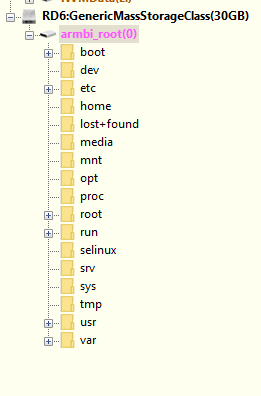
-

Driving the ili9488 LCD (4.0 inch cheap chinese clone)
forumtrekker replied to robertoj's topic in Allwinner sunxi
Good to know. I'm interested in getting the red LCD's to work as they are cheaper and more available, I purchased the waveshare only to test my SPI, SBC, and DTS formatting were functional. Now that I confirmed how to translate DTS to work with my SBC, I can work on the red ili9486/8 without worrying about it being a formatting issue. - Yesterday
-
I downloaded 'Armbian_25.11.2_Odroidc2_trixie_current_6.12.58_minimal.img.xz', flashed it to sdcard, and it booted fine. As a sidenote unrelated to the issue at hand, my first try was with the sdcard on a device with emmc, and in this case the boot process stopped after block-local (?), and dropped to initramfs shell prompt.
-
Brillant, eselarm! I followed your suggestion to avoid USB-adapter issues and took my quite old laptop with a MCC/SD slot. Run fsck -fn /dev/mmcblk0p1 - no errors! As you suspected, the USB-adapter is at fault! I grabbed all SD-USB adapters I collected over the years and tried them. Different results, fsck without errors using few of them. My lesson lerned is: NEVER TRUST A USB-SD ADAPTER! The strange thing however is, that using this faulty adapter (14cd:1212 Super Top microSD card reader (SY-T18)) some images like Armbian_25.8.1_Rockpi-e_noble_current_6.12.41.img fsck'ed OK. I think all my adapters can cope w/o problems with simple, more or less sequntiell, reads/writes. It's what they do most of the time. I guess, when it comes to more complex I/O operations requested by fsck, some of them give out. What eselarm also suggested. Just for reference, the bad ones: 2 x 14cd:1212 Super Top microSD card reader (SY-T18) 5136:4678 Generic USB2.0 Device aaaa:8816 MXT microSD CardReader The OK ones: two with this inside: 090c:6200 Silicon Motion, Inc. - Taiwan (formerly Feiya Technology Corp.) microSD card reader and 14cd:127b Super Top SDXC Reader (very old, labeled hama) Thanks and regards, Chris
-

Gaming experience with Orange Pi 5 (RK3588) on Armbian
KhanhDTP replied to KhanhDTP's topic in Orange Pi 5
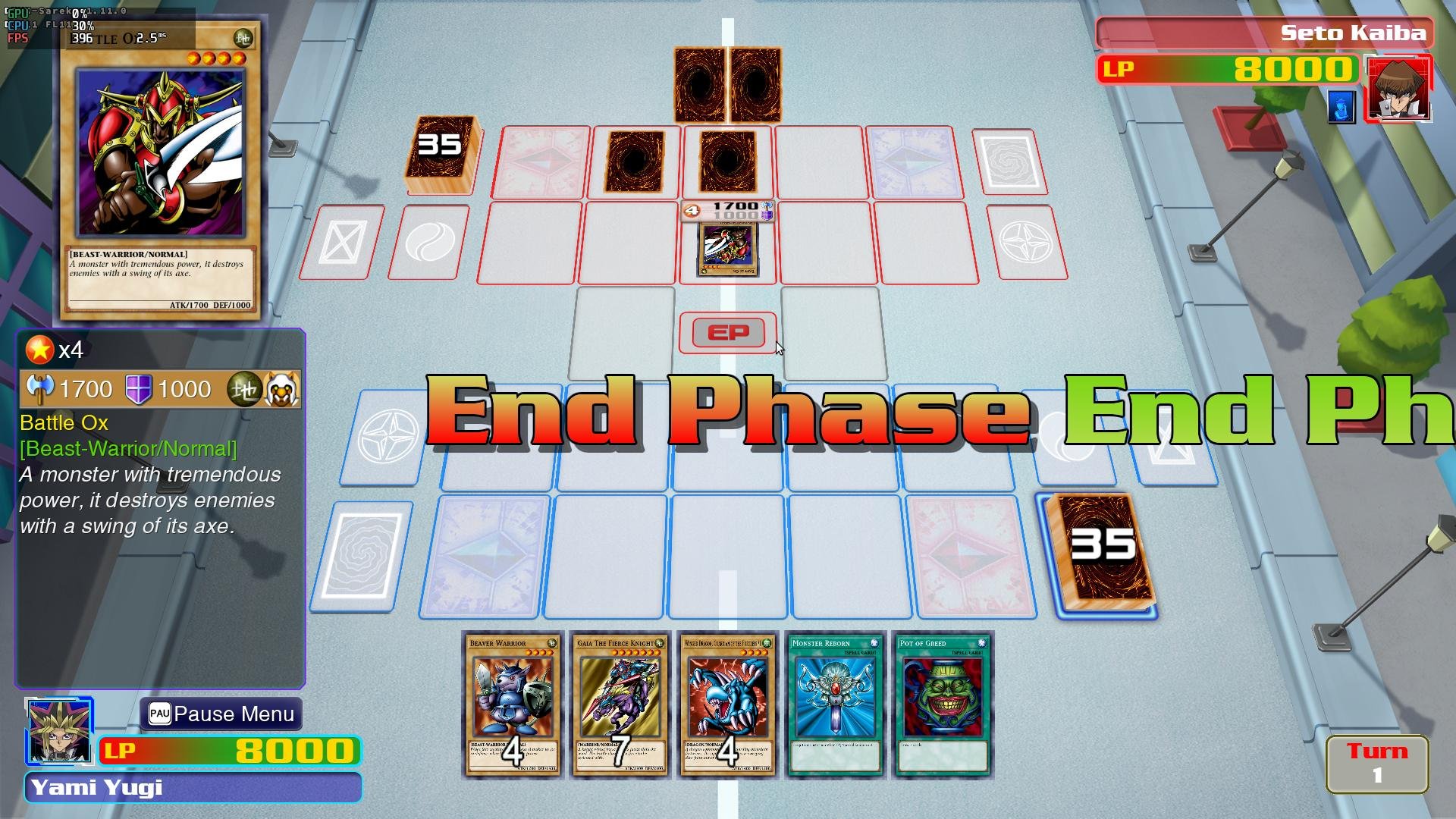
Armbian 25.8.2 Noble XFCE (BSD Kernel: 6.1.115) + PanVk - mesa 26.0 (https://launchpad.net/~ernstp/+archive/ubuntu/mesaaco) + box64 3.9 (https://ryanfortner.github.io/box64-debs/) + proton-10.0-3-amd64-wow64 (https://github.com/Kron4ek/Wine-Builds/releases/download/proton-10.0-3/wine-proton-10.0-3-amd64-wow64.tar.xz) + DXVK-stripped v2.6.2 >=60fps@1080p Yu-Gi-Oh LOTD Evolution
-
 Yes, you're right, I did a little Googling and clarified the specifications.
 -
@Gavin Munday Try these images. Extract them first before you write to the SD card. https://github.com/NickAlilovic/build/releases/tag/Radxa-a7a-v0.3
-

Rupa X88 Pro 13 - RK3528 board with images
Joao Cordeiro replied to fedes_gl's topic in Rockchip CPU Boxes
@fedes_gl To list USB speeds, do You will get an output like: 480M is the important part, this is is usb2.0. for USB3.0 you will see 5G or 10G for 3.1 Also check your ethernet port speed with: (replace end0 with your ethernet device) And if im not mistaken, those are my 2 issues with this image: only usb2.0 and network speed of 100mbps. Making it similar to a 5 years old device.. Let me know if you found the same speeds. -
@Phi Hùng Nguyễn that link looks nothing like Armbian. You shouldn’t install it on your tv box. Try my build it's unofficial Armbian but I provided source code. So you know what you are installing on your tv box. You can build it yourself if you want to. https://github.com/NickAlilovic/build/releases/tag/20250306
- Last week
-
Alright. Trust sacrificed. BTW, I am a 71yo real estate developer, which may explain my stupidity with coding, my not being able to ascertain streams of consciousness, nor plumb huge gaps in information. I would like to get some things done with the N2+, and the answer is Armbian is obviously not the way to do them. I have much bigger things to do than bit-twiddling. PS - NTPd doesn't fix time either.
-

20USD 4GRAM RK3528 host (cheap dq08 tvbox)
Hqnicolas replied to fensoft's topic in Rockchip CPU Boxes
Please STOP installing android Stock ROM's in this devices It's full of malware https://www.youtube.com/watch?v=1vpepaQ-VQQ There's no malware, but you need to review all the code before using it. We're talking about Linux, the code is there, review it, don't trust it. -

Amlogic S905X -- Cannot install Armbian to internal eMMC
DerDave replied to pochopsp's topic in Amlogic CPU Boxes
Hi pochopsp - I have the same issue on my Vontar X3. The frustrating thing is that it used in the past and now for some reason it doesn't detect the eMMC installation anymore. I haven't done a deep dive but probably (as the other participants in this thread suggest) it's only solvable with a new u-boot. Have you tried something out there? I guess if we get a new build running that new u-boot could be bundled with the releases to solve this issue for other users as well -
AFAIK this can mean the ROCK3C (and software running on it) failed on interpreting HDMI info from your specific HDMI monitor (too old, buggy, not according spec, strange timing, too new, maybe more). See things w.r.t. EDID. One can set a certain video= statement on the kernel cmdline, you need to read docs etc what the options are. Easier might be to use an newer kernel, rockchip64 edge kernel is 6.18.x, that one much better RK35xx support than the 6.12.x one in the image. See armbian-config for selecting edge/beta kernel. Or change sources.list yourself so that you can just do apt install linux-image-edge-rockchip64