Active threads
Showing topics posted in for the last 365 days.
- Today
-
@Darkseider I'm not sure if you are replying to OP or me, but if you look above at my comment, you will notice that I did run that command, and included the failing output. tldr; Armbian's latest kernel is built with a newer version of gcc (14) than what Ubuntu 24.04 defaults to (13), and dkms does not like that. So it requires some fixes (not sure what exactly) to actually work. This also doesn't just affect me, but in theory at least, should affect anyone using the Ubuntu images (Debian images default to gcc 14 so they should work)
-

RADXA Cubie A5E 1GB RAM Armbian CLI stucks while uboot via sdcard
Guation replied to chapeaufer's topic in Allwinner sunxi
I found that this is related to the DRAM parameters in u-boot. I modified these parameters and now it can boot on my RADXA Cubie A5E v1.2 with 1GB RAM. However, I am not sure if these parameters are valid for the 2GB/4GB version that uses 0.6V. This is the image with the parameters I modified: radxa-cubie-a5e-armbian-build This is the tool I use to obtain parameters: radxa-cubie-a5e-u-boot -
Please tell me what changes do I need to make in the latest armbian image for odroid N2 so that it can boot via petitboot either from the usb or micro sd card. I already have android pie and coreelec on emmc. TIA.
-
Mainline?
-

Efforts to develop firmware for H96 MAX V56 RK3566 8G/64G
Hqnicolas replied to Hqnicolas's topic in Rockchip CPU Boxes
Not necessary, thats the same module from legacy board. This comes from the mainline Linux support for the RK3566, not specifically from the board data. Don't trust your data under any circumstances to this EMMC. Keep your data away from this device. -

Armbian for H313 X96-Q LPDDR3 TV-Box
William Bulchi replied to sicxnull's topic in Allwinner CPU Boxes
Hello, i've just tried https://github.com/velvet-os/imagebuilder/releases/tag/230910-02 image, and boots perfectly from sd card in my x96q tv box, allwinner h313 v4.0, is the only image that worked... i've tried them all....my question is how to install it on the internal memory of the box? i've tried from the terminal with root access, but when i hit cd /root/ and ls, nothing happens.... if anybody can give any ideas i will appreciate it... thanks in advance. - Yesterday
-
 Looks like there is a problem with this image. A brand new banana pi m4 berry would not boot from SD. I then tried Bananapi-Armbian_24.8.2_Bpi-m4berry_jammy_legacy_5.4.125_xfce_desktop it boots normally. Kindly review this. Ron
 -
Try those modules for WIFI driver 7.1-rc-4. Now it should work as I have tested on my rock-2a. For HDMI Samsung QP driver... This is a huge work... but who knows it might happen soon
-
 Hello all, Starts with a blank screen and hard crashing, see fault log. Workaround is to use to download the deb. version as can be found on Github: https://github.com/armbian/imager/releases Greets crasharmbianKubuntu26.04
 -
Hi, All. I've make brick X88 PRO B while update firmware. So, I'm trying recoverying from MASK ROM mode, PC recognized Rockchip USB VID/PID, but rockchip tool makes error like below, (in Admin mode with PowerShell or CMD prompt are same, even windows 10/11 ) using tool: GitHub - cpebit/rkdeveloptool-bin --------------------------------------------------------- PS C:\prog\rkdeveloptool-bin-master\bin> .\rkdeveloptool.exe ld DevNo=1 Vid=0x2207,Pid=0x320c,LocationID=201 Maskrom PS C:\prog\rkdeveloptool-bin-master\bin> .\rkdeveloptool.exe rd 3 Reset Device quit, creating comm object failed! --------------------------------------------------------- I'm tryed install a rockchip device driver but it not effects totally. GUI tools (like RKDevTool.exe ) also make error result. Please someone give me a hint that makes progress.... Thank you advance.
- Last week
-
I wanted to play with: kernel on ubifs or perhaps DAX on erofs. Btw, Amlogic's boy did "job secure". The bootloader must be signed with aml-enc, a x86 binary, differently for SD and NOR flash. Anyways, it makes x00kb of trice encrypted and signed 0s.
-
https://github.com/radxa-pkg/u-boot-aw2501 This is the radxa u-boot build. The important build scripts are in the Makefile.local and the ones in the main directory. I believe the patch directory is in the Debian folder. https://github.com/radxa-pkg/u-boot-aw2501/blob/main/.github/local/Makefile.local https://docs.radxa.com/en/cubie/a7a/low-level-dev/build-system/u-boot Use AI to help you figure it out. My armbian build downloads the official uboot deb package. But I also added a directory for custom uboot packages that overrides the official package.
-
This week's work centers on board portfolio expansion, kernel and U-Boot version bumps, and CI and infrastructure hardening across the build and documentation pipelines. Board support saw notable growth with the introduction of the SpacemiT K3 Pico-ITX and Luckfox Nova (RK3308B), alongside a new generic uefi-arm64-dt family and board intended to standardize UEFI device-tree targets. Qualcomm enablement advanced through Radxa Dragon Q6A and Q8B work, including UFS provisioning for Kodiak, EDL-based UFS flashing in the imager, and audioreach topology firmware for sc8280xp. Catalog assets were extended for the MaaXBoard 8ULP, Mellow Fly C5, Xiaomi Sheng, and the new Radxa and SpacemiT boards. On the kernel and bootloader front, rockchip64, meson64, and rpi4b edge branches were promoted to the stable 7.1 series, with the rtl8192eu driver rebuilt and re-enabled against the new tree. U-Boot was refreshed on cm3588-nas, nanopik2-s905, and the Luckfox Nova, while updated DDR, BL31, and BL32 blobs landed for RK3528 and new SPL loaders were published for RV1103, RV1106, and RK3506. Targeted kernel-config work restored md/RAID modules on sunxi, enabled MIPI DBI panels on sunxi64, and added CPUFreq support for the SpacemiT K1. Infrastructure changes focused on resilience and resource control. The git-trees workflow gained bounded retries, escalating timeouts, and Google mirror fallbacks; Docker base-image pulls now retry transient GHCR failures and split host dependencies into per-group apt layers. Image compression caps xz memory and thread usage, the info-gatherer no longer exhausts file descriptors, and a new CI policy enforces transparent backgrounds and object-size limits for board and vendor logos, with offending assets re-cropped. #Armbian #EmbeddedLinux #UBoot #Qualcomm #Rockchip ChangesActions: Disable debugsym builds. by @vidplace7 in armbian/MorseMicro-DKMS#7Add Board & Vendor logo for the Mellow Fly C5. by @deece in armbian/armbian.github.io#324Add board SpacemiT K3 Pico-ITX. by @pyavitz in armbian/build#10001Add board: Luckfox Nova (RK3308B). by @crackerjacques in armbian/build#9985Add K3 Pico ITX. by @igorpecovnik in armbian/armbian.github.io#341Add Luckfox Nova board image. by @crackerjacques in armbian/armbian.github.io#332Add MaaXBoard 8ULP board image and Avnet vendor logo. by @govindsi in armbian/armbian.github.io#340Add Radxa Dragon Q8B board image. by @SuperKali in armbian/armbian.github.io#342Add spl_loader bins for RV1103, RV1106, RK3506. by @vidplace7 in armbian/rkbin#46Add Xiaomi Sheng board image. by @code002-2 in armbian/armbian.github.io#337armbian-install: fix boot on UEFI systems. by @EvilOlaf in armbian/build#9945armbian-upgrade: use apt-get to silence apt CLI-warning noise. by @igorpecovnik in armbian/build#9998artifact-uboot: opt-in cache-bust via UBOOT_HASH_EXTRA for prebuilt blobs. by @igorpecovnik in armbian/build#9995board assets: fix 10 board-image dimensions + square the Huawei logo. by @igorpecovnik in armbian/armbian.github.io#334ci: board-asset validation — transparent background + object-size + full monthly scan. by @igorpecovnik in armbian/armbian.github.io#333ci: bound each retry attempt with a 10-minute timeout. by @rpardini in armbian/shallow#8ci: double retry timeout each attempt; fetch from Google mirrors. by @rpardini in armbian/shallow#9ci: enforce MAX_OBJECT_PCT=50 + re-crop the two over-limit board images. by @igorpecovnik in armbian/armbian.github.io#335ci: make git-trees workflow resilient to network failures. by @rpardini in armbian/shallow#7ci: push image-info data branch direct to github (bypass git cache proxy). by @igorpecovnik in armbian/armbian.github.io#338ci: vendor logos must be transparent + ≤80% object fill (+ fix the 6 opaque ones). by @igorpecovnik in armbian/armbian.github.io#336cm3588-nas: u-boot: bump to v2026.07-rc3. by @rpardini in armbian/build#9975docker: retry transient ghcr base-image pulls; guard the auto-pull cronjob. by @igorpecovnik in armbian/build#10006docker: split host deps into per-group apt layers in generated Dockerfile. by @rpardini in armbian/build#9999Feature/sunxi mainline stmmac ac300. by @deece in armbian/build#9952fix(images): hide UFS images from the catalog. by @SuperKali in armbian/imager#157fix(profiles): keep the flash profile picker in sync with Settings. by @SuperKali in armbian/imager#156Flash UFS images to Qualcomm boards over EDL. by @SuperKali in armbian/imager#158image: cap xz compression memory and lower the thread cap. by @igorpecovnik in armbian/build#10005info-gatherer: fix 'Too many open files' from cpu*4 parallel workers. by @igorpecovnik in armbian/build#10014introduce new family uefidt and new board uefi-arm64-dt. by @amazingfate in armbian/build#9923Kodiak: add Radxa Dragon Q6A UFS provisioning XML. by @SuperKali in armbian/qcombin#2luckfox-rk3308b-nova: bump U-Boot to v2026.07-rc4. by @crackerjacques in armbian/build#10010meson64: bleedingedge: enable CONFIG_GPIO_CDEV_V1. by @adeepn in armbian/build#9979nanopik2-s905: bump u-boot to v2026.04. by @igorpecovnik in armbian/build#9989PocketBeagle 2 - Fix NCM Networking w/ACM for Serial. by @Grippy98 in armbian/build#10007qcom/qcs6490: replace Radxa Dragon Q6A adsp/cdsp with linux-firmware. by @SuperKali in armbian/firmware#129qcom/sc8280xp: add Radxa Dragon Q8B audioreach topology. by @SuperKali in armbian/firmware#128radxa-cubie-a5e: tidy BOARD_NAME to "Cubie A5E". by @igorpecovnik in armbian/build#9990remove bleedingedge from all boards. by @EvilOlaf in armbian/build#10016rk3528: updated rkbins ddr/bl31/bl32 for rk3528. by @rpardini in armbian/rkbin#47rockchip64 & meson64: bump edge to stable 7.1. by @EvilOlaf in armbian/build#9980rpi4b: bump edge to 7.1.y. by @EvilOlaf in armbian/build#9982rtl8192eu: fix build against 7.1 and re-enable. by @EvilOlaf in armbian/build#10009SpacemiT K1: Update CPUFreq support EDGE. by @pyavitz in armbian/build#9981sunxi64: Enable CONFIG_DRM_PANEL_MIPI_DBI=m for current and edge configs. by @d93921012 in armbian/build#9984sunxi: restore md modules (software raid modules). by @k-popov in armbian/build#9992Update MorseMicro suite to 1.17.9. by @vidplace7 in armbian/MorseMicro-DKMS#8Update odroidxu4-current to 6.6.143. by @belegdol in armbian/build#10018View the full article
-
This week's work centers on board portfolio expansion, kernel and U-Boot version bumps, and CI and infrastructure hardening across the build and documentation pipelines. Board support saw notable growth with the introduction of the SpacemiT K3 Pico-ITX and Luckfox Nova (RK3308B), alongside a new generic uefi-arm64-dt family and board intended to standardize UEFI device-tree targets. Qualcomm enablement advanced through Radxa Dragon Q6A and Q8B work, including UFS provisioning for Kodiak, EDL-based UFS flashing in the imager, and audioreach topology firmware for sc8280xp. Catalog assets were extended for the MaaXBoard 8ULP, Mellow Fly C5, Xiaomi Sheng, and the new Radxa and SpacemiT boards. On the kernel and bootloader front, rockchip64, meson64, and rpi4b edge branches were promoted to the stable 7.1 series, with the rtl8192eu driver rebuilt and re-enabled against the new tree. U-Boot was refreshed on cm3588-nas, nanopik2-s905, and the Luckfox Nova, while updated DDR, BL31, and BL32 blobs landed for RK3528 and new SPL loaders were published for RV1103, RV1106, and RK3506. Targeted kernel-config work restored md/RAID modules on sunxi, enabled MIPI DBI panels on sunxi64, and added CPUFreq support for the SpacemiT K1. Infrastructure changes focused on resilience and resource control. The git-trees workflow gained bounded retries, escalating timeouts, and Google mirror fallbacks; Docker base-image pulls now retry transient GHCR failures and split host dependencies into per-group apt layers. Image compression caps xz memory and thread usage, the info-gatherer no longer exhausts file descriptors, and a new CI policy enforces transparent backgrounds and object-size limits for board and vendor logos, with offending assets re-cropped. #Armbian #EmbeddedLinux #UBoot #Qualcomm #Rockchip ChangesActions: Disable debugsym builds. by @vidplace7 in armbian/MorseMicro-DKMS#7Add Board & Vendor logo for the Mellow Fly C5. by @deece in armbian/armbian.github.io#324Add board SpacemiT K3 Pico-ITX. by @pyavitz in armbian/build#10001Add board: Luckfox Nova (RK3308B). by @crackerjacques in armbian/build#9985Add K3 Pico ITX. by @igorpecovnik in armbian/armbian.github.io#341Add Luckfox Nova board image. by @crackerjacques in armbian/armbian.github.io#332Add MaaXBoard 8ULP board image and Avnet vendor logo. by @govindsi in armbian/armbian.github.io#340Add Radxa Dragon Q8B board image. by @SuperKali in armbian/armbian.github.io#342Add spl_loader bins for RV1103, RV1106, RK3506. by @vidplace7 in armbian/rkbin#46Add Xiaomi Sheng board image. by @code002-2 in armbian/armbian.github.io#337armbian-install: fix boot on UEFI systems. by @EvilOlaf in armbian/build#9945armbian-upgrade: use apt-get to silence apt CLI-warning noise. by @igorpecovnik in armbian/build#9998artifact-uboot: opt-in cache-bust via UBOOT_HASH_EXTRA for prebuilt blobs. by @igorpecovnik in armbian/build#9995board assets: fix 10 board-image dimensions + square the Huawei logo. by @igorpecovnik in armbian/armbian.github.io#334ci: board-asset validation — transparent background + object-size + full monthly scan. by @igorpecovnik in armbian/armbian.github.io#333ci: bound each retry attempt with a 10-minute timeout. by @rpardini in armbian/shallow#8ci: double retry timeout each attempt; fetch from Google mirrors. by @rpardini in armbian/shallow#9ci: enforce MAX_OBJECT_PCT=50 + re-crop the two over-limit board images. by @igorpecovnik in armbian/armbian.github.io#335ci: make git-trees workflow resilient to network failures. by @rpardini in armbian/shallow#7ci: push image-info data branch direct to github (bypass git cache proxy). by @igorpecovnik in armbian/armbian.github.io#338ci: vendor logos must be transparent + ≤80% object fill (+ fix the 6 opaque ones). by @igorpecovnik in armbian/armbian.github.io#336cm3588-nas: u-boot: bump to v2026.07-rc3. by @rpardini in armbian/build#9975docker: retry transient ghcr base-image pulls; guard the auto-pull cronjob. by @igorpecovnik in armbian/build#10006docker: split host deps into per-group apt layers in generated Dockerfile. by @rpardini in armbian/build#9999Feature/sunxi mainline stmmac ac300. by @deece in armbian/build#9952fix(images): hide UFS images from the catalog. by @SuperKali in armbian/imager#157fix(profiles): keep the flash profile picker in sync with Settings. by @SuperKali in armbian/imager#156Flash UFS images to Qualcomm boards over EDL. by @SuperKali in armbian/imager#158image: cap xz compression memory and lower the thread cap. by @igorpecovnik in armbian/build#10005info-gatherer: fix 'Too many open files' from cpu*4 parallel workers. by @igorpecovnik in armbian/build#10014introduce new family uefidt and new board uefi-arm64-dt. by @amazingfate in armbian/build#9923Kodiak: add Radxa Dragon Q6A UFS provisioning XML. by @SuperKali in armbian/qcombin#2luckfox-rk3308b-nova: bump U-Boot to v2026.07-rc4. by @crackerjacques in armbian/build#10010meson64: bleedingedge: enable CONFIG_GPIO_CDEV_V1. by @adeepn in armbian/build#9979nanopik2-s905: bump u-boot to v2026.04. by @igorpecovnik in armbian/build#9989PocketBeagle 2 - Fix NCM Networking w/ACM for Serial. by @Grippy98 in armbian/build#10007qcom/qcs6490: replace Radxa Dragon Q6A adsp/cdsp with linux-firmware. by @SuperKali in armbian/firmware#129qcom/sc8280xp: add Radxa Dragon Q8B audioreach topology. by @SuperKali in armbian/firmware#128radxa-cubie-a5e: tidy BOARD_NAME to "Cubie A5E". by @igorpecovnik in armbian/build#9990remove bleedingedge from all boards. by @EvilOlaf in armbian/build#10016rk3528: updated rkbins ddr/bl31/bl32 for rk3528. by @rpardini in armbian/rkbin#47rockchip64 & meson64: bump edge to stable 7.1. by @EvilOlaf in armbian/build#9980rpi4b: bump edge to 7.1.y. by @EvilOlaf in armbian/build#9982rtl8192eu: fix build against 7.1 and re-enable. by @EvilOlaf in armbian/build#10009SpacemiT K1: Update CPUFreq support EDGE. by @pyavitz in armbian/build#9981sunxi64: Enable CONFIG_DRM_PANEL_MIPI_DBI=m for current and edge configs. by @d93921012 in armbian/build#9984sunxi: restore md modules (software raid modules). by @k-popov in armbian/build#9992Update MorseMicro suite to 1.17.9. by @vidplace7 in armbian/MorseMicro-DKMS#8Update odroidxu4-current to 6.6.143. by @belegdol in armbian/build#10018View the full article
-

NVMe not recognized on OrangePi 5 Pro with Armbian
eselarm replied to Folaht Pjehrsohmehj's topic in Beginners
This is not NVME, but SATA. No surprise it does not work. It might be that the M.2 slot of the OPi5pro is such that with an overlay, you could map SATA signals to that slot and then it should work. Look in rockchip overlays folder for any .dtbo file with name like *rk3588*sata* But you should check HW circuit diagram maybe first, might also be that this is only for the normal OPi5 Maybe search a bit, I found Is old topic, but the principles are still the same. -

SATA hard drives on Odroid-HC4 (OpenMediaVault works!)
BigHeadMode replied to BigHeadMode's topic in Odroid C4
I am 95% sure this happens even on a plain Armbian install. I'll double check. Some news: - it does not happen on all SATA devices (booted fine with 1 SSD) - power supply seems fine; marked 4.0 A There is a workaround! press any key to interrupt boot (be fast, 2 second timer) scsi scan # wait under 2 minutes boot # similar output to "failed" boots # but after under 2 minutes, it will continue into the boot process Does anyone know how I could put these steps into the boot process automatically? -
Hello everybody, With 6.18.10-current-rockchip64 and rk3399-kobol-helios64.dtb-6.18.18-opp dtb file, Ok With 6.18.35-current-rockchip64 and overlay helios64 patch with armbian-config, Ko With 6.18.35-current-rockchip64 and k3399-kobol-helios64.dtb-6.18.18-opp dtb file, Ko The crash is random... sometime crash: - At the boot with red system light blinking - At the opening of my LUKS ciffers drives - At a high cpu load - With nothing special, all led are blue, system blinking but network and ssh is Ko Is it possible to explain me how to see the problem or how to have log because I am in blind to have more details ? Is it possible to explain me how to pass to the last 6.18.36 kernel to seen if it is better than 6.18.35 ? Thanks a lot.
-
Installation Instructions for TV Boxes with Amlogic CPUs
William Bulchi replied to SteeMan's topic in FAQ
I want to install an image from the sd card to the internal memory in x96q tv box, it boots perfectly from sd card, without having to press anything, and everything works ok, even bluetooth adapter and video reproduction, my question is "do i still need to modify boot files to install in emmc or is not necessary? thanks in advance.... -

armbian not booting TV BOX TX9Pro sun50iw9 H616
Nick A replied to Роман Логинов's topic in Allwinner CPU Boxes
You can find everything you need here. H616 is similar to H618. https://forum.armbian.com/topic/29794-how-to-install-armbian-in-h618/ you can use this tool to extract your dram settings. https://github.com/apritzel/sunxi-fw -
Update on 0.7: Led Display works perfectly Wifi works perfectly after reboot (i would suggest it on screen after the driver is built) Unable to test USB3 at the moment Installed Kodi, unable to get video acceleration (it says llvmpipe with CPU at almost 100%, clearly is running software rendering) @serovan did you reboot after first boot? But yes, probably your revision has different pinout for the peripherals (wifi and PHY)
-
IMX708/ Pi Cam 3 not initializing on Pi Zero 2W
eselarm replied to Stuart Watt's topic in Raspberry Pi
What is your plan with that camera? My latest try with raspbian (armv6) trixie based failed w.r.t. V4L2. So that is with start.elf, not start_x.elf. The latter works fine on bookworm based raspbian for camara v1. Camera v3 never worked with legacy firmware mode (start_x=1), so needs libcamera. For easy handling, the latest RPL variant of libcamera named rpicam should work, but then you'll be essentially back to RaspberryPiOS. If you have standard Debian Trixie based, all that modified libcamera is not there and more important, you will have other firmware files (bootcode.bin start.elf fixup.dat). Armbian takes the version from Ubuntu AFAIK, Debian is yet another version as is the latest from RaspberryPiOS (64-bit patched Debian or 32-bit patched and re-compiled Raspbian). The package name is raspi-frmware, check which versions there are with sudo apt list -a raspi-frmware and in addition, the 3 files themselves, I did timestamp or suffix them with sha256sum in the past on order to keep track of the various ones delivered for various OSses and images. I assume the Armbian kernel is compiled from same RPi kernel tree as RaspberryPiOS, so overlays for the v3 camera should be there and functionally the same. I currently have 1 camera v1 base RPI3B+ running, still bookworm, but I might boot it with Debian Trixie/Sid and see what mainline libcamera does. Probably then Armbian bcm2711 edge kernel, at least something that provides overlays as Debian kernels have almost none, at least not for camera sensors. -
I have wifi and it worked without building or installing anything. During the first boot I was asked if I would like to use wifi, I saw the list of SSIDs, but I was unable to connect. I used nmcli and I'm connected now. dkms status outputs: bcmdhd-spacemit-sdio/101.10.591.84.37-4, 6.18.36-current-spacemit, riscv64: installed Update: It boots from eMMC
-

Armbian in IK316-EMCP_v4.1
Aldiansyah Permana replied to Matheus Gomes's topic in Allwinner CPU Boxes
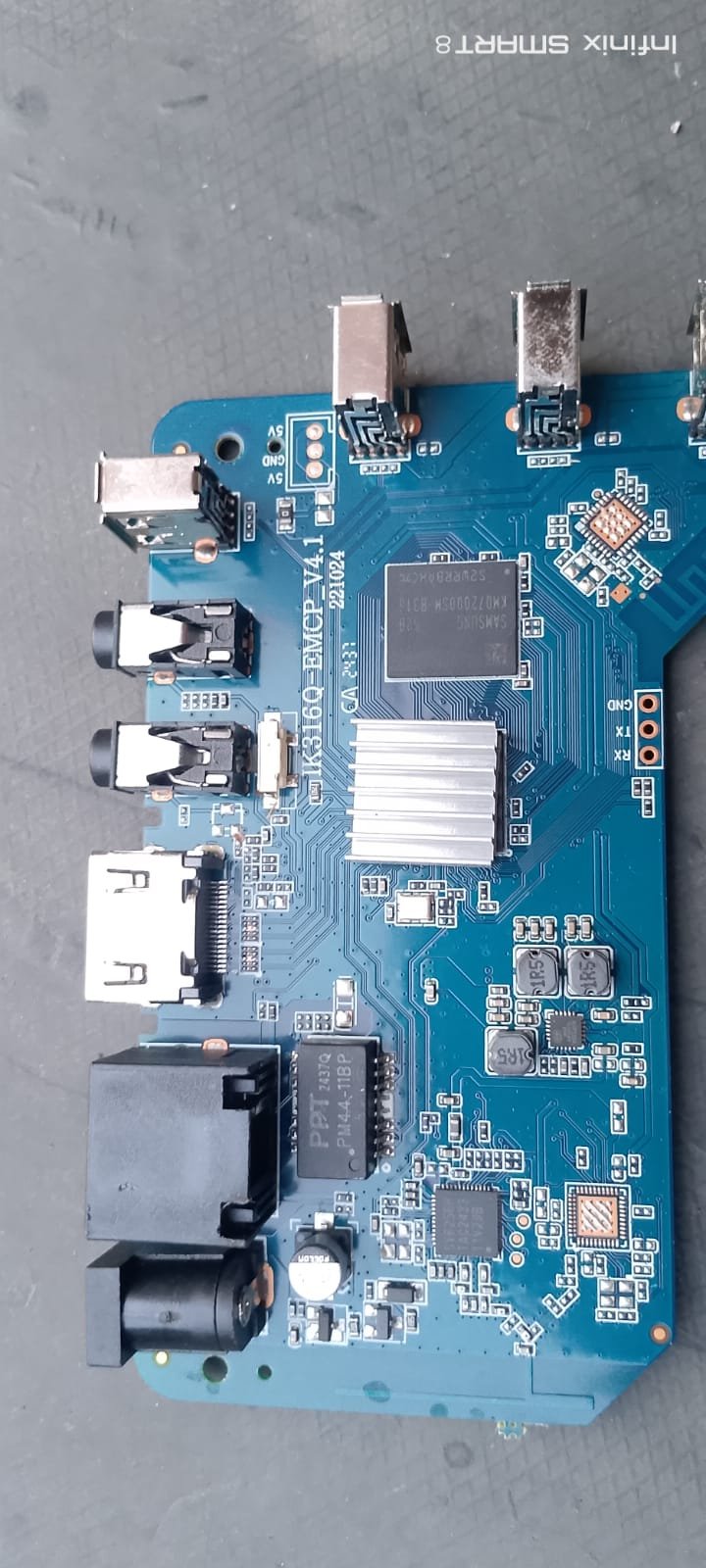
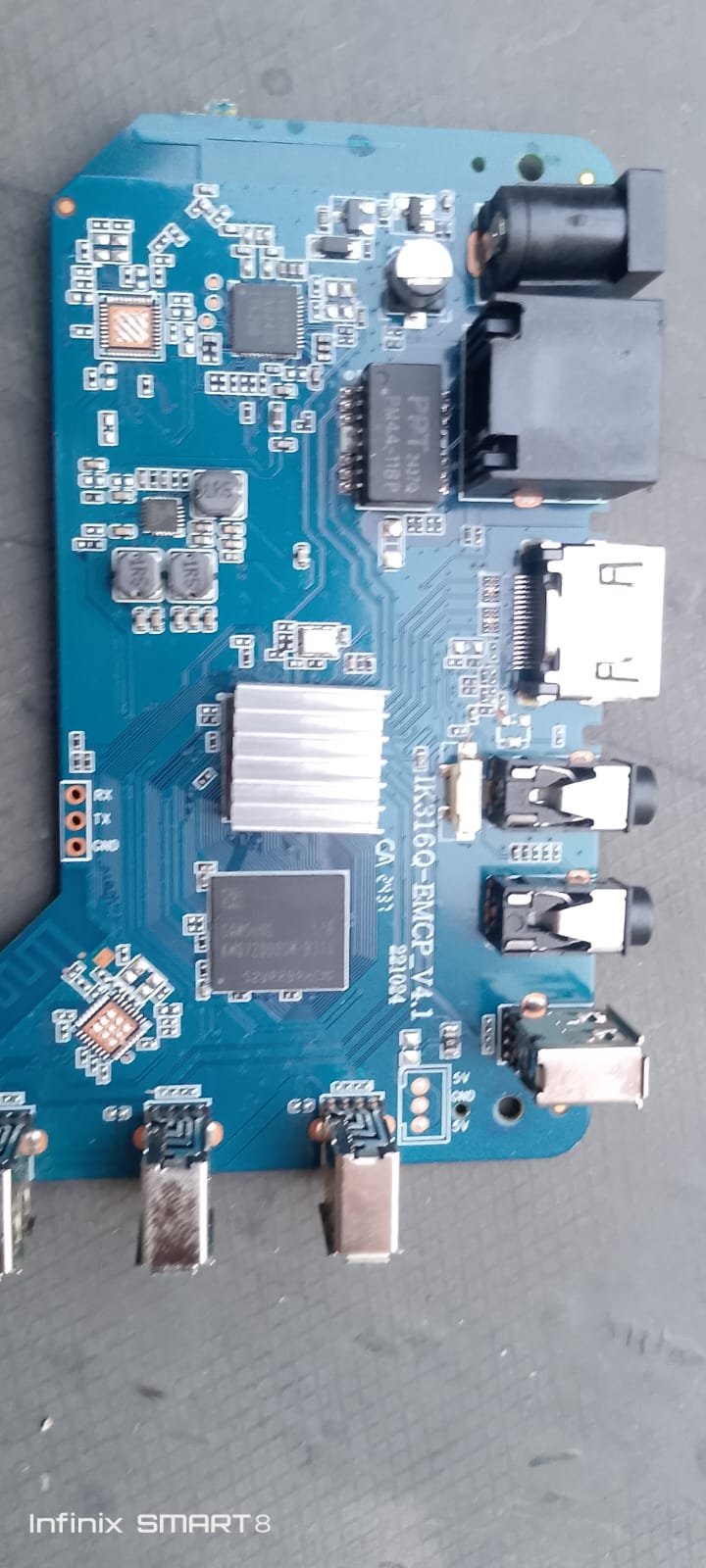
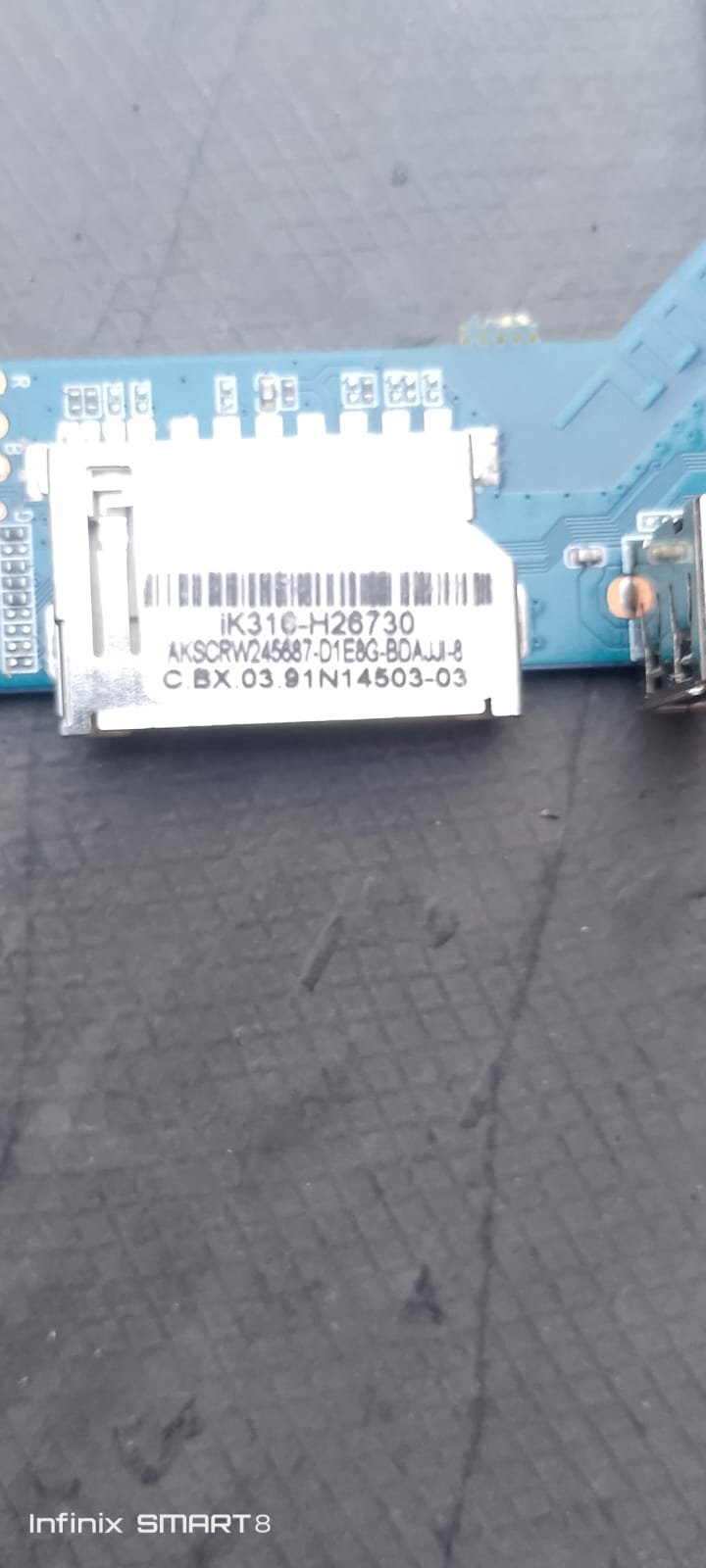
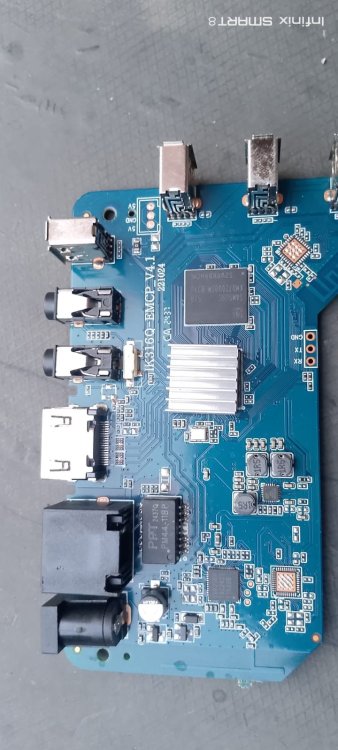
please help me I need firmware STB MXQPRO 4K 5G ADVANCE mainbord type IK316Q-EMCP_V4.1 221024.send me FW as the same board please,i need install for android tv.and tool I'have as I flash for 8 firmware while I install program full after reboot or shutdown then start again my stb did'nt start to menu.Thank's Best Regard brothers,.jpeg.40b0d79a49f98e9c83a5e45df94ee1ca.jpeg)
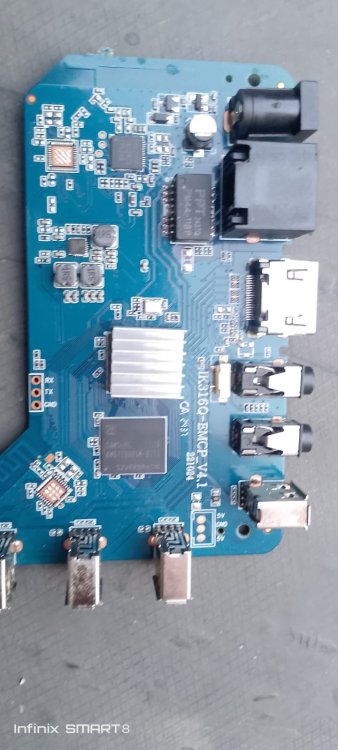
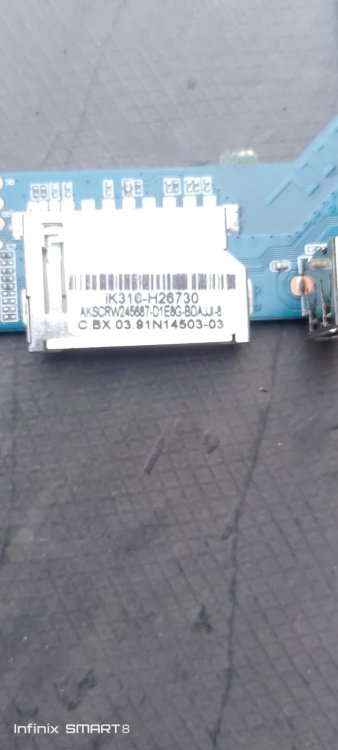
-

Gaming experience with Orange Pi 5 (RK3588) on Armbian
KhanhDTP replied to KhanhDTP's topic in Orange Pi 5
@Alex Ling Yeah, I hope it will boost the performance or compatibility even more. -
I don't have this device so I can only give generic advice. Set verbosity to 7 in /boot/armbianEnv.txt to get more details besides this unhandled SMC message. From what I've read over the years is that this device seems quite fragile and has lots of quirks in to get it halfway decently running. It would be not uncommon that (on first glance unrelated) upstream changes break something.