Active threads
Showing topics posted in for the last 365 days.
- Past hour
-

Super console cube X3 seems can't boot.
SteeMan replied to gnutux landia's topic in Amlogic CPU Boxes
At this point you seem to have done everything properly. The next step would be to find the uart connection point on you board and hook up a usb-uart reader so you can see the debug output from uboot to see what is happening. - Today
-

How you can help test upcoming Armbian 26.02 images?
eselarm replied to Igor's topic in Advanced users - Development
Armbian_26.2.1_Bananapi_trixie_current_6.12.68_minimal.img.xz (Bananapi M1) - only power, ethernet and serial console cable connected: 1st boot and user creation all fine - network up, WAN IP shown - then connecting a SATA SSD ('hotplug'), pops up in dmesg, so recognized OK -
 some things are happening at the bleeding edge https://lore.kernel.org/u-boot/?q=a733 pay attention to u-boot, the most important thing are dram controller, pmic, mmc/sd etc then of course kernel as well https://lore.kernel.org/linux-sunxi/?q=a733
 -
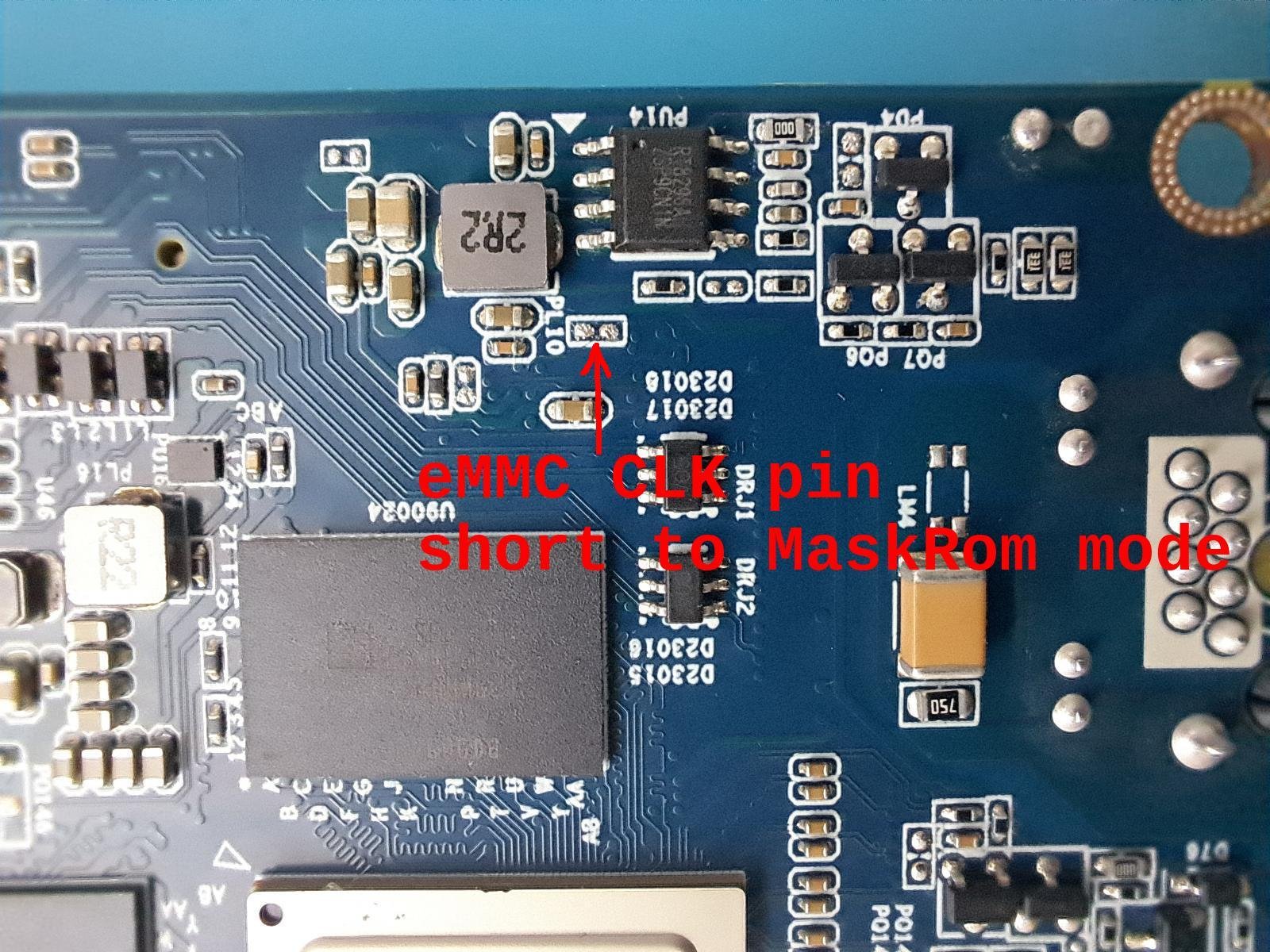
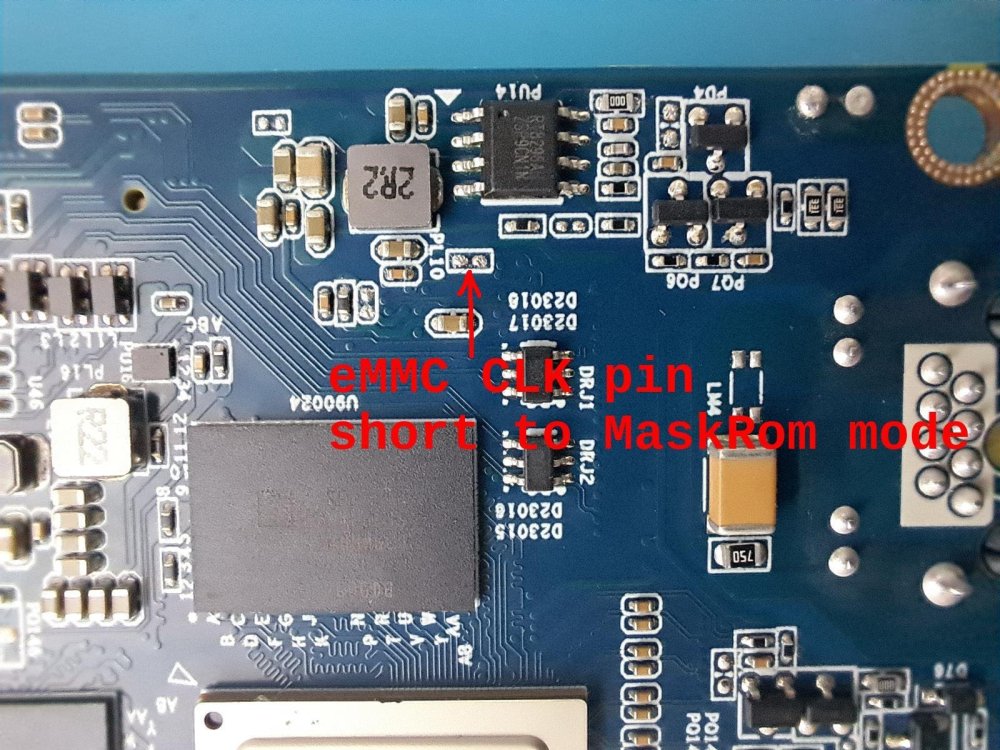
Take some time but I was able to identify the CLK pin. Shorting the marked pins (CLK and GND in this case) was able to switch MaskRom mode. Note: in early boot stages the eMMC CLK only working in legacy mode (24Mhz).
-
Sorry in advance, but this is a bit of a dive. But, I haven't seen this fully captured and explained anywhere, and think this would be a useful thing to know for anyone who's doing arm64 development on a PC, which seems very relevant here ... I started pulling this thread when moving some software from Ubuntu Jammy to Noble, where the arm64 build process went from 20 mins to 50 mins. When I was done, it below to 15 min, and all I did was poke some flags for qemu's emulated CPU. The TL;DR version is that setting the environment variable QEMU_CPU to something like "cortex-a53" or "max,pauth-impdef=on" or even what I settled on, "max,pauth=off" saves massive amounts of time, and should be used anywhere you are running debootstrap, apt, or python in an emulated environment. However, you can't blindly set it everywhere because these flags are not defined for other architectures and will cause a hard stop when emulating PC or RISC-V. This has also shown up in the Armbian Build System. If you want to see this first hand, use the example here. Just save the following in test.sh: echo -n "testing... " for i in $(seq 2 10000); do is_prime=1 j=2 while ((j*j <= i)); do if (( i % j == 0)); then is_prime=0 break fi ((j++)) done if (( is_prime == 1 )); then echo $i > /dev/null fi done echo "done" And then run it in docker after ensuring a few things are installed ... ~ $ sudo apt install binfmt-support qemu-user-static ~ $ time docker run --rm -it --platform linux/arm64 -v .:/test ubuntu:noble /test/test.sh testing... done real 0m37.620s user 0m0.013s sys 0m0.022s ~ $ time docker run --rm -it --platform linux/arm64 -v .:/test ubuntu:jammy /test/test.sh testing... done real 0m4.700s user 0m0.011s sys 0m0.023s And we can wrestle that performance back by fiddling with QEMU flags ... ~ $ time docker run --rm -it --platform linux/arm64 -v .:/test --env QEMU_CPU=max,pauth=off ubuntu:noble /test/test.sh testing... done real 0m4.694s user 0m0.011s sys 0m0.024s So qemu bug? Not quite. The qemu emulator is a host application, and is the same both jammy and noble docker images, and I think the root cause was found here, and first appears in Ubuntu Lunar (23.10). The short version looks like gcc's stack protection logic wasn't operating as expected as the stack layout is a little different than it is on PC, a CVE was filed, and the "fix" is now stressing a slow code path in qemu. For the record, my heart goes out to "steev" and his slow, hours-per-bisect march to the answer. Pulling that thread a bit more, the QEMU Documentation has the following to say on the subject of arm64 pointer authentication: The qemu docs also suggest that the qemu impdef algorithm is the default, but I've not seen this on my version. It's possible this may be addressed in a much newer version of qemu, but that's not available in the Noble repos. It could be overridden via tonistiigi/binfmt (but I've not yet tested that). For what it's worth, it's not possible to just add a simple wrapper to qemu fix this either, as seen in this Github Example, and that's due to the Linux Kernel Binfmt Interface. The 'F' flag forces the kernel to store a handle to the specified emulator, and make it available in chroot and Docker contexts, and that doesn't help if it's only the wrapper it grabs and not the emulator binary. Similarly, it's not possible to pass additional flags via this interface, so without a change to the qemu binary, the QEMU_CPU environment variable may be the only way to work around this immediately. The other curious bit is what does QEMU_CPU=cortex-a53 enable to recover qemu speed? The answer is absolutely nothing. it just turns CPU features off. At a glance, I'm not sure if that something qemu is doing indirectly, or glibc conditionally enables at runtime. If anyone knows better than I here, please drop a comment. The curious can check can via: ~ $ docker run --rm -it --platform linux/arm64 ubuntu:noble cat /proc/cpuinfo processor : 0 model name : ARMv8 Processor rev 0 (v8l) BogoMIPS : 100.00 Features : fp asimd aes pmull sha1 sha2 crc32 atomics fphp asimdhp cpuid asimdrdm jscvt fcma lrcpc dcpop sha3 sm3 sm4 asimddp sha512 sve asimdfhm dit uscat ilrcpc flagm sb paca pacg dcpodp sve2 sveaes svepmull svebitperm svesha3 svesm4 flagm2 frint svei8mm svef32mm svef64mm svebf16 i8mm bf16 rng bti mte mte3 sme smei16i64 smef64f64 smei8i32 smef16f32 smeb16f32 smef32f32 smefa64 mops hbc CPU implementer : 0x00 CPU architecture: 8 CPU variant : 0x0 CPU part : 0x051 CPU revision : 0 ~ $ docker run --rm -it --platform linux/arm64 --env QEMU_CPU=cortex-a53 ubuntu:noble cat /proc/cpuinfo processor : 0 model name : ARMv8 Processor rev 4 (v8l) BogoMIPS : 100.00 Features : fp asimd aes pmull sha1 sha2 crc32 cpuid CPU implementer : 0x41 CPU architecture: 8 CPU variant : 0x0 CPU part : 0xd03 CPU revision : 4
-

Have Armbian for Tanix TX1 QHZIW_H313_TX1_EMCP_V2.0?
Nick A replied to Lesano's topic in Allwinner CPU Boxes
@billymore I was able to detect my transpeed box using the toothpick trick. Here are some links that might help figure it out. Maybe even going on irc and asking the sunxi guys. https://oftc.catirclogs.org/linux-sunxi/search?q=tx1 https://groups.google.com/g/linux-sunxi/c/OrktE3duFDA -

how install armbian or miniarch in tv box Tanix tx1 mini
billymore replied to Info Zap's topic in Allwinner CPU Boxes
Hello, I'm stuck as well. I tried to boot on different version of Armbian made for H313 (X96Q) but without success (burning image on USB drive, booting with AV FEL button pressed during boot). LED remains RED and no booting. I tried miniarch. I tried to enter fel mode via USB and Debian virtual Machine witout succcess (the TX1 does not appear as USB peripheral during my USB FEL attempts). -
Thank you OP, I used HeliOS64 for a long time until it started to get disconnected after few hours of use that that was annoying. And so I stopped using it. I have just started using Claude-code. I am missing a remote backup solution. Claude-code gave me encouragement to revive it. I got directed to https://www.armbian.com/helios64/ to download, the only issue I found was that initially my 2.5Gbe worked and then after reboot stopped. Cloud code help me get that fixed. Below is what got it working again: # Step 1: Enable 2.5GbE (then reboot) echo "overlays=rk3399-pcie-gen2" | sudo tee -a /boot/armbianEnv.txt sudo reboot # Step 2: Install driver & Tailscale sudo apt update && sudo apt install -y build-essential dkms git linux-headers-current-rockchip64 cd /usr/src && sudo git clone https://github.com/awesometic/realtek-r8125-dkms.git r8125-9.013.02 cd r8125-9.013.02 && sudo ./dkms-install.sh Best of luck
-
 Yes running on gnome-wayland session. jfl@orangepi5-plus:~$ apt list labwc Listing... Done labwc/noble 0.7.1-1build1 arm64
 - Yesterday
-
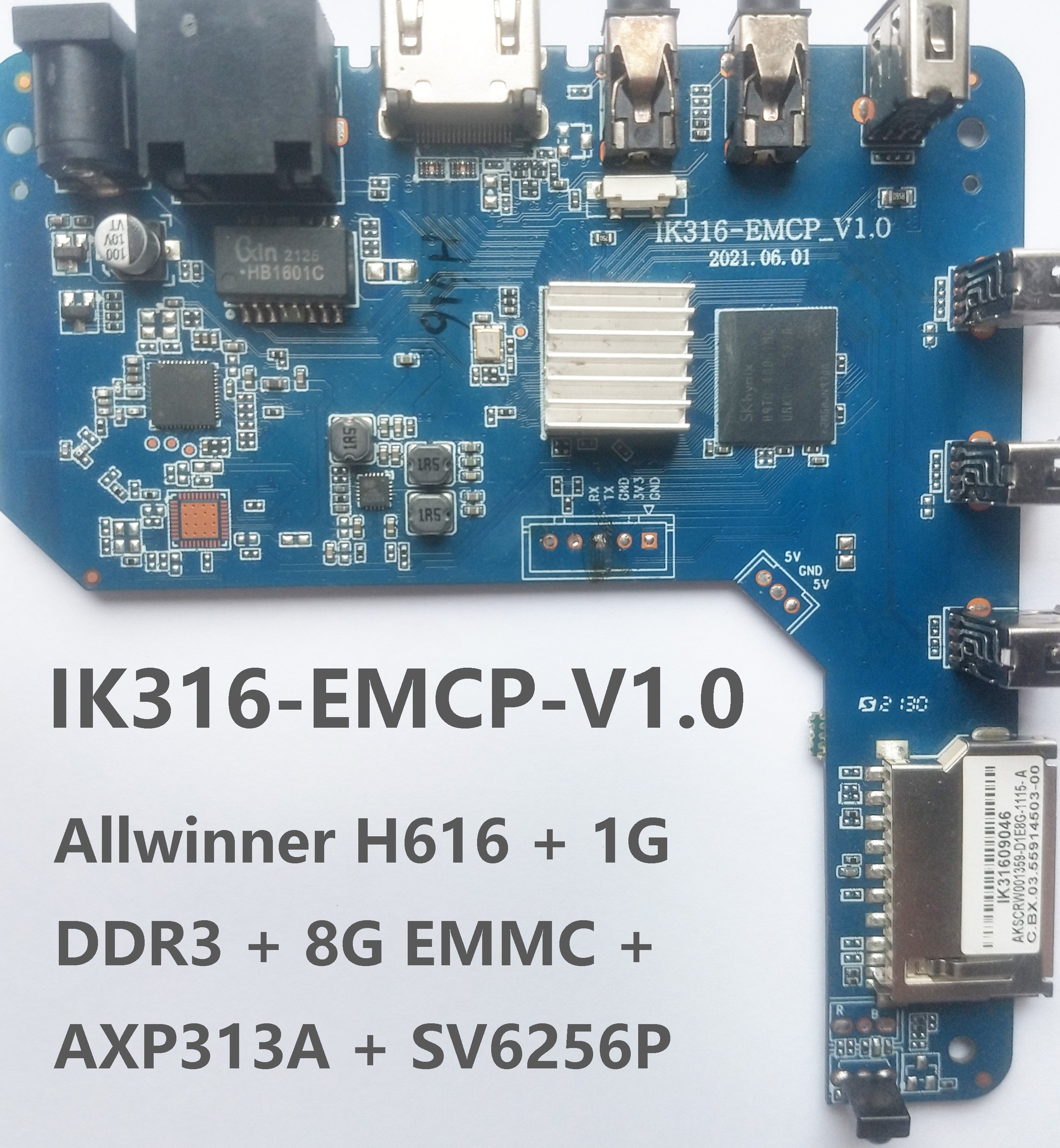
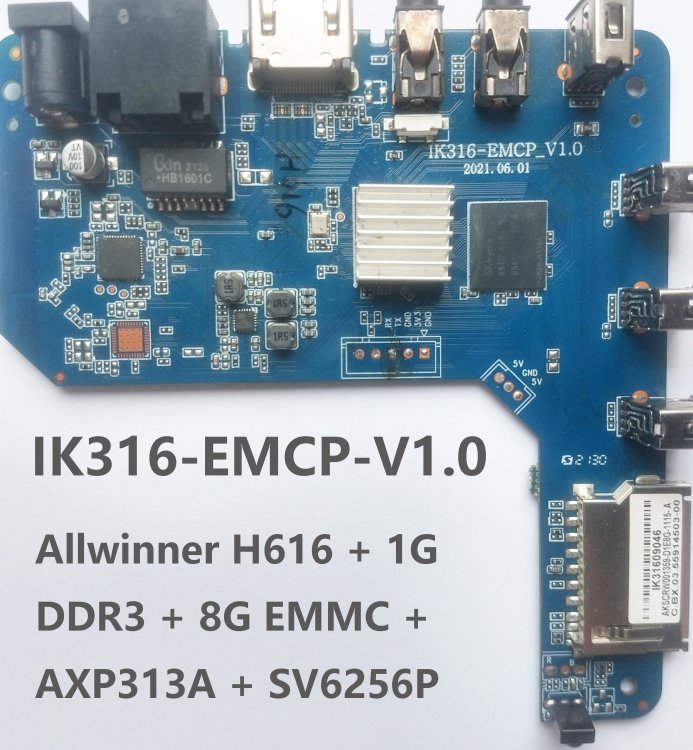
@Nick A Thank you for your excellent work! I managed to compile it myself and shared it with someone who has the same board (IK316-EMCP_V1.0). 1. Changed kernel preemption mode from full preemption to voluntary preemption. 2. Added MediaTek Wi-Fi drivers (MT7601U etc). 3. Embedded kernel headers. https://github.com/cdhigh/armbian_build/releases/tag/v20250306
-
Hello Orima, Thank you for asking. I am doing well. I've been mainly distracted by an online drawing class. I will try to make a complete written guide in the weekend. It will be a new project in my github, and I will make a new thread here.
-

Armbian Linux v6.1 - Bluetooth not working - no BT controller found
SM2027 replied to SM2027's topic in Banana Pi M7
i had to do it on my own, no worries but it surprised me about it. -

[Latest] Armbian Build HDMI Audio support Fix
Hackerman replied to just_facking_about's topic in Radxa Dragon Q6A
This recipe does not work for me. Could you please explain in more detail which exact Armbian image you are using and what exactly needs to be done to get the sound working? -
I have been testing the R2S extensively. The 1GbE is very stable, but the 2.5GbE drops frequently. I do not have debug logs yet but it is something I need to analyze. I also have a wireless AP running on the R2S. Performance is poor: 1GbE WAN connection, but I am getting only 20Mbps throughput but it is stable.
-
@Brow Mosh Have you tried extracting your arndroid dts to find the gpio settings for emmc? The only other thing I can suggest at this point is trying mainline U-Boot booted over USB (FEL). Booting mainline U-Boot via FEL completely bypasses SD.
-
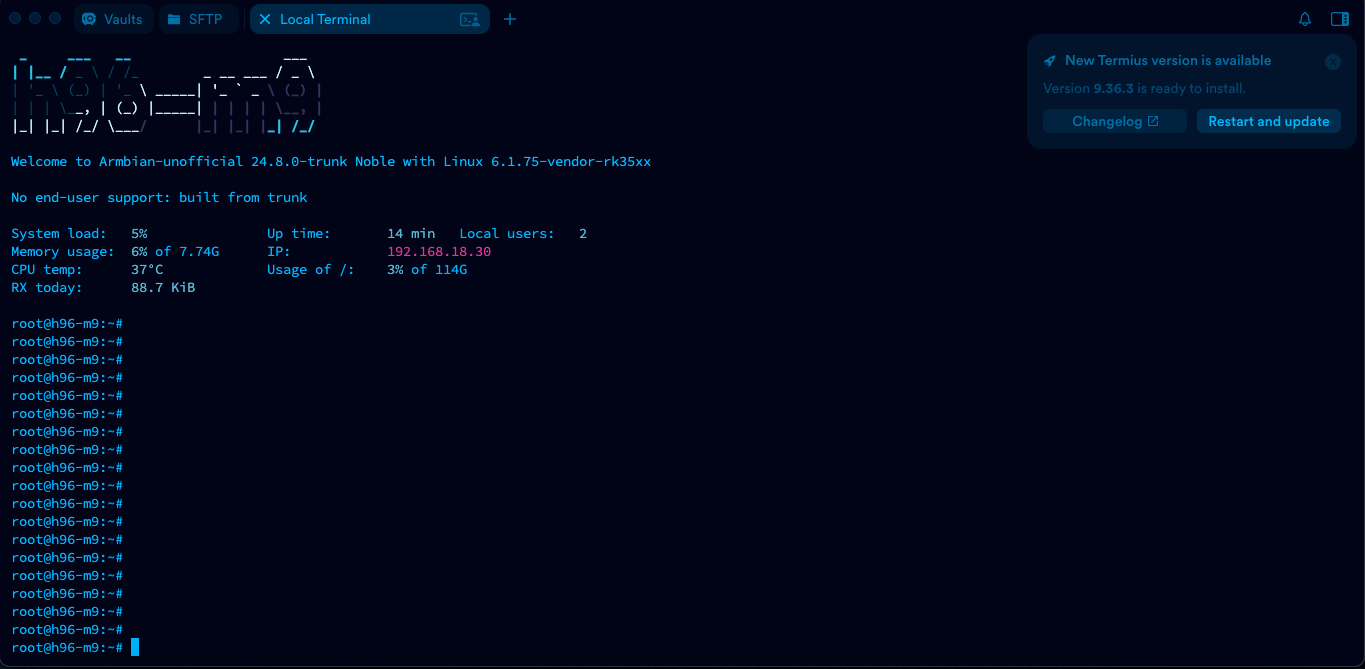
 Thank you all... I was able to install Armbian on the H96 Max M9 thanks to all of your help.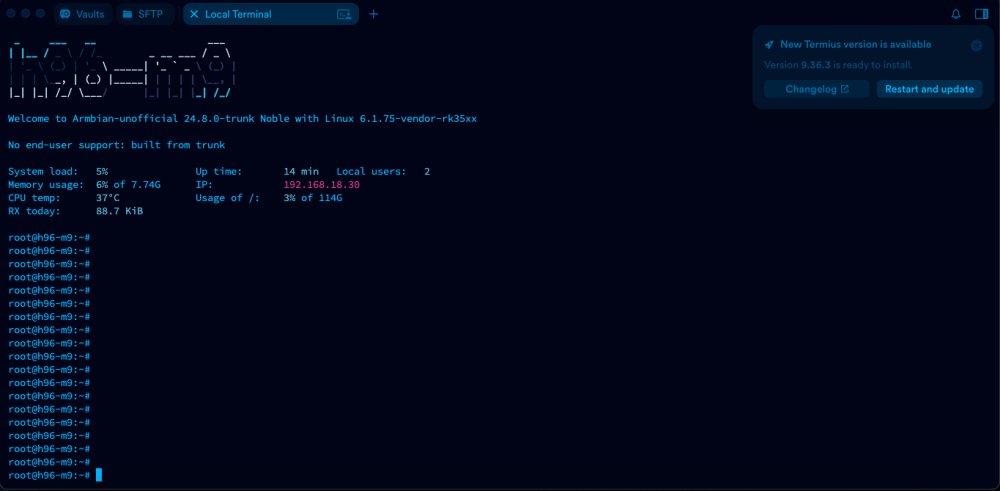
-
@Bones558 Try these images. No boot splash on a7z yet. I'll look into it when I have time. https://github.com/NickAlilovic/build/releases/tag/Radxa-a7a-a7z-v0.6
-
 I wonder if a port is possible and/or feasible, if it is, where can I check? I tried searching on documentations for a guide on how to start a port, but couldn't find anything. If I remember correctly, xiaomi-elish hardware is very related to xiaomi-alioth, to the point of some of the code for PMOS being shared, obviously each hardware has it's quirks but, I think it's possible, i do have the device for testing, and I have some knowledge of programming, but I can learn more in the process.
 -
http://blog.armbian.com/content/images/2026/02/githubhighlights-2.webpThis week’s Armbian development saw significant progress across multiple areas, including desktop environment enhancements, kernel updates, and expanded hardware support. Notable changes include the addition of GNOME desktop options, improvements to XFCE organization, and updates to U-Boot for several boards. The team introduced new board images and logos, refined Docker automation and documentation, and standardized numerous software modules for better maintainability. Kernel advancements featured bumps to 6.19-rc8, integration of ZFS v2.4.0, and targeted fixes for Rockchip and Odroid platforms. Community governance and build processes were also strengthened, alongside the deprecation of Matrix and OFTC chat utilities. These updates collectively improve user experience, system stability, and future development agility. Add community governance and improve documentation. by @igorpecovnik in armbian/armbian.github.io#197Add DESKTOP_APPGROUPS_SELECTED to stable XFCE desktop target. by @igorpecovnik in armbian/armbian.github.io#198Add documentation for ARMBIAN_DOCKER_AUTO_PULL build switch. by @igorpecovnik in armbian/documentation#865Add GNOME desktop and reorganize XFCE in stable targets. by @igorpecovnik in armbian/armbian.github.io#199Add Khadas Mind, Minisiforum logo and Orangepi 6 Plus. by @igorpecovnik in armbian/armbian.github.io#203Add manual append for standard UEFI images. by @igorpecovnik in armbian/armbian.github.io#204Add zfs-zed to GLOB pattern in ZFS configs. by @igorpecovnik in armbian/os#426armbian-kernel: add AMD DC support for UEFI boards. by @igorpecovnik in armbian/build#9324armbianmonitor: fix error message at the end of every report. by @EvilOlaf in armbian/build#9325bcm2711 Family: Remove post_family_tweaks_bsp__rpi_firmware func. by @pyavitz in armbian/build#9331Board images for Orange Pi RV2 and Orange Pi R2S. by @sven-ola in armbian/armbian.github.io#201Bump BesTV R3300-L U-Boot. by @retro98boy in armbian/build#9303Bump CAINIAO CNIoT-CORE U-Boot. by @retro98boy in armbian/build#9304Chat utilities: remove missing package. by @igorpecovnik in armbian/build#9334ci: run all unit tests on schedule and main branch workflow_dispatch. by @igorpecovnik in armbian/configng#727clang: enable colored diagnostic output for kernel compilation. by @iav in armbian/build#9310Deprecate Matrix. by @EvilOlaf in armbian/build#9318Deprecate OFTC and matrix. by @EvilOlaf in armbian/documentation#872docker: add automatic image pull cronjob and cleanup system. by @igorpecovnik in armbian/build#9265feat: add reusable board definitions to image JSON generator. by @igorpecovnik in armbian/armbian.github.io#202Fix missing Cinnamon menu by removing outdated Cinnamon menu applet blob.. by @schwar3kat in armbian/build#9300fix(software): correct stderr redirection placement in docker commands. by @igorpecovnik in armbian/configng#746fix(software): fix netdata module issues and add test cleanup. by @igorpecovnik in armbian/configng#747fix: motd: handle empty temperature values in printf. by @igorpecovnik in armbian/build#9296followup #9164 2ba0766 - add ubuntu resolute,questing to optional-cli. by @iav in armbian/build#9320forge1: switch to RK3506J variant and add OPTEE support. by @igorpecovnik in armbian/build#9326json: add kernel_version field to images output. by @igorpecovnik in armbian/armbian.github.io#206Kernels 6.18 needs ZFS v2.4.0. by @igorpecovnik in armbian/os#425mainline-kernel: bump 6.19 to 6.19-rc8. by @rpardini in armbian/build#9332mainline: bump to 6.19-rc7. by @EvilOlaf in armbian/build#9294networking: relax networkd-wait-online to avoid multi-NIC timeouts. by @igorpecovnik in armbian/build#9311Odroid XU4: remove upstreamed patches. by @igorpecovnik in armbian/build#9306odroidm1: u-boot v2026.01 + kernel fix for ethernet. by @rpardini in armbian/build#9333OrangePi 3 LTS: Update U-Boot to v2026.01 and Linux DTS "and other fixups". by @pyavitz in armbian/build#9323Re-enable build targets after fixing their assembly. by @igorpecovnik in armbian/armbian.github.io#200refactor(docker): use upstream docker-ce for bookworm, distro for others. by @igorpecovnik in armbian/configng#726refactor(immich): standardize module and update postgres interface. by @igorpecovnik in armbian/configng#733refactor(network): standardize modules and add hidden WiFi support. by @igorpecovnik in armbian/configng#739refactor(pihole): standardize module with docker.io and improve detection. by @igorpecovnik in armbian/configng#734refactor(software): move docker check to install command. by @igorpecovnik in armbian/configng#738refactor(software): standardize 33 docker modules with modern patterns. by @igorpecovnik in armbian/configng#736refactor(system): harden armbian_firmware module with standard conventions. by @igorpecovnik in armbian/configng#744refactor(system): standardize headers and ZFS modules with improved hardening. by @igorpecovnik in armbian/configng#742refactor(wireguard): consolidate status checks and simplify module interface. by @igorpecovnik in armbian/configng#731refactor: standardize ghost and mysql docker modules. by @igorpecovnik in armbian/configng#728Resolving boot issues. by @rvdr in armbian/build#9329Rockchip 6.19: drop upstreamed patches. by @igorpecovnik in armbian/build#9309rockchip/64: import mainlined patch to fix gpio . by @paolosabatino in armbian/build#9328rockchip64-6.18: fix helios64 pcie patch. by @igorpecovnik in armbian/build#9315rockchip64-current: rewrite patches. by @EvilOlaf in armbian/build#9313rockchip64-current: rewrite patches due to upstream changes in 6.18.8. by @EvilOlaf in armbian/build#9319rockchip64: fix clang build error. by @paolosabatino in armbian/build#9307rockchip: fix gpio-ir-recv stack dumps, other minor fixes. by @paolosabatino in armbian/build#9317SMART AM40: Bump U-Boot. by @retro98boy in armbian/build#9302sun55i aftercare. by @EvilOlaf in armbian/build#9321sunxi a523: Adding support for PCIe, SPI Flash and Iommu. by @rvdr in armbian/build#9280sunxi: drop unneeded patches. by @EvilOlaf in armbian/build#9312targets: change community builds from forky to trixie. by @igorpecovnik in armbian/armbian.github.io#207Update header level for Pi-hole Explained section. by @igorpecovnik in armbian/configng#748Update odroidxu4-current to 6.6.122. by @belegdol in armbian/build#9322Update sm8250 current kernel config. by @retro98boy in armbian/build#9292Use EDGE branches for Orangepi 6 and Minisforum R1S. by @igorpecovnik in armbian/armbian.github.io#205uwe5622: fix compilation with clang on Linux 6.19. by @iav in armbian/build#9314[RFC] qcs6490: fix patched dtb not compiled. by @amazingfate in [#9301](https://github....View the full article
-

Gaming experience with Orange Pi 5 (RK3588) on Armbian
KhanhDTP replied to KhanhDTP's topic in Orange Pi 5
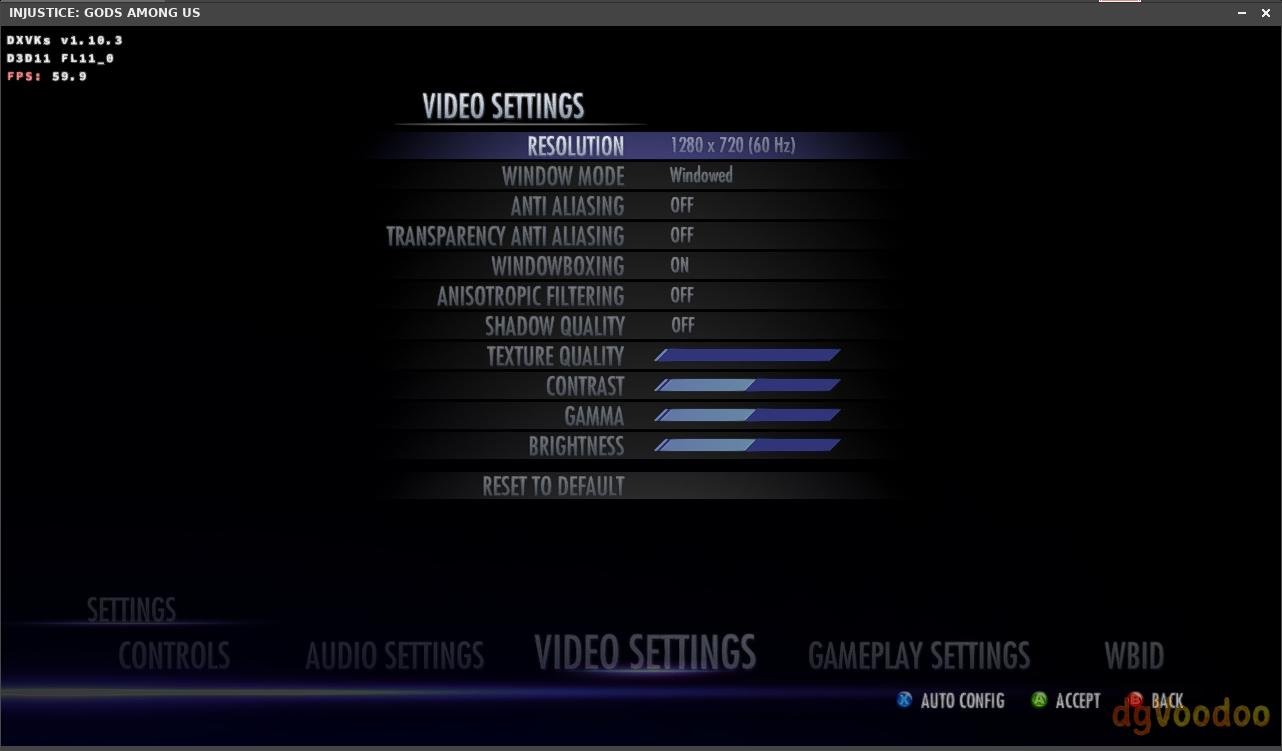
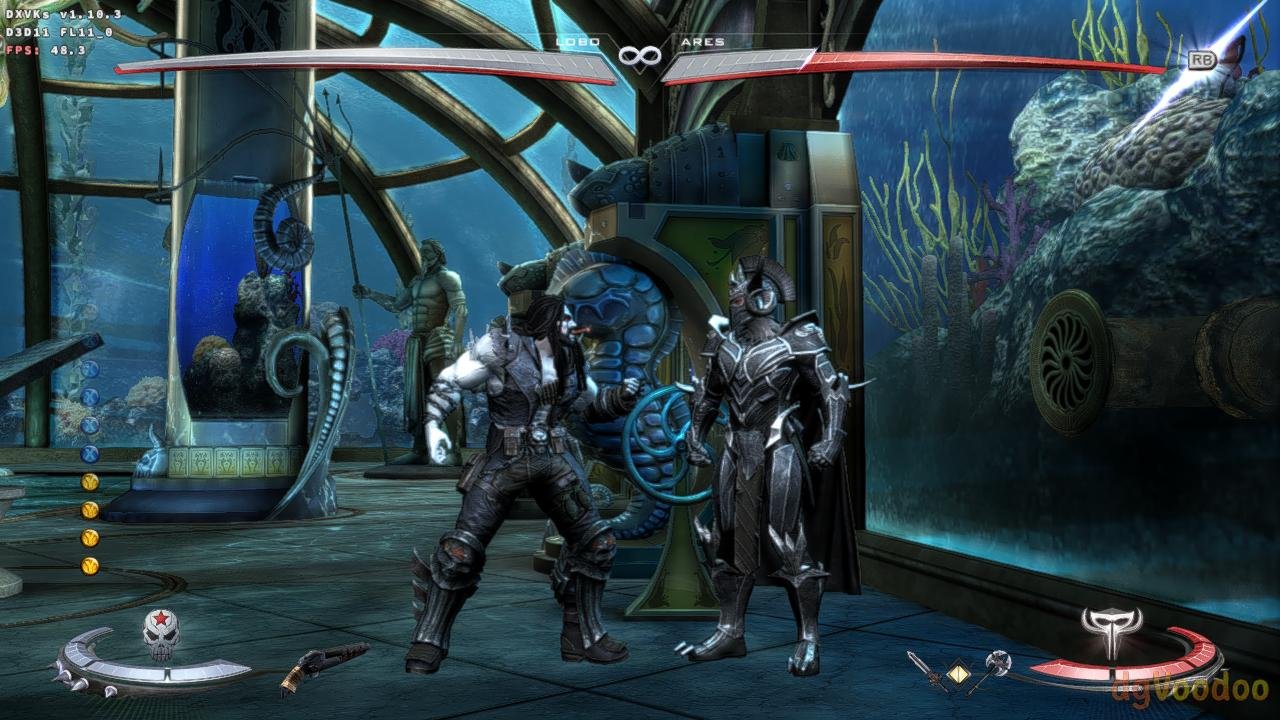
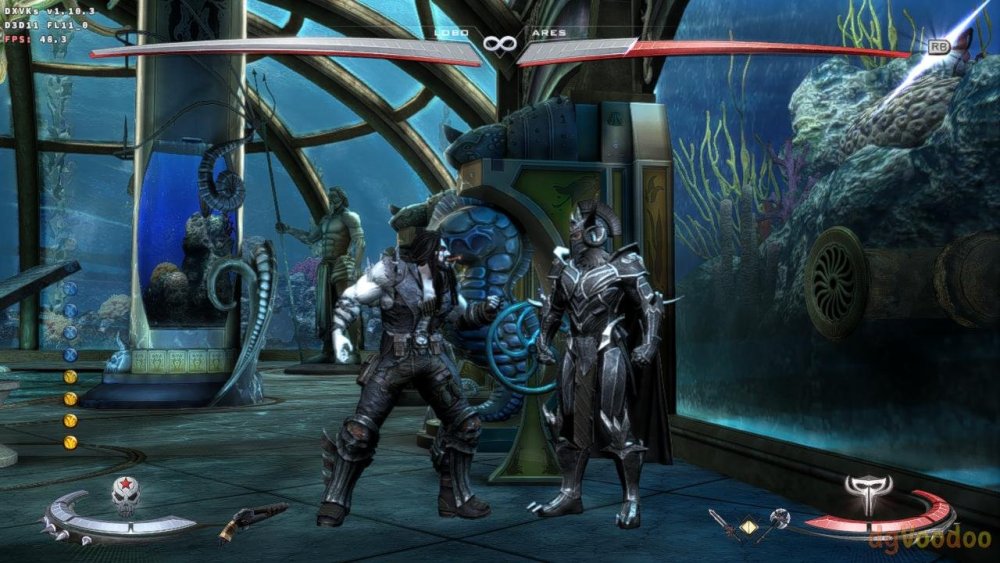
Armbian 25.11.2 Noble XFCE (BSP Kernel: 6.1.115) + PanVk - mesa 26.0 (https://launchpad.net/~ernstp/+archive/ubuntu/mesaaco) + Box64 arm64 v0.4.1 652da4fbc (https://ryanfortner.github.io/box64-debs/) + proton-10.0-4-amd64-wow64 (https://github.com/Kron4ek/Wine-Builds/releases/download/proton-10.0-4/wine-proton-10.0-4-amd64-wow64.tar.xz) + DXVK-stripped v1.10.3 ~50fps@720p (low settings) box64 environment variables: Injustice Gods Among Us Ultimate Edition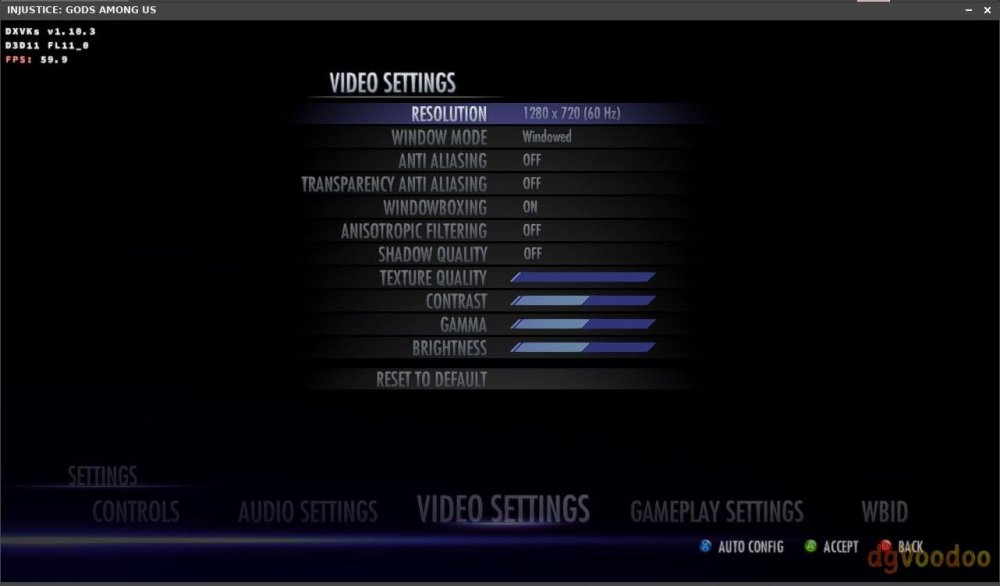

- Last week
-
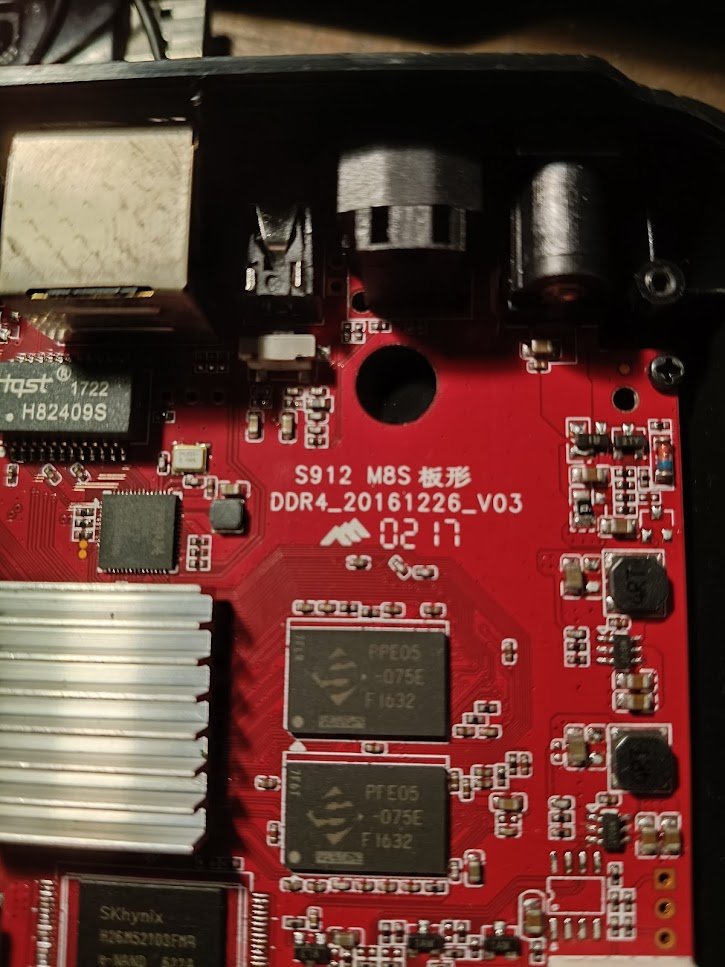
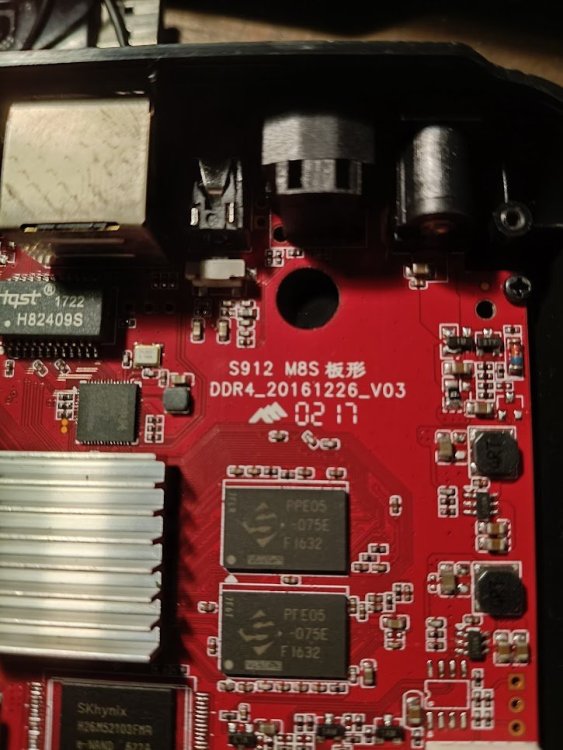
Hello, I have some troubles with this TVBOX: it runs armbian and other distros correctly, using the meson-gxm-t95z-plus.dtb but sometimes wifi goes into kernel panic at boot, and when it does, the whole system becomes unstable (i.e. not rebooting, eth0 hangs...). I have extracted the original .DTB from the only firmware that exists for this box, the ancient 6.0 Marshmellow Android (I guess it's a 3.x kernel...). I attach it to this message hoping someone more expert than me can help in making it work ina more stable manner. I attach a picture of the board also, it reads "M8S". Box has 2GB ram and 16GB eMMC, brcmfmac wifi/bt and ZTE PHY chip. meson1.dtb
-
UPDATE: Serial Logs and GPT Signature Error on RK3229 (Kingston eMCP) Hi everyone, Following up on my previous post about the "Red LED" issue with my RK3228A (Kingston eMCP) box. I managed to hook up an ESP32-S3 as a USB-to-Serial bridge to see what’s happening under the hood. The box is communicating at 1,500,000 baud. Here is the log I captured when trying to boot the Multitool from the SD card: Secure read PBA: 0xc04 Secure read PBA: 0x1004 Secure read PBA: 0x1404 Secure read PBA: 0x1804 Secure read PBA: 0x1c04 SecureInit ret = 0, SecureMode = 0 atags_set_bootdev: ret:(0) GPT 0x631442f0 signature is wrong recovery gpt... GPT 0x631442f0 signature is wrong recovery gpt fail! LOADER Check OK! 0x2000, 735748 TOS Check OK! 0x4000, 804945 Enter Trust OS INF [0x0] TEE-CORE:init_primary_helper:377: Initializing (1.1.0-333-gc9d95d1 #2 2018年 08月 17日 星期五 03:32:22 UTC arm) INF [0x0] TEE-CORE:init_primary_helper:378: Release version: 2.0 INF [0x0] TEE-CORE:init_primary_helper:379: Next entry point address: 0x61000000 It seems the bootloader initializes the RAM and Trust OS correctly, but then it hits a GPT signature is wrong error and the recovery fails. This happens right before the kernel should start loading. I have already tried two different SD cards (16GB Lexar and 8GB Generic) with the same result. Given these logs, what should be my next steps?
-
I think the onboard fan is not being controlled correctly. root@rock5b01:~# dmesg | grep -i fan [ 6.577344] pwm-fan pwm-fan: Looking up fan-supply from device tree [ 6.577352] pwm-fan pwm-fan: Looking up fan-supply property in node /pwm-fan failed [ 6.581563] thermal_sys: Failed to bind 'soc-thermal' with 'pwm-fan': -22 [ 6.581571] thermal_sys: Failed to bind 'soc-thermal' with 'pwm-fan': -22 [ 6.581574] thermal_sys: Failed to bind 'soc-thermal' with 'pwm-fan': -22 [ 6.581577] thermal_sys: Failed to bind 'soc-thermal' with 'pwm-fan': -22 Running: Armbian v25.11.2 for Rock 5B running Armbian Linux 6.1.115-vendor-rk35xx
-
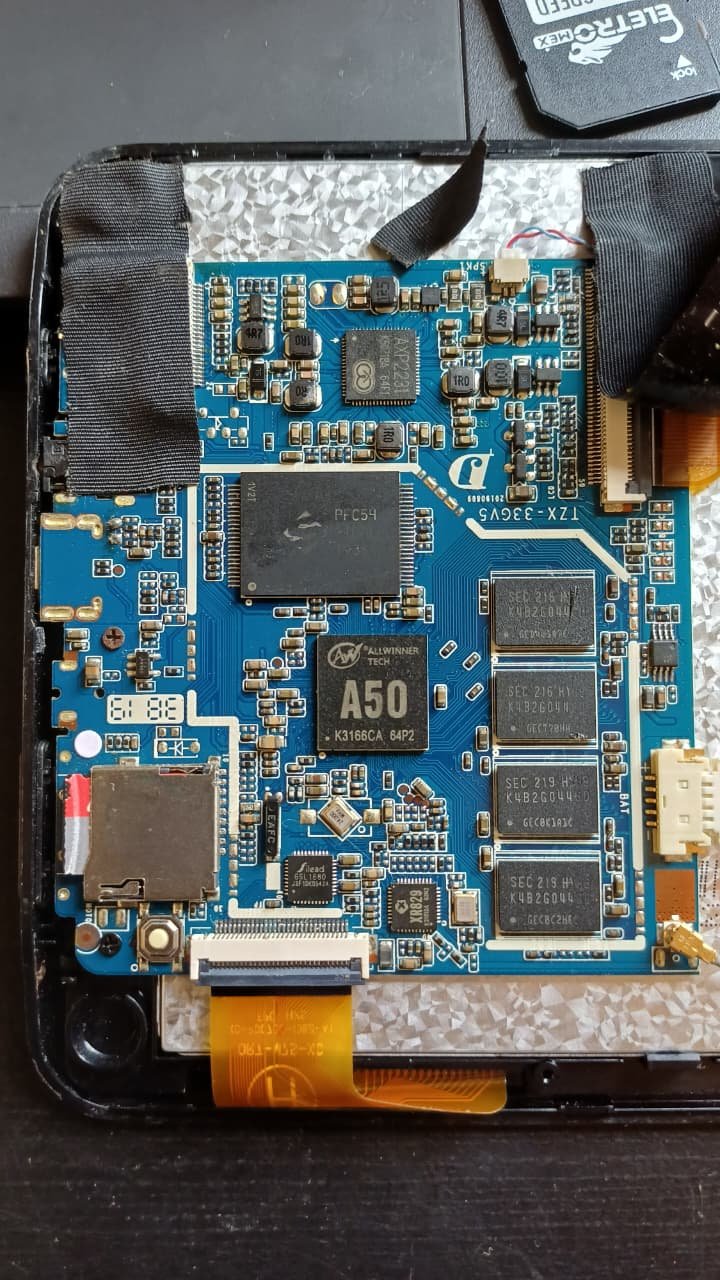
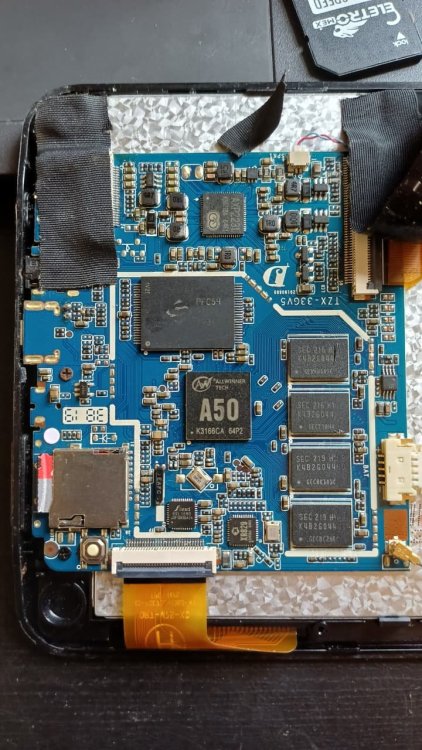
Hi everyone, I have a Multilaser tablet with the Allwinner A50 chip and I wanted to compile a DTB file for it, so I could boot Armbian, but I haven't found anything on the internet about PIN MAP or anyone who has worked with this chip. Also, it already has an unlocked bootloader. I really wanted to do a project with this tablet, as I'm a student at the Federal Institute and it would be a great project!
-
I managed to get some USB-C functionality back by adding a device tree overlay. cat odroid-usbc-fix.dts /dts-v1/; /plugin/; /* 1. Force the USB controller into Host mode */ &{/usb@fc000000} { dr_mode = "host"; status = "okay"; /delete-property/ usb-role-switch; /delete-node/ port; }; /* 2. Target the specific USB3 Type-C regulator by its absolute path */ &{/regulator-5v0-vcc-usb3-typec} { regulator-always-on; regulator-boot-on; status = "okay"; }; /* 3. Target the USB3 Host regulator by its absolute path */ &{/regulator-5v0-vcc-usb3-host} { regulator-always-on; regulator-boot-on; status = "okay"; }; However this disables OTG and devices with strict udev switching timing requirements fail to switch. So my QHY CCD camera is correctly detected as a westbridge device and udev / fxload commences loading the firmware but the power to the device is toggled and the firmware load fails as a result. If I plug the QHY CCD in to the USB-C port via a powered USB-C hub then everything works fine. This works because the HUB is providing constant power. So there appears to be a lot of difference between the Radxa USB-C and Odroid USB-C implementation that will need someone better at kernel stuff than me.