Active threads
Showing topics posted in for the last 365 days.
- Past hour
-

install bookworm 6.6.63 on x96q pro+ h728
San Dich Huu replied to hamidreza h's topic in Allwinner CPU Boxes
Yes, the device is working now. Check the forum manjaro, they put kernel from sunxi and working now. - Today
-

H96 Max RK3528 - Cannot boot Armbian from TF/SD card
epost.deb replied to 0KTAV1US's topic in Rockchip CPU Boxes
@jock Is it possible to dump BOOTROM from Linux, or is it hidden/shadowed by ATF ? There is RK3399 dumper code at github, so i am wondering if the same can be done on RK3528. -
Note: This is for Odroid m1s, not Odroid m1 - there just isn't a forum for the m1s (yet?) When I tried to start the board with the community image for the Odroid m1s on a SD card, it wouldn't boot. The connected screen (HDMI) would stay black and the blue heartbeat LED would stay on permanently. I tried building and flashing u-boot but that didn't help me. Here's what DID work: (Note: it worked for me. I can't guarantee that this fixes it for everyone, use at your own risk) I mounted the SD card on a Linux desktop and created backups of the boot scripts (just to be safe) sudo cp <mount_path>/armbi_root/boot/boot.cmd <mount_path>/armbi_root/boot/boot.cmd.bak sudo cp <mount_path>/armbi_root/boot/boot.scr <mount_path>/armbi_root/boot/boot.scr.bak Then I set the load address to 0x0c000000 sudo sed -i 's/setenv load_addr "0x9000000"/setenv load_addr "0x0c000000"/' <mount_path>/armbi_root/boot/boot.cmd Then I ran mkimage as follows: sudo /usr/bin/mkimage -C none -A arm -T script -d <mount_path>/armbi_root/boot/boot.cmd <mount_path>/armbi_root/boot/boot.scr This fixed the booting, but just to be sure a future update wouldn't undo it I also wrote it to armbianEnv.txt echo "load_addr=0x0c000000" | sudo tee -a <mount_path>/armbi_root/boot/armbianEnv.txt And that's it! One more thing: I noticed that Ethernet did not work out of the box, so I did this: I attached a UART cable to log into the machine and created the following script, which patches the device tree. You might need to get a little creative if your only access would be through Ethernet, but you I'm sure you can figure something out. (Maybe create the necessary files while the SD card is still mounted on your PC) cat > /usr/local/sbin/patch-gmac-dtb.sh << 'EOF' #!/bin/bash DTB=/boot/dtb/rockchip/rk3566-odroid-m1s.dtb dtc -I dtb -O dts $DTB -o /tmp/m1s.dts 2>/dev/null # Only patch if not already applied if grep -q 'snps,reset-gpio' /tmp/m1s.dts; then echo "GMAC DTB patch already present, skipping" exit 0 fi sed -i '/phy-mode = "rgmii-id";/a \\t\tsnps,reset-gpio = <0x51 0x0f 0x01>;\n\t\tsnps,reset-active-low;\n\t\tsnps,reset-delays-us = <0x00 0x4e20 0x186a0>;' /tmp/m1s.dts sed -i '/reset-assert-us/d; /reset-deassert-us/d; /reset-gpios = <0x51/d' /tmp/m1s.dts dtc -I dts -O dtb /tmp/m1s.dts -o $DTB 2>/dev/null echo "GMAC DTB patch applied" EOF chmod +x /usr/local/sbin/patch-gmac-dtb.sh Execute the script and Ethernet should be working. (Might need a reboot, though). If this works, you should make sure this is applied after every kernel update, because it will get overwritten otherwise: # Run it automatically after kernel/dtb package updates cat > /etc/apt/apt.conf.d/99-patch-gmac-dtb << 'EOF' DPkg::Post-Invoke {"if [ -f /usr/local/sbin/patch-gmac-dtb.sh ]; then /usr/local/sbin/patch-gmac-dtb.sh; fi"}; EOF
-
Thank you! I ended up getting this working. For one, an update and reboot did get me the 6.18.10 kernel. Then, in the installation scripts for drivers, I just had to specify the package name for the headers explicitly, e.g. replacing: apt-get install linux-headers-$(uname -r) -y with apt-get install linux-headers-current-bcm2711 -y
-
 I am using a Rock 5T 12GB board and have tested multiple Armbian images (24.04, 26.04, and others). Here is my experience so far: Armbian current images Audio does not work at all. When I plug in a 3.5 mm headset, nothing happens — no detection, no sound. Bluetooth works, Wi‑Fi does not. I have to manually compile the Realtek rtw89 wireless driver. After compiling, both Wi‑Fi and Bluetooth work, but still no audio output. Vendor (Radxa) images Audio works perfectly. When I plug in a headset, the system immediately detects it and asks whether it has a microphone. Sound output through the headset works as expected. However, with the vendor image I cannot use Bluetooth and Wi‑Fi at the same time. According to what I found online, the RTL8852BU chip shares internal resources. I must disable Wi‑Fi to use a Bluetooth mouse and keyboard reliably. Connecting a Bluetooth headset causes an immediate disconnect. Feedback from Radxa Radxa confirmed that the Bluetooth/Wi‑Fi coexistence issue is caused by the driver. Summary At the moment, I cannot use either the current Armbian images or the vendor images without running into major problems: Armbian: Wi‑Fi/Bluetooth OK (after manual driver build), but no audio. Vendor image: Audio OK, but Bluetooth and Wi‑Fi cannot work simultaneously. Is this a known issue, and am I the only one experiencing these problems? Thanks a lot for your support and help.
 -
Hello everyone, I am reaching out to see if anyone in the community has successfully managed to get the internal Wi-Fi working on a box with the Realtek RTL8703bs chip. I have a MXQ Pro max (t9-RK3328) and I am using the latest Armbian build (Armbian_community_26.2.0-trunk.904_Rk3318-box_trixie_current_6.18.30_minimal.img.xz) provided by @jock for RK3318/RK3328 TV boxes. Here is the situation: 1. Using `rk3318-config` with `rk3318-box-led-conf1`, the chip is correctly powered and detected on the SDIO bus. 2. `dmesg` shows: `mmc1: new high speed SDIO card at address 0001`. 3. The hardware ID is confirmed as `024c:b703`. My questions : - Has anyone ever managed to make this specific chip (RTL8703bs) work on Armbian? - Does anyone have a patched driver (`.ko`), a specific `.dtbo` overlay, or a workaround that doesn't require recompiling the entire kernel from scratch? Here is my system log for reference: https://paste.armbian.com/ecadekazaz Thank you very much for your time and any advice you can share!
-
The one from my firmware build.
-
Solved it by simply removing the upstream folder which had some symlink tomfolery 1. rm -rf /lib/firmware/qcom/sm8550/ayn/ 2. apt update && apt upgrade 3. PROFIT <3
-
SOLVED by enable on BIOS
- Yesterday
-
 Hi everyone, I’m working on an RK3568-based platform (Yocto build, Rockchip BSP) and I’ve reached a blocker regarding OP-TEE / Trusted Application (TA) development. Anyone knows how to get RK3568 + Linux + OP-TEE source/build path Rockchip vendor SDK with RK3568 OP-TEE source a repo showing rk3568 + optee_os + TA dev kit for
 -
@ssdm2nvme Hi, whats up? I tried everything you recommended, including following some other tutorials beforehand, but I still can't get past the TV box's "BIOS" screen. It keeps restarting repeatedly, and I can never actually access the system. Do you have any idea what it could be?
-
guess it kernel/driver issue The driver does not request the stmmaceth (emac1-25M) clock during probe. Without this clock the MDIO bus does not function on cold boot - PHY ID reads as 0x00000000 and kernel falls back to Generic PHY instead of YT8531. Ethernet does not work until warm reboot.
-
I've just installed Ubuntu KDE vendor image and now the proper refresh rates are detected. Thank you However, now it seems video players are not working properly. No HW decoding and no audio. It works if I play youtube videos through via Chrome though Strange thing is that after the clean installation, lots of basic KDE packages were missing (dolphin, Konsole, mpv, etc), which I had to install via apt. After that I also performed a apt full-upgrade, but it didnt solve the problem Tried to play h264 and 265 with no success I add some logs, but feel free to request more if they may help
-
I have a Orange Pi Zero 3 4GB Board. It uses a Micron LPDDR4X RAM and H618 Processor. I have tried a plethora of distros and tried to change Uboot and DTB but unable to make it work. Spent days on Gemini and Claude but no luck. Below is the output from UART debuggger: The Highlight being Unhandled Exception EL3. U-Boot SPL 2025.04-armbian-2025.04-S3482-Pf089-H8869-V3d5b-Bb703-R448a-dirty (May 25 2025 - 14:46:18 +0000) DRAM base address is defined as 0x40000000 DRAM has 16 b/raw, 10 b/col, 4 B/width, 2 #rank and 8 #bank DRAM top address must be less than 0x100000000 DRAM: 4096 MiB Trying to boot from MMC1 Unhandled Exception in EL3. uart_opizero3.txt
-
I think most important is that people make sure they can fix their own issues if a HW/computer fails. I found high-availability interesting, but for just my house (or even 2 places/countries at the same time) I found it too much to make it all work. The thing I could maybe use is DRDB, however I see v9 is under development since 2011 and it still is not in mainline kernel. Compared to that I have some script to transfer latest differential Btrfs snapshot from 1 computer to the other on-the-fly, I doubt I can really benefit from DRDB, but maybe I set up a test and see what it does. I use only ARM64 for 24/7 servers, so no x86_64 <=> ARM64 incompatibility. So same as for ZFS for example, it is external to Linux distro and my experience is that complicated issues/failures always happen at the wrong moment, e.g. also no internet and/or mains power failure etc. So I try to minimize the amount of 'external' HW/SW modules, certainly if the backing company is commercial and in whatever country far away from where I am. Proxmox is nice, but also 'external'. Same for even Docker, so I have actually no such containers. But it all depends on how much you are involved in various HW and SW. As you can see in my earlier message, I already forgot HA was available as generic aarch64 image, so that says enough. I use several custom (own) HW (like 'changed' solar inverter) and HomeAssistent does not support it, so I actually do not really use it. It is mostly C-code and Node-RED in conjunction with various micro-controllers. A good test is to disconnect internet (power-off fiber-RJ45 box in my case) and/or also do an ad-hoc power cut (no cheating with UPS). And then see if you can get it all running again within a certain time frame (what you think is acceptable, like before temperature in freezer gets > -10 or so).
-
@humanus You are a very nice guy!
-
Hi team, I am on the latest vendor release of gnome installed via armbian installer. Kernel is linux-image-6.1.115-*-rk2410. When I look for audio drivers I do not see card 3: rockchiphdmiin [rockchip,hdmiin], device 0: fddf8000.i2s-dummy_codec hdmiin-dc-0 [fddf8000.i2s-dummy_codec hdmiin-dc-0] Subdevices: 1/1 Subdevice #0: subdevice #0 I got the board very recently and the forum is a little mesay about the hdmi rx functionality. It would be a great help if anyone can help me out on this, let me know if i am missing anything.
- Last week
-

CSC Armbian for RK322x TV box boards
Vinicius Guastala replied to jock's topic in Rockchip CPU Boxes
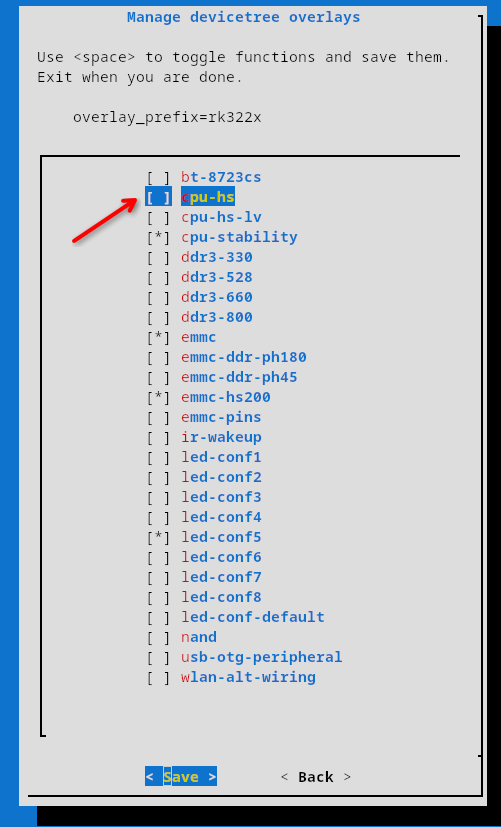
Hi @Tavares R You should definetly check the "Media framework installer v0.1" by Jock, on this link -> https://forum.armbian.com/topic/34923-csc-armbian-for-rk322x-tv-box-boards/page/10/#comment-102655 Also, this other link contains a repo to install some patched libs to at least use decoded video -> https://forum.armbian.com/topic/32449-repository-for-v4l2request-hardware-video-decoding-rockchip-allwinner/ Hope it helps, but reality check is the rk3229 is just too weak to properly handle a full DE running a modern browser... Something also worth trying is to enable the "cpu-hs" overlay. it will "overclock" the rk3229 from 1200Mhz to 1400Mhz, giving some extra performance, but keep low expectations... PS: Are you brazillian by any means? Tavares is a very common last name in Brazil.
-
@Morales Morales when I have more free time.. busy with work the next couple of months.
-
@Droll, something worth to check out is the SMB version your server is running... They have slightly different authentication, so the mount command differs a bit: SMBV1: sudo mount -t cifs -o vers=1.0,username=your_username,password=your_password //server_ip/share_name /mnt/myshare SMBV2: sudo mount -t cifs -o vers=2.0,username=your_username,password=your_password //server_ip/share_name /mnt/myshare
-
Suggestions will be very appreciated.
-
@Arthur Gu Thank you for the effort and congratulations for your success. I will try it in the next days.
-
 yet still giving enough to write a answer. flaming over LPEs (or any vulnerability) does not solve any issues. I suggest to read the license again to get a clue who's responsible about fixing things in general: https://github.com/armbian/build/blob/5e60c0183d035bfd5179373e1eac284790e08904/LICENSE#L265-L268 Both parties also shall read the terms of use again, the very first bullet point in particular. I will not give this hint a second time. fixes will land upstream, stable builds will adapt four times a year. For everyone wants things faster, options were provided.
 -
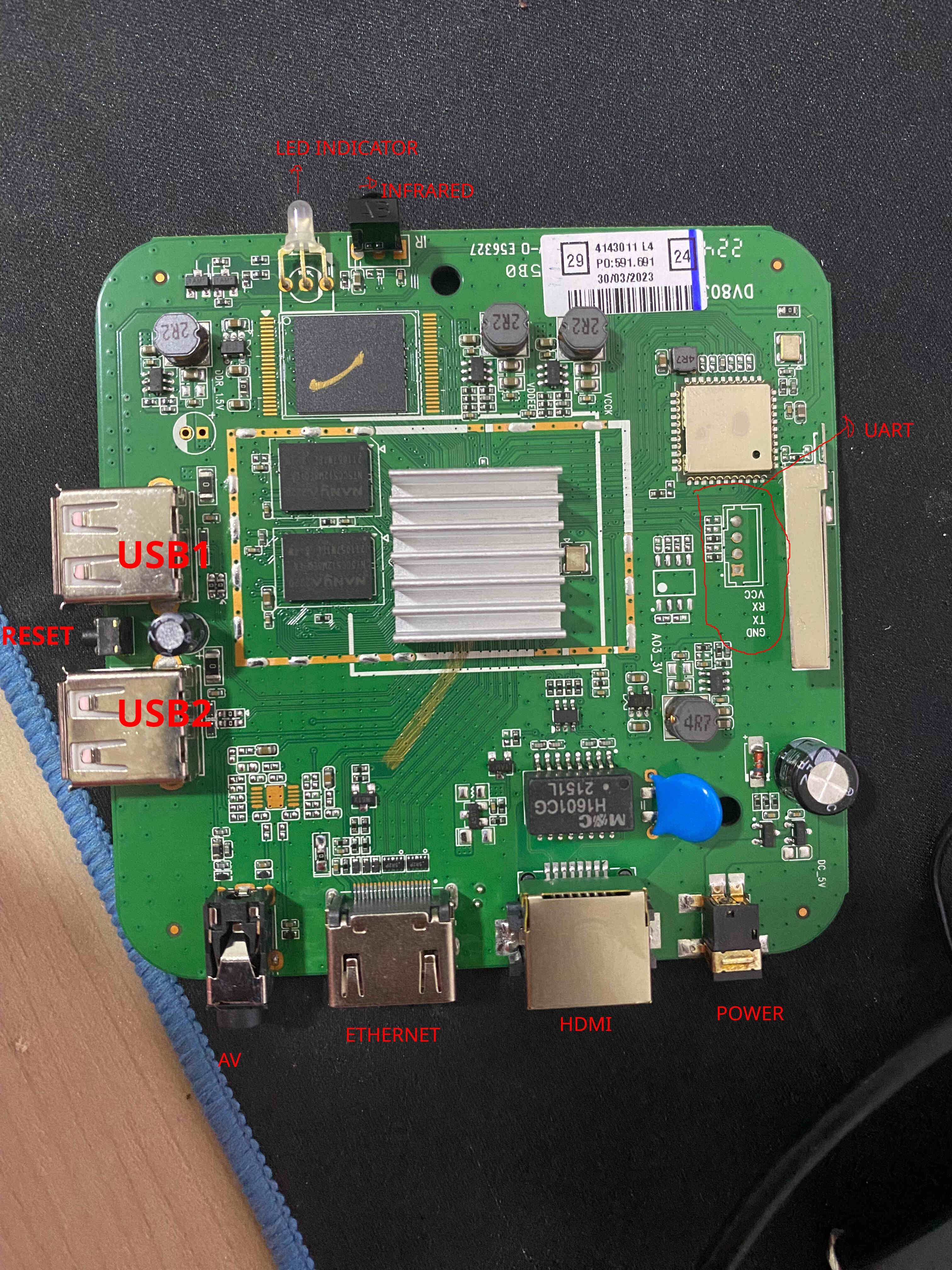
 TV Box Name: Intelbras IzyPlay Board name: DV8038 CPU: Amlogic S805X (GXL Meson, Rev D) Armbian build file name: Armbian_community_26.2.0-trunk.821_Aml-s9xx-box_trixie_current_6.18.26_minimal.img.xz DTB file used: meson-gxl-s805x-p241.dtb Kernel Version: 6.18.26-current-meson64 Distribution Installed: Debian 13 (Trixie) Working Ethernet: Yes Max Ethernet Speed that works: 100 Mbps Does wifi work: Yes Does bluetooth work: No Does HDMI audio work: Not tested (headless setup) Additional Comments: - Board has 1GB RAM (908MB available) and 7.3GB eMMC - HDMI output works (tested on a DELL P2219H) - Reset button is between USB1 and USB2 ports - USB2 port is required for booting (closest to power input) - To boot from USB: hold reset button while applying power, release after 15 seconds
-

Helios64 - Armbian Trixie with linux 6.18 (incl. opp-microvolt patch)
BipBip1981 replied to ebin-dev's topic in Rockchip
Thank @iav